Cast Iron vs Competition Kettlebells & 120 Pound Dumbbell Value
We break down the 2026 costs of cast iron vs competition kettlebells and analyze if a 120 pound dumbbell offers better ROI for heavy home gyms.

The Heavy Unilateral Dilemma: Kettlebells vs. Dumbbells
As home gym owners progress from intermediate to advanced strength levels, the equipment budget faces a critical stress test. The standard 16kg and 24kg kettlebells that once provided ample resistance for swings, goblet squats, and Turkish get-ups eventually become mere warm-up tools. When you need to push past the 32kg (70lb) threshold, you are forced into a complex purchasing decision: Do you invest in heavy cast iron kettlebells, pay the premium for competition-grade steel, or pivot entirely to heavy dumbbells?
From a strict budget breakdown and value analysis perspective, the answer is not just about the price per pound. It requires evaluating biomechanical efficiency, space footprint, and long-term utility. In this 2026 guide, we dissect the true cost of ownership for cast iron versus competition kettlebells, and explore why integrating a 120 pound dumbbell into your arsenal might actually deliver a higher return on investment (ROI) for pure strength and hypertrophy goals.
Cast Iron Kettlebells: The Budget-Friendly Workhorse
Cast iron kettlebells are the traditional choice for hardstyle training, characterized by their thick handles and compact, dense bodies. Brands like Rogue Fitness and Rep Fitness dominate this space, offering gravity-cast iron bells with powder-coated finishes.
The Economics of Cast Iron
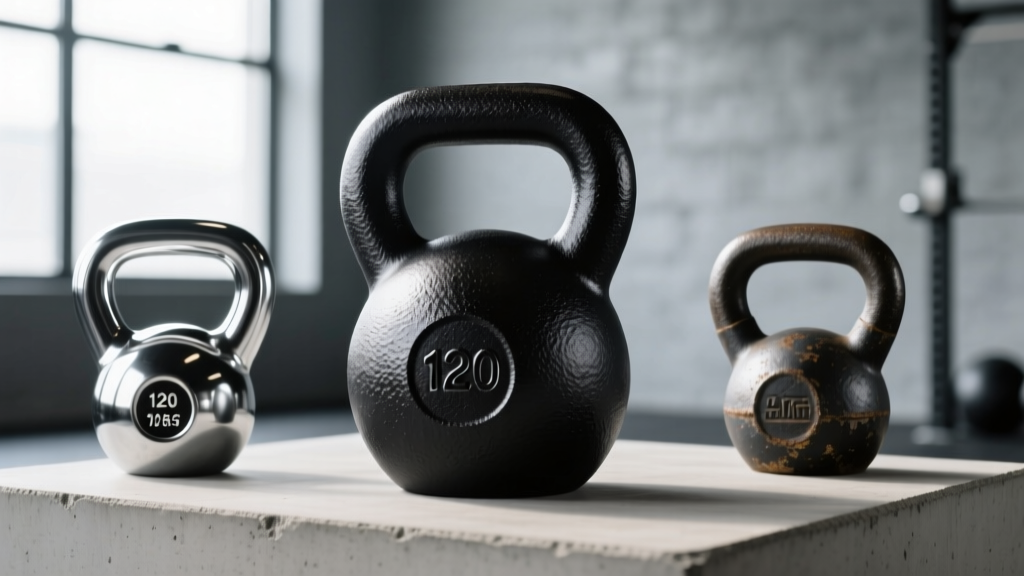
In 2026, the market average for high-quality cast iron kettlebells hovers between $1.50 and $1.90 per pound. A 32kg (70.5lb) cast iron bell typically retails for $115 to $135. The manufacturing process is relatively inexpensive: molten iron is poured into a mold, cooled, and machined to remove burrs.
However, the budget-friendly nature of cast iron comes with distinct physical trade-offs. As the weight increases, the physical dimensions of the bell grow exponentially. A 40kg or 48kg cast iron kettlebell features a massively thick handle (often exceeding 40mm in diameter) and a sprawling bell profile. This creates a severe failure mode for high-repetition ballistic movements; the thick horn will tear through calluses during double cleans, and the oversized bell will crash awkwardly against the forearm during rack positions.
Competition Kettlebells: Precision at a Premium
Competition kettlebells are engineered for Girevoy Sport (kettlebell sport) and high-volume endurance training. Unlike cast iron, competition bells are single-cast from steel, ensuring that a 12kg bell and a 48kg bell share the exact same physical dimensions: a 280mm height, a 210mm width, and a universal 35mm handle diameter.
The Cost of Uniformity
This precision manufacturing drives the price up significantly. Premium brands like Kettlebell Kings and Onnit price their competition bells between $3.80 and $5.00 per pound. A 32kg competition bell will cost upwards of $260, while a massive 48kg (106lb) bell can easily exceed $400.
Warning on Hollow Horns: When buying budget-tier competition bells (often priced under $3.00/lb), beware of hollow steel handles filled with ball bearings to achieve the target weight. These frequently suffer from weld failures at the horn junction when dropped, rendering the bell dangerous and unusable. Always verify single-cast solid steel construction.Head-to-Head Cost Analysis: Cast Iron vs. Competition
To understand the budget gap, let us look at the exact 2026 pricing matrix for the most common heavy kettlebell sizes.
| Weight | Cast Iron (Avg Price) | Competition (Avg Price) | Price Premium |
|---|---|---|---|
| 24kg (53lb) | $85 | $190 | +123% |
| 32kg (70lb) | $125 | $265 | +112% |
| 40kg (88lb) | $160 | $340 | +112% |
| 48kg (106lb) | $210 | $430 | +104% |
The 120 Pound Dumbbell Pivot: Maximum ROI for Heavy Lifters
Here is where the traditional kettlebell buying guide requires a paradigm shift. If your primary training goal has evolved from ballistic endurance (snatches, long-cycle jerks) to raw unilateral strength, heavy hypertrophy, and muscle mass, continuing to buy increasingly massive kettlebells is a poor allocation of funds. This is where the 120 pound dumbbell enters the value equation as a superior alternative.
Biomechanical Limitations of Heavy Kettlebells
Attempting heavy strict presses, split squats, or chest-supported rows with a 40kg or 48kg kettlebell is biomechanically inefficient. The offset center of mass and the thick handle limit neural drive and grip endurance before the target muscle group (e.g., the deltoids or quadriceps) reaches true mechanical failure. Furthermore, according to strength standards tracked by ExRx, advanced male lifters frequently require loads exceeding 100lbs per limb to stimulate hypertrophy in pressing movements.
Cost and Utility of the 120 Pound Dumbbell
Instead of spending $430 on a single 48kg competition kettlebell that is painful to rack and awkward to press, consider the economics of a 120 pound dumbbell setup.
- Fixed Urethane Option: A commercial-grade 120lb fixed urethane dumbbell (such as the Rogue Urethane series) costs roughly $350 to $400 per bell. While expensive, it offers perfect balance, a 32mm ergonomic handle, and zero forearm bruising during heavy unilateral presses.
- Adjustable Option (The Ultimate ROI): High-end adjustable dumbbells, like the PowerBlock Elite USA series (expandable up to 120 lbs per hand), cost approximately $550 to $600 for a full pair. This single purchase replaces an entire rack of heavy kettlebells and fixed dumbbells, allowing for precise 2.5lb micro-loading—a feature entirely absent in kettlebell training.
'When the load exceeds 32kg, the kettlebell transitions from a versatile strength tool to a specialized endurance implement. For pure unilateral overload, a heavy dumbbell provides a vastly superior stimulus-to-fatigue ratio.' — Home Gym Equipment Analysis, 2025
2026 Space and Budget Matrix: Which Setup Wins?
To finalize the value analysis, we must factor in the physical footprint of the equipment, as home gym space is a hidden cost. Below is a decision framework based on a $1,000 equipment budget.
Scenario A: The Ballistic Athlete (Kettlebell Sport / CrossFit)
Budget Allocation: Purchase a matched pair of 24kg and 32kg Competition Kettlebells ($910 total).
Value Proposition: High. If you are training for kettlebell sport or high-rep WODs, the uniform 35mm handle of competition bells is non-negotiable to prevent hand tears. The cost per pound is high, but the specialized utility justifies the expense.
Scenario B: The Strength & Hypertrophy Lifter (Bodybuilding / Powerbuilding)
Budget Allocation: Purchase a pair of adjustable dumbbells expandable to a 120 pound dumbbell capacity ($600), plus a 24kg Cast Iron Kettlebell for swings and carries ($85). Total: $685.
Value Proposition: Exceptional. You save over $300 compared to Scenario A, while gaining access to loads up to 120lbs per hand for presses, rows, and lunges. The single 24kg cast iron bell handles all ballistic hinge movements perfectly, eliminating the need for heavy, oversized kettlebells.
Pro-Tip on Storage: A pair of 120lb adjustable dumbbells occupies roughly 2 square feet of floor space. Storing a full set of heavy cast iron kettlebells (16kg through 48kg) requires a specialized reinforced steel rack costing an additional $150-$200, plus 6 square feet of floor space.Final Verdict: Where to Allocate Your Funds
The debate between cast iron and competition kettlebells ultimately hinges on your training modality. If your programming demands high-repetition cleans, snatches, and jerks, the premium paid for competition steel is a mandatory investment in your joint health and skin integrity. Cast iron remains the undisputed king of budget-friendly, low-rep strength work and heavy swings.
However, from a holistic budget breakdown perspective, chasing massive kettlebells (40kg+) for pressing and squatting is a trap that yields diminishing ergonomic returns. Recognizing when to pivot to a 120 pound dumbbell—whether fixed or adjustable—is the hallmark of a smart home gym investor. By blending a mid-range cast iron kettlebell for hinges with heavy, adjustable dumbbells for unilateral overload, you maximize your budget, minimize your footprint, and optimize your long-term strength gains.
More gear to consider
All reviews
Budget Dumbbell Rack Storage for Your Dumbbell Step Ups Alternative

Olympic Barbell Knurling Guide & Lying Overhead Dumbbell Pullover
Olympic vs Standard Plates: 3 Day a Week Dumbbell Workout Setup

Best Dumbbell Full Body Workouts: Top Neoprene Sets Compared

Dumbbell Rack Trends 2026: Storage for Heavy RDLs & Muscles Worked