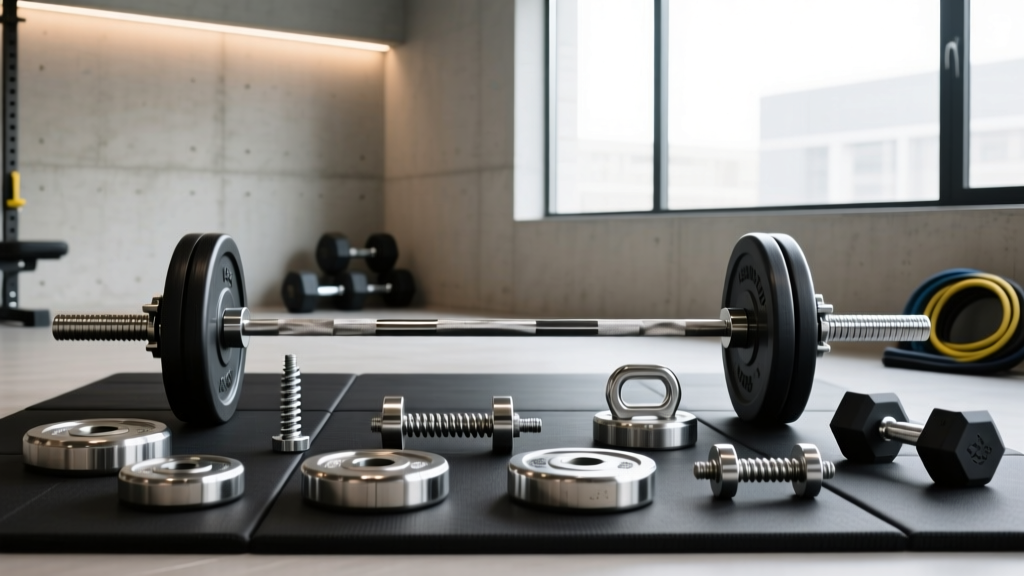
Bumper Plate vs Iron Plate Comparison: Upgrading Your Metal Dumbbell & Barbell Setup
Expert bumper plate vs iron plate comparison. Discover which weight plates pair best with your metal dumbbell collection and barbell for your home gym.

The Core Dilemma: Building a Cohesive Free Weight Arsenal
Outfitting a serious home or commercial gym requires more than just buying whatever weight plates are on sale. The debate between bumper plates and traditional iron plates is one of the most common crossroads for lifters expanding their free weight zones. As of 2026, the market has evolved significantly. Supply chain stabilizations have narrowed the price gap between virgin rubber bumpers and standard cast iron, while advancements in polyurethane and steel-alloy machining have redefined durability standards.
However, your plate selection does not exist in a vacuum. It must integrate seamlessly with the rest of your equipment ecosystem—most notably, your heavy-duty metal dumbbell racks and barbell stations. Choosing the wrong plate type can lead to acoustic nightmares, damaged flooring, or severely restricted loading capacities on your Olympic sleeves. In this hands-on review and expert comparison, we break down the exact material sciences, spatial realities, and real-world failure modes of both plate categories to help you make an informed, data-driven purchase.
Expert Quick Summary
- Buy Iron Plates If: You are a powerlifter, bodybuilder, or on a strict budget prioritizing maximum weight per dollar and minimal sleeve space.
- Buy Bumper Plates If: You practice Olympic weightlifting, CrossFit, or frequently drop weights from overhead onto a garage gym floor.
- The Synergy Factor: Your existing metal dumbbell set dictates floor wear; pairing bare cast iron dumbbells with iron plates requires heavy-duty flooring, whereas urethane-coated metal dumbbells pair beautifully with shock-absorbing bumper plates.
Iron Plates: Cast, Machined, and Calibrated Steel
Iron plates remain the undisputed champions of density and cost-efficiency. When we talk about 'iron' plates in 2026, we are generally referring to three distinct manufacturing tiers: standard cast iron, machined cast iron, and calibrated steel.
Standard vs. Machined Cast Iron
Standard cast iron plates (like the classic gray enamel plates found in older commercial gyms) are poured into molds. They are notoriously inconsistent in weight—often varying by 2% to 5% from their stated weight. Machined iron plates, such as the REP Fitness Cast Iron Plates or Titan Fitness Olympic Iron Plates, undergo a secondary milling process. This guarantees a flat, smooth surface and an exact 1% weight tolerance. Priced between $1.50 and $2.20 per pound, machined iron is the sweet spot for traditional strength training.
The Space Advantage on the Barbell Sleeve
The most significant physical advantage of iron is its density. A 45-pound cast iron plate is typically 1.1 to 1.3 inches thick. This allows you to load upwards of 500+ pounds on a standard Olympic barbell sleeve without needing a bar with extended sleeves. For lifters moving massive tonnage on squats and deadlifts, iron is non-negotiable.
Bumper Plates Decoded: Durometer, Virgin Rubber, and Dead Bounce
Bumper plates were engineered for one primary purpose: to be dropped from overhead without destroying the barbell, the floor, or the plates themselves. However, not all rubber is created equal. According to comprehensive equipment testing by Garage Gym Reviews, the critical metric to watch is the Shore A Durometer rating, which measures rubber hardness.
Understanding Shore A Hardness and 'Dead Bounce'
A lower durometer (e.g., 75-80 Shore A) means softer rubber. While soft bumpers are quiet, they suffer from 'high bounce,' which is a severe safety hazard during heavy Olympic cleans. Premium competition and training bumpers, like the Rogue Echo Bumpers (rated around 85 Shore A) or Fringe Sport Black Bumpers (88 Shore A), utilize virgin rubber formulations engineered for 'dead bounce.' This means the plate absorbs the kinetic energy and stays planted on the floor. As noted by the equipment analysts at BarBend, virgin rubber also eliminates the toxic off-gassing odors associated with recycled crumb rubber alternatives.
The Uniform Width Dilemma
Unlike iron, bumper plates maintain a uniform diameter (450mm) across all weights to ensure the 10lb and 15lb plates can safely hit the floor alongside the 45s. Consequently, a 45lb bumper plate is usually 2.15 to 2.75 inches thick. Loading 405 lbs on a barbell will consume nearly the entire usable sleeve space, leaving minimal room for collars.
Head-to-Head Comparison Matrix
| Feature | Machined Iron Plates | Virgin Rubber Bumpers | Calibrated Steel Plates |
|---|---|---|---|
| Average Cost (per lb) | $1.50 - $2.20 | $3.50 - $5.50 | $8.00 - $12.00 |
| 45lb Plate Thickness | ~1.25 inches | ~2.15 - 2.75 inches | ~0.85 inches |
| Drop Safety | Poor (Will crack floors) | Excellent (Shock absorbing) | Moderate (Loud, high impact) |
| Primary Use Case | Powerlifting, Bodybuilding | Olympic Lifting, CrossFit | Competition Powerlifting |
| Weight Tolerance | +/- 1% to 2% | +/- 1% to 3% | +/- 10 grams |
The Metal Dumbbell Synergy: Spatial and Acoustic Realities
Why are we discussing plates in the context of a metal dumbbell setup? Because a holistic gym environment requires acoustic and spatial harmony. If you own a commercial-style rack of bare cast-iron or urethane-coated metal dumbbells ranging from 5 to 120 pounds, you already have a massive source of localized floor impact and acoustic reverberation.
When a lifter racks a 100-pound metal dumbbell onto a steel saddle, the high-frequency metallic 'clank' travels through the floor joists. If you pair a heavy metal dumbbell zone with standard iron barbell plates, the cumulative noise pollution in a garage or basement gym becomes unbearable for the rest of the household. Furthermore, dropping iron plates alongside dropped metal dumbbells accelerates the degradation of standard 3/4-inch horse stall mats.
Pro-Tip: The Hybrid Flooring & Plate Strategy
If your budget dictates purchasing machined iron plates for your barbell, but you utilize heavy metal dumbbells for high-volume hypertrophy work, you must invest in a layered flooring system. Place a layer of 1/2-inch plywood beneath your 3/4-inch rubber stall mats. This creates a floating subfloor that disperses the kinetic energy of both the iron plates and the dropped metal dumbbells, protecting your concrete slab from micro-fractures.
Conversely, if you opt for virgin rubber bumper plates, the acoustic dampening of the rubber helps balance the harsher acoustics of the metal dumbbell zone, creating a more balanced auditory environment in enclosed spaces.
Common Failure Modes: What Breaks First?
Equipment degradation is inevitable, but the failure modes between iron and rubber are vastly different. Understanding these edge cases will save you money in the long run.
- Bumper Plate Insert Separation: The most common failure in mid-tier bumpers is the steel center insert pulling away from the rubber matrix. This creates a hollow, 'woody' sound when the plate hits the floor. Once the brass or steel bushing separates, the plate will wobble on the barbell sleeve, accelerating bushing wear on your Olympic bar. Premium brands like Rogue and Eleiko use hooked or flanged inserts to mechanically lock the steel into the rubber, preventing this.
- Iron Plate Enamel Chipping and Rust: Standard cast iron plates coated in cheap gray hammertone enamel will chip upon impact. Once the bare iron is exposed to the humidity of a garage gym, surface rust begins within 48 hours. While cosmetic, severe rust can pit the surface and stain your flooring. Machined iron plates with black oxide or zinc finishes resist this far better but require occasional wiping with 3-in-One oil or WD-40 Specialist Corrosion Inhibitor.
- Bumper Plate 'Tacoing': Dropping a barbell loaded only with light 10lb or 15lb bumper plates (without a 45lb plate to absorb the shock) will bend the steel inserts and permanently warp the rubber—a phenomenon lifters call 'tacoing.' Always pair light bumpers with a set of 45s, or use specialized technique plates.
Final Verdict and Buying Framework for 2026
The choice between bumper plates and iron plates ultimately hinges on your training modality, spatial constraints, and the existing equipment in your gym. According to the Rogue Fitness equipment guidelines, matching your plate type to your barbell's whip and your floor's shock tolerance is critical for longevity.
Choose Machined Iron Plates if: You are strictly powerlifting, bodybuilding, or doing strongman work. You need to maximize sleeve space for heavy squats and deadlifts, and you have a dedicated lifting platform that can handle the localized impact. Iron remains the most economical way to build a 500+ pound plate arsenal.
Choose Virgin Rubber Bumper Plates if: Your programming includes Olympic lifts (snatches, cleans, jerks), CrossFit WODs, or high-rep barbell cycling. The dead-bounce characteristics and uniform diameter are essential safety features that iron simply cannot provide.
"A well-designed home gym doesn't just buy equipment; it curates an ecosystem. Whether you are racking a 100-pound metal dumbbell or dropping a 45-pound bumper plate from overhead, every piece of gear must interact safely with your flooring, your barbell sleeves, and your acoustic space."
By evaluating the Shore A durometer of bumpers and the machining tolerances of iron, you can build a resilient, high-performance free weight zone that will easily survive the next decade of heavy training.
More gear to consider
All reviews
Beginner Dumbbell Home Exercise Guide Using Neoprene Weights

Barbell Collar Comparison: Fixing Dumbbell Set Walmart Mistakes

Barbell Collar Clamp Comparison: Beyond the Dumbbells Work Out

Tricep Dumbbell Exercise Gear: Rubber Hex vs Urethane Care

Dumbbell Prone Press Setup: Bumper vs Iron Plate Rack Guide