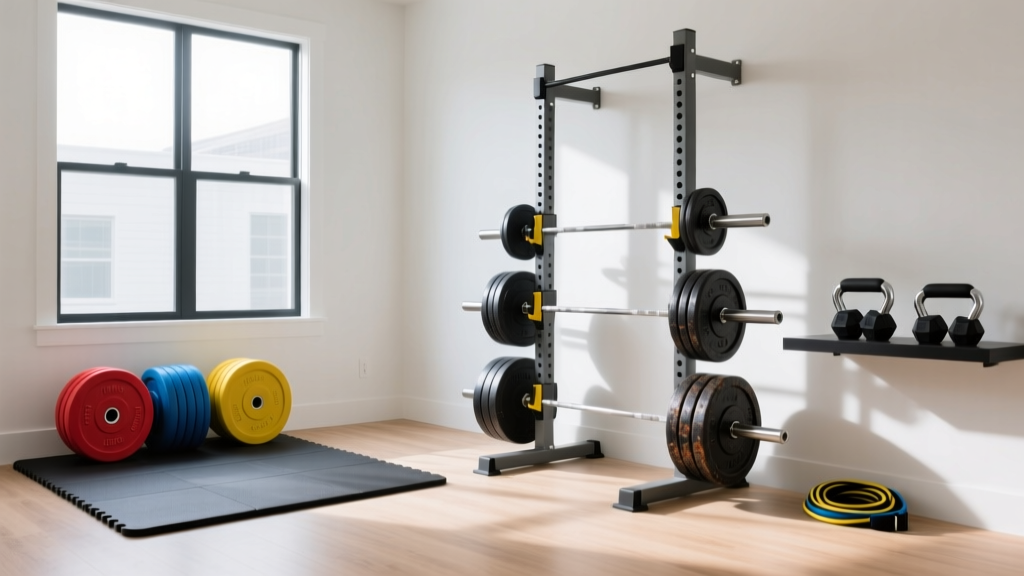
Bumper vs Iron Plates: Space Layouts and the Dumbbell Back Squat
Optimize your home gym layout. Compare bumper vs iron plates for spatial geometry, storage, and clearing space for the dumbbell back squat.

The evolution of the home gym in 2026 is defined by a single, uncompromising metric: spatial efficiency. As urban living spaces shrink and garage real estate becomes increasingly contested by vehicles and storage, lifters are forced to become amateur architects. The decision between equipping your space with bumper plates or traditional cast iron plates is no longer just a question of drop-safety or barbell whip. It is a fundamental layout decision that dictates your storage footprint, your floor clearance, and your ability to safely execute wide-stance, high-elbow movements like the dumbbell back squat.
When you eliminate the massive 4x3-foot footprint of a traditional power rack to save space, you naturally pivot to free-weight variations. The dumbbell back squat—performed by hoisting heavy hex or urethane dumbbells to shoulder height to simulate a barbell back squat—is a cornerstone of rackless leg training. However, this movement requires a specific lateral clearance zone that is frequently compromised by poorly planned plate storage. Let us break down the spatial geometry of bumper versus iron plates and how to design a layout that accommodates both your storage needs and your biomechanics.
The Spatial Geometry of Plates: Uniformity vs. Density
To optimize a room, you must first understand the physical dimensions of the equipment you are storing. Bumper plates and cast iron plates behave entirely differently in three-dimensional space.
Bumper Plates: The 450mm Monolith
According to International Weightlifting Federation (IWF) standards, all bumper plates, regardless of weight, share a uniform diameter of 450mm (17.7 inches). A 10-pound bumper plate is essentially the same physical size as a 45-pound bumper plate; the difference lies in thickness and density. For example, a standard 45lb Rogue Echo Bumper Plate is roughly 3.3 inches thick. This uniformity means that storing bumpers on a vertical A-frame tree requires a massive, continuous cylindrical footprint. You cannot tuck smaller bumpers into tight corners; they demand a dedicated, unobstructed 2-foot radius around the tree.
Cast Iron Plates: The Variable Puzzle
Cast iron plates scale in diameter relative to their weight. A 45lb iron plate typically measures around 14.5 inches in diameter, while a 10lb plate shrinks down to roughly 9 inches. Furthermore, iron is significantly denser than rubber. A 45lb cast iron plate is usually only 1.2 to 1.5 inches thick. This variable geometry allows for highly optimized, space-saving storage solutions, such as wall-mounted plate racks or staggered peg systems, which keep the floor entirely clear.
⚠️ Layout Warning: Stacking bumper plates directly on the floor in a corner creates a 'dead zone' that is difficult to clean and invites moisture trapping, which can degrade the rubber and rust the inner steel inserts over time. Always elevate bumpers on a low-profile rack or mat.Clearance Zones: Mapping the Dumbbell Back Squat Footprint
Why does plate storage matter for your lifting biomechanics? The answer lies in the 'swing zone' required for specific exercises. According to biomechanical analyses of squat variations, such as those documented in research published in the National Institutes of Health (NIH), the lateral sway and joint angles during squats dictate the necessary safety perimeter.
When performing a dumbbell back squat, the lifter holds heavy dumbbells (often 50 to 100 lbs each) racked at shoulder height, mimicking the barbell back squat position. To balance the load and maintain an upright torso, the elbows must flare outward significantly.
Calculating the Lateral Clearance
- Shoulder Width: Average 18-20 inches.
- Arm Flare & Elbow Extension: Adds roughly 12-15 inches per side.
- Dumbbell Length: A standard 70lb hex dumbbell is approximately 15 inches long. When held vertically at the shoulder, the top and bottom caps extend the lateral profile.
When you combine these factors, a heavy dumbbell back squat requires a minimum lateral clearance zone of 72 to 84 inches (6 to 7 feet). If you place a bulky, floor-standing bumper plate tree just three feet to the left of your lifting platform, you will inevitably strike the tree with your elbow or the dumbbell cap during the descent of the squat. This is where the choice of iron plates becomes a spatial superpower.
Storage Matrix: Reclaiming Floor Space
By utilizing cast iron plates and mounting them on the wall, you reclaim the floor space necessary for wide-stance, high-elbow movements. Below is a comparison matrix of how different plate types interact with storage solutions in a micro-gym environment.
| Storage Method | Best Suited For | Floor Space Consumed | Impact on Squat Clearance |
|---|---|---|---|
| Vertical A-Frame Tree | Bumper Plates | High (24" x 24" base + 18" radius) | High risk of lateral collision during dumbbell back squats. |
| Wall-Mounted Peg Rack | Cast Iron Plates | Zero (Utilizes vertical dead space) | Zero interference; maximizes lateral swing zone. |
| Low-Profile Horizontal Rack | Mixed / Bumpers | Medium (36" x 20" footprint) | Low risk if placed behind the lifter, outside the swing zone. |
Acoustic and Vibration Layouts in Multi-Use Spaces
Space optimization is not purely visual; it is also acoustic. In 2026, many home gyms are integrated into shared living spaces, basements with finished ceilings, or second-floor bonus rooms. The material of your weight plates dictates where your lifting zone can safely be positioned within the room's layout.
"Vibration transfer is the silent killer of multi-use home gyms. Dropping iron plates transmits high-frequency kinetic energy directly through the subfloor, while bumper plates dissipate it radially."
If your gym layout forces you to lift directly above a living space or near shared walls, bumper plates are mandatory. However, because bumpers require floor-standing trees that eat into your dumbbell back squat clearance zone, you must design an 'L-shaped' layout. Place the bumper tree in the corner opposite your dominant hand, and angle your lifting platform at 45 degrees to maximize the distance between your elbows and the storage rack.
Conversely, if your gym is on a concrete slab garage floor, cast iron plates are the superior choice. They allow for wall-mounted storage, completely opening up the center of the room. This unobstructed central zone is ideal for setting up a pair of heavy adjustable dumbbells and executing the dumbbell back squat with zero spatial anxiety.
Step-by-Step Layout Blueprint for the Compact Gym
To synthesize the battle of bumper vs. iron plates into an actionable floor plan, follow this 4-step layout blueprint:
- Map the Primary Swing Zone: Use painter's tape to mark a 7-foot by 7-foot square on the floor. This is your dedicated zone for the dumbbell back squat, kettlebell swings, and lateral lunges. No storage equipment may cross this threshold.
- Audit Your Plate Needs: If your programming requires frequent deadlift drops or Olympic lifts, you must allocate space for a bumper plate tree outside the taped zone. If your training is strictly hypertrophy and controlled eccentrics, switch to cast iron plates and invest in a heavy-duty wall mount.
- Position the Dumbbell Rack: Place your dumbbell rack at the rear edge of the swing zone. For the dumbbell back squat, you need to pick the weights up, clean them to your shoulders, and step back. Ensure there is a 3-foot clearance between the rack and the center of your lifting zone to allow for the 'step-back' maneuver.
- Install Mirrors Strategically: In compact spaces, mirrors on the wall opposite your lifting zone not only check your squat depth but create an optical illusion of depth, reducing the claustrophobia of a micro-gym layout.
Final Verdict: Form Follows Function
The choice between bumper and iron plates is ultimately a decision about how you value your floor space. Bumper plates offer unparalleled equipment protection and acoustic dampening, but their uniform 450mm diameter demands bulky storage solutions that can encroach on the lateral clearance required for complex movements. Cast iron plates, with their high density and variable sizing, unlock vertical wall storage, giving you the ultimate luxury in a compact home gym: empty floor space.
If your training relies heavily on rackless leg movements like the dumbbell back squat, prioritize cast iron plates and wall mounts to protect your elbows and your drywall. If you are a CrossFit athlete or Olympic weightlifter who must use bumpers, respect the geometry of the A-frame tree and design your room's layout around its immovable footprint. In the modern micro-gym, every square inch is a tool; use it wisely.
More gear to consider
All reviews
Master the Dumbbell Press Up: Neoprene Home Gym Setup Guide
Troubleshooting Barbell or Dumbbell Deadlifts: Power Rack vs Squat Stand

Dumbbell Flys Muscles Worked vs. Bench: Olympic Bar Knurling Guide

EZ vs Straight Bar Care: Longevity & Skater Squats with Dumbbells
Bumper vs Iron Plates: Space for Hamstring Exercises with Dumbbells
