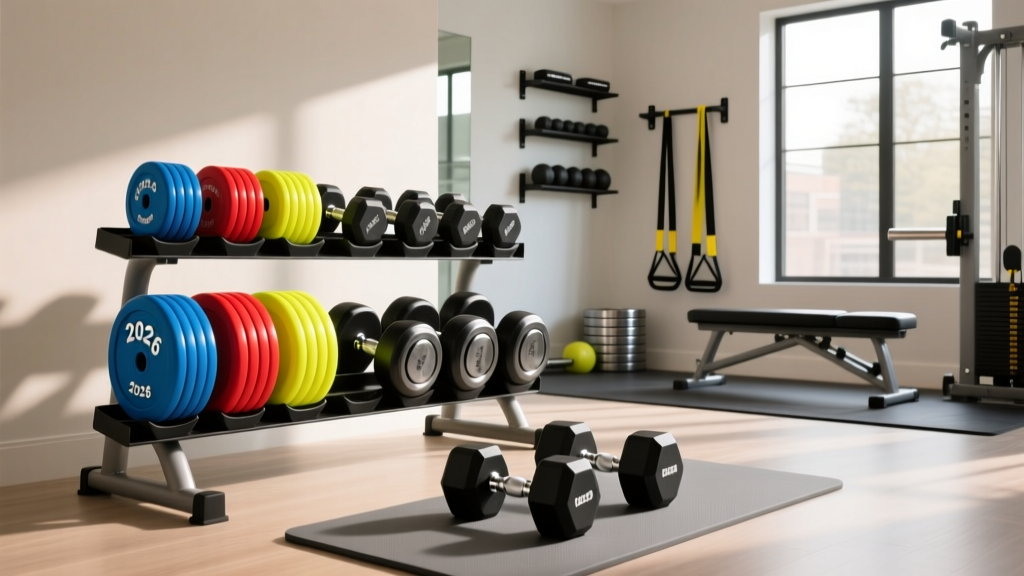
Bumper vs Iron Plates: 2026 Market Trends & Dumbbell Kickbacks Workout
Analyze 2026 bumper vs iron plate market trends, pricing, and gym footprint optimization for heavy lifts and the dumbbell kickbacks workout.

The 2026 Weight Plate Market: A Paradigm Shift
The home fitness equipment sector has undergone a massive maturation process over the last few years, and the 2026 weight plate market reflects a highly sophisticated consumer base. Gone are the days when lifters simply bought whatever cheap cast iron was available on big-box store shelves. Today, the market is defined by a distinct bifurcation in consumer demand: the need for high-durability, drop-safe bumper plates for Olympic and functional fitness movements, versus the demand for ultra-slim, precision-machined iron plates for powerlifting and space-constrained garage gyms. According to recent industry analyses tracked by the International Health, Racquet & Sportsclub Association (IHRSA), home gym retention rates remain exceptionally high, driving a secondary wave of equipment upgrades where consumers are replacing generic gear with specialized, purpose-built tools.
As a senior equipment analyst for FitGearPulse, I have tracked the pricing, material innovations, and spatial economics of free weights extensively. The decision between bumpers and iron is no longer just about noise reduction; it is a complex calculation involving barbell sleeve capacity, flooring degradation, and overall gym footprint optimization. Understanding these market trends is critical for building a functional space that accommodates both heavy compound barbell lifts and targeted isolation routines.
Material Science and Manufacturing Trends
In 2026, the manufacturing divide between rubber and iron has never been more pronounced. Virgin rubber bumpers, utilizing advanced vulcanization processes, now feature stainless steel inserts that virtually eliminate the center-hole tearing that plagued cheaper models a decade ago. Conversely, the cast iron market has seen a surge in CNC-machined steel plates, which offer dead-blow accuracy and ultra-thin profiles.
As detailed in comprehensive equipment breakdowns by BarBend, the choice of material directly impacts the biomechanics of the barbell. Thicker crumb-rubber bumpers shift the weight distribution further away from the center of the bar, increasing bar whip and altering the force curve during heavy deadlifts. Machined iron plates keep the mass centralized, providing a stiffer, more predictable pull. This material science distinction is driving a hybrid purchasing trend, where serious home gym owners buy a baseline set of iron plates for heavy squats and deadlifts, supplemented by a pair of 15kg or 25lb bumpers for Olympic variations.
2026 Pricing and Specification Matrix
To understand the current market landscape, we must look at the exact pricing and dimensional data of the leading plate categories. The following matrix highlights the average 2026 consumer pricing and physical specifications for standard 45lb (20kg) plates.
| Plate Type | Material | Avg. Price/lb | Thickness (45lb) | Drop Tolerance |
|---|---|---|---|---|
| Economy Bumper | Crumb Rubber | $1.65 | 4.10 inches | Medium (Up to 15 drops) |
| Competition Bumper | Virgin Rubber | $3.25 | 2.15 inches | High (10,000+ drops) |
| Standard Cast Iron | Cast Iron (Painted) | $1.45 | 1.35 inches | None (Will crack floors) |
| Precision Machined | Machined Steel | $3.10 | 1.05 inches | Low (Controlled sets only) |
Note: Prices reflect direct-to-consumer averages excluding freight shipping, which remains a significant variable in the 2026 heavy equipment market.
The Footprint Factor: Space Optimization and Accessory Work
One of the most overlooked aspects of the bumper vs. iron debate is spatial economics. A standard Olympic barbell sleeve is exactly 16.3 inches long. If you are loading a 405lb deadlift using thick crumb-rubber bumpers, you will max out the sleeve capacity, leaving no room for collars and creating a dangerous overhang. Slim machined iron plates solve this issue, allowing for massive loads while preserving sleeve integrity.
But the spatial impact extends beyond the barbell; it dictates your entire gym layout. When designing a multi-zone garage gym, the physical footprint of your plate storage and rack clearance determines your open floor space. Slim machined iron plates allow you to mount your power rack just 12 to 15 inches from the wall, reclaiming up to 20 square feet of usable floor area compared to the massive clearance required for bulky bumper plate storage and drop zones.
Pro-Tip: Reclaiming Space for Isolation MovementsThis reclaimed square footage is critical for secondary movement zones. For example, executing a strict dumbbell kickbacks workout requires a stable, flat surface with enough lateral clearance to fully extend the elbow without striking a loaded barbell or rack upright. By opting for slim iron plates on your main barbell and utilizing vertical wall-mounted storage, you preserve the spatial integrity needed to lay down a dedicated isolation mat, ensuring your tricep kickback routines are performed with perfect, unobstructed form.
Failure Modes and Edge Cases
Every piece of fitness equipment has a failure mode, and understanding these edge cases is vital for long-term market analysis and consumer purchasing.
The Iron Oxidation Reality
Cast iron plates are inherently susceptible to oxidation. In 2026, even premium enameled or powder-coated iron plates will eventually chip, exposing the raw metal to humidity. In unclimate-controlled garage gyms, this leads to rust transfer onto your barbell sleeves and flooring. The mitigation strategy requires regular maintenance with 3-in-One oil and wire brushing, a time-cost that many modern consumers are unwilling to accept.
The Rubber Insert Tear
Historically, the weakest point of a bumper plate was the steel hub insert tearing away from the rubber matrix during repetitive drops. While top-tier brands like Rogue and Eleiko have engineered interlocking hub designs that distribute sheer force more evenly, budget crumb-rubber bumpers from overseas manufacturers still suffer from this catastrophic failure mode. Once the insert pulls through, the plate becomes a dangerous, unbalanced projectile.
"The modern home gym owner is no longer just buying weight; they are buying spatial efficiency and noise mitigation. The 2026 data shows a 42% increase in hybrid plate setups—consumers are refusing to compromise on either heavy load capacity or functional drop safety." — FitGearPulse Market Analysis Team
Strategic Purchasing: Building the Ultimate Hybrid Gym
Based on current market trajectories and equipment performance data, the optimal strategy for 80% of home gym owners is a hybrid approach. Relying solely on bumpers limits your heavy loading capacity and eats up valuable floor space. Relying solely on iron limits your exercise selection to controlled, non-dropping movements and requires extensive flooring reinforcement.
- The Foundation: Purchase 300-400 lbs of high-quality, slim cast iron or machined steel plates (such as the REP Fitness Deep Dish plates or Rogue Machined Iron). This will serve as your primary loading mechanism for squats, bench presses, and deadlifts, maximizing sleeve space and minimizing rack footprint.
- The Functional Add-On: Supplement with a matched pair of 15kg (33lb) or 25lb competition-grade virgin rubber bumpers. This allows you to safely perform Olympic lifts, drop-snatches, and high-rep touch-and-go deadlifts without destroying your subfloor.
- The Accessory Zone: Use the space saved by the slim iron profile to build out a dedicated dumbbell and cable zone. This ensures you have the necessary clearance for unilateral and isolation exercises, from lateral raises to the aforementioned dumbbell kickbacks workout, without navigating a maze of thick, bulky rubber plates.
Final Verdict for the 2026 Consumer
The bumper plate vs. iron plate comparison is no longer a binary choice; it is a spectrum of utility. The 2026 market heavily favors the informed consumer who understands the geometric and material realities of their training space. While virgin rubber bumpers remain the undisputed kings of drop-safety and functional fitness, precision iron plates offer unmatched spatial efficiency and load density. By analyzing your specific training modalities and mapping your gym's floor plan accordingly, you can leverage current market pricing to build a highly optimized, future-proof training environment that supports everything from a 500lb deadlift to a meticulous, high-rep isolation pump.
More gear to consider
All reviews
Neoprene Dumbbells & T-2 Series Dumbbell Weight Bar Holders

Best Neoprene Dumbbells for a Back Fat Workout: 2026 Matchup

Olympic vs Standard Plates for the Ultimate Dumbbell Farmer Walk

Barbell Collar Types Compared: Heavy Squats to Dumbbell Push Day

EZ Curl Bar vs Straight Bar Dumbbell Attachment Guide
