Bumper vs Iron Plates: Space for Hamstring Exercises with Dumbbells
Optimize your home gym layout. Compare bumper vs iron plate storage footprints to maximize floor space for hamstring exercises with dumbbells.

The Spatial Footprint: Bumper vs. Iron Plate Dimensions
As home gym real estate becomes increasingly precious in 2026, the debate between bumper plates and cast iron plates has shifted from purely 'what are you lifting' to 'how much space does it consume.' While Olympic weightlifters and CrossFit athletes have long championed rubber-encased bumpers, the modern hybrid athlete must weigh the spatial tax these plates demand against the need for open floor areas dedicated to isolation work. If your programming heavily features hamstring exercises with dumbbells, the physical footprint of your weight plates will directly dictate your gym's layout and your movement quality.
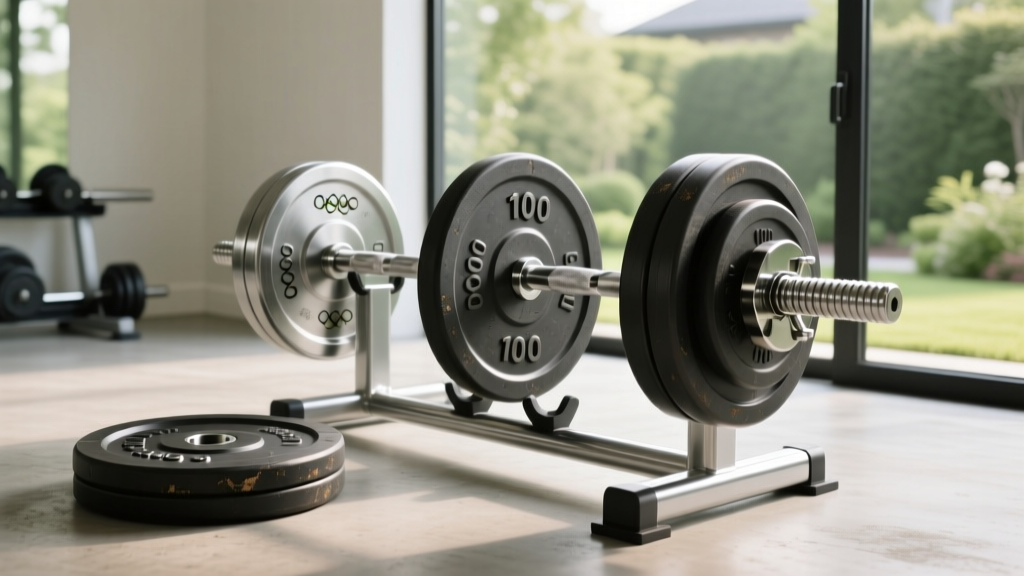
To understand the spatial impact, we must look at the raw geometry of the equipment. A standard 45-pound bumper plate is uniformly 17.71 inches in diameter and roughly 3.25 inches thick. In contrast, a 45-pound machined cast iron plate typically spans 14.5 inches in diameter and a mere 1.3 inches in thickness. This difference in volume creates a cascading effect on your storage solutions and, consequently, your available floor space.
| Specification | 45lb Bumper Plate (e.g., Rogue Echo) | 45lb Cast Iron Plate (e.g., Rogue Deep Dish) |
|---|---|---|
| Diameter | 17.71 inches | 14.5 inches |
| Thickness | ~3.25 inches | ~1.3 inches |
| Price Per Pound (Avg 2026) | $3.75 / lb | $2.25 / lb |
| Peg Capacity (Standard 16" Tree) | 4 plates per peg | 8 plates per peg |
| Floor Storage Footprint (500lbs) | Requires 2 vertical trees or large A-frame | Fits on 1 standard vertical tree |
The Volume Tax
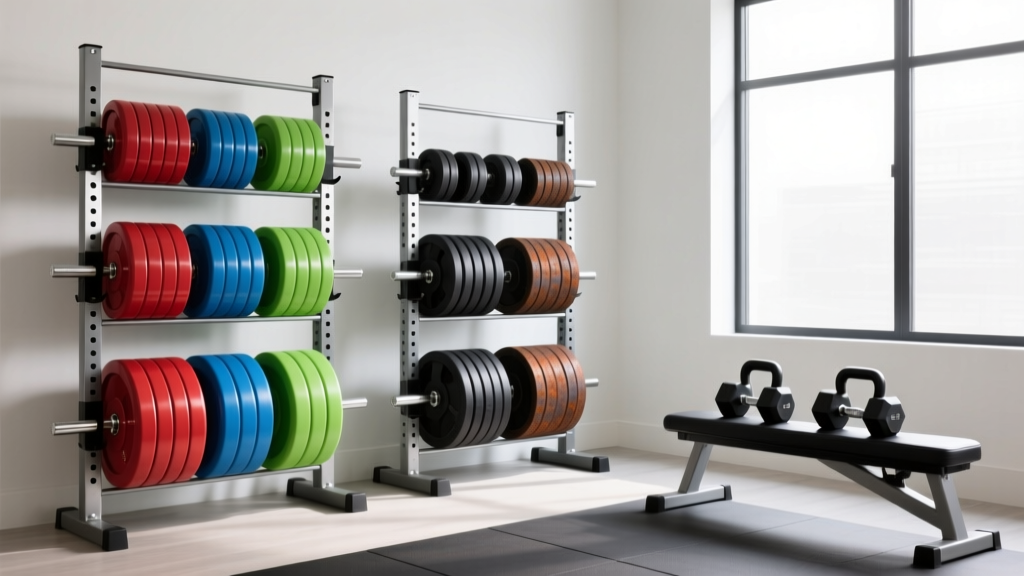
Because bumper plates are nearly 2.5 times thicker than iron plates, a standard 6-peg vertical plate tree (which takes up roughly 4 square feet of floor space) will hold a maximum of 480 lbs in 45lb bumpers before you run out of room. The exact same tree will hold over 1,000 lbs in cast iron. If you choose bumpers, you will likely need to purchase a second storage unit, effectively doubling the storage footprint and eating into your active workout zones.
Designing the Drop Zone vs. Isolation Zone
When mapping out a standard 2-car garage gym (approximately 400 square feet), space optimization requires strict zoning. You generally need two distinct areas: the Drop Zone for dynamic barbell work, and the Isolation Zone for dumbbell and accessory movements.
The Drop Zone (Bumper Territory)
If you are performing Olympic lifts, high-rep deadlifts, or any movement where the barbell is dropped from overhead or the hip, bumper plates are non-negotiable. They protect your flooring and your barbell sleeves. However, a safe drop zone requires a minimum 4x8 foot platform. When you factor in the barbell's 7-foot wingspan and the user's stance, you are committing a 6x10 foot area exclusively to heavy, impact-based lifting.
The Isolation Zone (Iron's Advantage)
By utilizing cast iron plates for your barbell work (assuming you are doing controlled eccentrics and not dropping the bar), you shrink your storage footprint. This reclaimed square footage can be reallocated to the center of the room, creating an unobstructed 'sweep zone' necessary for targeted accessory work. This is where the layout directly impacts your ability to perform hamstring exercises with dumbbells safely and effectively.
Optimizing Floor Space for Hamstring Exercises with Dumbbells
Targeting the posterior chain with free weights requires significant spatial awareness. Unlike machine-based leg curls, hamstring exercises with dumbbells demand a clear 'sweep radius' to accommodate the hip hinge, the posterior weight shift, and the dumbbell path. According to facility guidelines outlined by the ExRx Weight Room Directory, a minimum of 36 inches of clearance is recommended around free-weight stations to ensure safe biomechanics.
If your plate storage is poorly placed, or if you have bulky bumper plate trees jutting into your workout area, you will subconsciously alter your movement patterns to avoid hitting the equipment. Here is how specific hamstring movements dictate your layout needs:
- Dumbbell Romanian Deadlifts (RDLs): As noted by the American Council on Exercise (ACE), proper RDL form requires pushing the hips back 12 to 18 inches behind the heels while lowering the dumbbells along the legs. You need at least 4 feet of depth behind your heels to allow for balance corrections without tripping over a plate tree.
- Single-Leg Dumbbell RDLs: This unilateral movement requires a lateral sway allowance. The lifter needs a 5-foot wide clearance to maintain balance during the hip hinge. Bulky A-frame bumper storage units placed too close to the lifting area create a severe collision hazard.
- Floor-Based Dumbbell Hamstring Curls: Performed by lying prone on the floor and curling a dumbbell between the feet toward the glutes. This requires a clear 7-foot by 3-foot floor space. If you have multiple vertical plate trees scattered around the room to accommodate thick bumpers, finding a contiguous stretch of open flooring becomes a frustrating puzzle.
"Biomechanical efficiency is deeply tied to environmental psychology. When a lifter feels spatially constrained by nearby equipment, they will prematurely terminate the eccentric phase of a hip hinge to avoid perceived collisions, drastically reducing hamstring activation."
Storage Solutions: Vertical Trees vs. Wall Racks
If your training demands bumper plates, but you refuse to sacrifice the floor space needed for hamstring exercises with dumbbells, you must change how you store your weight. The traditional vertical plate tree is the enemy of small home gyms.
The Vertical Tree Problem
A standard Rogue A-Tree has a base of roughly 24x24 inches, but the plates overhang, creating a functional footprint of nearly 30x30 inches. Furthermore, they are often placed in the corners or against walls, precisely where you might want to set up a bench for seated or lying dumbbell work.
The Wall-Mounted Solution
To reclaim your floor plan, transition to wall-mounted plate storage. Systems like the Titan Fitness Wall Mount Plate Rack or Rogue Wall Mount Stringer hold hundreds of pounds of bumpers while occupying zero square inches of floor space. By moving the 'volume tax' of bumper plates onto the drywall or studs, you open up the perimeter of your gym. This allows you to place an adjustable bench flush against the wall when not in use, and pull it into the center of the room for your dumbbell hamstring isolation work without navigating a maze of steel pegs.
The 2026 Hybrid Layout Blueprint
For the athlete who wants the durability of bumpers for occasional drops but prioritizes hypertrophy and isolation work, the hybrid plate approach is the ultimate space-saving strategy for 2026.
- Buy Bumpers for the 'Drop' Weights: Purchase 10lb, 25lb, and 45lb plates in high-density virgin rubber bumpers. These are the weights you are most likely to drop from a fatigued state during heavy complexes.
- Buy Iron for the 'Fractional' Weights: Purchase 1.25lb, 2.5lb, 5lb, and 35lb plates in cast iron. The 35lb iron plate is a massive space-saver, as a 35lb bumper is often nearly as thick as a 45lb bumper due to the large steel hub required for structural integrity.
- Map the Perimeter: Install wall-mounted plate racks on the back wall. Store all dumbbells on a tiered wall-shelf rather than a floor rack.
- Center the Action: Leave the exact center of the gym completely empty. This is your dedicated zone for hamstring exercises with dumbbells, allowing full, uninhibited hip hinges and unilateral balance work.
Acoustic and Vibration Footprints
Space optimization is not just about physical dimensions; it is also about acoustic space. If your home gym is located on an upper floor, in a finished basement, or shares a wall with living spaces, dropping cast iron plates will create structural vibrations that can damage drywall and disturb neighbors. In these environments, bumpers are mandatory to absorb kinetic energy. However, because bumpers take up more physical space, you must be even more aggressive with wall-mounted storage to ensure you still have the necessary 36-inch clearance radius for your dumbbell accessory work.
Final Verdict: Let Your Programming Dictate Your Floor Plan
Choosing between bumper and iron plates is ultimately an exercise in spatial geometry. If your primary focus is Olympic weightlifting, accept the spatial tax of bumpers and invest heavily in wall-mounted racks to preserve your floor area. If your training is rooted in controlled hypertrophy, powerlifting, and extensive isolation work—specifically hamstring exercises with dumbbells like RDLs and floor curls—cast iron plates are the superior choice. They condense your storage footprint, lower your cost per pound, and grant you the wide-open, unobstructed floor space necessary to move, hinge, and balance without restriction.
More gear to consider
All reviews
Power Rack vs Squat Rack vs Squat Stand: Dumbbell Rows & Lifts
Loadable Dumbbells for Dumbbell Reverse Wrist Curls: Budget Guide

Barbell Collar Types: Securing Weights for Reverse Fly Dumbbell Form
Bumper vs Iron Plates: Setup for Beginner Dumbbell Exercises

Barbell Weight & Knurling: Setup for Dumbbell Hang Squat Clean