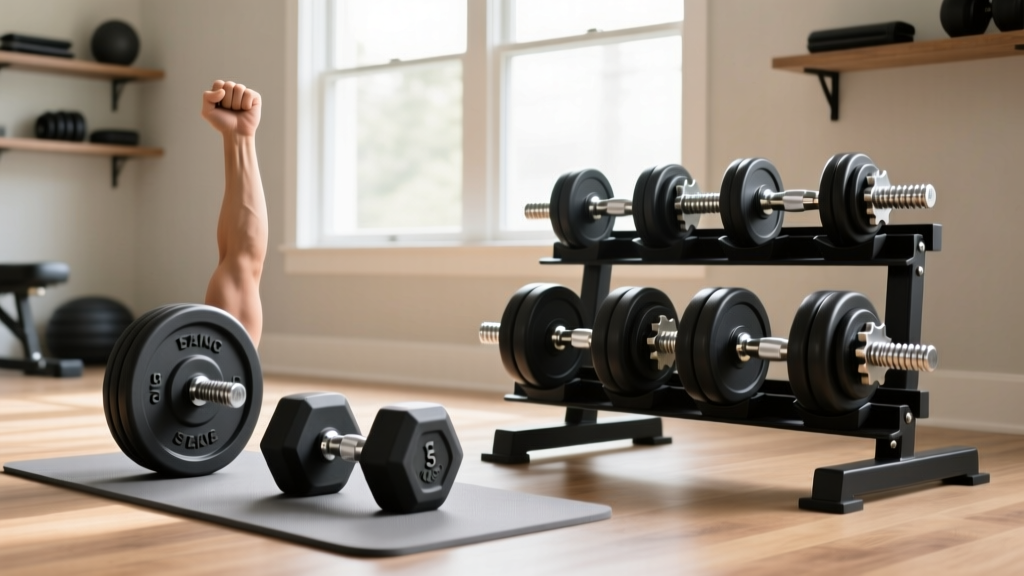
Bumper vs Iron Plates: Layout & Dumbbell Exercises for Triceps
Optimize your home gym layout. Compare bumper vs iron plate storage footprints and design the perfect space for dumbbell exercises for triceps.

The Spatial Reality: Bumper Plates vs. Iron Plates
Designing a high-performance home gym in 2026 requires a meticulous approach to spatial geometry. You are not just buying equipment; you are allocating cubic footage. The debate between bumper plates and cast iron plates extends far beyond noise reduction and barbell whip—it fundamentally dictates your floor plan, storage infrastructure, and safety clearances. When you mix heavy compound lifting with targeted hypertrophy work, such as dumbbell exercises for triceps, your layout must accommodate both high-impact drop zones and precision isolation corners.
To optimize your space, we must first look at the raw dimensional data of the two most popular plate variants on the market: the Rogue Echo Bumper Plates and the Rogue Black Oxide Machined Iron Plates.
| Metric (45 lb / 20 kg Plate) | Echo Bumper Plate | Machined Iron Plate | Layout Impact |
|---|---|---|---|
| Diameter | 17.7 inches | 14.5 inches | Bumpers require wider vertical A-frame racks; iron fits compact wall pegs. |
| Thickness | 2.25 inches | 1.3 inches | Iron plates allow 40% more weight on a single storage tree sleeve. |
| Drop Tolerance | High (Deadbounce) | Zero (Floor Damage Risk) | Bumpers mandate 3/4" vulcanized matting; iron requires strict controlled lowering. |
| Cost per Pair (2026) | ~$355.00 | ~$155.00 | Iron frees up capital for specialized isolation benches and dumbbells. |
Zoning Your Floor Plan: Drop Zones vs. Precision Zones
Space optimization begins with zoning. A hybrid gym must separate the Drop Zone (Olympic lifts, heavy deadlifts) from the Precision Zone (hypertrophy, isolation, and rehabilitation).
The Drop Zone Footprint
If your programming includes Olympic weightlifting or high-volume touch-and-go deadlifts, bumper plates are non-negotiable. However, they demand an 8-foot by 8-foot dedicated drop zone covered in interlocking 4x6-foot horse stall mats (minimum 3/4-inch thickness). Bumper plates also require wider storage solutions. A standard vertical A-frame plate rack holds bumpers efficiently but consumes roughly 4 square feet of premium floor space.
The Precision Zone Footprint
Conversely, if your training is strictly powerbuilding or hypertrophy-focused, machined iron plates allow for a radically compressed layout. Because iron plates are thinner and feature a smaller diameter, you can utilize wall-mounted weight plate pegs. This eliminates floor-standing racks entirely, reclaiming up to 6 square feet of usable workout space—crucial when you need to carve out room for an adjustable bench and dumbbell rack.
Expert Layout Tip: Never store bumper plates on standard wall pegs designed for iron. The 17.7-inch diameter and offset center of gravity on bumpers create severe leverage issues that can rip standard drywall anchors out, even when mounted to studs. Always use floor-standing trees or heavy-duty steel wall brackets rated for 500+ lbs of sheer force.
The Isolation Corner: Dumbbell Exercises for Triceps
Reclaiming space from your plate storage directly benefits your isolation training. The triceps brachii make up roughly 60% of your upper arm mass, and fully developing the long head requires specific shoulder flexion angles that demand rigorous spatial planning. When programming dumbbell exercises for triceps, spatial awareness shifts from floor impact protection to overhead and lateral clearance.
Overhead and Lateral Clearance Metrics
Exercises like the dumbbell overhead triceps extension and the French press require the humerus to be fully flexed overhead. According to biomechanical data cataloged by ExRx.net, maximizing the stretch on the long head of the triceps requires the elbows to travel behind the coronal plane of the torso.
Triceps Extension Clearance Calculator
- Ceiling Height Minimum: 84 inches (7 feet). If your user is 6'0" and using 12-inch dumbbells, an overhead extension will strike a standard 8-foot ceiling at the top of the range of motion.
- Lateral Wall Clearance: 36 inches from the edge of the bench to any wall or rack upright. This prevents elbow strikes during the eccentric phase of skull crushers and overhead extensions.
- Head Clearance: 18 inches behind the bench headrest to allow for safe spotting and dumbbell retrieval.
Bench Placement for Skull Crushers
The lying dumbbell triceps extension (skull crusher) is a staple for mass. To execute this safely, your adjustable bench (such as the REP AB-3100 2.0 or Rogue AB-2) must be positioned perpendicular to your dumbbell rack, not parallel. Placing the bench parallel to a wall or rack restricts the natural outward flare of the elbows during the descent, forcing the lifter to compensate with internal shoulder rotation, which degrades triceps activation and risks impingement.
Integrated Storage Solutions for Hybrid Gyms
To seamlessly blend heavy plate storage with dumbbell isolation zones, consider a tiered storage approach:
- The Perimeter Strategy: Mount machined iron plates on heavy-duty steel wall pegs along the longest unbroken wall. This keeps the center of the room completely open.
- The Rack-Integrated Tree: If you must use bumpers, attach a weight tree directly to the back uprights of your power rack. This contains the bulky plates within the rack's existing 4x4-foot footprint.
- The Tiered Dumbbell Rack: Place a 3-tier dumbbell rack at the foot of your adjustable bench. For triceps work, you will frequently transition between heavy overhead extensions (e.g., 50 lb dumbbells) and lighter kickbacks (e.g., 15 lb dumbbells). A tiered rack positioned 24 inches from the bench head allows for mid-set drop sets without breaking your spatial focus or risking a tripping hazard.
2026 Equipment & Layout Cost Breakdown
Optimizing for space and specific exercise requirements requires a strategic budget. Below is a real-world cost and footprint analysis for a 150-square-foot garage gym designed for both heavy compounds and triceps isolation.
| Equipment Category | Recommended Model | Approx. Cost | Footprint Allocation |
|---|---|---|---|
| Iron Plate Storage | Rogue Wall Mount Plate Pegs (Pair) | $65.00 | 0 sq ft (Wall-mounted) |
| Iron Plates (255 lbs) | Rogue Machined Iron Set | $415.00 | N/A (Stored on wall) |
| Adjustable Bench | REP AB-3100 2.0 | $399.00 | 12 sq ft (incl. clearance) |
| Dumbbell Rack & Set | PowerBlock Elite EXP (5-50lbs) + 3-Tier Rack | $680.00 | 6 sq ft |
| Impact Flooring | 3/4" Horse Stall Mats (4x6) | $60.00 | 24 sq ft (Drop zone only) |
By choosing machined iron plates and wall storage over bulky bumper plates and A-frames, you save approximately $250 and reclaim 8 square feet of floor space. That reclaimed space is exactly what is required to establish a dedicated, unobstructed zone for dumbbell exercises for triceps, ensuring your elbows never clip a power rack upright during a heavy set of lying extensions.
Frequently Asked Questions
Can I use bumper plates for dumbbell exercises?
Bumper plates are designed for barbells and Olympic lifts. For dumbbell exercises for triceps, you need specialized hex or adjustable dumbbells. However, the space you save by properly storing your bumper plates on an A-frame allows you to fit a dedicated dumbbell rack in your layout.
Do iron plates damage home gym flooring?
Yes, if dropped. Machined iron plates possess zero deadbounce and will crack standard rubber gym tiles or concrete. If you use iron plates, your layout must enforce a strict "no-drop" rule, or you must invest in specialized shock-absorbing drop pads rather than flooring the entire room with expensive vulcanized rubber.
What is the best ceiling height for overhead triceps extensions?
For a lifter over 5'10" using standard 12-inch adjustable dumbbells, a minimum ceiling height of 84 inches (7 feet) is required. If your ceiling is lower, you must adapt your layout to include seated overhead cable extensions or decline bench skull crushers to avoid structural impact.
More gear to consider
All reviews
Dumbbell Tenement Definition & Gym Setup: Olympic vs Standard Plates

Bumper vs Iron Plates: Rack Setup for Overhead Dumbbell Extension

Olympic vs Standard Plates for High Intensity Interval Training Workouts with Dumbbells
Optimize Your Training Program with Dumbbells: Rubber Hex vs Urethane
2026 Budget Dumbbell Racks: Space for KB Swings with Dumbbell