
Bumper vs Iron Plate Storage and Dumbbell Squeeze Press Layouts
Compare bumper vs iron plates for compact gym layouts. Learn space-saving storage solutions and how to zone your area for the dumbbell squeeze press.

The Compact Gym Dilemma: Plate Profiles and Floor Space
As home fitness spaces evolve in 2026, the micro-gym has become the standard. Whether you are converting a 10x10 spare bedroom or a single-bay garage, every square inch of floor space is premium real estate. Designing an efficient layout requires a deep understanding of how your equipment's physical dimensions dictate movement zones. Two of the most critical spatial considerations in any free weight setup are the storage footprint of your weight plates and the operational clearance required for specialized movements like the dumbbell squeeze press.
Choosing between bumper plates and traditional cast iron plates is rarely just about dropping weight from overhead; it is fundamentally a spatial geometry problem. Furthermore, if your layout forces your adjustable bench into a cramped corner to accommodate a massive plate cradle, you will physically compromise your ability to perform clearance-heavy hypertrophy movements. This guide breaks down the exact dimensional data, storage strategies, and zoning blueprints required to optimize your layout for both heavy barbell loading and targeted dumbbell work.
Dimensional Data: Bumper vs. Iron Plate Footprints
To optimize space, we must first look at the raw geometry of the equipment. The standard diameter for a 45lb (20kg) plate is roughly 17.7 inches (450mm) across both iron and bumper varieties. However, the thickness—and therefore the storage footprint—varies wildly. According to equipment analysts at Garage Gym Reviews, the variance in plate thickness can dictate whether you use a compact vertical tree or a sprawling horizontal cradle.
| Plate Type (45lb / 20kg) | Average Thickness | 10-Plate Storage Width | Best Storage Method for Small Spaces |
|---|---|---|---|
| Cast Iron (Standard) | 1.25" - 1.4" | ~14 inches | Vertical Weight Tree / Rack Horns |
| Competition Bumper (IWF) | 2.15" (55mm) | ~22 inches | Vertical A-Frame / Wall Rack |
| Economy / Hi-Temp Bumper | 3.0" - 3.5" | ~32+ inches | Vertical Plate Cradle (Floor) |
If you are outfitting a home gym with 500lbs of economy bumpers, a standard horizontal storage peg system will consume over 32 inches of linear wall or rack space. In contrast, the same weight in cast iron consumes less than half that footprint. This discrepancy forces a critical layout decision: do you sacrifice floor space for the drop-safety of bumpers, or do you maximize square footage with iron?
Strategic Storage: Exploiting the 'Dead Zones'
Space optimization is about utilizing the dead zones in your gym—the areas where human bodies do not need to occupy during a lift. The space directly behind a power rack or squat stand is prime dead-zone real estate.
Layout Warning: Never place a horizontal plate cradle directly adjacent to your bench press station. Economy bumpers protruding from a rack can reduce your lateral arm clearance by up to 8 inches per side, severely restricting your range of motion during dumbbell flyes and presses.For Iron Plate Users: Utilize vertical weight trees tucked into the corners of the room, or load them directly onto the storage horns of your power rack. Because iron plates are thin, they sit flush and do not interfere with the barbell's rotation or the lifter's grip width.
For Bumper Plate Users: If you require bumpers for Olympic lifting but lack the width for a horizontal cradle, invest in a vertical plate caddy or a wall-mounted vertical plate rack. Rogue Fitness and other premium manufacturers design bumpers with steel hub inserts specifically meant to be stored vertically on specialized pegs without damaging the rubber casing. This pulls the footprint off your primary walking paths and back into the wall plane.
Zoning Your Layout: The Dumbbell Squeeze Press Station
While barbell movements dictate the macro-layout of the gym (rack placement, flooring, ceiling height), dumbbell movements dictate the micro-layout (bench placement, lateral clearance, mirror positioning). A prime example of a movement that demands specific spatial zoning is the dumbbell squeeze press.
The squeeze press involves pressing two dumbbells upward while forcefully squeezing them together over the chest. This creates continuous inward tension, heavily targeting the sternal head of the pectoralis major and the anterior deltoids. However, the biomechanics of the squeeze press alter your elbow tracking. Unlike a standard dumbbell press where the elbows flare out at 45 to 60 degrees, the squeeze press forces the elbows to tuck closer to the torso while the hands converge.
Clearance Metrics for the Squeeze Press
When designing the dumbbell zone in a compact gym, you must account for the 'elbow drop'—the distance your elbows travel below the plane of the bench pad at the bottom of the eccentric phase.
- Bench Pad Height: Standard commercial benches sit 17 to 18 inches off the floor.
- Elbow Drop Clearance: For a full range-of-motion squeeze press, the elbows will drop 4 to 6 inches below the pad.
- Lateral Buffer Zone: You must maintain a minimum of 18 inches of clear, unobstructed space on the left and right sides of the bench. If your bench is shoved against a wall to make room for a bumper plate tree, your elbows will strike the drywall or baseboard at the bottom of the movement, destroying the stretch reflex and risking joint injury.
- Head Clearance: The squeeze press requires a slight arch and shoulder retraction. You need 36 inches of clearance behind the head of the bench for spotting, racking heavy dumbbells, and maintaining proper cervical alignment.
Step-by-Step Compact Gym Blueprint (12x12 Footprint)
To harmonize the storage of thick bumper plates with the operational needs of the dumbbell squeeze press, follow this spatial blueprint:
- Anchor the Rack: Place your power rack in the center of the back wall, leaving 24 inches of clearance behind the uprights for plate loading and wall-mounted vertical bumper storage.
- Establish the Dumbbell Zone: Position your adjustable bench 4 feet directly in front of the rack. This provides the necessary 36-inch head clearance and allows you to use the rack's safety spotter arms for heavy dumbbell pressing if a spotter is unavailable.
- Flank with Dumbbell Racks: Place a tiered dumbbell rack parallel to the bench on your non-dominant side, ensuring the 18-inch lateral elbow-drop zone on your dominant side remains completely empty.
- Deploy Vertical Bumper Storage: Store your bumper plates on a vertical A-frame rack in the opposite corner of the room, completely removing their 3-inch thickness from the immediate bench-press perimeter.
Acoustic and Vibration Considerations in Tight Spaces
Space optimization is not purely visual; it is also acoustic. In a small, enclosed room, the reverberation of cast iron plates clanking together can exceed 90 decibels, causing structural vibration and noise complaints. Bumper plates absorb this kinetic energy, making them mandatory for apartment gyms or shared-wall spaces. However, if you choose iron plates to save physical space, you must compensate by installing 3/4-inch thick vulcanized rubber horse stall mats over a plywood subfloor to dampen the acoustic footprint.
"In micro-gym design, the physical footprint of your equipment is only half the equation. The acoustic footprint and the kinetic clearance required for multi-planar movements like the squeeze press will ultimately dictate whether your space feels like a functional training facility or a cluttered storage closet."
Summary Matrix: Choosing Your Layout Strategy
| Layout Priority | Recommended Plate Type | Storage Solution | Bench Placement for Squeeze Press |
|---|---|---|---|
| Maximum Floor Space | Cast Iron | Rack Horns / Corner Tree | Centered, 4ft from rack |
| Noise Reduction / Drop Safety | Competition Bumper | Wall-Mounted Vertical Rack | Centered, 4ft from rack |
| Budget / Garage Setup | Economy Hi-Temp Bumper | Floor Vertical A-Frame | Offset to avoid A-Frame elbows |
Frequently Asked Questions
Can I mix bumper plates and iron plates on the same barbell?
Yes, but with caveats. If you are doing floor work or light Olympic lifts, you can place a 45lb bumper plate on the collar first, followed by iron plates. The bumper acts as a protective buffer for the floor. However, never place a smaller diameter iron plate (like a 25lb or 10lb) on the outside of a bumper plate, as the iron will strike the floor first upon dropping, potentially bending your barbell sleeve.
Why do my elbows hurt during the squeeze press in my home gym?
Elbow pain during the squeeze press in a home gym is frequently a spatial issue, not a biomechanical one. If your bench is too close to a wall or a plate rack, you will subconsciously limit your eccentric depth to avoid hitting the obstacle. This partial-rep braking places immense shearing force on the elbow joint. Ensure your 18-inch lateral buffer zones are completely clear to allow for a natural, unbraked descent.
How much floor space does a dedicated dumbbell zone actually need?
For a standard adjustable bench, a pair of heavy dumbbells, and full clearance for movements like the squeeze press and chest flyes, you need a minimum dedicated zone of 6 feet wide by 8 feet long (48 square feet). Attempting to compress this zone to fit more plate storage will result in compromised form and restricted range of motion.
More gear to consider
All reviews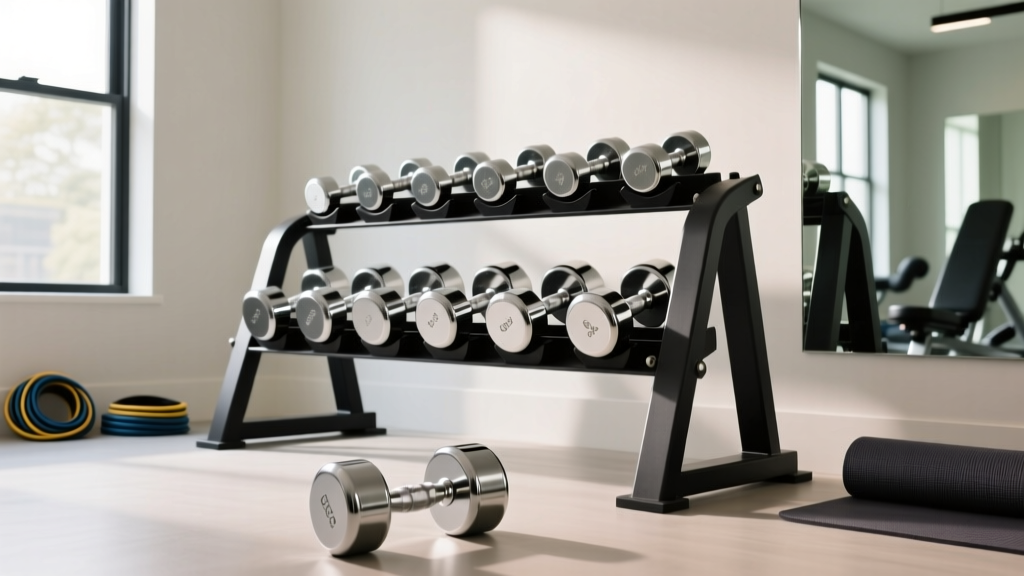
Rack Storage & Maintenance for the Lying Dumbbell Curl

Chest and Bicep Dumbbell Workout Upgrade: Barbell Knurling Mistakes
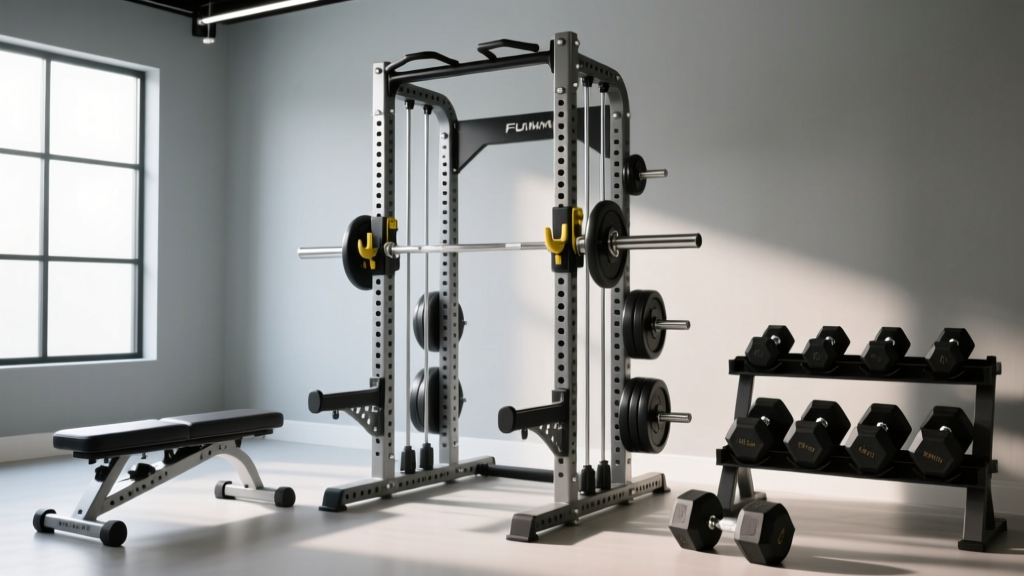
Power Rack vs Squat Stand: Best Dumbbell Lunge Alternative Setups
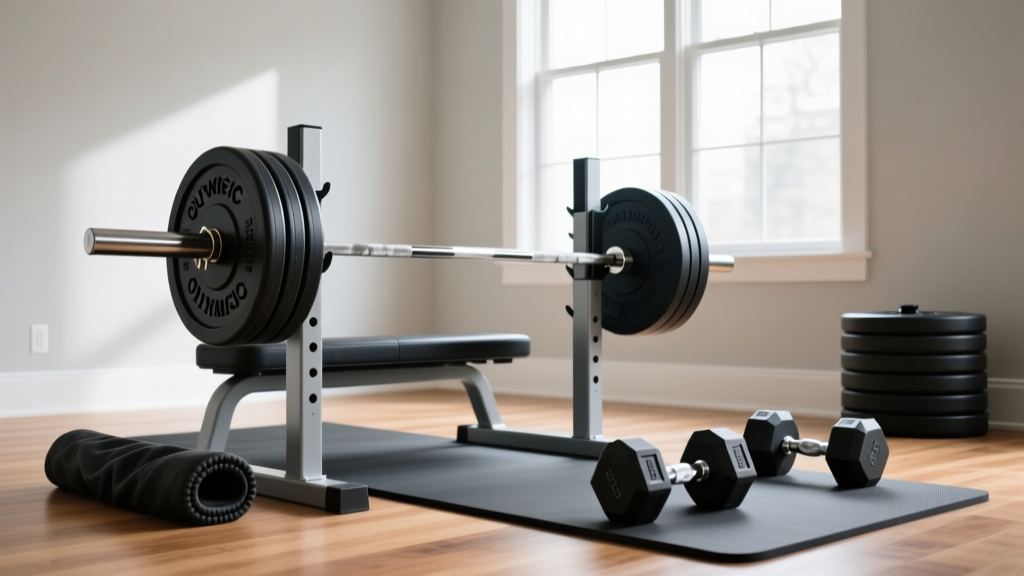
Olympic Barbell Setup & Plank Dumbbell Drag Muscles Worked Guide

Space-Saving Racks for Chest and Arm Exercises with Dumbbells
