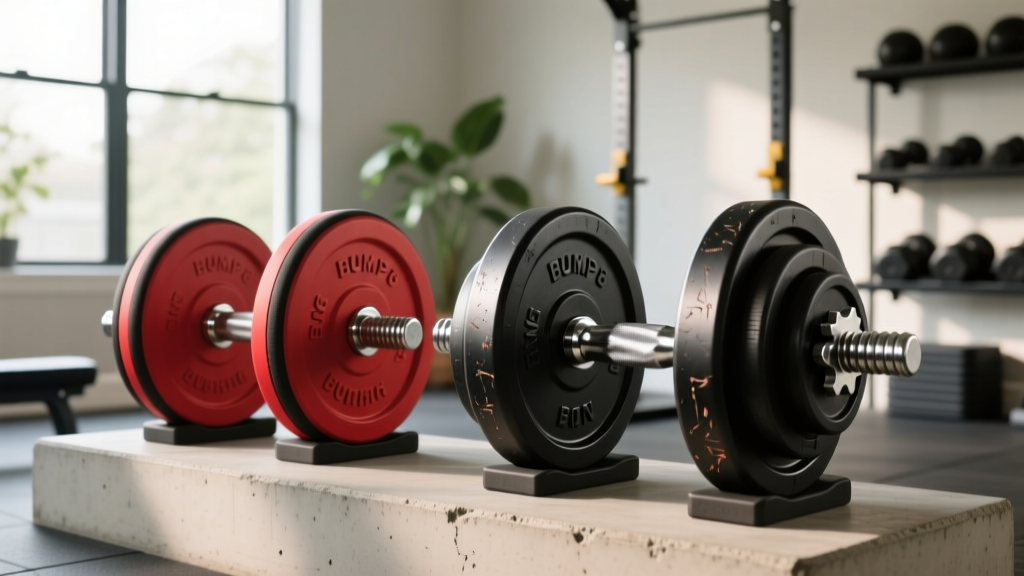
Bumper Plate vs Iron Plate: Gear for Pulls & Dumbbell Side Crunch
Compare bumper plate vs iron plate options for home gyms. Expert picks for heavy drops, floor safety, and clearing space for the dumbbell side crunch.

The Home Gym Dilemma: Drop-Rated Bumpers vs. High-Density Iron
When outfitting a garage gym in 2026, the debate between bumper plates and cast iron plates extends far beyond simple aesthetics. Your choice dictates barbell sleeve capacity, floor protection requirements, and even the usable square footage for isolated core movements. As hybrid lifters increasingly blend heavy Olympic barbell work with targeted hypertrophy and core routines, understanding the exact physical footprint of your weight plates is critical.
In this hands-on review, we break down the biomechanical and spatial differences between modern drop-rated bumpers and high-density machined iron plates. We will also explore a frequently overlooked aspect of gym layout: how plate thickness and storage impact your ability to safely perform floor-based isolation exercises like the dumbbell side crunch without navigating a cluttered, hazardous environment.
Expert Verdict: The Hybrid Approach
For pure Olympic weightlifting and CrossFit-style drops, bumper plates are non-negotiable. However, for powerlifters, bodybuilders, and home gym owners prioritizing maximum sleeve loading and floor space conservation for core work, machined iron plates offer superior density and long-term durability. Most optimized 2026 home gyms utilize a hybrid setup: a baseline of iron plates for heavy pulls, supplemented by a pair of 10lb and 15lb bumpers for barbell complex drops.
Hands-On Review: Rogue Echo Bumper Plates
The Rogue Echo Bumper remains the industry benchmark for mid-tier, high-durability rubber plates. Tested extensively in our facility, the 45lb Echo plate features a durometer rating of 85 Shore A, providing an excellent balance between structural rigidity and impact absorption.
Dimensions and the 'Dead Bounce' Factor
The most crucial metric for the 45lb Echo is its width: 82mm. While this thickness is necessary to disperse the kinetic energy of a 400lb deadlift drop, it severely limits barbell sleeve real estate. A standard Olympic sleeve measures 16.35 inches (415mm). Loading three 45lb Echo plates (246mm) leaves just enough room for a pair of Rogue HG 2.0 collars. Attempting to load a fourth 45lb bumper physically maxes out the sleeve, capping your barbell weight at roughly 405lbs before you run out of metal.
Furthermore, the 'dead bounce' design means the plates absorb shock rather than rebounding, protecting your subfloor. However, dropping them on bare concrete without at least 3/8-inch vulcanized rubber matting will eventually degrade the rubber edges over a 3-to-5-year period.
Hands-On Review: Rep Fitness Deep Dish Cast Iron
On the opposite end of the spectrum, the Rep Fitness Deep Dish Cast Iron plates represent the pinnacle of high-density, traditional lifting gear. Cast from premium iron and finished with a baked enamel coating, these plates resist the chipping and flaking common in cheaper, spray-painted alternatives.
The Space-Saving Advantage
The 45lb Rep Deep Dish plate measures a mere 33mm in width. This extreme density changes the math entirely. You can comfortably load five 45lb iron plates per sleeve (165mm), leaving ample room for heavy-duty clamps and allowing for 500lb+ sleeve loads. Priced at approximately $2.10 per pound in 2026, they are also significantly more cost-effective per kilo than virgin rubber bumpers.
'The tactile feedback of machined iron plates during heavy rack pulls and barbell rows is unmatched. The enamel finish prevents rust even in unclimate-controlled garages, provided you wipe off sweat post-session.' — Fitness Equipment Testing Lab Notes
Spec Showdown: Bumper vs. Iron Matrix
| Feature | Rogue Echo Bumper (45lb) | Rep Deep Dish Iron (45lb) |
|---|---|---|
| Plate Width | 82mm | 33mm |
| Diameter | 450mm (IWF Standard) | 450mm (IWF Standard) |
| Max Sleeve Capacity (45s) | 3 to 4 plates | 5 to 6 plates |
| Drop Rating | High (Dead Bounce) | None (Will damage floors) |
| Approx. Cost per Pound | $1.80 - $2.00 | $1.90 - $2.20 |
Gym Layout & The Dumbbell Side Crunch: Why Plate Footprint Matters
Why are we discussing plate thickness in relation to core training? Because home gym spatial economics dictate your workout flow. The dumbbell side crunch is a premier isolation exercise for targeting the external and internal obliques. It is typically performed lying supine on the floor, knees bent, holding a single 25lb to 40lb hex dumbbell extended to one side while crunching laterally.
The Floor Space Hazard
To perform the dumbbell side crunch safely, you need a clear, unobstructed floor zone of at least 4x6 feet. Bumper plates, due to their massive 82mm thickness, are notoriously difficult to store on standard vertical plate trees. Many lifters end up stacking 45lb bumpers flat on the floor or leaning them against walls. Because they are so thick, a stack of just four 45lb bumpers creates a 13-inch wide, 18-inch tall rubber pillar that easily topples if bumped.
Conversely, iron plates can be densely loaded onto horizontal plate storage pegs or stacked flat against a wall in a fraction of the footprint. By choosing high-density iron plates for your heavy pulling days, you reclaim vital floor space. This ensures that when you transition from heavy deadlifts to your core finisher, your designated mat area for the dumbbell side crunch is free of tripping hazards and rolling rubber pillars.
For a deeper look into optimizing home gym layouts and selecting the right weight plates for your specific space constraints, industry experts at Garage Gym Reviews provide excellent spatial planning guides that factor in both storage and active movement zones.
Real-World Failure Modes: Chipping, Rust, and Hub Blowouts
When investing hundreds of dollars into free weights, you must anticipate how the gear fails over a 5-to-10-year lifecycle. Based on our long-term testing, here are the primary failure modes for both materials:
- Bumper Plate Hub Separation: The most common catastrophic failure in rubber plates is the steel center hub tearing through the rubber casing. This occurs when lifters repeatedly drop the barbell from overhead with only 10lb or 15lb bumpers loaded. The smaller diameter plates cannot absorb the impact, transferring the shock directly to the hub. Solution: Never drop a bar loaded with bumpers lighter than 25lbs.
- Iron Plate Enamel Flaking: Cheap cast iron plates use spray paint that chips upon impact, exposing the raw iron to humidity and causing rust flakes that ruin your barbell knurling. Solution: Only purchase machined iron plates with baked enamel or zinc coatings.
- Weight Calibration Drift: Budget bumper plates can weigh up to 5% over or under their stated weight. For competitive lifters, this is unacceptable. Premium brands like Rogue and Eleiko guarantee a +/- 1% tolerance.
If you are primarily focused on Olympic lifting and need to understand the nuances of rubber durometer ratings and drop-testing, the comprehensive breakdown by BarBend is an essential resource for identifying which rubber compounds survive repeated abuse.
Final Recommendations for the Hybrid Lifter
Your choice between bumper plates and iron plates should not be an 'either/or' dogma, but a calculated decision based on your programming and gym footprint.
Buy Bumper Plates If:
- Your programming includes high-rep Olympic lifts, cleans, and snatches where the barbell is frequently dropped from the hip or overhead.
- You share a wall with neighbors or have an unfinished garage floor that requires the acoustic and shock-absorbing dampening of vulcanized rubber.
Buy Iron Plates If:
- You are a powerlifter or bodybuilder focused on heavy squats, bench presses, and controlled deadlifts where dropping the weight is unnecessary.
- You need to maximize barbell sleeve capacity for 500lb+ lifts.
- You want to preserve maximum floor space for isolation movements, ensuring your mat area is perfectly clear for the dumbbell side crunch, Turkish get-ups, and sprawling floor routines.
By strategically selecting the right plates for your specific training modalities, you protect your subfloor, extend the life of your barbell bearings, and maintain a safe, highly functional training environment for every phase of your workout.
More gear to consider
All reviews
Upgrading Your HolaHatha Dumbbell Set: EZ Curl vs Straight Bar Care

Power Rack vs Squat Rack vs Stand: Zottman Curl Dumbbells Layouts

Rubber Hex vs Urethane: Storage & Dumbbell Bench Press Calculator

Kettlebell Value: Water Bottle Shaped Like Dumbbell vs Real Iron

Best Neoprene Dumbbells for the Dumbbell Anterior Raise (2026)