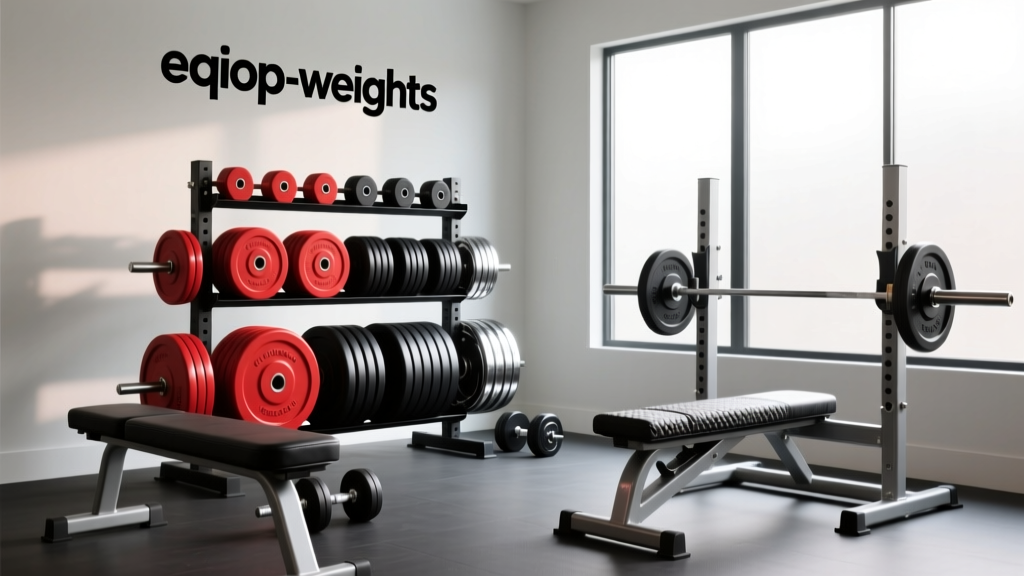
Bumper vs Iron Plates & Dumbbell Bench vs Barbell Bench Budget Guide
Compare bumper plate vs iron plate costs for your 2026 home gym. Plus, discover how your dumbbell bench vs barbell bench choice impacts overall value.

The 2026 Home Gym Economics: Plates and Benches
Building a resilient home gym in 2026 requires ruthless capital allocation. With global supply chains stabilizing, the fitness equipment market has seen a correction in pricing, but the debate between bumper plate vs iron plate remains a central pillar of any budget breakdown. Your choice of weight plates doesn't exist in a vacuum; it is deeply intertwined with your spatial footprint, your flooring investment, and crucially, your benching setup. When mapping out your equipment list, the decision of a dumbbell bench vs barbell bench fundamentally alters your plate requirements, noise constraints, and long-term value proposition. This guide provides a deep-dive value analysis to help you maximize every dollar of your fitness budget.
Expert Insight: Never buy plates without first calculating your 'drop factor.' If your programming includes Olympic lifts, high-rep deadlifts, or CrossFit-style WODs, iron plates will destroy your subfloor and your equipment's resale value. If you are strictly bodybuilding or powerlifting with controlled eccentrics, iron offers unmatched cost-per-pound efficiency.The 2026 Pricing Matrix: Bumper Plate vs Iron Plate
To understand true value, we must look beyond the sticker price and analyze the cost per pound, factoring in material longevity and secondary costs. According to Garage Gym Reviews' comprehensive weight plate guide, the market has segmented into three primary tiers for Olympic-sized plates. Below is the current 2026 pricing and performance matrix.
| Feature | Cast Iron Plates | Virgin Rubber Bumpers | Crumb Rubber Bumpers |
|---|---|---|---|
| Avg Cost per LB | $1.20 - $1.80 | $3.00 - $4.50 | $2.20 - $2.80 |
| Noise Level | Extremely High (Clang) | Low (Thud) | Very Low (Deadened) |
| Floor Damage Risk | Severe (Requires Mats) | Low | Very Low |
| Lifespan | Generational (50+ yrs) | 10-15 Years | 5-8 Years |
| Calibration Accuracy | +/- 2% (Budget brands) | +/- 1% (IWF Spec) | +/- 5% (Varies wildly) |
While cast iron wins on raw upfront cost, virgin rubber bumpers (like the Rogue Echo series) offer the best balance of drop-safety and longevity. Crumb rubber, often made from recycled tires, is the cheapest bumper option but suffers from a distinct 'fishy' odor that can take months to off-gas in a poorly ventilated garage.
Material Science and Real-World Failure Modes
Value analysis must account for how equipment fails. Iron plates are virtually indestructible, but they are prone to cosmetic degradation. Unless you purchase premium machined iron or urethane-coated variants, standard cast iron will oxidize in humid environments. A 2026 climate-controlled garage will preserve them, but an unsealed shed will have them rusting and flaking within two years, potentially staining your flooring and barbell sleeves.
Bumper plates, conversely, suffer from mechanical failure modes. The most common is the 'taco effect.' As highlighted in BarBend's expert analysis on bumper plate durability, dropping a barbell loaded only with light bumper plates (10lb or 15lb) creates immense leverage on the steel center hub. The rubber folds inward like a taco, and the steel insert can push completely through the rubber, rendering the plate useless. Rule of thumb: Never drop a barbell with less than 45lbs of total bumper plate weight on each side.
The Spatial Synergy: Dumbbell Bench vs Barbell Bench Considerations
Your plate selection does not happen in isolation; it must align with your primary pressing and lifting station. This is where the dumbbell bench vs barbell bench debate directly impacts your wallet and your plate choices.
Scenario A: The Adjustable Dumbbell Bench Ecosystem
If your gym is centered around an adjustable dumbbell bench (such as the REP AB-3100 2.0) paired with adjustable dumbbells or a lighter set of fixed hex dumbbells, your lifting is inherently more controlled. Dumbbell presses, incline work, and seated shoulder presses rarely involve dropping weights from a height onto the floor. In this scenario, cast iron plates are the superior budget choice for your barbell work. Because you aren't performing high-impact drops, you can safely invest the money you saved on bumpers into a higher-tier adjustable bench with a 1000lb capacity and a ladder-adjustment mechanism.
Scenario B: The Flat Barbell Bench and Power Rack
If you opt for a flat competition-style barbell bench (like the REP FB-5000 2.0) housed inside a full power rack, your programming likely includes heavy barbell benching, floor presses, and potentially deadlifts or rack pulls. The barbell bench ecosystem demands a higher safety margin. Dropping a missed bench press rep or deadlifting heavy loads means the barbell will inevitably hit the floor or the rack's safety straps. Here, bumper plates are mandatory. The kinetic energy absorption of virgin rubber protects the welds on your power rack, the knurling on your barbell, and your concrete slab.
The dumbbell bench vs barbell bench decision is ultimately a decision about your 'drop tolerance.' Dumbbell work is precise and controlled; barbell work is heavy and occasionally catastrophic. Match your plate material to your worst-case scenario.
Hidden Costs: The Freight and Flooring Tax
When budgeting for iron vs. bumpers, amateurs only look at the plate price. Experts look at the 'Freight and Flooring Tax.'
- The Freight Tax: Iron is incredibly dense. A 300lb set of iron plates can often ship via standard parcel ground services (UPS/FedEx) because it fits into a compact, heavy box. Bumper plates are voluminous. A 300lb set of bumpers requires massive palletized freight shipping, which can add $150 to $300 in hidden delivery fees to residential addresses in 2026.
- The Flooring Tax: If you buy iron plates, you must buy 3/4-inch thick horse stall mats (approx. $50-$70 per 4x6 mat) to prevent catastrophic concrete spalling. If you buy high-quality bumpers, you can often get away with 8mm rubber gym tiles, saving significant square-footage costs.
Strategic Budget Allocation Framework
To maximize your 2026 fitness budget, follow this four-step allocation framework:
- Audit Your Programming: If your routine includes cleans, snatches, or high-rep touch-and-go deadlifts, allocate 60% of your plate budget to virgin rubber bumpers. If you are strictly doing controlled hypertrophy work, allocate 100% to machined cast iron.
- Anchor Your Bench First: Decide on the dumbbell bench vs barbell bench setup before buying plates. An adjustable dumbbell bench setup favors iron plates and space-saving storage trees. A barbell bench inside a rack favors bumpers and horizontal plate storage.
- Buy in Phases: Do not buy a full 300lb set immediately. Start with a pair of 45s, a pair of 25s, and a pair of 10s. Fill the micro-gaps with cheap fractional iron plates, which are universally useful regardless of your bumper or iron preference.
- Factor in the Hub: When buying bumpers, only purchase plates with hooked, stainless steel inserts. Smooth brass inserts will slip and ruin your barbell sleeves over time.
Final Verdict: Maximizing Your 2026 Fitness Budget
The choice between a bumper plate vs iron plate is not just about material; it is about the holistic ecosystem of your home gym. Cast iron remains the undisputed king of cost-per-pound and generational longevity, making it ideal for controlled, hypertrophy-focused setups centered around an adjustable dumbbell bench. However, if your training involves dynamic barbell work, heavy drops, and a traditional barbell bench inside a power rack, the premium paid for virgin rubber bumpers is an essential insurance policy for your floor, your equipment, and your sanity. By aligning your plate selection with your specific bench and rack configuration, you ensure that every dollar spent in 2026 yields maximum functional return.
More gear to consider
All reviews
Best Dumbbell Racks for a Bicep Workout Dumbbells Only Setup (2026)
EZ vs Straight Bar & Weight Lifting Exercises with Dumbbells

EZ Curl Bar vs Straight Bar: Good Upper Body Workouts with Dumbbells

Budget Dumbbell Racks for Heavy Pecs Dumbbell Exercises

Home Gym Layouts: Kettlebell Guide & Leg Extension with Dumbbells
