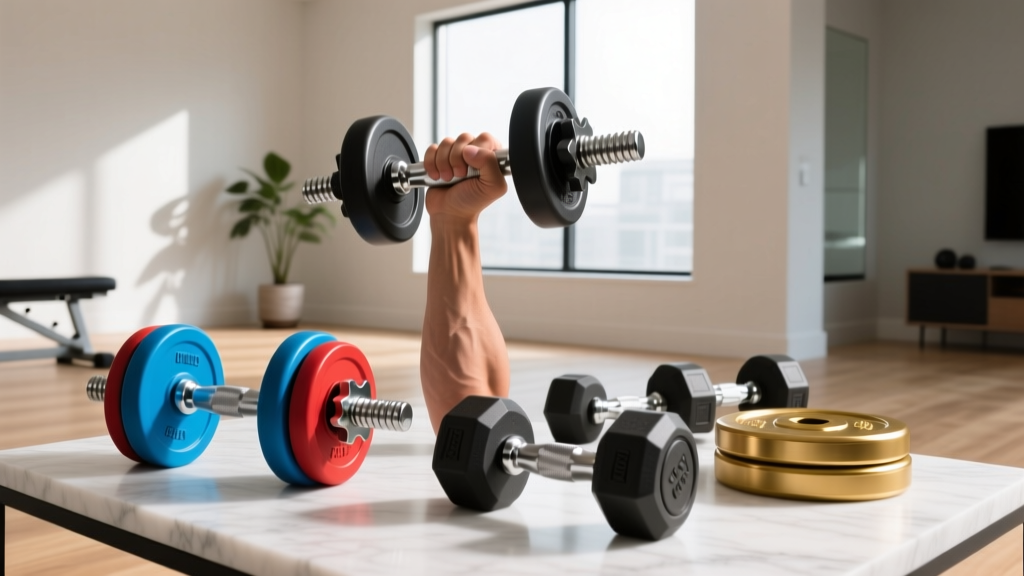
Bowflex Dumbbells vs PowerBlock: 2026 Head-to-Head Review
We pit Bowflex SelectTech against PowerBlock Sport and Pro series. Discover which adjustable dumbbell wins for durability, ergonomics, and value in 2026.

The Titans of the Home Gym: Bowflex vs. PowerBlock
The adjustable dumbbell market has matured significantly, but two names continue to dominate the landscape: Bowflex and PowerBlock. For home gym owners and commercial studio operators alike, the debate of Bowflex dumbbells vs PowerBlock remains the most common equipment dilemma. Both brands offer space-saving solutions that replace entire racks of traditional hex dumbbells, but their underlying engineering philosophies are radically different. In this comprehensive 2026 head-to-head review, we strip away the marketing fluff and analyze the exact mechanical failure modes, biomechanical constraints, and real-world pricing of these industry titans.
Quick Summary: Bowflex SelectTech utilizes a dial-and-gear mechanism optimized for traditional dumbbell feel and micro-loading, while PowerBlock employs a welded steel cage and selector pin built for extreme durability and compact footprint. Your choice ultimately depends on your training style and how much abuse your equipment will endure.Exact Models and 2026 Pricing Realities
Before comparing features, we must define the exact contenders. The most common comparison pits the Bowflex SelectTech 552 against the PowerBlock Sport 50. For heavy lifters, the Bowflex 1090 competes with the PowerBlock Pro Series.
Bowflex SelectTech Lineup
- SelectTech 552: Adjusts from 5 to 52.5 lbs in 15 increments. As of early 2026, retail pricing hovers between $349 and $399 per pair, though supply chain stabilizations have made them consistently available without the extreme markups seen in previous years.
- SelectTech 1090: Adjusts from 10 to 90 lbs. These massive units cost between $599 and $699 per pair and require heavy-duty, reinforced trays.
PowerBlock Lineup
- Sport 24 & Sport 50: The Sport 24 (up to 24 lbs) starts around $250, while the Sport 50 (up to 50 lbs) retails for approximately $329 to $379 per pair.
- Pro Series (Expandable): The Pro 50 starts around $359 but can be expanded with add-on kits (sold separately for ~$150-$200 each) to reach 70 lbs or 90 lbs, making it a modular investment.
Mechanism and Failure Modes: Dial vs. Pin
The most critical differentiator between Bowflex dumbbells vs PowerBlock is how they select weight. This mechanism dictates the equipment's lifespan, maintenance needs, and survivability.
Bowflex: The Dial-and-Gear System
Bowflex uses a patented dial system connected to internal gears that engage or disengage metal plates. When you turn the dial, the gears lock the desired weight plates to the central handle, leaving the unused plates in the cradle.
Failure Mode: The primary vulnerability of the Bowflex system is the tray alignment and the plastic internal gears. If the dumbbell is not placed perfectly flush into the cradle, the dials will jam. Furthermore, dropping a Bowflex dumbbell—even from waist height—can crack the internal plastic housing or misalign the gears, effectively turning a $400 piece of equipment into a locked paperweight. According to extensive drop-testing and durability analyses by Garage Gym Reviews, the Bowflex dials require a 'zero-drop' policy to ensure longevity.
PowerBlock: The Cage and Selector Pin
PowerBlock utilizes a solid steel selector pin that slides through a welded steel cage, locking the desired weight plates to the inner rail. Unused plates simply remain stacked on the outer rail.
Failure Mode: The pin mechanism itself is virtually indestructible. The failure point on a PowerBlock is the welded steel cage. If dropped violently on a hard surface (e.g., during a failed CrossFit-style snatch), the welds can crack or the cage can bend. However, unlike Bowflex, a dented PowerBlock cage will usually still function, even if it looks unsightly and rattles slightly during use.
Comparison Matrix: Specs and Durability
| Feature | Bowflex SelectTech 552 | PowerBlock Sport 50 |
|---|---|---|
| Weight Range | 5 - 52.5 lbs | 5 - 50 lbs (w/ adder kits) |
| Increments | 2.5 lbs (up to 25 lbs), then 5 lbs | 5 lbs (w/ 2.5 lb adder option) |
| Dimensions (L x W x H) | 16.9' x 8.3' x 9' | 12' x 6.5' x 6.5' |
| Drop Survivability | Low (Plastic gears jam/crack) | High (Steel cage dents, but functions) |
| Weight Selection Speed | Moderate (Dual dials, requires tray) | Fast (Single pin, trayless option) |
| App Integration (2026) | Bowflex JRNY App ecosystem | Basic smart-tracking collar add-ons |
Ergonomics and Biomechanical Constraints
Independent teardowns and longevity tests featured in Wirecutter's adjustable dumbbell guide highlight that ergonomics often dictate user preference more than durability. The physical shape of the dumbbell alters your biomechanics.
The Bowflex Experience
Bowflex dumbbells feel closer to traditional hex dumbbells. The handle is straight, knurled, and allows for natural wrist supination and pronation. However, the length is a major issue. The SelectTech 552 is 16.9 inches long, and the 1090 is a massive 17.5 inches. During exercises like dumbbell chest presses or shoulder presses, the bulky ends of the dumbbells will collide with each other before your hands reach a natural, shoulder-width starting position. This forces a wider grip, which can place undue stress on the anterior deltoids and rotator cuff over time.
The PowerBlock Experience
PowerBlock's cube-like, rectangular cage design is incredibly compact, completely eliminating the 'clashing' issue during chest flyes or presses. However, the cage restricts wrist movement. Biomechanical considerations regarding wrist supination and grip width are well-documented by the National Strength and Conditioning Association (NSCA), and PowerBlock's cage physically blocks the wrist from fully rotating during supinating dumbbell curls or hammer curls. Additionally, holding the dumbbell by the outer cage for exercises like goblet squats or renegade rows can be uncomfortable and awkward due to the sharp steel edges.
Expert Insight: If your programming heavily features alternating supinating curls, renegade rows, or Turkish get-ups, the Bowflex handle geometry is vastly superior. If you focus on heavy, bilateral pressing movements and strict hypertrophy work where wrist rotation is minimal, PowerBlock's compact footprint shines.
Space Efficiency and Footprint Analysis
For apartment dwellers or those converting a spare bedroom into a gym, footprint matters. PowerBlock wins this category decisively. The Sport 50 measures just 12 inches in length and 6.5 inches in width. They can be stored on a small bookshelf or tucked under a bed. Furthermore, PowerBlock offers a 'trayless' storage option via their optional stand, whereas Bowflex requires their specialized cradles to be used; lifting a Bowflex dumbbell without the tray risks the weight plates sliding off the handle and causing severe injury.
The Final Verdict: Decision Framework
There is no universal 'best' adjustable dumbbell; there is only the right tool for your specific training environment. Use this decision framework to make your 2026 purchase:
- Choose Bowflex SelectTech if: You perform high-rep circuit training, P90X-style workouts, or exercises requiring natural wrist rotation (curls, get-ups). You have a dedicated, safe space where the dumbbells will never be dropped, and you value micro-loading (2.5 lb jumps) for isolation exercises.
- Choose PowerBlock Sport/Pro if: You train heavy, drop your weights occasionally, or share the equipment with careless users (like teenagers or commercial clients). You have limited floor space, require a trayless storage solution, and primarily perform pressing movements, rows, and squats where the cage shape won't impede your range of motion.
Frequently Asked Questions
Can you drop PowerBlock dumbbells?
While PowerBlocks are significantly more durable than dial-based competitors, they are not designed for explosive Olympic drops. Repeatedly dropping them from overhead will eventually fatigue the welds on the steel cage. Treat them with the same respect you would give a traditional cast-iron dumbbell.
Which brand offers better expansion options?
PowerBlock wins on modularity. The PowerBlock Pro series allows you to buy a 50 lb base set and later purchase 20 lb or 40 lb expansion kits to reach 70 lbs or 90 lbs. Bowflex requires you to sell your 552s and buy the entirely separate, much larger 1090 model if you outgrow the 52.5 lb limit.
Do the 2026 app integrations change the experience?
Bowflex's integration with the JRNY app provides excellent guided workouts that automatically prompt you to change the dial to specific weights. However, this is a software perk, not a mechanical one. PowerBlock relies on third-party tracking collars for velocity and rep tracking, appealing more to data-driven powerlifters than guided-fitness beginners.
More gear to consider
All reviews
Optimizing Rack Storage for a Thigh Workout with Dumbbells
EZ Curl Bar vs Straight Bar: Leg Day Workouts with Dumbbells (2026)
Space-Saving Loadable Alternatives to Fixed 100 Pound Dumbbells
Olympic vs Standard Plates: Which is Best for the Dumbbell Tate Press?

Single Leg Romanian Deadlifts With Dumbbells: 2026 Form & Gear Guide