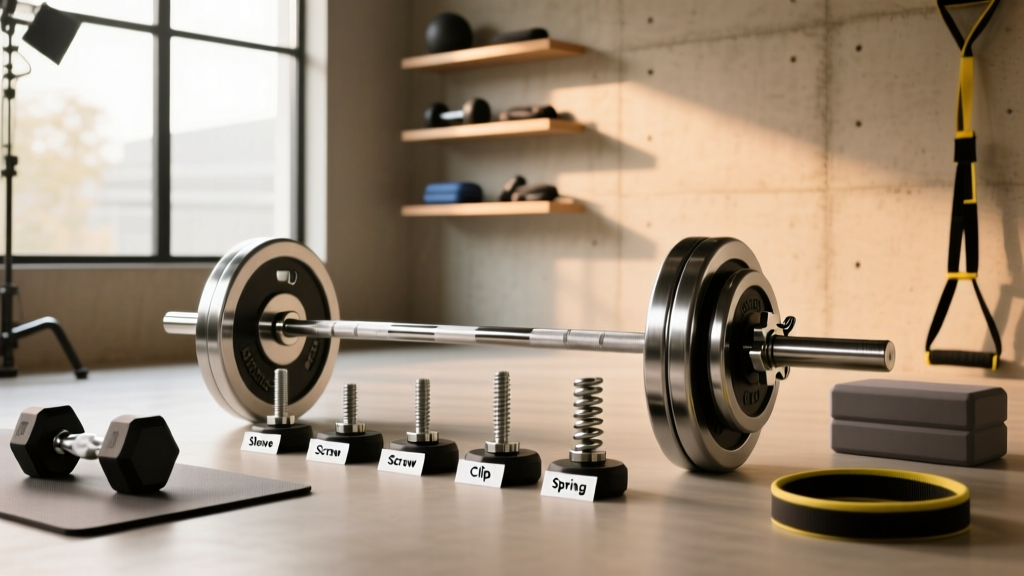
Beyond Tricep Workouts Dumbbells Only: Barbell Collar Types Compared
Moving past tricep workouts dumbbells only? Discover our beginner-friendly step-by-step comparison of barbell collars and clamps for safe, heavy lifting.

The Progression: Moving Past Tricep Workouts Dumbbells Only
Many lifters begin their home gym journey focusing on isolation, joint safety, and accessible movements. If you have spent your first few months searching for routines like tricep workouts dumbbells only, you already understand the immense value of dumbbells. They are inherently safe for solo training; if you fail a rep on a dumbbell skull crusher, you simply drop the weights to the floor without risking being pinned. However, as your strength develops, you will inevitably hit a ceiling with dumbbells. Transitioning to compound barbell movements—such as squats, deadlifts, and overhead presses—is mandatory for systemic overload and long-term progress.
But moving from dumbbells to a 7-foot Olympic barbell introduces a critical safety variable that beginners often overlook: barbell collars and clamps. Unlike dumbbells, where the weight is fixed or secured by a simple spin-lock or selectorized dial, a barbell relies on friction and mechanical leverage to keep hundreds of pounds of iron from sliding off the sleeves. In 2026, with home gyms more advanced than ever, understanding the exact mechanics of barbell collars is your first step toward safe, heavy lifting.
The Physics of the 'Teeter-Totter' Effect
Before comparing collar types, you must understand why they are non-negotiable. An Olympic barbell sleeve has a standard diameter of 50mm. If you load a 45-pound plate on one side and leave the other side empty, the barbell becomes an asymmetric lever. The center of mass shifts drastically toward the loaded side. If you attempt to lift the unweighted side, the bar will violently flip out of your hands, potentially causing severe wrist, shoulder, or facial injuries.
Even when loaded symmetrically, plates shift during dynamic movements. A power clean or a heavy deadlift drop generates immense kinetic energy. Without a high-quality collar, the plates will slide outward, altering the bar's balance mid-set. According to lifting safety guidelines detailed by BarBend's barbell loading tutorials, securing the sleeves is just as critical as checking the knurling and sleeve rotation before a heavy set.
Step-by-Step Breakdown: 3 Main Collar and Clamp Types
Not all collars are created equal. The market is generally divided into three distinct categories, each with specific use cases, price points, and failure modes.
1. Standard Spring Clips (The Commercial Gym Staple)
These are the silver, wire-based clips you see scattered across almost every commercial gym floor. They operate via spring steel tension, utilizing two coiled loops that you squeeze together to expand the inner diameter, slide over the 50mm sleeve, and release to grip the metal.
- Average Price: $5 to $12 per pair.
- Weight: ~0.2 lbs per clip (negligible for scoring).
- Best For: Light to moderate lifting, bodybuilding isolation work, and quick plate changes.
- Failure Mode: Metal fatigue. After roughly 500 to 1,000 compressions, the spring steel loses its tensile memory. Furthermore, if the barbell sleeve is coated in chalk dust, the smooth metal-on-metal friction coefficient drops to near zero, allowing the clip to slide off during heavy eccentric loading.
2. Clamp-Style Collars (The Home Gym Favorite)
Clamp collars, popularized by brands like Lock-Jaw, use a high-strength nylon or composite plastic body with a cam-lever locking mechanism. You slide the collar onto the sleeve, push it flush against the weight plate, and snap the lever shut. The internal cam bites into the steel sleeve, creating immense holding force.
- Average Price: $30 to $45 per pair.
- Weight: ~0.5 lbs per collar.
- Best For: CrossFit, Olympic weightlifting, and home gym owners who drop barbells frequently.
- Failure Mode: User error. If the lever is not pushed completely flush into the locked position, the vibration from dropping a barbell from shoulder height can cause the lever to pop open. Additionally, the plastic teeth can wear down after years of aggressive use on scratched sleeves.
3. Lever & Aluminum Competition Collars (The Gold Standard)
For serious lifters and competitive athletes, CNC-machined aluminum collars are the undisputed kings. The Rogue Fitness AB-2 Aluminum Barbell Collar is a prime example of 2026's top-tier engineering. These collars use a steel lever arm that tightens an internal aluminum band around the sleeve, creating a vice-like grip that will not slip, even under the most extreme kinetic impacts.
- Average Price: $60 to $85 per pair.
- Weight: Exactly 2.5 kg (5.5 lbs) per collar, adhering to International Weightlifting Federation (IWF) competition standards.
- Best For: Heavy powerlifting, competitive Olympic weightlifting, and lifters who demand zero sleeve play.
- Failure Mode: Virtually none during normal use. The only drawback is the time required to screw and lever the mechanism, which can be tedious during high-speed circuit training.
Collar Type Comparison Matrix
| Collar Type | Avg. Price (2026) | Holding Force | Weight per Collar | Ideal Lifter Profile |
|---|---|---|---|---|
| Spring Clip | $8.00 | Low (Friction-based) | ~0.2 lbs | Beginners, Bodybuilders |
| Composite Clamp | $35.00 | High (Cam-lock bite) | ~0.5 lbs | CrossFitters, Home Gym Owners |
| Aluminum Lever | $75.00 | Extreme (Vice-band) | 5.5 lbs (2.5kg) | Powerlifters, Competitors |
Step-by-Step Guide: How to Safely Secure Your Barbell
Transitioning from dumbbells means adopting new safety rituals. Follow this exact sequence every time you load a barbell to ensure maximum security.
- Prep the Sleeve: Before loading, take a microfiber towel and wipe down the 50mm sleeve. Removing chalk dust, sweat, and oxidized metal shavings ensures maximum friction for your collars.
- Load Symmetrically: Always add plates one side at a time in an alternating fashion (e.g., left 45, right 45, left 25, right 25). This prevents the bar from tipping off the J-cups or rack pins.
- Push Plates Flush: Ensure the inner hub of every weight plate is sitting perfectly flush against the next plate. Any gaps will allow the plates to shift and bang together during the lift.
- Seat the Collar: Slide your chosen collar onto the sleeve and push it hard against the outermost plate. There should be zero daylight between the collar and the iron.
- Engage and Test: Lock the lever or clamp. Perform the 'Shake Test' by grabbing the collar and trying to wiggle it side-to-side. If it rotates or slides even a millimeter, unlock it, push it tighter against the plate, and re-engage.
⚠️ The 'Dumbbell Mentality' Warning
When lifters transition from tricep workouts dumbbells only routines to barbells, they often carry over a false sense of security. With dumbbells, a loose grip just means a dropped weight. On a barbell, a loose collar during a back squat can cause the plates to slide off one side, resulting in a catastrophic asymmetric flip that can break your collarbone or spine. Never lift an unloaded or lightly loaded barbell without collars. The lightweight bar itself can flip if you grip it off-center.
Expert Insights: What the Data Says About Sleeve Security
According to comprehensive equipment reviews by BarBend's best barbell collars guide, the shift toward composite and aluminum collars in home gyms has drastically reduced equipment-related injuries over the last five years. While spring clips are fine for a controlled bicep curl, they are entirely inadequate for the lateral forces generated during a heavy barbell row or a dropped snatch. Investing $40 to $75 in premium clamps or aluminum collars is a fractional insurance premium compared to the cost of replacing damaged flooring, bent barbell sleeves, or medical bills.
Frequently Asked Questions
Do I need to factor collar weight into my total lift?
If you are using standard spring clips or composite clamps, the weight is negligible (under 1 lb total) and does not need to be calculated. However, if you are using IWF-spec aluminum competition collars like the Rogue AB-2, you must add 5 kg (11 lbs) to your total barbell weight, as the collars themselves weigh 2.5 kg each.
Can I use the same collars for my dumbbells and barbells?
No. Olympic barbell sleeves are exactly 50mm (approx. 1.97 inches) in diameter. Standard dumbbell handles are typically 25mm to 28mm. A barbell collar will slide right off a dumbbell handle. If you are still incorporating your favorite dumbbell tricep workouts into your routine, you will need specific, smaller spin-locks or neoprene-grip dumbbell clamps for those tools.
How often should I replace my spring clips?
If you are using spring clips, inspect them monthly. If the metal shows signs of rust, or if you can easily compress the handles with just two fingers (indicating a loss of spring tension), discard them immediately. They typically need replacement every 6 to 12 months in a busy home gym.
Final Thoughts on Your Lifting Progression
Leaving behind the exclusive realm of dumbbell training is a massive milestone in your fitness journey. It signals a shift from pure isolation to full-body, systemic strength development. By respecting the physics of the barbell and investing in the correct collar type—whether a quick-release composite clamp for high-intensity interval training or a precision-machined aluminum lever for heavy powerlifting—you ensure that your focus remains entirely on the lift, not on the safety of your equipment. Secure your sleeves, respect the iron, and lift heavy with total confidence.
More gear to consider
All reviews
Cast Iron vs Competition Kettlebells & Dumbbell Rear Lat Raise Swaps

Kettlebell Care & the Dumbbell Pull Exercise: Cast Iron vs Competition

Best Adjustable Dumbbells for the Best Upper Body Dumbbell Workout
Squat Rack vs Power Rack Setup: Oblique Workouts with Dumbbells

Best Loadable Dumbbells for Close Grip Dumbbell Chest Press in 2026
