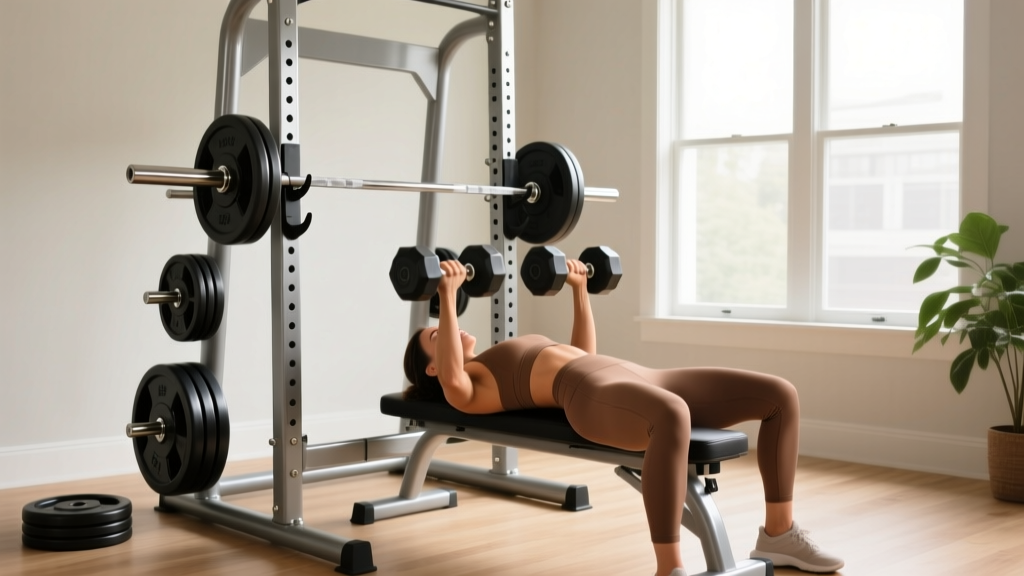
Power Rack vs Squat Rack vs Stand: Beyond the Dumbbell Buying Guide
Upgrading from dumbbells? Compare power racks, squat racks, and squat stands. Expert specs, 2026 pricing, and safety data to build your ultimate gym.

Every serious home gym journey eventually hits a wall. You have meticulously followed the ultimate dumbbell buying guide, maxed out your adjustable dumbbells at 90 or 120 pounds per hand, and realized that to continue building foundational strength, you need to move to barbell training. But buying a barbell and weight plates is only half the battle; the real investment—and the most critical safety decision you will make for your garage gym—is choosing the right racking system.
In 2026, the fitness equipment market is saturated with steel. To the untrained eye, a power rack, a squat rack (half rack), and a squat stand might look like interchangeable metal skeletons. In reality, they possess vastly different footprints, weight capacities, safety mechanisms, and biomechanical limitations. According to the National Strength and Conditioning Association (NSCA), improper spotting and inadequate racking equipment are leading contributors to home gym crushing injuries. This guide breaks down the exact engineering, pricing, and spatial requirements of each option so you can upgrade safely.
The Anatomy of Home Gym Racking Systems
Before comparing specific models, we must define the structural categories. The distinction lies in the number of uprights, the base footprint, and the integration of safety spotter arms.
1. Power Racks (Full Cages)
A power rack consists of four vertical uprights connected by a top frame, creating an enclosed 'cage.' You perform lifts inside the structure. This design inherently prevents the rack from tipping forward or backward, regardless of how aggressively you re-rack a heavy barbell.
- Industry Standard Specs: 11-gauge steel, 3x3-inch uprights, 5/8-inch or 1-inch hardware.
- 2026 Pricing: $1,100 to $4,500+ depending on brand and depth.
- Top Models: The Titan T-3 Short Power Rack (approx. $1,199) is ideal for low ceilings, while the Rogue R-3 Power Rack (approx. $3,495) remains the gold standard for commercial-grade home setups.
2. Squat Racks (Half Racks)
Often confused with squat stands, a true 'half rack' features two main front uprights and two shorter rear uprights or heavy rear stabilizers. You lift in front of the main uprights, but the rear base provides storage for weight plates, which acts as a counterweight to prevent forward tipping.
- Key Feature: Integrated weight storage on the rear base.
- 2026 Pricing: $900 to $2,500.
- Top Model: The Rogue S-2 Squat Stand 2.0 (approx. $1,250) features a massive 47x49-inch footprint and heavy-duty pin-pipe safeties.
3. Squat Stands
Squat stands are the minimalist option. They consist of two independent uprights mounted on wide, flat base plates. They lack a top crossmember and rear storage. Because you unrack the barbell in front of the uprights, squat stands are highly susceptible to forward-tipping physics if not properly secured.
- Key Feature: Ultra-compact footprint, highly portable, budget-friendly.
- 2026 Pricing: $350 to $800.
- Top Model: The Rogue S-1 Squat Stand (approx. $595) and the REP Fitness SB-1000.
The Physics of Unracking: Why Squat Stands Fail
When evaluating a dumbbell buying guide, the primary concern is usually grip ergonomics and coating durability. When evaluating racks, the primary concern is the forward tipping moment.
According to biomechanical analyses referenced by ExRx Squat Guidelines, the horizontal force applied to a barbell during the unracking phase of a heavy squat can exceed 50-80 lbs of forward push. If you are using a pair of 150-lb squat stands that are not bolted to a concrete slab, and you unrack a 300-lb barbell aggressively, the center of gravity shifts forward past the front edge of the base plate. The result? The stands tip forward, dropping the barbell onto your clavicles.
Real-World Edge Case: Many budget squat stands feature 'flip-down' spotter arms. These are notoriously dangerous for heavy squats. If the barbell strikes the flip-down arm with high velocity, the kinetic energy can snap the hinge pin or cause the arm to fold downward, rendering the safety useless. Always opt for pin-and-pipe or heavy-duty strap safeties.
2026 Rack & Stand Comparison Matrix
Use this data table to cross-reference your spatial limitations with your lifting goals.
| Feature | Power Rack (Full Cage) | Squat Rack (Half Rack) | Squat Stand |
|---|---|---|---|
| Uprights | 4 (Enclosed) | 2 Main + 2 Rear Support | 2 Independent |
| Avg. Footprint | 48x48 to 49x90 inches | 47x49 inches | 49x19 inches |
| Safety Mechanism | Internal Pin-Pipe / Strap | External Pin-Pipe / Catcher | External Spotter Arms |
| Tipping Risk | Near Zero | Low (if rear is loaded) | High (requires bolting/sandbags) |
| Price Range (2026) | $1,100 - $4,500+ | $900 - $2,500 | $350 - $800 |
| Best For | Heavy Powerlifting, Kipping, Band Work | Olympic Lifts, Space-Constrained Garages | Apartment Gyms, Strict Budgets, Travel |
Hole Spacing and Westside Standards
When moving beyond the fixed increments of a dumbbell buying guide, micro-loading becomes essential. The industry standard for high-end racks in 2026 is Westside Hole Spacing. This means the adjustment holes on the uprights are spaced 2 inches apart in the upper zones, but compress to 1-inch spacing in the 'bench press zone' (roughly from the floor to 50 inches up).
Why does this matter? When setting up J-cups for a bench press, a 2-inch gap can be the difference between safely clearing your chest with locked elbows and having to press the bar out of the rack, ruining your setup. Budget squat stands often feature uniform 2-inch or even 3-inch spacing, forcing you to buy specialized micro-adjustment J-cups or settle for suboptimal bar heights.
Decision Framework: Which Should You Buy?
Choose a Power Rack If:
- You plan to lift heavy (300+ lbs) without a human spotter.
- You want to incorporate resistance bands, gymnastic rings, or lat-pulldown attachments.
- You have a dedicated space (at least 8x10 feet) and an 8.5-foot or higher ceiling.
- Recommended Pick: REP Fitness PR-4000 (approx. $1,599) for its incredible attachment ecosystem and color customization.
Choose a Squat Rack (Half Rack) If:
- You perform Olympic lifts (cleans, snatches) where dropping the bar backward inside a cage is dangerous.
- You need built-in weight storage to keep your garage floor clear.
- Recommended Pick: Titan T-2 Half Rack or Rogue S-2.
Choose Squat Stands If:
- You are renting an apartment or home and cannot drill concrete wedge anchors into the floor.
- You need to store the equipment in a closet or corner when not in use.
- Critical Caveat: You must buy sandbags to place on the base plates, or use specialized bolt-down brackets if you are lifting over 225 lbs. Never trust the base weight of a standalone unit to counteract a heavy, off-center barbell.
Final Thoughts on Upgrading Your Gym
Transitioning from the adjustable dumbbells you found in your favorite dumbbell buying guide to a full barbell setup is a milestone in your fitness journey. Do not compromise on the steel that holds your barbell. A $400 barbell is useless if it rests on a $200 rack with wobbly J-cups and flimsy spotter arms. Invest in 11-gauge, 3x3 uprights with 5/8-inch hardware, prioritize proper hole spacing, and respect the physics of unracking. Your central nervous system—and your collarbones—will thank you.
More gear to consider
All reviews
Power Rack vs Squat Rack Mistakes: Barbell & 15 lbs Dumbbell Pair

Olympic vs Standard Weight Plates & Cardio Exercises with Dumbbells

Rack Maintenance & Storage for Safe Lats Workouts with Dumbbells

Space-Saving Dumbbell Racks & The Dumbbell Row No Bench
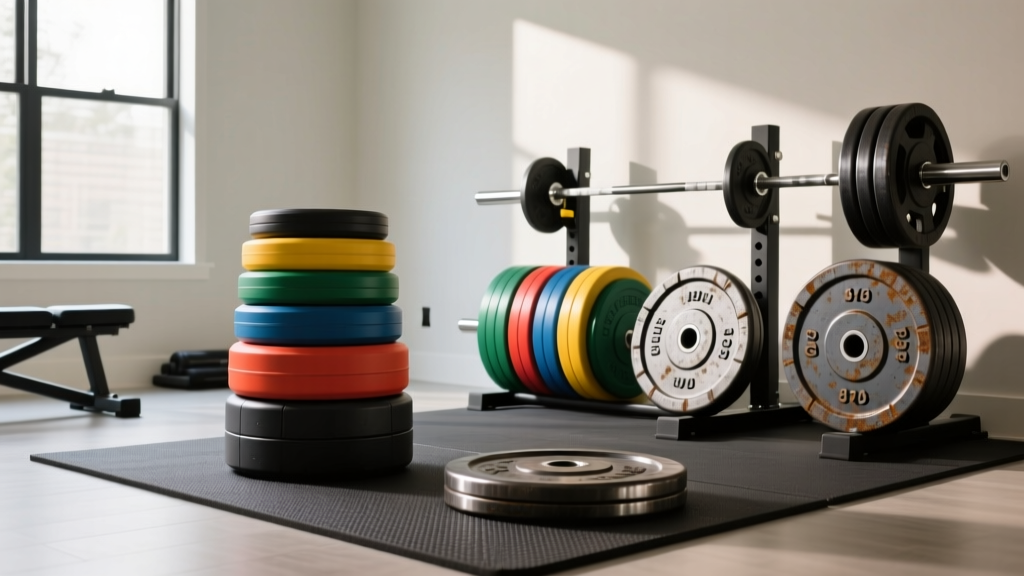
Beyond The Dumbbell Cartoon: Bumper vs Iron Plate Layouts