Progressing Past Bent Over Rows Dumbbells: A Beginner's Olympic Barbell Buying Guide
Maxed out your bent over rows dumbbells? Follow our step-by-step Olympic barbell buying guide to master weight, knurling, and pulling mechanics.

Every lifter’s back-building journey starts somewhere. For many, that starting point is a pair of hex dumbbells in the corner of the gym. While bent over rows dumbbells are a fantastic tool for developing unilateral symmetry and mind-muscle connection, they eventually become a bottleneck. Once you hit the 90 to 100-pound dumbbell mark, grip fatigue, stabilization limits, and the simple lack of heavier dumbbells in commercial gyms will stall your latissimus dorsi and rhomboid growth.
If you are ready to overload your posterior chain and transition to barbell rows, you need the right equipment. This step-by-step guide will walk you through the exact specifications, knurling patterns, and structural nuances of buying an Olympic barbell optimized for heavy pulling in 2026.
The Stabilization Ceiling
When performing bent over rows dumbbells, your rotator cuff and erector spinae work overtime to prevent rotational drift. According to biomechanical analyses featured on BarBend, the prime movers (lats, traps, rhomboids) are often capable of moving 20-30% more total load than your stabilizers can safely support with independent weights. Upgrading to a barbell removes the rotational stabilization requirement, allowing you to push your pulling muscles to true mechanical failure.
Step 1: Understanding Olympic Barbell Weight & Shaft Dimensions
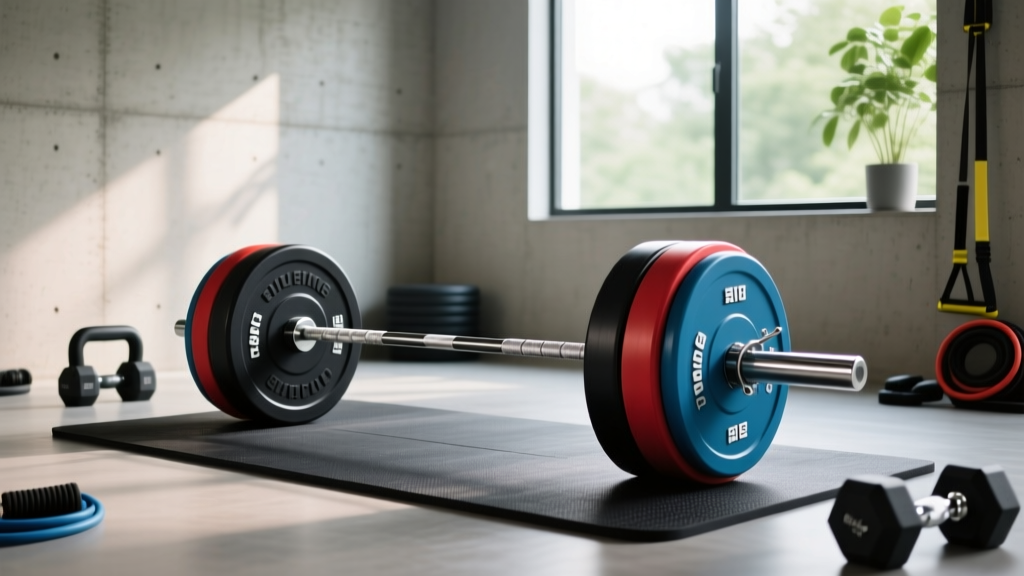
Not all 45-pound bars are created equal. A standard men’s Olympic barbell weighs exactly 20kg (44.09 lbs) and measures 2,200mm in total length. However, the internal engineering dictates how the bar behaves during heavy Pendlay rows or high-volume barbell rows.
For rowing and pulling, the shaft diameter is your most critical metric. While weightlifters prefer a 28mm shaft for the 'whip' it provides during snatches, powerlifters and bodybuilders benefit from a stiffer 28.5mm or 29mm shaft. A thicker shaft minimizes oscillation (whip) when you explosively pull the bar off the floor or from a dead-stop position.
| Specification | Ideal for Pulling/Rows | Why It Matters |
|---|---|---|
| Shaft Diameter | 28.5mm | Provides a secure grip without excessive whip during heavy rows. |
| Tensile Strength | 190,000+ PSI | Prevents permanent bending when dropping heavy 4-plate rows. |
| Bushing vs. Bearing | Bronze/Composite Bushings | Slower, controlled spin is safer for heavy pulling than fast needle bearings. |
Step 2: Decoding Knurling for the Perfect Rowing Grip
Knurling is the machined pattern on the steel shaft designed to increase friction. When you transition from the thick, knurled handles of heavy dumbbells to a steel barbell, the knurl pattern will dictate whether you can hold onto a 315-pound row or if your hands will tear open by set three.
The Three Knurl Profiles
- Volcano Knurling: The gold standard for multi-purpose and pulling bars. The machine cuts a diamond shape and then 'shaves' the top off, leaving a rim with four distinct gripping points. It is aggressive enough to hold chalk but won't shred your calluses during high-volume sets.
- Mountain Knurling: Sharp, pointed peaks. Excellent for heavy, low-rep deadlifts, but highly abrasive for high-rep barbell rows. Avoid this if rowing is your primary use case.
- Hill Knurling: Rounded, shallow valleys. Very mild and comfortable, but often requires excessive grip strength or lifting straps when your hands get sweaty during heavy back days.
Expert Tip: Look for a bar with 'Dual Knurl Marks'. This means the bar has both IWF (wide) and IPF (narrow) ring marks. While the rings don't change the grip for rows, dual-mark bars are typically manufactured to higher multi-purpose standards, ensuring versatility if you decide to start bench pressing or overhead pressing later.
Step 3: Top 2026 Barbell Recommendations for Back Day
Based on current market pricing, tensile strength testing, and knurling durability, here are the top Olympic barbells for lifters upgrading their rowing arsenal.
1. The Gold Standard: Rogue Ohio Bar V2
Priced around $325 to $345 in 2026, the Rogue Ohio Bar features a 190,000 PSI tensile strength shaft and Rogue’s signature composite volcano knurl. The 28.5mm shaft diameter is perfectly calibrated for pulling movements. The bronze bushings provide a smooth but controlled spin, meaning the sleeves won't violently rotate and torque your wrists when you reset the bar on the floor for Pendlay rows.
2. The Budget-Friendly Puller: REP Fitness Colorado Bar
Coming in at approximately $319, the REP Colorado Bar is famous for its 'mild volcano' knurling. If you are a lifter who performs rows 2-3 times a week and struggles with torn calluses, this bar is a savior. It features a 28.5mm shaft and 190k PSI tensile strength, punching well above its weight class in terms of durability and finish options (including a hard chrome shaft that resists gym-chalk corrosion).
Step 4: Transitioning Your Form (Dumbbell to Barbell)
Moving from bent over rows dumbbells to a barbell requires a slight biomechanical adjustment. With dumbbells, you likely pulled the weight toward your hip pocket to maximize lat contraction. With a barbell, your grip is fixed, and the bar must travel in a straight vertical line.
- The Hip Hinge: Push your hips back until your torso is at a 45-degree angle (or parallel to the floor for Pendlay rows). Keep your hamstrings engaged.
- Grip Width: Place your hands just outside the smooth center knurling. A slightly wider grip targets the upper back (rhomboids, rear delts), while a narrower, underhand (supinated) grip shifts the bias to the lower lats and biceps.
- The Pull: Drive your elbows up toward the ceiling, imagining you are squeezing a pencil between your shoulder blades at the peak of the contraction.
When to Use Lifting Straps
There is a persistent myth that using straps is 'cheating'. When your goal is hypertrophy of the back muscles, your grip should not be the limiting factor. Once you surpass 225 lbs on the barbell row, invest in a pair of figure-8 or lasso cotton lifting straps. This ensures your lats reach failure before your forearm flexors do.
Frequently Asked Questions
Do I need a center knurl for barbell rows?
No. The center knurl is designed to grip the back of your shirt during heavy back squats. During a barbell row, the center knurl will never touch your body. However, buying a bar with a center knurl is generally recommended simply because it increases the bar's resale value and versatility for other lifts.
Can I just use a cheap $150 barbell from a big-box store?
It is highly discouraged. Department store barbells typically have a tensile strength of under 120,000 PSI and use cheap bushings that seize up when exposed to chalk and humidity. More importantly, they are prone to permanent bending if you drop a heavy 300+ lb row from the top position. Stick to reputable fitness brands with verified 190k+ PSI ratings.
How do I maintain the knurling on my new barbell?
After every heavy back day, use a stiff nylon brush (never wire, as it can strip protective coatings like zinc or cerakote) to scrub out dried sweat and chalk from the knurl valleys. Wipe the shaft down with a lightly oiled rag once a month to prevent oxidation and keep the volcano peaks sharp and grippy.
More gear to consider
All reviews
EZ vs Straight Bar Longevity: Curls & Dumbbell Shoulder Shrugs

Rack Maintenance for Dumbbell Exercises for Arm Strength
Barbell Clamps for Squats & Any Leg Workout Routine With Dumbbells
Gym Layouts: Upper Chest Workout with Dumbbells & Kettlebell Guide
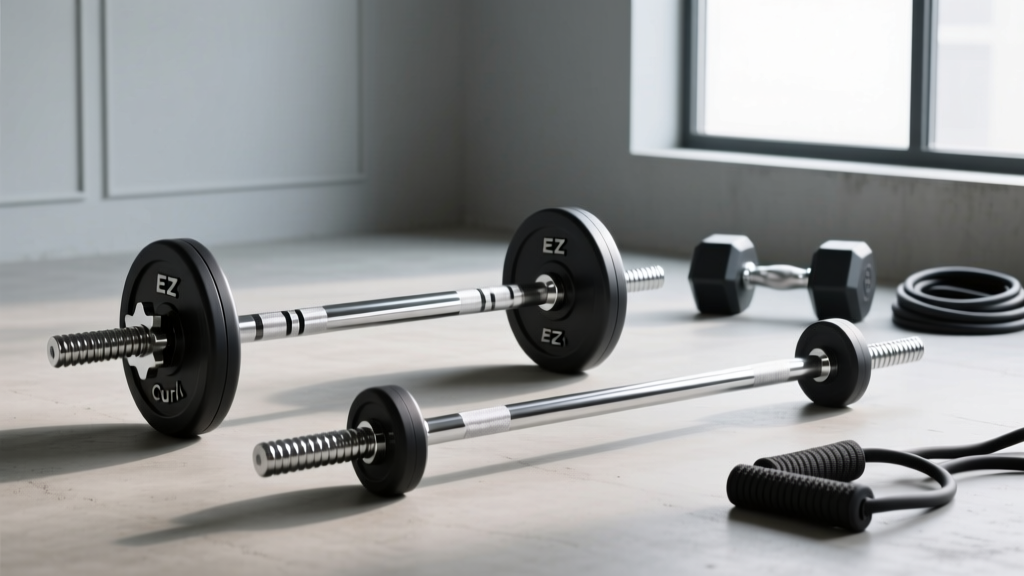
EZ Bar vs Straight Bar: Beyond the Best Dumbbell Exercises for Biceps