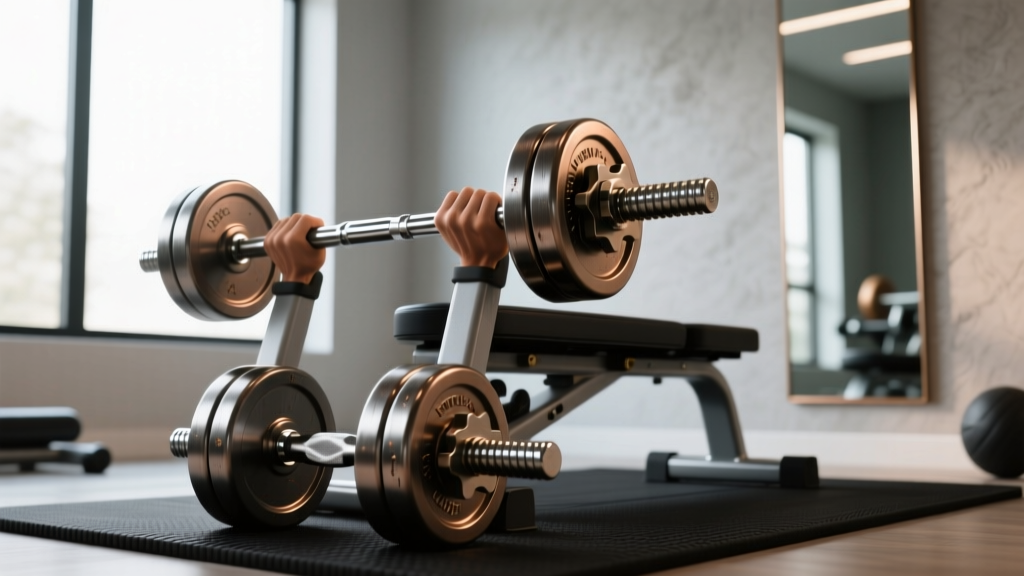
What Do Bent Over Dumbbell Rows Work? Gear Stress & Care
Discover what do bent over dumbbell rows work regarding muscle growth and equipment stress. Learn expert maintenance for loadable interchangeable dumbbells.

The Biomechanics of the Row: Muscles and Mechanical Stress
When athletes and coaches ask what do bent over dumbbell rows work, the standard anatomical answer focuses on the posterior chain. According to biomechanics databases like ExRx.net, the primary movers are the latissimus dorsi, teres major, and posterior deltoids, while the rhomboids, middle trapezius, and erector spinae act as crucial stabilizers. However, from an equipment engineering and longevity perspective, this foundational compound movement puts immense, asymmetric stress on your gear—specifically, loadable dumbbells with interchangeable plates.
Unlike fixed rubber dumbbells, loadable dumbbell handles (such as the Rogue Loadable Dumbbell Handles or the Ironmaster Quick-Lock V2) rely on mechanical collars, threaded sleeves, and friction locks to secure interchangeable iron or urethane plates. When you perform a heavy bent-over row, you are not just lifting dead weight; you are managing rotational torque. As your wrist naturally pronates or supinates to keep the dumbbell path neutral against your torso, that rotational force transfers directly down the steel sleeve and into the collar threading. Over time, this repetitive micro-rotation is the leading cause of collar back-out, thread degradation, and catastrophic plate slippage.
💡 The Torque Metric: A 90 lb loadable dumbbell held in a neutral grip during a heavy row generates up to 15-20 Nm of rotational torque at the wrist. If your collar mechanism lacks secondary locking features or suffers from chalk-clogged threads, this torque will slowly unthread the collar mid-set.Why Loadable Dumbbells Fail During Heavy Pulls
Interchangeable plate dumbbells are incredibly cost-effective and space-efficient, but their modular nature introduces specific failure points. Understanding these failure modes is critical for any home gym owner or commercial facility manager in 2026.
1. Chalk and Sweat Accumulation in Threads
Magnesium carbonate (lifting chalk) is highly desiccant and particulate. When it mixes with sweat and sebum from your hands, it forms a gritty, cement-like paste that lodges deep into the collar threads. This paste increases friction, making it difficult to tighten the collar fully. Worse, when it dries, it expands microscopically, causing steel or zinc-alloy threads to gall and strip when you attempt to force the collar off.
2. Asymmetric Shear on Spin-Lock Collars
Traditional spin-lock dumbbells (the kind with the star-shaped nuts) are notorious for failing during unilateral rows. Because the row requires you to pull the weight tight to your hip, the dumbbell often rests against your leg or torso at the top of the movement. This physical impact, combined with the rotational torque of the pull, creates a shearing force that backs the spin-lock nut away from the plates, resulting in a dangerous rattle or complete plate dump.
3. Sleeve Bushing Degradation
Premium loadable handles use bronze or composite bushings inside the sleeve to allow the handle to rotate independently of the plates (similar to an Olympic barbell). If these bushings dry out or become contaminated with iron oxide from cheap cast-iron plates, the sleeve seizes. When the sleeve seizes during a bent-over row, the rotational force bypasses the bushing and transfers entirely to the collar threads, accelerating wear.
Collar Types and Maintenance Vulnerabilities
Not all loadable dumbbells are built equally. The maintenance required to keep your interchangeable plates secure depends heavily on the locking mechanism your handles utilize.
| Collar Mechanism | Common Models (2026) | Torque Resistance | Primary Failure Mode | Maintenance Frequency |
|---|---|---|---|---|
| Standard Spin-Lock | Generic Amazon/Cap Barbell | Low | Nut backing out due to vibration | Every single workout |
| Olympic Threaded | Rogue Loadable Handle | Medium-High | Thread galling from chalk buildup | Bi-weekly deep clean |
| Lever / Quick-Lock | Ironmaster V2, Titan | Very High | Pin spring fatigue, lever misalignment | Monthly inspection |
| Magnetic / Pin-Load | Nuobell, PowerBlock | High (Internal) | Magnet demagnetization, pin shearing | Annual professional service |
Essential Maintenance Protocol for Interchangeable Dumbbells
To ensure your loadable dumbbells survive the rigors of heavy back days, implement this targeted maintenance routine. Proper care not only extends the life of your equipment but ensures your safety during high-torque exercises like the bent-over row.
Step 1: Knurling and Sleeve Extraction
According to equipment care experts at BarBend, maintaining the knurling and sleeves of any free weight requires the right tools. Never use a steel wire brush on your dumbbell handles; steel is harder than the zinc or black oxide coating and will strip the protective layer, leading to rapid rusting.
- Tool: Use a stiff brass wire brush or a nylon-bristle brush.
- Solvent: Spray a light mist of Simple Green Pro HD or a dedicated gym equipment cleaner onto the brush (not directly on the handle, to avoid liquid pooling in the sleeve).
- Action: Scrub the knurling in a circular motion to dislodge chalk and dead skin. Wipe clean with a microfiber cloth.
Step 2: Thread Degreasing and Lubrication
The threads on your dumbbell sleeves and the inside of your collars must be clean but lightly lubricated to prevent cross-threading and galling.
- Remove all plates and collars from the handle.
- Use a degreaser (like isopropyl alcohol or WD-40 Specialist Degreaser) on a rag to wipe down the male and female threads, removing old oil and chalk paste.
- Apply a single drop of 3-IN-ONE White Lithium Grease or a light synthetic barbell oil to the sleeve threads. Note: Avoid standard WD-40, as it is a solvent that evaporates quickly and attracts chalk dust, creating a grinding paste.
Step 3: Securing Loose End-Caps and Screws
On loadable handles, the end-caps that keep the internal bushings seated are often secured with small Allen or Torx screws. The vibration from dropping dumbbells or clanking plates together during rows will inevitably loosen these screws. If an end-cap backs out, the sleeve will slide off the shaft mid-rep.
⚠️ Critical Repair Warning: If you find loose end-cap screws on your loadable handles, do not simply tighten them. Clean the screw threads with alcohol, apply a drop of Loctite 243 (Medium Strength Threadlocker), and torque them down. Loctite 243 is oil-tolerant and will prevent vibrational back-out while still allowing you to remove the screw with hand tools if you ever need to service the internal bushings.
Troubleshooting Common Loadable Dumbbell Issues
Issue: The Collar Won't Thread Smoothly
Diagnosis: Cross-threading or chalk impaction. Forcing a collar onto a dirty thread will strip the zinc plating, rendering the handle useless.
Fix: Run a thread chaser (not a standard tap, which cuts new metal) through the female collar threads to push out compacted chalk and reshape bent zinc threads. Follow with a brass brush and light oil.
Issue: Plates Rattle Excessively During Rows
Diagnosis: Tolerance gaps between the plate hub and the dumbbell sleeve. Cheaper cast-iron plates have wider center holes, allowing them to shift during the dynamic movement of a bent-over row.
Fix: Wrap a single layer of high-quality athletic tape or use specialized silicone sleeve shims around the dumbbell sleeve to increase the diameter by 1-2mm, creating a friction-fit that eliminates the rattle and reduces rotational shear on the collar.
Frequently Asked Questions
Can I use standard barbell collars on loadable dumbbell handles?
If you are using Olympic loadable dumbbell handles (which feature 2-inch diameter sleeves), you can absolutely use standard barbell spring collars or clamp collars (like Rogue HG 2.0 collars) instead of the threaded screw collars. In fact, for heavy bent-over dumbbell rows, using a high-tension aluminum clamp collar provides superior grip and eliminates the risk of threaded collars backing out due to wrist rotation.
How often should I replace the rubber O-rings on my interchangeable plates?
If your loadable dumbbell plates feature rubber O-rings in the center hubs to reduce noise and protect the steel sleeve, inspect them every 6 months. In a climate-controlled home gym, they will last 3-5 years. In a humid or unheated garage gym, the rubber can dry-rot and crack within 12-18 months, leading to metal-on-metal contact and accelerated sleeve wear.
Does the grip style of the row affect dumbbell wear?
Yes. A neutral grip (palm facing your torso) generally keeps the dumbbell aligned with gravity, minimizing lateral stress on the sleeve. However, an overhand or underhand grip forces the wrist into extension or flexion, creating a levering effect that places asymmetric bending stress on the dumbbell shaft and collar junction. Ensure your collars are torqued to the manufacturer's specifications if you frequently vary your grip angles.
More gear to consider
All reviews
Best Adjustable Dumbbells for Incline Dumbbell Chest Press (2026)

Pink Dumbbell Value: Fixed Neoprene vs Loadable Plates

Rubber Hex vs Urethane: 2026 Squat Dumbbell Market Trends
Power Rack vs Squat Stand: Oblique Exercises with Dumbbells Mistakes

Upgrading From a 25 Pound Dumbbells Pair: Adjustable Set Guide