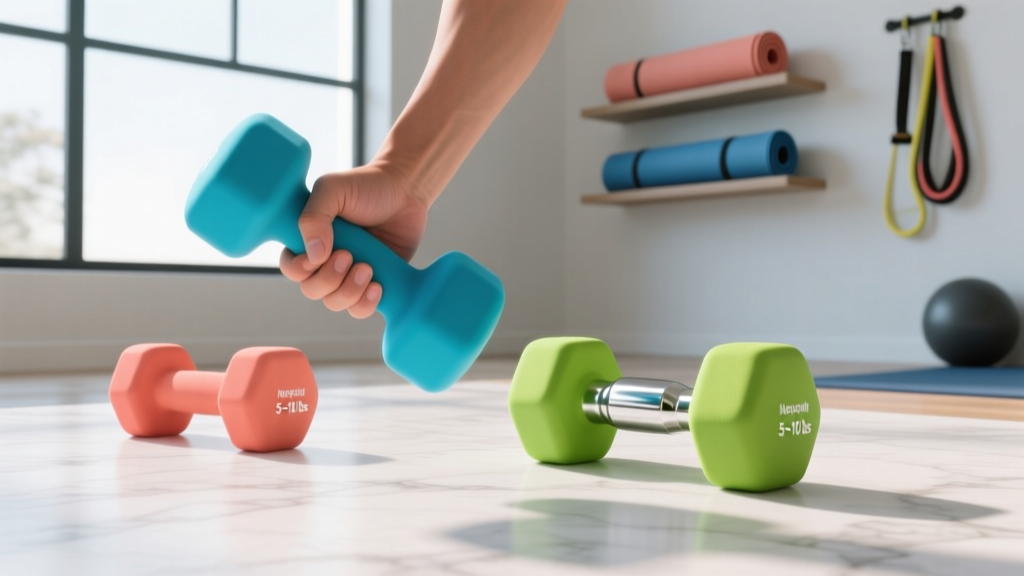
Beginner Guide to Dumbbell Scoops Using Neoprene Weights
Learn how to perform dumbbell scoops safely at home. Our beginner guide covers step-by-step form, programming, and the best neoprene coated dumbbells.

The Ultimate Beginner Guide to Dumbbell Scoops at Home
When building a functional home gym in 2026, most beginners gravitate toward standard bicep curls and goblet squats. However, if you want to build rotational power, core stability, and full-body coordination, you need to incorporate multi-planar movements. Enter the dumbbell scoop—a dynamic, explosive exercise that mimics real-world lifting, athletic pivoting, and functional core engagement.
But performing high-velocity rotational movements in a home gym comes with a specific set of challenges: sweaty hands, slippery floors, and the risk of dropping a rolling iron weight on your foot. This is exactly why neoprene coated dumbbells are the undisputed champion for home use. In this step-by-step guide, we will break down the exact biomechanics of the dumbbell scoop, how to select the right neoprene gear, and how to program this movement safely into your weekly routine.
Why Neoprene Coated Dumbbells Are Essential for Home Gyms
Neoprene (scientifically known as polychloroprene) is a synthetic rubber that offers a unique combination of durability, tactile grip, and floor protection. When executing dynamic movements like dumbbell scoops, your grip is the weakest link. As your heart rate elevates and your palms sweat, bare cast iron or cheap PVC-coated weights become hazardous.
Material Advantages for Dynamic Movements
- Micro-Textured Grip: Neoprene features a slight 'tack' that increases friction against the skin, drastically reducing the chance of the weight slipping during the explosive apex of a scoop.
- Hexagonal Anti-Roll Design: Almost all premium neoprene dumbbells (such as those from CAP Barbell or J/fit) feature hex-shaped ends. If you need to drop the weight quickly between sets or transition to a floor-based core exercise, the hex edges prevent the dumbbell from rolling under furniture or into your shins.
- Acoustic and Surface Protection: Dropping a 15 lb cast iron dumbbell on luxury vinyl plank (LVP) flooring or laminate will cause immediate structural damage. Neoprene absorbs kinetic impact, saving your home infrastructure.
Step-by-Step: Mastering the Dumbbell Scoop
The dumbbell scoop is a diagonal, multi-joint movement that integrates the hips, thoracic spine, and shoulders. According to the American Council on Exercise (ACE), training in the transverse and frontal planes is critical for preventing lower back injuries in daily life. Here is how to execute the movement flawlessly.
Step 1: The Setup and Grip
Stand with your feet slightly wider than shoulder-width apart. Hold a single neoprene dumbbell vertically with both hands, cupping the top and bottom of the handle. Keep your arms relatively straight but do not lock your elbows. Your chest should be proud, and your core braced as if preparing for a light punch to the stomach.
Step 2: The Hinge and Descent
Initiate the movement by pushing your hips back and bending your knees, lowering the dumbbell toward your right shin. This is a hip-hinge pattern, similar to a deadlift or kettlebell swing. Your torso should be tilted forward at roughly a 45-degree angle. Keep your lumbar spine completely neutral—never round your lower back.
Step 3: The Explosive Scoop and Catch
Drive aggressively through your heels and squeeze your glutes to extend your hips. As your hips snap forward, use the momentum to 'scoop' the dumbbell diagonally across your body, finishing with the weight at your left shoulder height. Your back foot (right foot) should pivot naturally, and your hips should fully rotate to face the left wall. Slowly reverse the motion back to the starting hinge position to complete one rep.
'Rotational power is generated from the ground up. The hips and glutes initiate the force, while the core acts as a transmission system to transfer that energy to the upper extremities.' — National Strength and Conditioning Association (NSCA) Guidelines on Transverse Plane Training.
2026 Neoprene Dumbbell Buyer's Matrix for Beginners
Selecting the correct weight is paramount. Because the dumbbell scoop relies on momentum and rotational torque rather than raw isolated strength, beginners should start lighter than they think. Below is a decision matrix to help you purchase the right neoprene coated dumbbell for home use.
| Experience Level | Recommended Weight | Top 2026 Model Example | Est. Price (Per Pair) |
|---|---|---|---|
| Absolute Beginner (Focus on Form) | 5 lbs - 8 lbs | Yes4All Neoprene Coated Hex | $28.00 - $32.00 |
| Novice (Active Lifestyle) | 10 lbs - 15 lbs | CAP Barbell Neoprene Hex | $38.00 - $45.00 |
| Intermediate (Athletic Base) | 20 lbs - 25 lbs | J/fit Premium Neoprene Set | $55.00 - $65.00 |
Note: Always buy dumbbells in pairs for home use, even if the scoop only requires one weight at a time. You will need matched pairs for standard bilateral exercises like presses and rows.
Troubleshooting Common Form Mistakes
When learning dynamic movements, minor biomechanical errors can lead to joint strain. Watch out for these three common failure modes:
1. Lumbar Flexion (Rounding the Back)
The Error: Bending at the waist instead of hinging at the hips during the descent phase.
The Fix: Imagine trying to close a car door with your glutes. Push your hips backward until you feel a deep stretch in your hamstrings, keeping your chest pointed toward the floor in front of you.
2. Arm-Dominant Lifting
The Error: Using the front deltoids and biceps to lift the weight, rather than using hip extension to launch it.
The Fix: The arms are merely 'ropes' connecting your torso to the dumbbell. If your hips do not aggressively snap forward, the weight will not reach shoulder height. Focus on the glute squeeze.
3. Wrist Extension at the Apex
The Error: Allowing the wrist to bend backward when catching the dumbbell at the top of the scoop.
The Fix: Maintain a rigid, neutral wrist. The Cleveland Clinic frequently notes that repetitive wrist extension under load is a primary driver of tendonitis in home-gym enthusiasts. Keep your knuckles pointing toward the ceiling at the finish.
Programming Scoops Into Your Weekly Routine
Because dumbbell scoops are highly neurologically demanding and tax the central nervous system, they should be performed at the beginning of your workout, immediately after your warm-up, when your muscles are fresh.
- Frequency: 2 times per week (e.g., Tuesday and Friday full-body sessions).
- Volume: 3 sets of 8 to 12 repetitions per side.
- Rest Periods: 60 to 90 seconds between sets to allow for full ATP (adenosine triphosphate) replenishment in the fast-twitch muscle fibers.
- Tempo: Explosive on the concentric (scoop up) phase, controlled and deliberate on the eccentric (lowering) phase.
Final Thoughts on Home Gym Safety
Incorporating dumbbell scoops into your regimen bridges the gap between basic strength training and true athletic conditioning. By pairing this multi-planar movement with high-quality, hex-shaped neoprene coated dumbbells, you ensure that your home gym remains a safe, floor-friendly, and highly effective training environment. Start light, master the hip hinge, and let your rotational power translate into everyday functional strength.
More gear to consider
All reviews
Olympic vs Standard Plates: Upper Arm Workout with Dumbbells
Beyond the Single Dumbbell Bench Press: Barbell Collar Guide

Cast Iron vs Competition Kettlebell & Dumbbell Chest Press Weight Care

Neoprene Dumbbells: Incline Dumbbell Fly Muscles Worked & Guide

Power Rack vs Squat Rack Mistakes: Barbell & 15 lbs Dumbbell Pair
