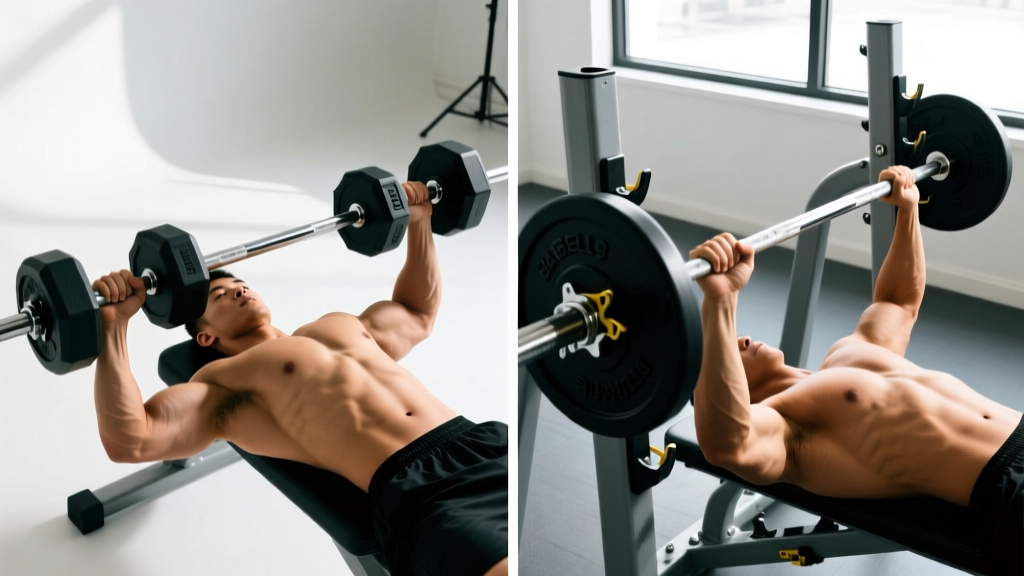
Beyond Reverse Dumbbell Rows: Barbell Weight & Knurling
Master your home gym setup. This beginner guide covers Olympic barbell weight, shaft dimensions, and knurling profiles to elevate your strength training.

Introduction: Upgrading from Dumbbells to the Barbell
Many beginners build their initial back and posterior chain strength using unilateral movements. While reverse dumbbell rows are exceptional for targeting the lats, improving mind-muscle connection, and correcting left-to-right imbalances, your foundational strength will eventually demand the systemic overload only a barbell can provide. Transitioning from the smooth, ergonomic handles of adjustable dumbbells to a knurled steel barbell is a major milestone in any lifter's journey.
However, not all barbells are created equal. Walking into the equipment market in 2026 can be overwhelming, with terms like 'tensile strength,' 'volcano knurl,' and 'Cerakote' thrown around in every product description. This step-by-step beginner's guide will decode Olympic barbell weights, dimensions, and knurling profiles so you can invest in a bar that perfectly matches your training style and grip needs.
Step 1: Decoding Olympic Barbell Weights and Dimensions
Before worrying about the grip texture, you must understand the physical dimensions and weight standards of Olympic barbells. According to the International Weightlifting Federation (IWF) Technical Rules, competition bars must adhere to strict tolerances, but commercial and home gym bars offer more variety.
The Standard Weights
- Men's Olympic Bar: Weighs exactly 20 kg (44 lbs / commonly rounded to 45 lbs). It is 2,200 mm (7.2 feet) long with a 28mm shaft diameter.
- Women's Olympic Bar: Weighs exactly 15 kg (33 lbs / commonly rounded to 35 lbs). It is 2,010 mm (6.6 feet) long with a slightly thinner 25mm shaft diameter, accommodating smaller hand sizes.
- Multi-Purpose Bars: Usually weigh 20 kg but feature a 28.5mm shaft, bridging the gap between weightlifting and powerlifting.
Shaft Diameter and Tensile Strength
The shaft diameter dictates how the bar 'feels' in your hands and how much it bends (whips) under heavy loads. A 29mm shaft is stiff and ideal for powerlifting (squats, bench presses), while a 28mm shaft offers 'whip' for Olympic lifts (snatches, clean and jerks). Furthermore, you must check the tensile strength, measured in PSI. Anything below 165,000 PSI risks permanent bending if dropped heavy. For a lifelong home gym investment, look for a minimum of 190,000 PSI.
Step 2: The Knurling Deep Dive (Where Grip Meets Steel)
Knurling is the cross-hatched pattern machined into the steel shaft to increase friction. If you are transitioning from dumbbell work—where grip fatigue during high-rep reverse dumbbell rows is often the limiting factor—choosing the right barbell knurl is critical to prevent tearing your calluses during heavy deadlifts.
Expert Grip Tip: If your hands are already heavily taxed from accessory movements like reverse dumbbell rows or pull-ups, avoid 'Mountain' knurl profiles. They are excessively sharp and will tear your skin during high-volume barbell rows or deadlifts. Opt for a 'Volcano' profile instead.The Three Knurl Profiles
Manufacturers use different machine tools to cut the knurl. Understanding these three shapes is the secret to buying the right bar:
- Hill Knurl: The peaks of the knurl are rounded off. It feels smooth and is comfortable for high-rep work, but it becomes slippery when you start sweating heavily.
- Mountain Knurl: The peaks are sharp and pointed, resembling jagged mountains. It provides an aggressive, almost painful grip. Common in cheap commercial gym bars and specialized deadlift bars.
- Volcano Knurl: The gold standard for premium bars. The machine cuts a sharp rim but leaves a small 'dip' or crater in the center of the peak. This provides maximum surface area and grip without acting like a cheese grater on your palms.
Knurling Profile Comparison Matrix
| Profile Type | Visual Shape | Aggressiveness | Best Used For |
|---|---|---|---|
| Hill | Rounded peaks | Mild / Passive | Beginners, high-rep conditioning, bare hands |
| Volcano | Sharp rim, dipped center | Moderate to Aggressive | Multi-purpose, Olympic lifting, Powerlifting |
| Mountain | Sharp, pointed peaks | Highly Aggressive | Heavy 1-Rep Max Deadlifts, chalk-heavy lifting |
Step 3: Center Knurl and Sleeve Construction
Another vital decision is the center knurl. This is a small strip of knurling in the exact middle of the bar. Powerlifters love it because it 'grips' the back of their t-shirt during heavy low-bar squats, preventing the bar from sliding up the neck. However, Olympic weightlifters and CrossFit athletes despise it, as it will scrape the chest and neck during cleans and front squats. If you are a general fitness enthusiast doing a mix of squats and cleans, look for a bar with a 'passive' or lightly knurled center strip.
Additionally, check the sleeve construction. Premium bars use needle bearings (allowing the sleeve to spin rapidly during Olympic lifts), while budget or powerlifting bars use bushings (bronze or composite rings that provide a slower, more controlled spin).
Step 4: 2026 Market Recommendations by Budget
Based on current market pricing and manufacturing standards, here is how you should allocate your budget when shopping for an Olympic barbell.
Budget Tier ($150 - $220)
At this price point, expect bare steel or basic black oxide coatings, 165k to 180k PSI tensile strength, and bushing sleeves. The knurl will likely be a basic 'Hill' or shallow 'Mountain' profile. Recommendation: Look for entry-level offerings from major fitness retailers, but verify the PSI rating before purchasing to avoid bending the bar on heavy squats.
Mid-Tier / The Sweet Spot ($250 - $399)
This is where 90% of home gym owners should shop. You get 190k+ PSI steel, Cerakote or stainless steel shafts, and precision-machined Volcano knurling. According to the Rogue Fitness Barbell Lineup and similar premium manufacturers, this tier offers lifetime durability. Top Picks: The Rogue Ohio Bar (~$295, composite volcano knurl, 190k PSI) or the REP Fitness Excalibur II (~$349, aggressive stainless steel volcano knurl).
Elite / Competition Tier ($700 - $1,100+)
Reserved for competitive athletes or those who appreciate premium Swedish steel and exact IWF tolerances. These bars feature needle bearings, flawless dual knurl marks, and incredibly refined knurling. Top Pick: The Eleiko Sport Training Bar (~$995) offers a proprietary mild knurl that grips perfectly without tearing the skin, even during high-volume sessions.
Step 5: Maintenance and Care for Longevity
A high-quality barbell is a generational investment, but only if maintained. Chalk and sweat are the enemies of steel. Even stainless steel can develop surface rust if left caked in acidic sweat and magnesium carbonate.
- Weekly: Wipe down the shaft and sleeves with a microfiber cloth to remove excess chalk.
- Monthly: Use a stiff nylon brush (never wire on coated bars) to scrub chalk out of the knurling grooves. Apply 3-in-One oil or mineral oil to the sleeves to keep the bushings or bearings spinning smoothly.
- Storage: Store horizontally on a rack or vertically in a barbell holder. Never leave it loaded with heavy plates on the floor for days, as this can induce a permanent set (bend) in lower PSI bars.
'The barbell is the anchor of your gym. You might use dumbbells for isolation and accessory work, but your heaviest, most central-nervous-system-taxing lifts will always be on the bar. Don't compromise on the steel.' — FitGearPulse Equipment Testing Team
Frequently Asked Questions (FAQ)
Can I use a 20kg barbell for lighter accessory work?
Yes, but if you are doing high-rep accessory movements where grip is a factor, the aggressive knurl on a 20kg power bar might irritate your hands. Many lifters keep a 15kg women's bar (25mm shaft, lighter knurl) specifically for high-rep rows, curls, and tricep extensions.
Does Cerakote ruin the knurling?
In 2026, modern Cerakote application is incredibly thin (measured in microns). When applied by top-tier manufacturers, it fills the 'valleys' of the knurl slightly but leaves the peaks sharp. A high-quality Cerakote volcano knurl will still provide immense grip while offering superior rust resistance compared to bare steel or black oxide.
How do I know if my bar has bushings or bearings?
Spin the sleeve with your hand. If it spins freely and rapidly for several seconds, it has needle bearings (ideal for Olympic lifting). If it stops relatively quickly and feels more grounded, it uses bushings (ideal for powerlifting and general strength).
More gear to consider
All reviews
How Low Should the Bench Be for Incline Dumbbell Press? (Barbell Guide)

Bumper vs Iron Plates: 2026 Trends & Dumbbell Cardio Exercises

Space-Saving Dumbbell Racks: Storage Layouts for Women's Lunges
How to Choose Your First Neoprene Weight Dumbbell Set for Home
Bumper vs Iron Plates for Bent Over One Arm Dumbbell Rows