
Barbell Knurling Mistakes & Dumbbell Push Ups Benefits Explained
Upgrade your home gym. We troubleshoot common Olympic barbell weight and knurling buying mistakes, comparing heavy lifting to dumbbell push ups benefits.

While many lifters begin their strength journey researching dumbbell push ups benefits to build unilateral chest stability, joint health, and core activation without a spotter, the eventual transition to heavy bilateral barbell training requires a massive shift in equipment knowledge. Dumbbells teach stabilizer recruitment; Olympic barbells demand central nervous system overload and precise mechanical tolerance. When making this jump, buyers frequently make critical errors regarding barbell weight tolerances, steel metallurgy, and knurling profiles.
According to biomechanics data from ExRx, transitioning from unilateral dumbbell movements to bilateral barbell lifts alters the force vector and grip demands entirely. If your barbell's knurling is too passive, you'll lose grip on heavy deadlifts. If it's too aggressive, you'll tear your hands during high-volume cleans. As of 2026, the home gym equipment market is flooded with mislabeled 'Olympic' bars that fail under real-world loads. This troubleshooting guide will help you identify buying mistakes, understand weight tolerances, and select the exact knurling profile your training demands.
The Biomechanical Bridge: Stabilizers vs. Overload
Before diving into steel and knurling, it is vital to understand why lifters transition away from dumbbells in the first place. The primary dumbbell push ups benefits revolve around an increased range of motion (ROM) and the correction of muscular imbalances. However, once a lifter can press 100lb dumbbells for reps, the setup time, stabilizer fatigue, and sheer logistics of hoisting heavy dumbbells into position become limiting factors.
An Olympic barbell allows for systemic loading. But unlike a pair of hex dumbbells that simply sit on a rack, an Olympic barbell is a dynamic, flexing piece of spring steel. Misunderstanding how that steel behaves under load is the first major mistake buyers make.
Mistake #1: Confusing Tensile Strength with Yield Strength
When browsing Rogue Fitness or other premium manufacturers, you will see two distinct metallurgical terms: Tensile Strength and Yield Strength. Most buyers focus solely on tensile strength, which is a critical error.
- Tensile Strength (measured in PSI): The maximum stress the steel can withstand before physically snapping or breaking. A standard budget bar sits around 165,000 PSI, while premium competition bars exceed 215,000 PSI.
- Yield Strength: The point at which the steel bends and fails to return to its original straight shape. This is the metric that actually dictates the lifespan of your barbell.
Many lifters complain that their barbell 'bends' during heavy squats or deadlifts and assume it is defective. In reality, a bar with high tensile strength (e.g., 190k+ PSI) is designed to flex—or 'whip'—to store and release kinetic energy. However, if you drop a 190k PSI bar loaded with 500 lbs from overhead without bumper plates, you will exceed its yield strength, permanently bending the shaft. Always match the bar's yield rating to your intended drop patterns.
The Fix: If you are strictly powerlifting (squat, bench, deadlift) and want zero whip, look for a 29mm shaft diameter with a tensile strength around 190,000 PSI. If you are an Olympic weightlifter (snatch, clean and jerk), you need a 28mm shaft with 215,000+ PSI tensile strength to allow for the necessary whip and bounce out of the hole.
Mistake #2: Choosing the Wrong Knurl Profile for Your Grip
Knurling is the cross-hatched pattern machined into the steel shaft. It is the only point of contact between your nervous system and the load. Buying a 'universal' bar without understanding knurl geometry is the second most common mistake. According to comprehensive equipment reviews from BarBend, knurling is categorized by its cut depth and shape.
| Knurl Profile | Visual Shape | Aggressiveness (1-10) | Best Use Case |
|---|---|---|---|
| Hill | Rounded peaks, shallow valleys | 3/10 (Passive) | High-rep hypertrophy, beginner lifters, bare hands |
| Volcano | Peaks are flattened, creating a rim with deep valleys | 7/10 (Balanced) | All-around training, powerlifting, mixed grip deadlifts |
| Mountain | Sharp, pointed peaks with deep cuts | 9/10 (Aggressive) | Heavy 1RM deadlifts, Olympic lifting with chalk |
Troubleshooting Grip Slippage vs. Skin Tearing
If your hands are slipping during heavy pulls, your bar likely features a 'Hill' knurl that has been polished down over time, or you are failing to use the knurl rings (the smooth rings etched into the bar) to align your grip consistently. Conversely, if you are experiencing severe skin tearing during high-volume WODs or dynamic movements, you are likely using a 'Mountain' knurl barbell meant for 1-rep max deadlifts, not high-rep snatches.
The Fix: For a true 'do-it-all' home gym barbell in 2026, seek out a Volcano knurl. The flattened peaks provide immense surface area for friction without acting like a cheese grater on your calluses. Ensure the bar features dual knurl marks (both IWF and IPF spacing) if you plan to mix Olympic lifting with powerlifting.
Mistake #3: Ignoring the Center Knurl and Sleeve Assembly
When transitioning from dumbbells—where the grip is inherently neutral and localized to the hands—lifters forget about the bar's interaction with the body. The center knurl is a small strip of knurling in the exact middle of the shaft.
- For Squatters: A passive center knurl is mandatory. It bites into the fabric of your t-shirt or back, preventing the bar from sliding down your traps during heavy back squats.
- For Olympic Lifters / CrossFitters: A center knurl will tear the skin off your chest and collarbone during the clean and jerk catch phase. If you do Oly lifting, buy a bar without a center knurl.
Bushing vs. Bearing: The Spin Factor
Unlike a static dumbbell, the sleeves of an Olympic barbell must rotate independently of the shaft. This rotation absorbs the torsional force of the plates spinning during a clean or snatch, saving your wrists from catastrophic injury.
💡 Expert Insight: Sleeve DiagnosticsBronze Bushings: Provide a slower, more controlled spin. Ideal for powerlifting (squats, bench, deadlifts) where you want the bar to feel stable and 'tight' in your hands. Typically found on 29mm shafts.
Needle Bearings: Provide a lightning-fast, frictionless spin. Mandatory for Olympic weightlifting (snatches, cleans) where the bar flips rapidly in space. Typically found on 28mm shafts. Troubleshooting tip: If a bearing-equipped bar feels 'gritty' when you spin the sleeve, the internal grease has dried out or chalk dust has infiltrated the sleeve housing. Do not use WD-40; use a dedicated synthetic bearing oil or 3-in-One oil.
Troubleshooting Your Current Barbell Setup
If you already own an Olympic barbell and are experiencing issues, run through this diagnostic checklist before blaming your programming or grip strength:
- The 'Spin' Test: Hold the shaft and spin the sleeve. It should rotate freely for at least 4-5 seconds. If it stops immediately, your bushings are compressed or your bearings are seized. Solution: Apply barbell oil to the sleeve seam.
- The 'Chalk' Audit: Inspect the knurl valleys. If they are packed with white magnesium carbonate, the bar will feel slick and passive. Solution: Use a stiff brass wire brush (never steel, which damages the zinc coating) and scrub the knurling with a mild degreaser.
- The 'Roll' Test for Straightness: Roll the bare barbell across a flat, level concrete floor or glass table. Watch the center of the shaft. If it wobbles up and down, the bar has exceeded its yield strength and is permanently bent. It must be retired from heavy axial loading (squats).
- Oxidation Check: If your bar features a bare steel or black oxide finish, surface rust is inevitable in humid environments. Solution: Wipe down with 3-in-One oil after every session. Avoid chrome-plated bars if you live in high-humidity coastal areas, as the knurling cuts through the chrome, leading to flaking and peeling over time.
Conclusion: Bridging the Gap Between Dumbbells and Barbells
Understanding the specific dumbbell push ups benefits is crucial for building a foundation of joint integrity, unilateral balance, and stabilizer endurance. However, when your goals shift toward absolute strength, systemic overload, and moving massive poundage, the Olympic barbell becomes your primary tool.
Do not let a poorly chosen barbell bottleneck your progress. By prioritizing correct tensile strength for your specific lifts, selecting a Volcano knurl for optimal grip-to-tear ratio, and matching the sleeve assembly to your rotational needs, you ensure that your equipment serves as a conduit for your strength, not a limiting factor. Invest in a high-quality 190k to 215k PSI barbell, maintain the knurling with a brass brush, and your bar will easily outlast your lifting career.
More gear to consider
All reviews
Loadable Dumbbell Care for One-Arm Dumbbell Overhead Extensions

Bumper vs Iron Plates: 2026 Trends & Dumbbell Cardio Exercises

Iron vs Bumper Plates & Dumbbell Chest Supported Upright Row Budget

Space-Saving Dumbbell Racks for the Single Dumbbell Bicep Curl
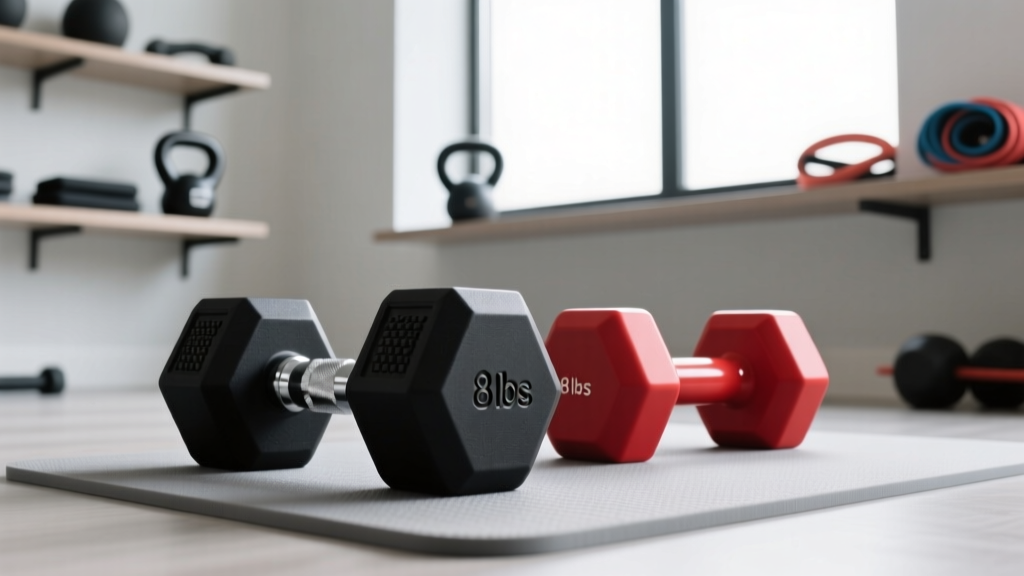
8 lbs Dumbbell Value: Rubber Hex vs Urethane Cost Breakdown
