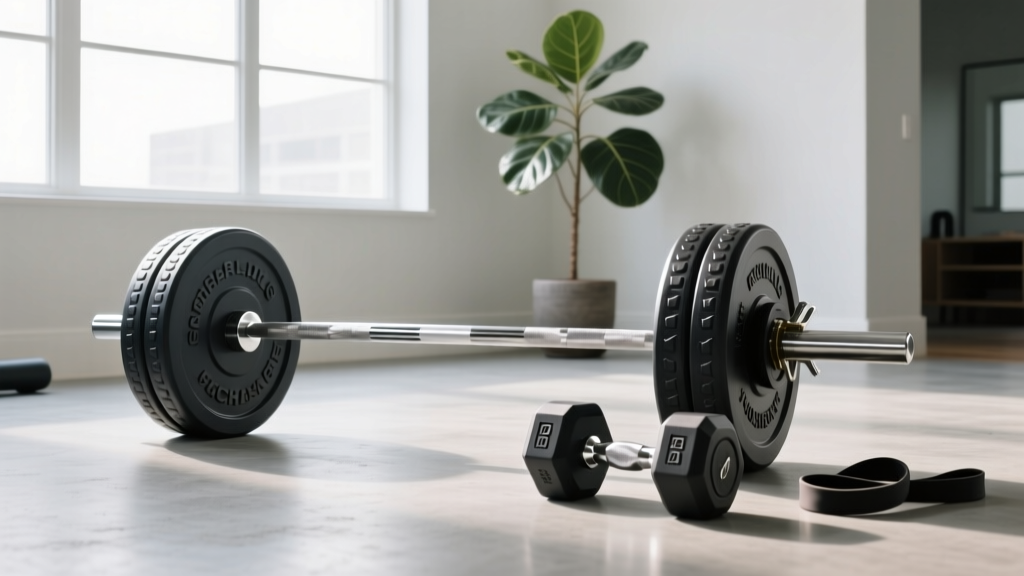
Barbell Guide: Weight, Knurling & Brachioradialis Dumbbell Exercises
Master our beginner-friendly Olympic barbell buying guide covering weight and knurling, plus essential brachioradialis dumbbell exercises for grip.

The Ultimate Beginner's Guide to Olympic Barbells and Grip Mastery
Building a home gym in 2026 means making smart, long-term investments, and the Olympic barbell is the undisputed centerpiece of your setup. However, walking into the world of barbell specs can feel like learning a new language. Between tensile strength, bushing types, and knurl patterns, it is easy to make an expensive mistake. This step-by-step guide will demystify Olympic barbell weight and knurling, ensuring you buy the right tool for your goals.
But buying the perfect barbell is only half the battle. If your forearms fatigue before your back or legs do on heavy pulls, that expensive knurling won't save you. That is why this guide also includes a targeted breakdown of brachioradialis exercises with dumbbells to bulletproof your grip and ensure your muscles can actually handle the weight your barbell can hold.
Step 1: Decoding Olympic Barbell Weights and Dimensions
Not all barbells weigh 45 pounds. The International Weightlifting Federation (IWF) and International Powerlifting Federation (IPF) have strict standards, but manufacturers also produce specialized bars. Understanding these weights is critical for calculating your working sets accurately.
| Barbell Type | Weight | Shaft Diameter | Total Length | Best For |
|---|---|---|---|---|
| Men's Olympic | 20kg (44 lbs) | 28mm - 29mm | 2200mm (86.6 in) | Powerlifting, General Strength |
| Women's Olympic | 15kg (33 lbs) | 25mm | 2010mm (79.1 in) | Olympic Weightlifting, Smaller Hands |
| Technique Bar | 10kg (22 lbs) | 25mm - 28mm | 1500mm - 2010mm | Form Practice, Youth Lifters |
| Curl Bar (EZ) | 7kg - 10kg (15-22 lbs) | 25mm - 28mm | 1200mm (47 in) | Isolation, Arm Work |
Pro Tip: If you have smaller hands or are strictly focusing on Olympic weightlifting (snatches and clean & jerks), a 25mm or 28mm shaft will feel significantly more secure than a thick 29mm powerlifting bar.
Step 2: The Knurling Masterclass (Hill, Mountain, and Volcano)
Knurling is the cross-hatched pattern machined into the steel shaft. It is the only point of contact between you and the load. According to manufacturing experts at Rogue Fitness, the geometry of the knurl dictates how aggressive the bar feels.
The Three Knurl Patterns
- Hill Knurling: The peaks of the knurl are flattened off. This feels smooth and is typically found on cheap, big-box-store barbells. Avoid these for heavy lifting, as they become incredibly slippery when you start sweating.
- Mountain Knurling: The peaks are sharp and pointy. This pattern bites aggressively into the skin. It is excellent for heavy, low-rep powerlifting deadlifts but will tear your hands to shreds during high-rep barbell complexes.
- Volcano Knurling: The gold standard for 2026. The peaks are machined with a small crater or 'dip' in the center. This creates four distinct gripping edges per peak rather than one sharp point. It provides immense grip security without tearing the skin. Look for bars like the Rogue Ohio Bar or Rep Fitness EX Bar for excellent volcano knurling.
To Center Knurl or Not to Center Knurl?
Powerlifters prefer a center knurl to help the bar 'stick' to their upper back during low-bar squats. Olympic weightlifters and CrossFit athletes despise center knurling because it scrapes the chest and neck during cleans and front squats. If you are a general fitness enthusiast, a mild center knurl or no center knurl is usually the most versatile choice.
Step 3: Tensile Strength and Barbell Finishes
Tensile strength, measured in Pounds per Square Inch (PSI), dictates how much weight the bar can hold before it permanently bends. As a beginner, you should never buy a bar with a tensile strength below 165,000 PSI. In 2026, the sweet spot for entry-to-mid-level lifters is 190,000 PSI, which typically costs between $220 and $350. Elite bars push past 215,000 PSI.
Finish Types: What Coating Should You Choose?
Bare Steel: Best feel, but requires constant oiling to prevent rust.
Zinc: Budget-friendly, but wears down and oxidizes over time.
Hard Chrome: Very durable, but thick applications can fill in the knurling, reducing grip.
Cerakote: A ceramic polymer coating available in custom colors. It is incredibly thin, preserving the knurl, and offers top-tier rust resistance.
Stainless Steel: The ultimate premium choice. Offers the bare steel feel with the rust resistance of chrome.
Step 4: The Grip Bottleneck and Brachioradialis Dumbbell Exercises
You have selected a 190k PSI stainless steel bar with perfect volcano knurling. You load up 315 lbs for a deadlift, but your hands peel open before your glutes even fire. Why? Because your barbell is only as strong as your weakest link: your forearms.
According to kinesiology data from ExRx, the brachioradialis is a massive muscle on the lateral (thumb-side) of your forearm. It is the primary elbow flexor when your forearm is in a neutral or pronated (palms down) position. While barbell holds build isometric grip strength, they do not take the brachioradialis through a full range of motion. To build thick, tireless forearms, you must incorporate targeted brachioradialis exercises with dumbbells into your accessory routine.
The Step-by-Step Brachioradialis Dumbbell Routine
Perform this routine twice a week at the end of your pull or back days. The goal is hypertrophy and tendon conditioning, not max strength.
-
Dumbbell Hammer Curls (Neutral Grip)
Execution: Stand holding two dumbbells at your sides, palms facing your body. Keeping your elbows pinned to your ribs, curl the weights up toward your shoulders. Squeeze at the top, and lower with a strict 3-second eccentric (negative) phase.
Prescription: 3 sets of 12-15 reps. Choose a weight that leaves 2 reps in the tank (RIR).
-
Dumbbell Reverse Curls (Pronated Grip)
Execution: Hold the dumbbells with your palms facing the floor (pronated). Curl the weights upward while fighting the urge to let your wrists bend backward. This variation heavily taxes the brachioradialis and the extensors on the top of the forearm.
Prescription: 3 sets of 10-12 reps. You will need to drop the weight by 20-30% compared to hammer curls.
-
Dumbbell Zottman Curls (The Finisher)
Execution: Start with palms facing up (supinated) and curl the weight to your shoulder. At the top of the movement, rotate your wrists 180 degrees so your palms now face the floor. Lower the weight slowly in this pronated position. This targets both the biceps brachii on the way up and the brachioradialis on the way down.
Prescription: 2 sets to technical failure.
'Grip strength is often the limiting factor in posterior chain development. If you cannot hold the barbell, your central nervous system will inhibit force production in your hamstrings and glutes to protect your hands. Direct forearm hypertrophy work is non-negotiable for intermediate lifters.' — National Strength and Conditioning Association (NSCA) principles on kinetic chain limitations.
Step 5: Barbell Maintenance for Longevity
Even the most expensive Cerakote or Stainless Steel barbell requires basic maintenance. Chalk, dead skin, and humidity are the enemies of barbell knurling. If the knurl gets clogged, it turns into a 'hill' pattern and loses all its bite.
The 5-Minute Weekly Maintenance Routine
- Step 1: Grab a stiff nylon brush (never use a wire brush, as it will strip zinc and Cerakote finishes).
- Step 2: Apply a few drops of 3-in-One oil or specialized barbell oil directly to the brush.
- Step 3: Scrub the knurling in a circular motion to dislodge chalk and dead skin.
- Step 4: Wipe the shaft down with a microfiber cloth to remove excess oil. Leaving the bar oily will make it dangerously slippery for your next workout.
- Warning: Never use WD-40 on your barbell. It is a solvent, not a lubricant, and will strip away protective coatings and attract dust.
Final Thoughts on Your 2026 Home Gym Build
Selecting the right Olympic barbell requires balancing weight, shaft diameter, knurl geometry, and tensile strength. By targeting a 190,000 PSI bar with a volcano knurl pattern, you set yourself up for a lifetime of safe, effective lifting. However, do not forget that the barbell is merely the tool; your body is the engine. By integrating dedicated brachioradialis exercises with dumbbells into your weekly programming, you ensure that your grip will never be the bottleneck that holds your strength gains back. Train smart, maintain your gear, and lift heavy.
More gear to consider
All reviews
Lat Workouts With Dumbbells: 2026 Adjustable Gear Review & Fixes

552 Dumbbells vs. Olympic Barbells: Weight & Knurling Buying Guide

Power Rack vs Squat Rack vs Stand: 2026 Iron Grip Dumbbell Set Guide

Olympic vs Standard Plates & Bench Rows With Dumbbells: Beginner Guide

Beyond the Dumbbell Leg Day: Cast Iron vs Competition Kettlebells
