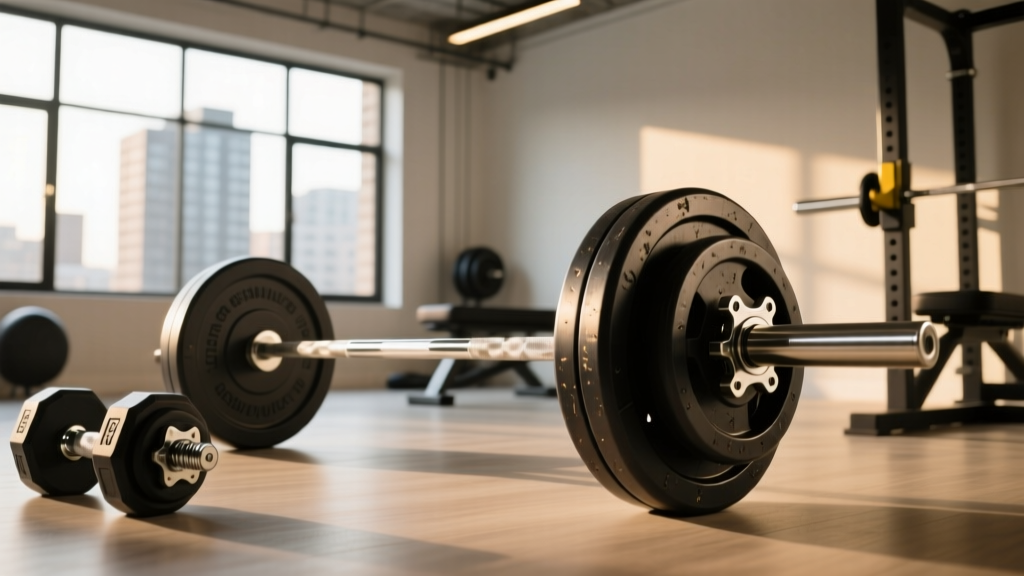
Barbell Collar Types and Dumbbell Front Squats: Safety Mistakes
Troubleshoot weight security errors. Compare barbell collar and clamp types, and fix dangerous mistakes during dumbbell front squats.

The Hidden Dangers of Unsecured Free Weights
Walk into any commercial gym or home garage setup, and you will inevitably spot a critical safety oversight: unsecured weight plates. While most lifters understand the basic premise of using a barbell collar, the nuance of which collar to use—and how weight security principles apply to unilateral or dumbbell movements—is frequently misunderstood. Weight room injuries often stem from two intersecting errors: failing to secure barbell sleeves properly during heavy compounds, and poor weight distribution during front-loaded movements.
In this comprehensive troubleshooting guide, we will execute a deep-dive barbell collar and clamp types comparison to help you match the right securing mechanism to your lifting style. Then, we will pivot to a highly specific, often-overlooked hazard: the intersection of loadable dumbbell handles, collar slippage, and dumbbell front squats. By the end of this guide, you will have a concrete decision framework to eliminate equipment-based failure points from your training.
Barbell Collar and Clamp Types Comparison
Not all collars are created equal. The market is saturated with cheap spring clips that fail under vibration, alongside premium locking mechanisms designed for 1,000-pound deadlifts. Understanding the mechanical differences is the first step in troubleshooting your equipment setup. Below is a detailed comparison matrix of the three primary collar types used on standard 50mm Olympic sleeves.
| Collar Type | Model Example | Price Range | Security Rating | Best Use Case | Known Failure Mode |
|---|---|---|---|---|---|
| Spring Clip | Generic Chrome Clips | $10 - $15 | Low | Light accessories, warm-ups | Tension loss after repeated drops |
| Clamp (Lever) | Rogue HG 2.0 | $12 - $18 | Medium-High | Powerlifting, high-volume squats | Slipping on oxidized/worn zinc sleeves |
| Locking (Cam/Padlock) | Lockjaw 2.0 | $35 - $45 | Very High | Heavy deadlifts, Olympic lifts | Plastic housing cracks if dropped directly on collar |
Spring Clips vs. Locking Clamps: Analyzing Failure Modes
Spring clips rely on metal tension to grip the barbell sleeve. According to equipment maintenance guidelines outlined by the National Strength and Conditioning Association (NSCA), regular inspection of tension-based equipment is vital because metal fatigue is invisible to the naked eye. After approximately 500 repetitions involving barbell drops (such as Olympic cleans or high-rep touch-and-go deadlifts), a standard spring clip can lose up to 30% of its gripping tension. This results in the dreaded 'plate slide,' where weights shift outward, altering the bar's center of mass and risking a catastrophic tear or joint injury.
Clamp-style collars, like the widely used Rogue HG 2.0, utilize a lever-action plastic and rubber padlock system. They offer vastly superior grip on pristine steel or chrome sleeves. However, their primary failure mode occurs on older, oxidized zinc sleeves where the surface friction is degraded. If you are lifting in a humid garage gym and your barbell sleeves are pitted, clamp collars can slowly inch outward during heavy bench presses or squats.
⚠️ Troubleshooting Warning: If you use clamp collars and notice them shifting during a set, do not simply tighten them. Inspect your barbell sleeve. You likely need to clean the sleeve with a wire brush and a light coat of 3-in-1 oil to restore the friction required for the clamp's rubber pad to grip effectively.The Dumbbell Front Squat Conundrum: Where Collars Meet the Neck
Why are we discussing dumbbell front squats in a guide about barbell collars? Because the rise of adjustable and loadable dumbbell handles in home gyms has created a massive, unaddressed safety blind spot. Lifters are increasingly using loadable dumbbell handles (which feature short 50mm Olympic stubs) to save space. When performing heavy dumbbell front squats, the handles must be secured with collars.
Unlike a barbell back squat, where the collar is resting safely on your upper back or hanging away from your body, the front rack position places the dumbbell sleeves—and therefore the collars—inches from your jaw, throat, and collarbone. If you use standard, bulky barbell collars on a loadable dumbbell handle for dumbbell front squats, you introduce severe mechanical and safety flaws.
Common Mistakes in Dumbbell Front Squats
- Using Bulky Locking Collars on Loadable Handles: A standard Lockjaw collar adds nearly 2 inches of width to the sleeve. On a short dumbbell handle, this forces your hands into an excessively wide grip, destroying the biomechanics of the front rack and placing immense torque on the wrists.
- The Spring Clip Slip Hazard: Because loadable dumbbell sleeves are short, spring clips are often jammed against the weight plates. During the ascent of dumbbell front squats, the natural vibration can cause a poorly seated spring clip to pop off. A sliding 10lb plate shifting toward your neck mid-squat is a recipe for a cervical spine injury.
- Ignoring Wrist Extension Limits: To compensate for bulky collars, lifters often flare their elbows and extend their wrists beyond 45 degrees. This shifts the load from the anterior deltoids and clavicle shelf directly into the fragile carpal joints.
Troubleshooting the Front Rack and Weight Security
To safely execute dumbbell front squats, especially when utilizing loadable handles or fixed hex dumbbells, you must troubleshoot both your equipment choices and your physical rack position. Here is a step-by-step framework to correct these errors.
Step 1: Upgrade to Low-Profile or Fixed Dumbbells
If you are committed to heavy front-loaded dumbbell work, abandon loadable handles with standard barbell collars. The safest route is investing in fixed hex or urethane dumbbells (e.g., Rogue Urethane Dumbbells), which eliminate the collar variable entirely. If you must use loadable handles for budget or space reasons, purchase specialized mini-locking collars or low-profile aluminum clamp collars designed specifically for dumbbell stubs. These secure the plates without adding lateral bulk, allowing your hands to sit closer to the dumbbell head for better balance.
Step 2: Dial in the Biomechanics of the Rack
The most frequent troubleshooting complaint regarding dumbbell front squats is wrist pain. This is rarely a wrist mobility issue; it is almost always a weight distribution error.
- The Fix: Clean the dumbbells to your shoulders so the handle rests diagonally across the palm, not horizontally. The posterior head of the dumbbell should rest securely on your anterior deltoid, while the anterior head points slightly forward.
- Elbow Tracking: Keep your elbows pinned to your ribcage and pointing strictly forward, not flared outward. Flaring the elbows disengages the lats and forces the wrists to bear 100% of the stabilization load.
'The front rack is a shelf, not a cradle. Whether you are holding a barbell or executing dumbbell front squats, the weight should rest on the muscular shelf of the anterior deltoids and clavicle. If your wrists are bending backward, your shelf is broken.' — Elite Biomechanics Coaching Principle
Step 3: The Breathing and Bracing Protocol
Weight security isn't just about the metal clamps; it is about internal pressure. Before initiating the descent of a dumbbell front squat, take a diaphragmatic breath into your belly, not your chest. Expanding your chest upward will physically knock the dumbbells out of your front rack, causing you to lose your center of gravity and potentially drop the weights. Brace your core, maintain a neutral spine, and descend keeping the dumbbells glued to your shoulders.
Decision Framework: Matching Equipment to the Lift
To eliminate guesswork, use this quick-reference troubleshooting matrix to ensure your collars and equipment match the movement pattern you are performing.
| Movement Pattern | Recommended Collar / Equipment | Equipment to Avoid |
|---|---|---|
| Heavy Barbell Deadlifts | Lockjaw 2.0 or Heavy-Duty Clamps | Spring Clips (Plates will slide on the floor pull) |
| Olympic Weightlifting (Cleans/Snatches) | Competition Spring Clips or Lever Clamps | Locking Collars (Too slow to remove between attempts) |
| Dumbbell Front Squats (Loadable Handles) | Low-Profile Aluminum Screw Collars | Standard Barbell Locking Collars (Neck strike hazard) |
| Dumbbell Front Squats (Fixed) | N/A (Use Urethane/Hex Fixed Dumbbells) | Adjustable Dial Dumbbells (High risk of dropping mechanism) |
Frequently Asked Questions (FAQ)
Can I use standard barbell spring clips for dumbbell front squats?
No. Standard barbell spring clips are too wide and lack the localized tension required for the short sleeves of loadable dumbbell handles. During the dynamic movement of dumbbell front squats, the vibration can easily dislodge a spring clip, allowing plates to slide toward your neck. Always use low-profile, screw-down, or specialized mini-clamp collars for loadable dumbbells.
Why do my wrists hurt during dumbbell front squats but not barbell front squats?
Barbells force your hands into a fixed, uniform width, allowing you to create a solid 'shelf' with your elbows. Dumbbells allow for independent movement, which often leads lifters to flare their elbows and over-extend their wrists to balance the independent weights. Focus on keeping your elbows tucked to your ribs and resting the back of the dumbbell head on your shoulder.
How often should I replace my barbell clamp collars?
High-quality clamp collars like the Rogue HG 2.0 can last for years in a home gym. However, if the rubber padding on the inside of the clamp becomes compressed, torn, or slick with chalk and oil, they will begin to slip on the barbell sleeve. Inspect the rubber pads every 6 months and replace the collars if the grip is compromised.
Are adjustable dial dumbbells safe for heavy front squats?
Adjustable dial dumbbells (e.g., Bowflex or NordicTrack) are generally not recommended for heavy, dynamic movements like front squats. If the dial mechanism is bumped against your shoulder or collarbone during the rack position, the internal locking pins can disengage, causing the weight plates to fall. For heavy lower-body work, fixed hex/urethane dumbbells or loadable handles with secure locking collars are vastly superior.
More gear to consider
All reviews
Best Adjustable Dumbbells for the Prone Incline Dumbbell Row

EZ vs Straight Bar: 2026 Trends & The Dumbbell Deadlift Exercise
Cast Iron vs Competition: Beyond Dumbbell Exercises for Biceps and Chest

Power Rack vs Squat Rack Setup: Dumbbell Shoulder Press Muscles Worked Clearance
Arnold Press Dumbbells: Adjustable Sets Reviewed for Beginners
