Barbell Collar Types Compared: From Seated Chest Press with Dumbbells to Heavy Squats
Compare barbell collar and clamp types for 2026. Learn which lockjaw, spring, or screw clamp secures your barbell and adjustable dumbbells safely.

The Critical Role of Collars in Free Weight Training
When building a comprehensive home gym in 2026, lifters often obsess over barbell shaft tensile strength or bumper plate durometer ratings, yet overlook the most vital safety component: the barbell collar. Whether you are executing a heavy barbell back squat or performing a seated chest press with dumbbells using adjustable plate-loaded handles, a failing collar can lead to catastrophic weight shifts, ruined lifts, or severe injury.
This in-depth buying guide compares the primary barbell collar and clamp types available on the market today. We will evaluate their clamping force, durability, and specific use cases, providing a data-driven framework to help you choose the right locking mechanism for your training style.
Understanding Clamping Force and Failure Modes
Not all collars are created equal. The primary metric for evaluating a collar is its axial clamping force—the amount of lateral pressure it applies to the barbell sleeve to prevent weight plates from sliding. According to biomechanical analyses published by research indexed in the National Center for Biotechnology Information (NCBI), asymmetric load shifting during dynamic movements alters the barbell's center of mass, exponentially increasing the torque applied to the lifter's joints.
⚠️ Safety Warning: Never use standard spring collars for Olympic weightlifting variations (snatches, cleans) or heavy barbell hip thrusts. The vertical and horizontal deceleration forces easily overcome the ~40 lbs of clamping force provided by basic springs, leading to plate ejection.Common Failure Scenarios
- The 'Creep' Effect: Over a 12-week training block, repeated micro-impacts cause low-tension collars to slowly slide outward, eventually unseating entirely.
- Drop-Test Failures: When dropping a barbell from overhead or the rack, inferior plastic clamps can shatter upon impact with the floor or rack uprights.
- Sleeve Tolerance Mismatches: Olympic sleeves vary slightly in the 2026 market. A collar calibrated for a precise 50.4mm Eleiko sleeve might rattle loosely on a 49.8mm budget barbell.
Comprehensive Comparison Matrix: Collar Types
To help you navigate the options, we have compiled a comparison of the four dominant collar technologies currently dominating the fitness equipment sector.
| Collar Type | Est. Clamping Force | Application | Price Range (Pair) | Durability Rating |
|---|---|---|---|---|
| Spring / Clip | 20 - 45 lbs | Light isolation, warm-ups | $10 - $20 | Low (Spring fatigue) |
| Lockjaw (Clamp) | 150 - 200 lbs | General powerlifting, bodybuilding | $25 - $45 | Medium (Hinge wear) |
| Competition Screw | 400+ lbs | Olympic lifting, heavy squats | $80 - $160 | High (Steel/Aluminum) |
| Smart Magnetic | 120 - 180 lbs | Cross-training, rapid changes | $60 - $90 | High (Neodymium) |
Deep Dive: The Top Contenders for 2026
1. The Lockjaw Pro (Clamp Style)
The Lockjaw series remains the gold standard for commercial and high-end home gyms. Utilizing a glass-reinforced nylon resin, these clamps use a cam-lever action to bite into the barbell sleeve. They are incredibly secure for standard movements like the bench press or the aforementioned seated chest press with dumbbells (when utilizing plate-loadable dumbbell handles). However, the plastic hinges can develop micro-fractures after 3 to 5 years of heavy daily abuse in a commercial setting.
2. Competition Screw Collars (IWF Standard)
If you are training for weightlifting or moving maximal loads, steel or aircraft-aluminum screw collars (like those from Rogue Fitness or Werksan) are non-negotiable. They thread onto the sleeve or use a heavy-duty locking knob to apply hundreds of pounds of lateral pressure. They add exactly 2.5kg or 5lbs to the bar, which is crucial for competition math.
3. Aluminum Spring Collars
Brands like Rogue have upgraded the traditional wire spring clip to an aluminum-bodied spring mechanism. These are fantastic for high-rep metabolic conditioning where speed of plate changes is paramount, but they lack the sheer holding power required for heavy eccentric overload training.
Application Spotlight: Adjustables and Dumbbell Work
While we primarily discuss 50mm Olympic barbells, the principles of clamping force apply directly to plate-loaded adjustable dumbbells (like the classic Ironmaster or Titan models). When performing a heavy seated chest press with dumbbells, the angle of the bench (typically 75 to 85 degrees) places significant sheer force on the dumbbell collars.
Standard star-lock nuts on adjustable dumbbells are secure but notoriously slow to adjust. In 2026, many lifters are retrofitting their plate-loaded dumbbells with miniaturized Lockjaw-style clamps designed specifically for shorter dumbbell sleeves. This reduces loading time by up to 60% per set, keeping the lifter in their optimal heart rate zone and maintaining workout density.
Pros and Cons of Upgrading Dumbbell Collars
- Pro: Eliminates the "rattle" of loose plates during pressing movements, improving proprioceptive feedback.
- Pro: Saves 45-90 seconds per drop-set when adjusting weights.
- Con: Quick-release clamps add physical width to the dumbbell, which can interfere with grip placement on shorter handles during close-grip neutral presses. >
Expert Buying Framework: How to Choose
Do not buy a single pair of collars and expect them to excel at everything. The most efficient 2026 home gym setups utilize a tiered collar system.
- The Daily Drivers (Lockjaws): Keep two pairs of heavy-duty clamp collars on your main rack. Use these for 80% of your training, including squats, bench presses, and barbell rows.
- The Speed Set (Aluminum Springs): Keep a pair of aluminum spring collars on your floor or plyo box. Use these for deadlift touch-and-goes, lunges, and conditioning circuits where you are stripping weights rapidly.
- The Heavy Duty (Screw Collars): Reserve a pair of calibrated steel screw collars strictly for your 1RM testing days and heavy Olympic lifting variations.
Maintenance and Longevity
Even the best collars require maintenance. According to equipment maintenance guidelines from the National Strength and Conditioning Association (NSCA), keeping barbell sleeves free of chalk buildup and oxidation is critical for collar efficacy. Chalk acts as an abrasive lubricant under pressure, reducing the friction coefficient between the collar and the steel sleeve. Wipe down your sleeves with a nylon brush and a light application of 3-in-One oil monthly to ensure your collars maintain their rated clamping force.
Frequently Asked Questions
Can I use barbell collars on standard 1-inch dumbbells?
No. Olympic collars are engineered for 50mm (2-inch) sleeves. Using them on standard 1-inch equipment is impossible without specialized adapters, which are generally unsafe for heavy pressing movements.
Do smart magnetic collars really work?
Yes, but with caveats. High-end magnetic collars use neodymium magnets paired with a mechanical detent. They are incredibly fast to apply and remove, making them ideal for CrossFit-style workouts. However, if the barbell sleeve is heavily scratched or coated in thick chalk, the magnetic seal can be compromised.
Why do my plates still slide during a seated chest press with dumbbells?
If you are using plate-loaded adjustable dumbbells and the plates slide despite using collars, check the inner sleeve tolerance. Many budget dumbbell handles are slightly undersized (e.g., 49mm instead of 50mm). You may need to wrap a layer of athletic tape around the inner collar stopper to create a tighter friction seal before applying your main collar.
More gear to consider
All reviews
Bumper Plate vs Iron Plate Cost: Cable Fly vs Dumbbell Fly Value
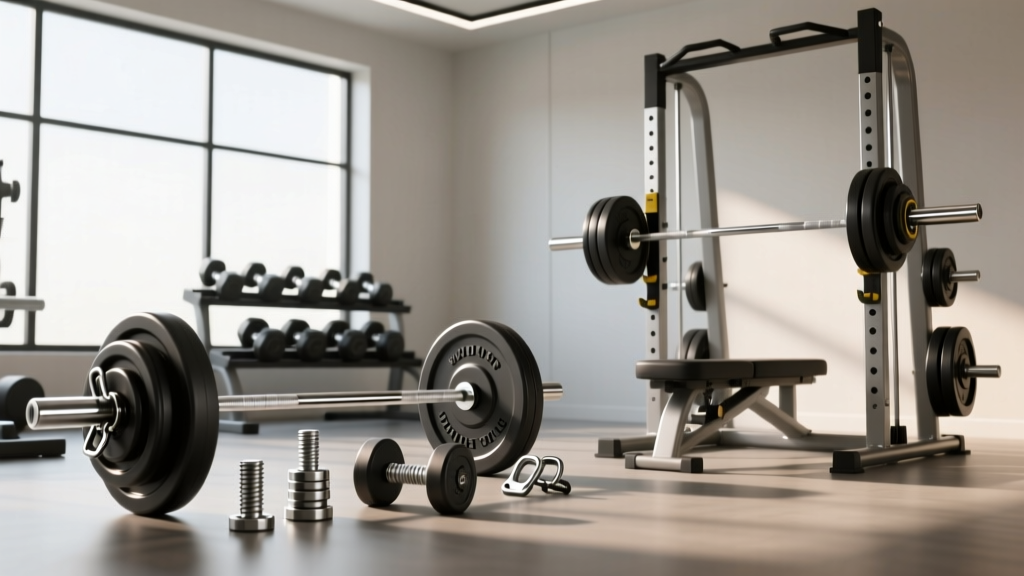
Barbell Collar Setup & The Dumbbell Squat Front Raise Station

Bumper Plate vs Iron Plate & Good Exercises to Do With Dumbbells

Bumper vs Iron Plates: 2026 Trends & Dumbbell Kelso Shrug Setups
Rubber Hex vs Urethane Dumbbells for Dumbbell Pec Flys: Value Guide