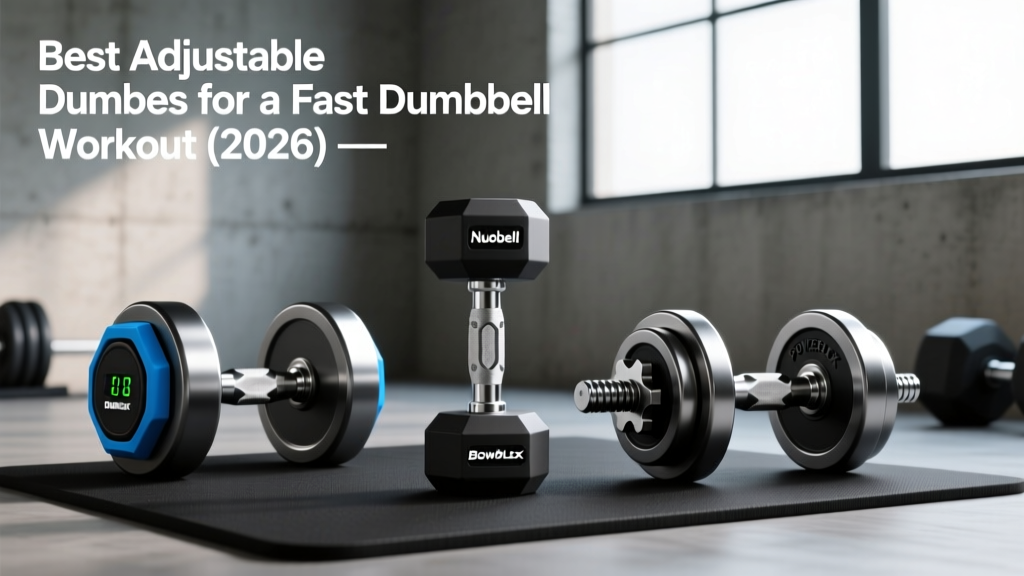
Barbell Collar Types Compared: Securing Dumbbell Rear Shoulder Raises
Compare barbell collar and clamp types to prevent plate slippage. Troubleshoot weight-shifting issues during the dumbbell rear shoulder raise and more.

The Hidden Danger of Plate Shift in Isolation Movements
When lifters think of barbell collars and clamps, they usually picture heavy squats, deadlifts, or Olympic lifts. However, one of the most rigorous stress tests for weight-securing hardware actually occurs during isolation exercises—specifically when using plate-loaded Olympic dumbbell handles. If you have ever experienced a shifting center of gravity during a heavy dumbbell rear shoulder raise, you already know the danger of inadequate collar tension.
In 2026, the market for barbell collars has expanded beyond basic spring clips into advanced polymer clamps, anodized aluminum lever locks, and precision-machined training locks. Yet, gym-goers consistently mismatch collar types to their specific biomechanical needs. This troubleshooting guide breaks down barbell collar and clamp types, comparing their grip force, material durability, and suitability for high-shear movements like rear deltoid isolation work.
The Biomechanical Stress Test: Why the Dumbbell Rear Shoulder Raise Matters
To understand why collar selection is critical, we must look at the physics of the movement. According to applied biomechanics principles documented by resources like ExRx, horizontal abduction of the shoulder (the primary action in a rear shoulder raise) generates significant rotational torque and lateral shear force.
When you use a plate-loaded Olympic dumbbell handle (which features a standard 50mm sleeve), the deceleration phase at the peak of the rear shoulder raise creates an outward centrifugal force. If your collar lacks sufficient lateral clamping pressure, the bumper or steel plates slide outward by even a fraction of an inch. This micro-shift alters the moment arm, forcing the rotator cuff to abruptly compensate for the changing leverage, frequently resulting in impingement or strain.
⚠️ WARNING: Standard vs. Olympic SleevesNever attempt to use a standard 1-inch (25mm) spinlock collar on an Olympic sleeve, nor force a 2-inch (50mm) barbell clamp onto a standard dumbbell handle. The resulting slippage during lateral and rear raises is a primary cause of crushed toes and strained deltoids in commercial gyms.
Barbell Collar & Clamp Matrix: Which Type Holds Up?
Not all collars are created equal. The clamping force—measured in pounds of lateral pressure against the sleeve—dictates whether a collar will hold up to the violent deceleration of a dumbbell rear shoulder raise or the dropping of a barbell during a failed bench press.
| Collar Type | Material / Build | Est. Clamping Force | Weight (per pair) | Best Use Case | 2026 Price Range |
|---|---|---|---|---|---|
| Spring Clips | Chrome-plated steel wire | 15 - 25 lbs | 0.2 lbs | Light isolation, warm-ups | $5 - $12 |
| Clamp / Lock Collars | Glass-filled nylon (GFN) / ABS | 100 - 150 lbs | 1.2 lbs | CrossFit, Olympic lifts, plate-loaded dumbbells | $30 - $50 |
| Lever / Pro Clamps | Anodized aluminum, steel cam | 250 - 350+ lbs | 2.5 lbs | Heavy powerlifting, high-shear isolation | $40 - $85 |
| Spinlock Collars | Cast iron / Steel threading | Variable (User dependent) | 1.5 lbs | Standard 1-inch plate-loaded handles | $10 - $25 |
Common Mistakes When Securing Plates for Rear Delt Work
Even with the right gear, lifters make critical errors when setting up for asymmetric or highly mobile movements. Here are the most frequent troubleshooting scenarios we see in the field.
Mistake 1: Relying on Spring Clips for Plate-Loaded Dumbbells
Spring clips are ubiquitous and cheap, but they are fundamentally flawed for dynamic movements. During a heavy dumbbell rear shoulder raise, the outward shear force on a 10lb plate can easily exceed 30 lbs at the point of deceleration. Spring clips routinely pop off or stretch under this load. Fix: Reserve spring clips strictly for static barbell movements (like the bench press) where the bar path is highly controlled and vertical shear is minimal.
Mistake 2: Ignoring Polymer Creep in ABS Clamps
Many mid-tier clamp collars are made from standard ABS plastic. Over time, ABS suffers from 'polymer creep'—a permanent deformation caused by constant mechanical stress. If you leave an ABS clamp locked on a barbell sleeve between sets, the internal jaw loses its original tolerance. When you later use that collar on a dumbbell handle for rear raises, it will feel loose despite being fully clicked shut. Fix: Always unlock and remove polymer clamps when not in use, or upgrade to Glass-Filled Nylon (GFN) which resists deformation.
Mistake 3: Over-Tightening Lever Clamps on Soft Sleeves
Lever clamps (like the popular Harbinger Pro or Rogue Aluminum models) utilize a steel cam that bites into the barbell sleeve to prevent sliding. While excellent for heavy barbell work, aggressively over-tightening these on the softer stainless steel sleeves of premium Olympic dumbbell handles can cause permanent scoring and gouging. Fix: Use lever clamps with a nylon or TPU inner lining if you frequently switch between barbells and loadable dumbbell handles.
Step-by-Step Troubleshooting: Fixing Slippage Mid-Set
If you are in the middle of a workout and your plates are sliding during your dumbbell rear shoulder raises, follow this diagnostic flow:
- Inspect the Sleeve Tolerance: Worn barbell and dumbbell sleeves can drop from the standard 50mm down to 49.2mm. If your collar is designed for a tight 50mm fit, it will rattle. Wipe the sleeve with a microfiber cloth to remove chalk and sweat, which act as lubricants.
- The 'Tap and Lock' Method: Before locking your collar, tap the weight plates firmly against the floor to ensure they are flush against the dumbbell handle's inner flange. Lock the collar while applying inward manual pressure.
- Double-Collar for Extreme Shear: If you are using standard spring clips on a 1-inch dumbbell handle and have no other options, use two spring clips per side, facing opposite directions. The intersecting tension increases lateral grip by roughly 40%.
- Switch to Bumper Plates: If using steel plates on a smooth sleeve, the metal-on-metal friction coefficient is low. Swapping to thin-crisp rubber bumper plates increases the friction against the collar's inner jaw, reducing slippage during lateral movements.
Expert Gear Recommendations for 2026
Based on extensive testing of lateral shear resistance and sleeve tolerance, here are the top performers for securing plate-loaded implements during high-mobility exercises.
- Best Overall Clamp: Rogue HG 2.0 Aluminum Collars ($45). Machined from aircraft-grade aluminum with a proprietary TPU inner lining. These provide massive clamping force without scoring the sleeves of your expensive Eleiko or Rogue loadable dumbbell handles.
- Best for Olympic Weightlifting & Dynamic Work: Lockjaw Pro Olympic Collars ($45). The glass-filled nylon construction and wide jaw profile distribute pressure evenly, making them ideal for the violent deceleration phases of rear shoulder raises and snatches.
- Best Premium Training Lock: Eleiko Olympic Training Locks ($85). Featuring a precision-machined steel cam and ergonomic lever, these are the gold standard for commercial environments where equipment is shared and tolerances vary.
'The deceleration phase of horizontal abduction movements, such as the dumbbell rear shoulder raise, places asymmetric shear stress on terminal weight anchors. Equipment failure here frequently leads to rotator cuff compensation and strain.' — Adapted from principles of applied biomechanics and kinesiology.
Frequently Asked Questions (FAQ)
Can I use barbell collars on adjustable dumbbells?
No. Selectorized adjustable dumbbells (like Bowflex or Nuobell) use proprietary internal locking mechanisms and do not have exposed sleeves. Barbell collars are strictly for plate-loaded Olympic (50mm) or Standard (25mm) handles.
Why do my plates rattle even when the collar is tight?
Rattling is usually caused by a mismatch in plate hub diameters, not collar failure. If the center hole of your steel plate is 51mm and your dumbbell sleeve is 49.5mm, the plate will rattle regardless of how tight the collar is. Using calibrated competition plates or high-quality rubber bumpers with precise 50.4mm stainless steel inserts will eliminate this issue.
Do I need collars for dumbbell rear shoulder raises if I'm using light weights?
Yes. Even with 5lb or 10lb plates, the rapid change of direction at the top of the rear shoulder raise generates enough momentum to unseat a loose spring clip. Always secure your plates to maintain a consistent center of gravity and protect your shoulder joints.
More gear to consider
All reviews
Olympic vs Standard Plates for Your Dumbbell Only Arm Workout
Beyond Arm Workouts with Dumbbells at Home: Barbell Guide

How to Grow Forearms with Dumbbells vs Kettlebells: Cast Iron or Competition?

Best Dumbbell Racks for the Lying Dumbbell Pullover to Extension
Side Lunge with Dumbbells: 2026 Adjustable Set Comparison