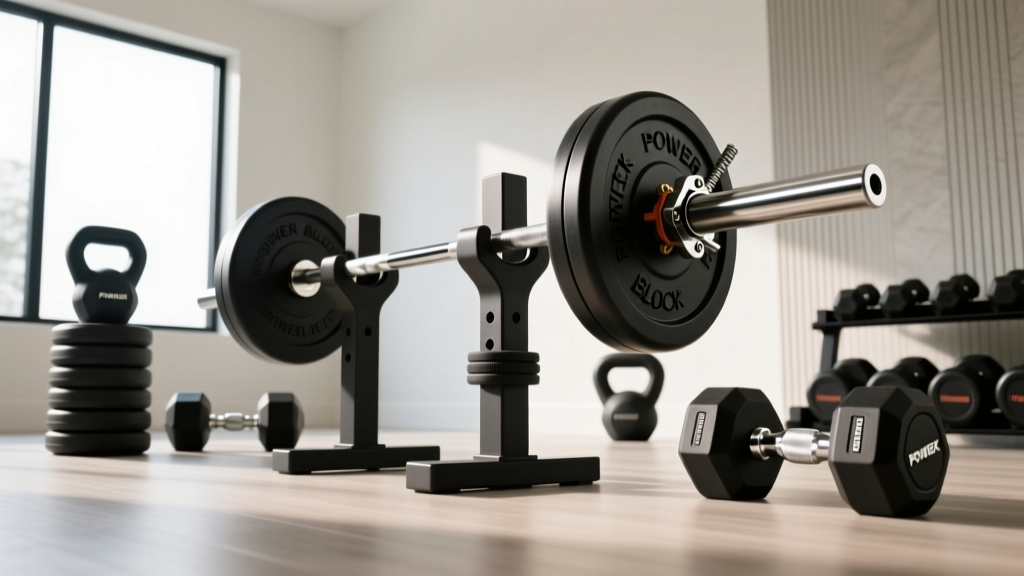
Barbell Clamp Guide: Upgrading from How to Use Power Block Dumbbells
Compare barbell collar and clamp types for your 2026 home gym. Learn safety mechanics, from how to use Power Block dumbbells to securing Olympic plates.

The Paradigm Shift: Internal Pins vs. External Clamps
Transitioning from a space-saving adjustable dumbbell setup to a full Olympic barbell rig is a major milestone for any home gym owner in 2026. When first learning how to use power block dumbbells, the primary safety focus is entirely internal. You are trained to verify that the magnetic selector pin is fully depressed and locked into the steel weight stack before initiating a lift. According to the PowerBlock Owner's Manual, failure to fully seat the pin can result in the weight stack separating mid-rep, a catastrophic failure mode unique to adjustable dumbbells.
However, when you upgrade to a 2-inch Olympic barbell, the safety paradigm shifts from internal locking mechanisms to external clamping force. Barbell plates do not have selector pins; they rely entirely on the static friction and mechanical pressure of barbell collars to stay secured on the steel sleeves. Using the wrong collar for your specific training style—whether you are doing heavy bench presses, high-volume hypertrophy work, or explosive Olympic lifts—can result in plates sliding off the sleeve, causing severe barbell imbalance and potential injury.
This in-depth buying guide breaks down the exact specifications, failure modes, and ideal use cases for every major barbell collar and clamp type on the market today.
⚠️ Safety Warning: Never use standard spring collars for Olympic weightlifting (snatches, cleans, and jerks). The kinetic shockwave of a dropped barbell will instantly overcome the spring's static friction, causing plates to eject laterally.2026 Barbell Collar and Clamp Types Comparison Matrix
Before diving into the mechanical nuances, here is a high-level comparison of the four primary collar categories available for 2-inch Olympic barbells.
| Collar Type | Avg Price (Pair) | Clamping Mechanism | Best Use Case | Primary Failure Mode |
|---|---|---|---|---|
| Spring Collars | $6 - $12 | Steel coil tension | Light benching, quick changes | Metal fatigue, loss of tension |
| Clamp Collars | $30 - $45 | Cam-lever with TPU pad | Powerlifting, general fitness | Plastic cam degradation |
| Competition Collars | $85 - $140 | Precision machined aluminum | Olympic lifting, IWF meets | Misplaced keys, thread stripping |
| Spin-Lock Collars | $15 - $25 | Threaded steel/plastic nut | 1-inch standard bars only | Thread cross-stripping |
Deep Dive: Clamp-Style Collars (The Home Gym Standard)
For 90% of home gym owners in 2026, clamp-style collars represent the optimal balance of security, speed, and durability. These collars utilize a glass-reinforced nylon or aluminum body with a cam-lever action that presses a high-durometer TPU (Thermoplastic Polyurethane) rubber pad directly against the barbell sleeve.
Top Contenders: Rogue HG 2.0 vs. Lock-Jaw Pro
The Rogue Fitness HG 2.0 Collars (priced around $32 per pair) remain a staple in commercial and home gyms. They feature a proprietary resin body that is virtually shatterproof under normal dropping conditions. The locking mechanism requires about 45 lbs of closing force, which is stiff enough to prevent accidental opening but manageable for most lifters.
Alternatively, the Lock-Jaw Pro Elite (approximately $42 per pair) uses a slightly different cam geometry that provides a more aggressive bite on the sleeve. Edge Case Insight: If you frequently perform drop sets or load the bar asymmetrically for unilateral movements, the Lock-Jaw's wider surface area pad distributes pressure more evenly, reducing the micro-slippage that can occur with narrower clamp pads during high-vibration exercises like landmine presses.
The Micro-Slip Phenomenon
Even the best clamp collars are subject to 'micro-slip'. When you drop a loaded barbell from the top of a deadlift or a clean, the kinetic energy travels laterally through the steel sleeve. Over hundreds of drops, the TPU rubber pad can compress and wear smooth, reducing the coefficient of friction. Pro Tip: Wipe your barbell sleeves and the inside of the collar pads with a microfiber cloth weekly to remove accumulated chalk dust, which acts as a dry lubricant and drastically increases plate slide.
Spring Collars: The Hidden Dangers of Metal Fatigue
Spring collars are the cheap, coiled steel clips found in almost every commercial gym. While they cost less than $10 a pair and allow for lightning-fast weight changes, they are fundamentally flawed for heavy or dynamic lifting.
- Tension Degradation: The steel coil is subjected to extreme tensile stress every time you squeeze the handles. After roughly 500 to 800 repetitions of opening and closing, the steel undergoes plastic deformation, permanently losing its clamping tension.
- Sleeve Scratching: The bare metal edges of cheap spring collars will gouge and scratch the zinc or chrome finish on your barbell sleeves, creating burrs that make plate loading difficult.
- Asymmetric Ejection: If you bench press without a spotter and the bar tilts, the weight of the plates can easily overcome the weak radial force of a spring collar, leading to a dangerous 'dump' of plates on one side.
Spring collars should only be used for controlled, slow-tempo isolation movements where the barbell remains perfectly horizontal and is never subjected to impact shock.
Competition Collars: The IWF Standard
If your training involves Olympic weightlifting, you must adhere to the standards set by the governing bodies of the sport. According to the International Weightlifting Federation (IWF) Technical Rules, competition collars must weigh exactly 2.5 kilograms each. This weight is factored into the total load on the barbell (a standard men's 20kg bar + two 2.5kg collars = 25kg starting weight).
Brands like Eleiko and Rogue manufacture precision-machined aluminum competition collars that lock onto the sleeve using a specialized wrench or lever system. These collars do not rely on friction pads; instead, they use mechanical threading or precision clamps that bite into the sleeve with thousands of pounds of force. While overkill for a casual home gym lifter, they are absolutely mandatory if you are practicing snatches and clean-and-jerks, as they guarantee zero lateral movement even when the bar is dropped from 7 feet overhead onto competition bumper plates.
Buying Framework: Which Collar Fits Your 2026 Gym?
Use this decision matrix to select the right collar based on your primary training modality:
- The Powerlifter / Bodybuilder: Buy heavy-duty clamp collars (Rogue HG 2.0 or Lock-Jaw). You need high clamping force for heavy squats and bench presses, but you don't need the calibrated 2.5kg weight of competition collars.
- The Olympic Weightlifter: Invest in IWF-certified competition collars. The mechanical lock is the only way to ensure safety during high-impact drops from overhead.
- The CrossFit / High-Intensity Athlete: Purchase two pairs. Keep a pair of clamp collars for heavy barbell cycling, and keep a pair of quick-release aluminum snap-collars (like the Bear Grips or DMoose speed collars) for WODs where every second of transition time matters.
- The Budget Beginner: If you are strictly doing controlled floor presses and light rows, a high-quality coated spring collar is acceptable temporarily, but plan to upgrade to clamps within your first six months of training.
Expert Maintenance: Extending Collar Lifespan
Barbell collars are often neglected in gym maintenance routines. To protect your investment and ensure maximum safety, implement the following protocol:
- UV Protection: If your gym is in a garage or exposed to sunlight, UV rays will degrade the TPU rubber pads on clamp collars, causing them to crack and lose grip. Store them in a drawer or bin away from direct light.
- Cam Hinge Lubrication: Once a quarter, apply a single drop of dry PTFE (Teflon) lubricant to the metal hinge pin of your clamp collars. Do not use WD-40, as it attracts dust and chalk, creating a grinding paste that will seize the hinge.
- Sleeve Hygiene: A collar is only as good as the surface it clamps to. Use a nylon brush and a light coat of 3-in-1 oil to clean your barbell sleeves monthly, removing rust and chalk buildup that compromises the collar's bite.
Mastering your equipment's safety mechanisms—from understanding how to use power block dumbbells to selecting the exact right barbell collar for your Olympic sleeve—is what separates novice lifters from seasoned veterans. Secure your iron properly, and train with absolute confidence.
More gear to consider
All reviews
Power Rack vs Squat Rack vs Stand: Setup & Reverse Grip Curls Dumbbell

Power vs Squat Rack Setup & Inner Thigh Exercises with Dumbbells

Lying Triceps Dumbbell Extension & Barbell Collar Setup Walkthrough

Bumper vs Iron Plate Comparison & Lying Dumbbell Extensions
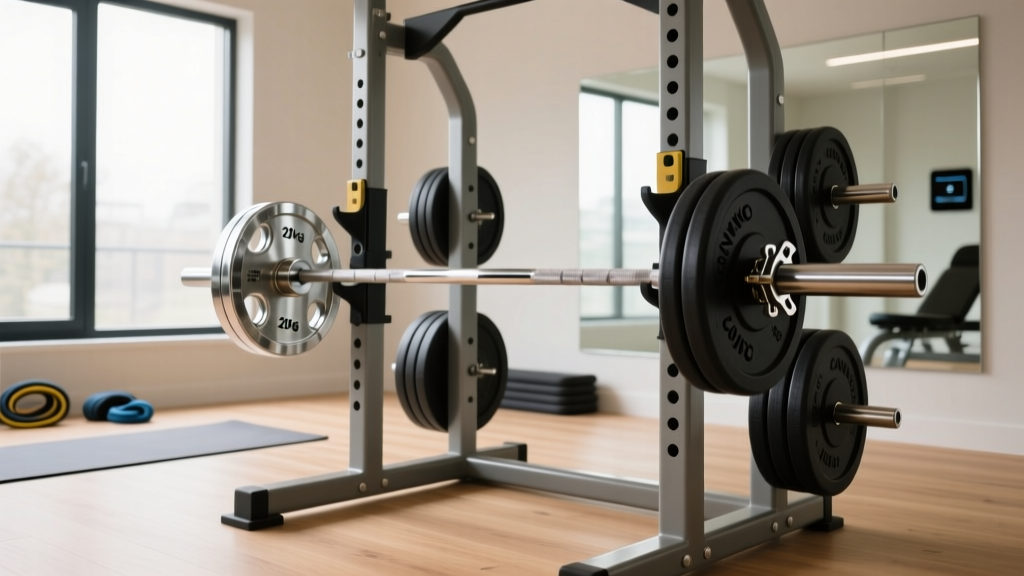
Beyond Dumbbell Back Workouts: Barbell Collar & Clamp Setup
