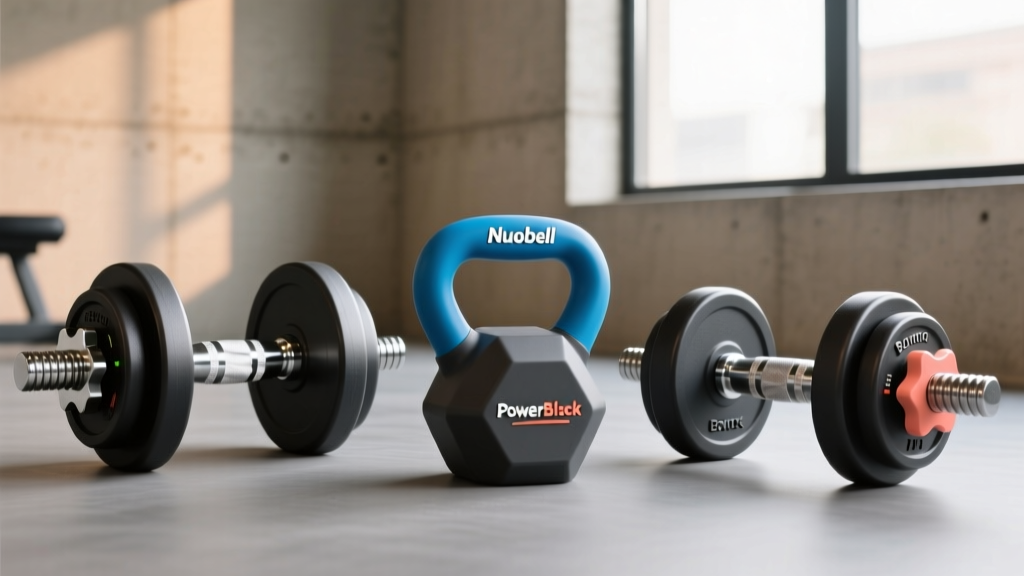
Beyond Arm Day With Dumbbells: 2026 Cast Iron vs Competition Bells
Explore the 2026 kettlebell market analysis. We compare cast iron vs competition bells to upgrade your arm day with dumbbells routine for better gains.

The Evolution of Arm Training: Why the Market is Shifting
For decades, the standard arm day with dumbbells has been the undisputed king of upper-body isolation. Dumbbells allow for strict supination during bicep curls and precise elbow extension for tricep pushdowns. However, as we navigate the 2026 fitness equipment market, a distinct shift is occurring in both commercial facilities and high-end home gyms. Lifters and strength coaches are increasingly integrating kettlebells into arm and accessory protocols to target neglected stabilizers, brachioradialis hypertrophy, and grip endurance.
This shift has triggered a massive evolution in the free weights sector. The kettlebell market is no longer a monolith; it has bifurcated into two distinct manufacturing categories: traditional cast iron and precision competition steel. Understanding the metallurgy, pricing structures, and biomechanical differences between these two categories is critical for making an informed purchasing decision in 2026.
2026 Market Insight: The Rise of 'Soft Competition' Bells
A major trend this year is the surge in 'soft competition' kettlebells. These are cast iron bells molded to the exact dimensions of steel competition bells (280mm height, 210mm width) but coated in thick polyurethane or e-coat to protect home gym flooring. They bridge the gap between the $1.50/lb cast iron market and the $5.00/lb competition market, retailing at roughly $2.80/lb.
Cast Iron Kettlebells: The Legacy Market Leader
Cast iron kettlebells remain the highest-volume sellers in the 2026 market. They are typically manufactured using either sand casting or gravity casting methods, utilizing grey cast iron (often Grade HT200). Because the bell and the handle are poured as a single, solid piece of metal, they offer immense structural integrity for heavy, ballistic movements.
Metallurgy and Manufacturing Realities
The primary differentiator in the cast iron market is the finishing process. In the early 2020s, cheap powder-coated bells dominated big-box stores. By 2026, the market has heavily penalized standard powder coat due to its tendency to chip, exposing the porous cast iron to rapid oxidation (rust). Today, premium cast iron bells from brands like Rogue Fitness and REP Fitness utilize E-coat (electrophoretic deposition) or bare, machined cast iron with a clear-cerakote finish. E-coat penetrates the microscopic pores of the iron, providing a rust-proof barrier that feels like bare metal in the hand, preserving the tactile knurling or machined grooves on the handle.
Pricing and Failure Modes
- Average 2026 Pricing: $1.20 to $2.20 per pound, depending on the finish and brand.
- Dimensional Variance: Unlike competition bells, cast iron bells scale in physical size as the weight increases. A 16kg bell is significantly smaller than a 32kg bell.
- Failure Modes: The most common failure mode is handle pitting from poor sand-casting molds, which can tear calluses during high-rep snatches. Additionally, the horn spacing (the distance between the handle and the bell) varies wildly between brands, forcing the lifter to adjust their rack position for every weight increment.
Competition Kettlebells: The Precision Premium
Competition kettlebells were originally designed for the sport of Kettlebell Lifting (Girevoy Sport). Their defining characteristic is uniformity. Whether you are holding an 8kg or a 48kg bell, the external dimensions are exactly the same: 280mm in height, 210mm in width, and a handle diameter of exactly 33mm.
Construction and Material Science
To achieve this uniformity, competition bells are not cast as a single solid piece. Instead, they feature a hollow steel shell (usually 3mm to 4mm thick) that is precision-welded to a steel handle. The internal cavity is then filled with a dense core material—ranging from iron scrap and lead to specialized tungsten-infused resins for the heaviest weights—to reach the target mass. Elite brands like Eleiko and Kettlebell Kings machine the handles to a mirror-like or highly specific satin finish to eliminate friction burns during thousands of repetitions.
The Biomechanical Advantage for Arm Training
While a traditional arm day with dumbbells isolates the biceps in the sagittal plane, the 33mm handle of a competition kettlebell forces a unique grip adaptation. According to research highlighted by the National Strength and Conditioning Association (NSCA), the offset center of mass in a kettlebell requires continuous micro-adjustments from the wrist flexors and brachioradialis. Performing 'bottoms-up' kettlebell presses or offset hammer curls with a 33mm steel handle yields superior forearm hypertrophy and grip endurance compared to the fixed, balanced center of mass of a rubber hex dumbbell.
Pricing and Edge Cases
- Average 2026 Pricing: $3.80 to $6.50+ per pound. The precision welding and steel shell manufacturing drive up costs.
- Failure Modes: Because they are hollow steel shells, dropping a competition kettlebell on concrete from overhead can dent the shell or crack the weld at the handle base. They are strictly designed for use on rubber gym flooring or competition platforms.
Feature Comparison Matrix: Cast Iron vs. Competition
| Feature | Traditional Cast Iron | Competition Steel |
|---|---|---|
| Material | Solid Grey Cast Iron (HT200) | Hollow Steel Shell + Dense Core |
| Dimensions | Scale with weight (Variable) | Uniform (280mm x 210mm) |
| Handle Diameter | Variable (32mm - 40mm+) | Strict 33mm Standard |
| 2026 Avg Price | $1.20 - $2.20 / lb | $3.80 - $6.50 / lb |
| Best For | Grinds, General Fitness, Outdoor | Girevoy Sport, High-Rep Ballistics |
| Durability Risk | Surface rust, handle pitting | Shell denting, weld fracturing |
Biomechanics: Upgrading the Arm Day Protocol
Why integrate kettlebells into an arm-focused hypertrophy block? The Mayo Clinic's fitness guidelines note that kettlebells engage multiple muscle groups simultaneously due to their unique weight distribution. When you perform a dumbbell bicep curl, the load is centered directly in your palm. When you perform a kettlebell curl (especially holding the bell by the 'horns' or upside down by the handle), the center of mass sits several inches away from your wrist joint.
'The offset load of a kettlebell increases the lever arm at the wrist and elbow, demanding significantly higher activation from the brachioradialis and the extensor carpi radialis longus to maintain joint stability throughout the range of motion.'
This makes kettlebells an exceptional tool for 'finisher' sets on arm day. After exhausting the biceps brachii with heavy dumbbell supination, transitioning to 12kg or 16kg cast iron kettlebell horn-curls will completely fatigue the forearm complex, leading to denser, more functional arm development.
The 2026 Buyer’s Decision Framework
To optimize your equipment investment, use this decision matrix based on your primary training modality:
- The Pure Bodybuilder (Hypertrophy Focus): Stick to your arm day with dumbbells for primary isolation, but invest in a pair of cast iron kettlebells (16kg and 24kg) with an E-coat finish. Use them exclusively for heavy farmer's carries and horn-curls to build the forearm thickness that dumbbells cannot provide. Budget: ~$150 for the pair.
- The Hybrid Athlete (CrossFit / Tactical): Invest heavily in competition kettlebells. The uniform 33mm handle is non-negotiable if you are practicing snatches, cleans, and jerks, as it prevents the skin-tearing associated with variable cast iron handles. Budget: ~$400+ for a matched set of 16kg, 20kg, and 24kg bells.
- The Home Gym Generalist: Look for the 2026 trend of polyurethane-coated soft competition bells. They offer the 33mm handle and uniform dimensions of a steel competition bell, but the solid cast-iron core and urethane shell mean you can drop them on your garage floor without denting the bell or cracking your concrete. Budget: ~$250 for a versatile trio.
Final Market Verdict
The 2026 free weights market has matured past the era of cheap, poorly cast iron. While the classic arm day with dumbbells remains a staple for targeted isolation, the integration of kettlebells is a proven method for unlocking stabilizer hypertrophy and grip strength. By understanding the metallurgical differences and pricing structures of cast iron versus competition steel, you can align your equipment purchases precisely with your biomechanical needs and training environment.
More gear to consider
All reviews
Dumbbell Rear-Delt Row: Rubber Hex vs Urethane Picks

Dumbbell Skull Crusher Exercise: Rubber Hex vs Urethane Budget Guide
Kettlebell Maintenance: Cast Iron vs Competition for Dumbbell Pec Exercises No Bench

Budget Breakdown: Loadable Dumbbells for Leg Raises with Dumbbells

Gym Layouts: Bumper vs Iron Plates & Stiff Legged Deadlift Dumbbells