Incline Dumbbell Press Targets Which Muscle? Best Adjustable Dumbbells
Discover what the incline dumbbell press targets, which muscle groups grow, and the best adjustable dumbbells for upper chest development in 2026.

Building a complete, shelf-like upper chest requires precise biomechanics and the right equipment. While barbells lock you into a fixed path, dumbbells allow for the deep stretch and converging adduction necessary for maximum pectoral hypertrophy. But when outfitting a home gym in 2026, space and budget constraints make traditional dumbbell racks impractical. This is where high-end adjustable dumbbells bridge the gap between commercial-grade training and home convenience.
In this comprehensive guide, we break down the exact anatomy of the movement, address the most common anatomical questions, and review the top adjustable dumbbells specifically suited for heavy, repetitive incline pressing.
Biomechanics Breakdown: The Incline Dumbbell Press Targets Which Muscle?
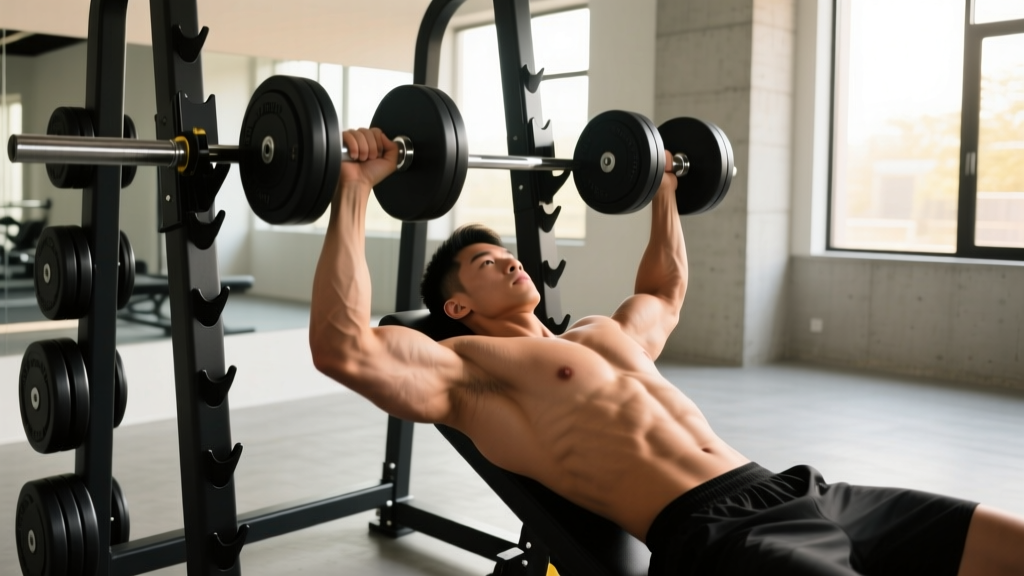
When lifters research chest hypertrophy, a frequent question is: the incline dumbbell press targets which muscle groups primarily? The short answer is the clavicular head of the pectoralis major (the upper chest). However, the movement is a compound exercise that recruits a synergistic chain of secondary movers.
Anatomy of the Incline Press:- Primary Mover: Clavicular Pectoralis Major (Upper Chest)
- Synergists: Anterior Deltoid (Front Shoulders), Triceps Brachii (Elbow Extension)
- Stabilizers: Biceps Brachii (Short Head), Rotator Cuff, Serratus Anterior
According to kinesiology data cataloged by ExRx.net, the angle of the bench dictates the load distribution. A common mistake in commercial gyms is cranking the adjustable bench to a 45-degree or even 60-degree angle. Electromyography (EMG) studies consistently show that a 30-degree incline optimally isolates the clavicular pecs. Pushing the bench to 45 degrees or higher shifts the primary load away from the upper chest and onto the anterior deltoids, effectively turning the movement into an overhead press variation.
Furthermore, the American Council on Exercise (ACE Fitness) highlights that dumbbells allow for horizontal adduction—bringing the hands together at the top of the movement. This converging path is impossible with a straight barbell and is critical for fully shortening the upper chest muscle fibers.
Why Adjustable Dumbbells Dominate Incline Pressing
The upper chest is a relatively small muscle group compared to the lats or glutes. This means micro-loading is essential. Jumping from a 50 lb fixed dumbbell to a 55 lb fixed dumbbell represents a 10% increase in total load. For the clavicular pecs, a 10% jump often forces the anterior deltoids and triceps to take over, ruining the isolation.
Premium adjustable dumbbells offer 2.5 lb to 5 lb micro-increments, allowing for seamless progressive overload. Additionally, failing on an incline bench with a barbell can be dangerous without a spotter or safety pins. With adjustable dumbbells, you can safely drop the weights to the side (with proper technique and equipment) or control them down to your thighs.
2026 Adjustable Dumbbell Comparison Matrix
Not all adjustable dumbbells are built for the incline bench. The handle geometry, weight distribution, and physical footprint dictate how easily you can 'kick up' the weights into position. Below is our 2026 testing matrix for the top contenders.
| Model | Weight Range | Increments | Handle & Footprint | Incline Suitability | 2026 Price (Pair) |
|---|---|---|---|---|---|
| Nuobell 80 | 5 - 80 lbs | 5 lbs | Traditional Steel / Compact | Excellent (Natural Wrist Rotation) | $349 |
| PowerBlock Elite EXP | 5 - 50 lbs (Expandable) | 2.5 lbs (w/ add-ons) | Caged / Blocky | Good (Cage restricts grip width) | $399 |
| Bowflex SelectTech 1090 | 4 - 90 lbs | 5 lbs (varies) | Bulky Plastic / Wide | Fair (Bulky ends hit thighs/knees) | $998 |
| Ironmaster Quick-Lock V2 | 5 - 45 lbs (Expandable) | 2.25 lbs | Square / Bombproof | Great (Solid, but slow to adjust) | $449 |
Top Adjustable Dumbbells Reviewed for the Incline Press
1. Nuobell 80lb Adjustable Dumbbells: The Biomechanical Winner
If your primary goal is mimicking the feel of a commercial gym on an incline bench, the Nuobell 80 is the undisputed champion. Unlike dial-based systems, Nuobells use a twisting handle mechanism that clicks into place. The physical footprint is identical to a standard hex dumbbell.
The Incline Advantage: When kicking up heavy dumbbells on a 30-degree incline, wrist alignment is critical to prevent sprains. The Nuobell features a smooth, traditional steel handle that allows for natural micro-rotations in the wrist joint during the concentric press. The compact head design also prevents the dumbbells from clanking together or hitting your knees during the initial kick-up.
Edge Case Warning: The knurling on the Nuobell handle is relatively mild. If you sweat heavily during high-volume hypertrophy sets, you will need chalk or lifting straps to maintain a secure grip at the bottom of the stretch where the pec is under maximum tension.2. PowerBlock Elite EXP: Best for Micro-Loading and Expansion
The PowerBlock Elite EXP is a modular system. You buy the base 50 lb set, and you can purchase expansion kits up to 70 lbs and 90 lbs later. The urethane-coated steel blocks are virtually indestructible.
The Incline Advantage: The 2.5 lb micro-loading capability (using the included adder weights) is phenomenal for upper chest isolation. When you are pressing 40 lb dumbbells on an incline, moving to 42.5 lbs is a much safer and more sustainable progression than jumping to 45 lbs.
The Drawback: The 'caged' handle design restricts your grip width. On a steep incline, lifters with narrow shoulders may find the bulky cage presses uncomfortably against their forearms at the very bottom of the eccentric stretch, slightly limiting the range of motion (ROM) compared to a traditional dumbbell.
3. Ironmaster Quick-Lock V2: The Heavy-Duty Alternative
Ironmaster utilizes a screw-and-lock mechanism. While it takes 15-20 seconds to change the weight, the trade-off is a solid steel construction that can be dropped from a standing height without breaking internal plastic gears.
The Incline Advantage: Safety. When you reach muscular failure on a heavy incline set, the safest exit is often to guide the dumbbells down and drop them to the floor. Dropping a Bowflex or Nuobell will shatter the internal dial or twisting mechanism. The Ironmaster can handle the abuse of heavy, failed incline sets. The square shape also rests securely on your thighs before the kick-up, preventing the 'rolling' issue common with round dumbbells.
Form, Failure, and Equipment Safety
The National Strength and Conditioning Association (NSCA) emphasizes that equipment safety protocols must match the biomechanical demands of the lift. The incline dumbbell press presents a unique failure scenario: you are pinned backward with heavy loads hovering over your face and neck.
- The Kick-Up: Rest the adjustable dumbbells on your distal thighs (near the knees). Lean back while simultaneously driving your knees up to help momentum carry the weights to your shoulders. Do not try to curl them into place.
- The Eccentric Stretch: Lower the weights until your elbows are slightly below the plane of your torso. With adjustable dumbbells, be mindful of the bulky weight plates hitting the bench pad, which can prematurely stop your ROM.
- The Bail-Out: If you fail the concentric phase, do not drop the weights outward, as this can tear the rotator cuff. Bring the handles toward each other, tuck your chin, and guide the dumbbells down to your thighs, using your legs to absorb the shock as you sit up.
Frequently Asked Questions
Can I use adjustable dumbbells for incline flyes as well as presses?
Yes, but you must be cautious. Adjustable dumbbells like the Bowflex SelectTech are quite long. During an incline flye, the extended length of the dumbbell can cause the ends to scrape against the bench pad or the floor at the bottom of the arc, ruining the stretch. The Nuobell or Ironmaster, which have more compact, traditional footprints, are vastly superior for incline flyes.
Why does my front shoulder hurt during the incline dumbbell press?
Anterior shoulder pain on the incline press is usually caused by two factors: setting the bench too high (45+ degrees), which shifts the load to the anterior deltoid, or flaring the elbows out at a 90-degree angle. Tuck your elbows slightly (about 45 to 60 degrees from your torso) to protect the shoulder capsule and keep the tension on the clavicular pecs.
Are 80 lb adjustable dumbbells heavy enough for chest growth?
For 90% of natural lifters, an 80 lb dumbbell per hand for strict, 30-degree incline presses is elite-level weight. If you can strictly press 80 lb adjustable dumbbells for 8-10 reps with a full eccentric stretch and a 1-second pause at the bottom, your upper chest development will be exceptional. Focus on time under tension and ROM before chasing 90+ lb models.
More gear to consider
All reviews
Easy Dumbbell Exercises: A Beginner's Guide to Neoprene Weights

Cast Iron vs Competition Kettlebells vs Dumbbells for Glutes (2026)
Dumbbell Shoulder Press Form: Rubber Hex vs Urethane Dumbbell Review

Dumbbell Bench Max Calculator & Plate Guide: Olympic vs Standard

How To Match Sauna With Precision: Engineering Thermal Harmony for Health, Space, and Safety