Mastering Incline Dumbbells Curls: Adjustable Dumbbell Review
Master incline dumbbells curls with our step-by-step beginner guide and 2026 adjustable dumbbell comparison to find the perfect grip and weight.

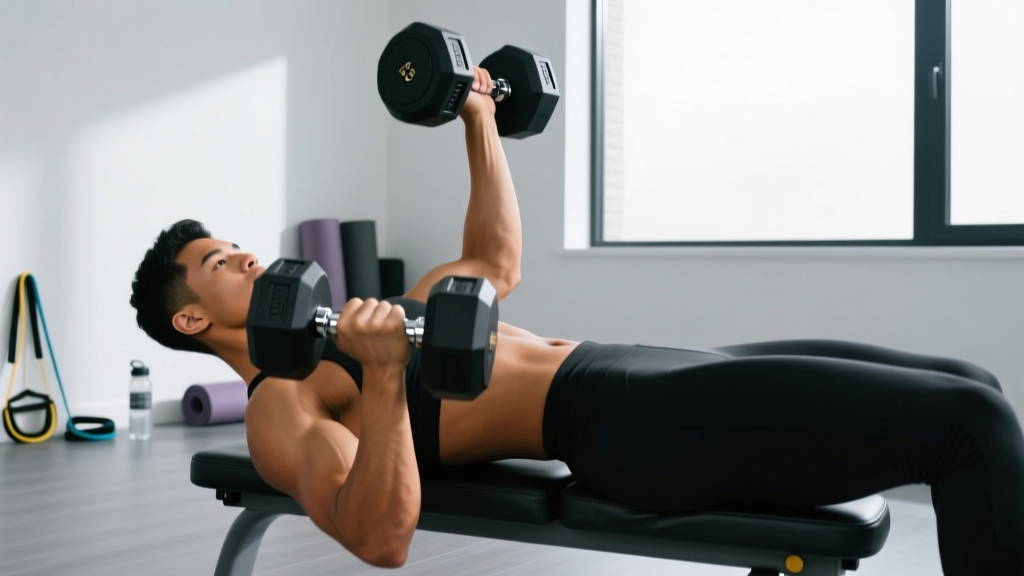
If you are looking to build the coveted bicep "peak" and develop overall arm thickness, the incline dumbbells curls exercise is non-negotiable. However, for beginners stepping into a home gym, this movement presents a unique mechanical challenge: the physical footprint of your equipment. Not all adjustable dumbbells are created equal, and choosing the wrong pair can turn a highly effective muscle-building exercise into an awkward, joint-straining ordeal.
In this comprehensive 2026 guide, we will break down the exact biomechanics of the incline curl, provide a beginner-friendly step-by-step execution protocol, and review the top adjustable dumbbells on the market to help you find the perfect tool for the job.
The Biomechanics: Why the Incline Angle Matters
The biceps brachii consists of two heads: the short head (inner) and the long head (outer). The long head crosses the shoulder joint, meaning its activation is heavily influenced by the position of your arm relative to your torso. According to ExRx.net's biomechanical directory, placing the arm behind the torso via an incline bench puts the long head under a deep, loaded stretch.
Expert Insight: A loaded stretch under tension is one of the primary drivers of hypertrophy (muscle growth). By reclining the bench, you remove the ability to "cheat" the weight up with your shoulders, forcing the biceps to handle 100% of the load.
Step-by-Step Guide: Perfecting Your Form
Before we discuss equipment, you must master the movement. Follow this 4-step protocol to ensure maximum tension and joint safety.
- Set the Bench Angle: Adjust your bench to a 30° or 45° angle. Anything steeper (like 60°) shifts the tension away from the biceps and onto the anterior deltoid (front shoulder).
- The Starting Position: Sit back, lay your torso flat, and let your arms hang straight down toward the floor. Use a neutral grip (palms facing each other). Let your shoulders settle backward and downward—do not let them roll forward.
- The Concentric Phase (The Curl):strong> Initiate the movement by curling the weight up. As the dumbbell passes your thigh, smoothly supinate your wrist (turn your palm to face the ceiling). Squeeze the bicep hard at the top, stopping before your forearm goes completely vertical to keep tension on the muscle.
- The Eccentric Phase (The Lowering):strong> This is where the magic happens. Take a full 3 seconds to lower the weight back to the starting position, gradually rotating your wrist back to a neutral grip as you reach the bottom. Feel the deep stretch in the long head for 1 second before initiating the next rep.
The Adjustable Dumbbell Dilemma: The "Bench-Strike" Failure Mode
When performing incline dumbbells curls, your arms hang straight down, often inches from the floor or the sides of the bench. This creates a major issue for beginners buying their first set of adjustable dumbbells: Length and Girth.
Many popular dial-system adjustable dumbbells are exceptionally long (up to 17.5 inches). If you are under 6 feet tall or using a standard-width weight bench, the bulky ends of these dumbbells will strike the bench pad or your own ribs at the bottom of the movement. This prevents you from achieving the full stretch, entirely defeating the purpose of the exercise.
2026 Adjustable Dumbbell Comparison Matrix
To help you avoid the bench-strike issue, we tested the most popular adjustable models specifically for isolation movements like incline curls. Here is how they stack up as of 2026.
| Model | Handle Profile | Total Length | Price Range | Incline Curl Rating |
|---|---|---|---|---|
| Nuobell 80lb | Knurled Steel (6.3") | 14.5 inches | $429 - $449 | 9.5 / 10 |
| PowerBlock Elite USA | Caged / Urethane | 12.0 inches | $369 - $399 | 7.0 / 10 |
| Bowflex SelectTech 1090 | Rubberized / Contoured | 17.5 inches | $599 - $649 | 4.0 / 10 |
1. Nuobell 80lb Adjustable Dumbbells (The Gold Standard)
If your budget allows, the Nuobell 80lb set is the undisputed champion for incline dumbbells curls. Unlike dial-based systems, Nuobell uses a twist-handle mechanism that adds or removes weight plates seamlessly.
- The Good: The handle is a true 6.3-inch knurled steel bar, mimicking a standard gym dumbbell. The weight distribution is perfectly balanced, and the compact length ensures you will never hit the bench, even if you are 5'4" tall.
- The Bad: The internal mechanism requires careful handling; dropping them will break the alignment pins.
- Best For: Beginners and intermediates focused on strict isolation and hypertrophy.
2. PowerBlock Elite USA (The Durability Pick)
PowerBlock utilizes a unique rectangular, caged design. While virtually indestructible (you can drop them without fear), their shape alters the mechanics of the curl.
- The Good: Extremely compact footprint. The 12-inch length means zero bench interference. Pricing is highly competitive for commercial-grade durability.
- The Bad: The caged design restricts wrist supination. You cannot fully rotate your palm to the ceiling without the cage hitting your forearm. You are forced to perform the curl with a neutral or semi-supinated grip.
- Best For: Lifters who prefer hammer curls or neutral-grip incline curls and prioritize drop-proof durability.
3. Bowflex SelectTech 1090 (The Heavy Lifter - Avoid for Incline)
The Bowflex 1090 adjusts from 10 to 90 pounds, making it a favorite for heavy compound movements like goblet squats and Romanian deadlifts. However, for incline curls, it is a poor choice.
- The Good: Massive weight range eliminates the need to buy heavier sets later. Excellent dial mechanism.
- The Bad: At 17.5 inches long, the dumbbell is unwieldy. During the bottom stretch of an incline curl, the plastic end-caps will aggressively bang against the bench frame or your torso, ruining the tempo and risking injury.
- Best For: Heavy compound lifts, not isolation curls.
Beginner's 6-Week Progression Protocol
The "Stretch & Peak" Protocol
Use this framework with your newly selected adjustable dumbbells to safely build tendon strength and muscle mass.
- Weeks 1-2 (Tendon Adaptation): 3 sets of 12-15 reps. Use a light weight (e.g., 10-15 lbs). Focus entirely on the 3-second eccentric lowering phase. Rest 60 seconds between sets.
- Weeks 3-4 (Hypertrophy Focus): 4 sets of 8-12 reps. Increase the weight by 5 lbs. Introduce a 1-second isometric hold at the very bottom of the stretch. Rest 90 seconds.
- Weeks 5-6 (Mechanical Tension): 4 sets of 6-8 reps. Increase weight to a challenging load (e.g., 25-35 lbs). Maintain strict form; if you must swing your elbows, the weight is too heavy. Rest 120 seconds.
Troubleshooting Common Beginner Mistakes
Even with the perfect adjustable dumbbell, form breakdowns can occur. Watch out for these edge cases:
Flaring the Elbows: As the weight gets heavy, beginners tend to flare their elbows outward. This shifts the load to the brachialis and front delt. Keep your elbows pinned to your sides, pointing directly at the floor.
Using Momentum: If you find yourself throwing your chest forward to initiate the curl, your bench angle is likely too steep, or the weight is too heavy. Drop the weight by 5 lbs and reset your shoulder blades against the pad.
For further reading on muscle activation and joint safety during arm isolation exercises, refer to the comprehensive guidelines provided by the American Council on Exercise (ACE) regarding upper extremity resistance training.
Final Verdict
The incline dumbbells curls movement is a staple for a reason, but it demands equipment that respects human biomechanics. For beginners building a home gym in 2026, investing in a compact, traditional-handled adjustable dumbbell like the Nuobell will save you from the frustration of bench interference and allow you to focus entirely on the mind-muscle connection. Set your bench to 45 degrees, control the eccentric, and watch your biceps respond.
More gear to consider
All reviews
Barbell Collar Comparison and Seated Dumbbell Raise Fixes

One Arm Dumbbell Row: Complete Neoprene Setup Guide
Power Rack vs Squat Rack vs Stand: Incline Dumbbell Overhead Extensions

Setting Up Your Home Gym for Different Arm Exercises with Dumbbells

Dumbbell Cross Bench Pullovers: Adjustable Dumbbell Troubleshooting