
Adjustable Dumbbell Squat Workout: 2026 Setup & Gear Guide
Master your dumbbell squat workout with our 2026 adjustable dumbbell comparison, complete setup walkthrough, and home gym installation guide.

Why Your Dumbbell Squat Workout Demands Precision Gear
Building a lower-body training sanctuary in a spare bedroom or garage requires more than just buying a set of weights; it demands a strategic approach to equipment selection and spatial design. When programming a high-volume dumbbell squat workout, the transition between sets, the ergonomics of the grip, and the physical footprint of your gear dictate the success of your session. In 2026, adjustable dumbbells have evolved past the clunky, rattling prototypes of the early 2010s, offering commercial-grade durability in a compact footprint. However, not all adjustable mechanisms are created equal when held in a front-rack or goblet position.
This comprehensive guide merges a rigorous adjustable dumbbell comparison with a complete setup and installation walkthrough. We will cover everything from subfloor preparation and cradle calibration to the biomechanical realities of squatting with different adjustable weight profiles.
2026 Adjustable Dumbbell Comparison Matrix
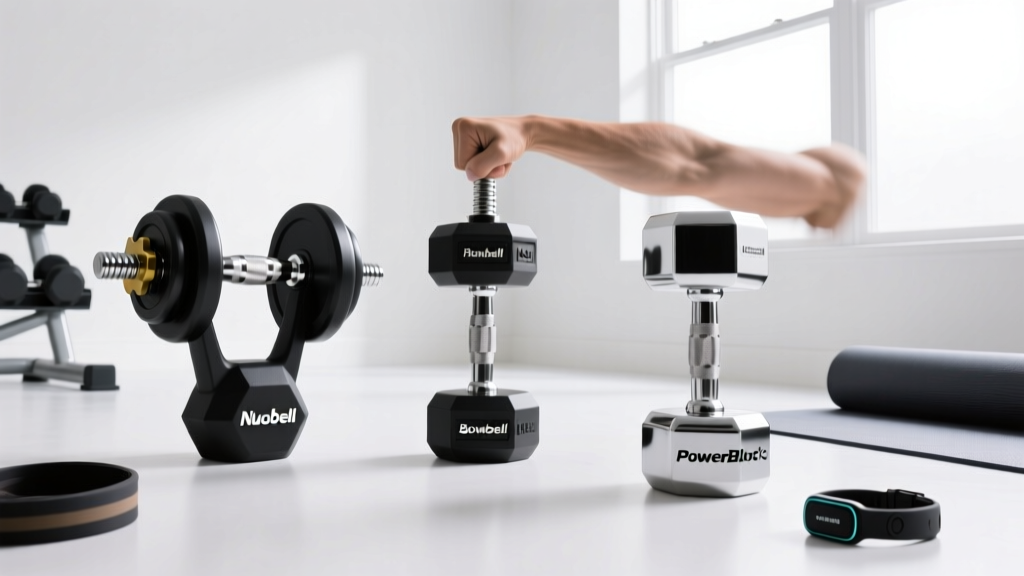
Before unboxing, you must select the right tool for your specific squat mechanics. Below is a head-to-head comparison of the top three adjustable models dominating the home gym market this year, evaluated specifically for lower-body training.
| Feature | Nuobell 80 lb | Bowflex SelectTech 1090i | PowerBlock Elite USA |
|---|---|---|---|
| Current Pricing (Pair) | $449 | $599 | $389 (Base 5-50 lbs) |
| Max Weight | 80 lbs | 90 lbs | 50 lbs (Expandable to 90) |
| Handle Profile | Knurled Steel (15.7'') | Smooth Rubber (17.5'') | Blocky Steel (12.0'') |
| Weight Increment | 5 lbs | 5 lbs | 2.5 lbs |
| Squat Suitability | Excellent (Goblet/Front) | Moderate (Clearance issues) | Excellent (Suitcase/Bear) |
Complete Home Gym Setup and Installation Walkthrough
According to the National Strength and Conditioning Association (NSCA), proper flooring and equipment spacing are critical for force absorption and injury prevention during heavy lower-body movements. A heavy dumbbell squat workout generates significant downward force, meaning your installation must start from the ground up.
Phase 1: Flooring and Spatial Allocation
Do not place adjustable dumbbells directly on concrete or hardwood. The internal mechanisms of dial-and-pin systems are highly sensitive to lateral shock.
- Calculate the Drop Zone: Allocate a minimum 6x6 foot square for your squatting area. This allows for emergency drops without damaging walls or nearby equipment.
- Install Vulcanized Rubber Matting: Purchase 3/4-inch thick vulcanized rubber horse stall mats (typically $2.50 to $3.00 per square foot). These provide the necessary density to absorb the kinetic energy of a dropped 80-lb dumbbell without bottoming out.
- Level the Cradle Zone: Adjustable dumbbell cradles require a perfectly level surface. Use a 24-inch torpedo level on your matting. If the floor slopes more than 1/8 inch over 3 feet, use rubber shims under the cradle base. Note: An unlevel Nuobell cradle will cause the internal locking pin to misalign, rendering the weight adjustment impossible.
Phase 2: Cradle Assembly and Calibration
Unboxing adjustable dumbbells requires care. The shipping weight of a 90-lb pair with cradles often exceeds 220 lbs. Recruit a partner or use a furniture dolly to position the boxes in your designated zone.
- Nuobell Assembly: The Nuobell cradle arrives fully welded. Your primary task is calibrating the baseplate. Insert the dumbbell at the 0-lb (handle only) setting. Rotate the handle; if you feel resistance before the click, adjust the micro-screws on the cradle's rear lip until the shaft glides frictionless.
- Bowflex 1090i Assembly: Secure the storage tray using the provided M8 hex bolts. Ensure the dial indicators are facing outward and that the tray sits flush against the mat. Dust is the enemy of the Bowflex dial; consider placing a microfiber cover over the cradles when not in use.
- PowerBlock Assembly: The PowerBlock uses an open-cage design. Ensure the steel selector pin tether is securely bolted to the cradle frame to prevent the pin from walking away during a fatigued set.
Biomechanics and Clearance: Matching the Dumbbell to the Squat
The physical dimensions of your chosen adjustable dumbbell will fundamentally alter your dumbbell squat workout. The American Council on Exercise (ACE) notes that anterior load placement, like in a goblet squat, significantly increases core activation and enforces an upright torso. However, clearance issues can ruin this mechanic.
Goblet and Front-Rack Squats
For goblet squats, the Nuobell 80 is the undisputed champion. Its traditional 15.7-inch barbell-like shaft and aggressive knurling allow you to cup the inner plate securely. Conversely, the Bowflex 1090i measures 17.5 inches in length. When held vertically in a goblet position, the extended plastic housing frequently collides with the user's chin or chest, forcing an unnatural forward lean.
For front-rack squats (resting the dumbbells on the anterior deltoids), the PowerBlock Elite shines. Its compact, blocky 12-inch profile sits snugly on the shoulder without the lever-arm effect that longer dumbbells create, reducing wrist strain.
Suitcase and Sumo Squats
If your programming relies heavily on sumo squats or suitcase (at-the-sides) squats, the handle clearance becomes paramount. The PowerBlock's enclosed cage can occasionally scrape the knuckles against the internal weight stacks during high-rep sumo variations. In this scenario, the smooth, rounded ends of the Bowflex or the traditional barbell profile of the Nuobell provide a much smoother path along the thighs.
'When designing a hypertrophy-focused leg day, the ability to seamlessly transition between a heavy 80-lb goblet squat and a 40-lb walking lunge without leaving the mat is what makes adjustable systems superior to traditional fixed racks in tight spaces.'
Troubleshooting Common Adjustable Dumbbell Failures
Even premium 2026 models experience wear and tear. Here is how to troubleshoot the most common issues that interrupt a heavy leg day:
1. The Dial Won't Turn (Bowflex)
Cause: Chalk dust or debris has accumulated in the selector gear, or the dumbbell is not seated perfectly flat in the cradle.
Fix: Remove the dumbbell from the cradle. Use compressed air to blow out the dial housing. Ensure the cradle is on a level surface; the internal safety catch will not disengage if the housing is torqued even slightly.
2. Plates Rattle Excessively (Nuobell)
Cause: The internal tension spring has loosened, or the weight stack is not fully engaged.
Fix: Ensure the handle is rotated completely back to the starting notch. If rattling persists, apply a single drop of 3-in-One oil to the central shaft pin to reduce friction and allow the spring to pull the plates tighter together.
3. Selector Pin Sticks (PowerBlock)
Cause: Oxidation on the steel pin or misalignment of the weight stack.
Fix: Wipe the pin with a silicone-based lubricant (avoid WD-40, which attracts dust). Ensure the dumbbell is resting flat on the floor or cradle while inserting the pin to align the internal stack channels.
Frequently Asked Questions
Can I drop adjustable dumbbells after a heavy squat set?
No. Unlike urethane-coated fixed dumbbells, adjustable models contain complex internal locking mechanisms. Dropping them from shoulder height will shatter the plastic housing on dial models and bend the selector pins on block models. Always lower them under control to the floor or cradle.
Which adjustable dumbbell is best for a beginner starting a dumbbell squat workout?
Beginners should prioritize handle ergonomics and smaller weight increments. The PowerBlock Elite USA offers 2.5-lb micro-increments, which is ideal for progressive overload in lower-body movements where jumping 10 lbs at a time can compromise form. Furthermore, its compact size makes it highly forgiving for learning the front-rack position.
Do I need a specialized rack for adjustable dumbbells?
While you don't need a full power rack, you absolutely need the manufacturer's proprietary cradle. Storing adjustable dumbbells on standard wire wall hooks or flat shelves will warp the housing and ruin the calibration. Always use the included or OEM-approved storage trays.
More gear to consider
All reviews
EZ Curl Bar vs Straight Bar vs 15 Minute Full Body Dumbbell Workout

Lower Back Workout Dumbbells: 2026 Loadable Plate Market Trends
Space-Saving Trap Dumbbell Workouts Using Loadable Plates
Beyond Dumbbell Squats: Power Rack vs Squat Rack vs Squat Stand
Best Adjustable Dumbbells for Bicep and Tricep Workouts (2026)
