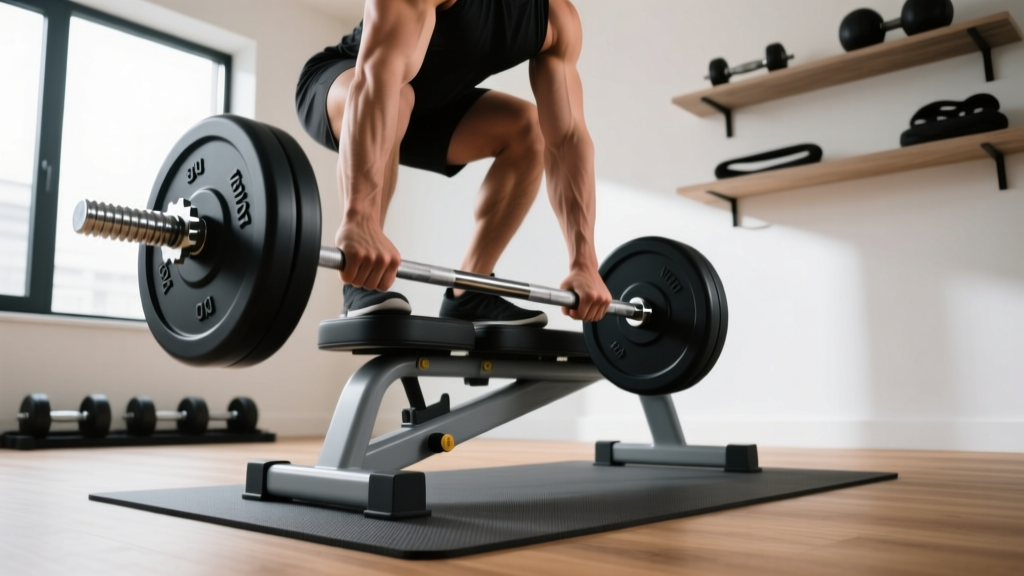
Deadlift Exercise with Dumbbells: Adjustable Set Setup & 2026 Review
Master the deadlift exercise with dumbbells. Our 2026 setup walkthrough and adjustable dumbbell review covers calibration, stance, and heavy hinge safety.

The Biomechanical Challenge: Why Adjustable Dumbbells Change the Hinge
When transitioning from fixed hex dumbbells to adjustable sets, the deadlift exercise with dumbbells introduces unique spatial and mechanical variables. Fixed dumbbells offer a compact, predictable center of mass. Adjustable dumbbells, however, utilize elongated handles, protruding weight plates, and complex locking mechanisms that fundamentally alter your grip width, stance clearance, and floor setup. According to the ExRx Biomechanics Database, the dumbbell deadlift requires precise alignment of the load over the mid-foot to optimize the posterior chain; if your equipment forces an unnatural stance width, you risk lumbar shear and compromised force production.
This comprehensive 2026 setup and installation walkthrough is designed specifically for home gym owners looking to optimize their adjustable dumbbells for heavy hinge movements. We will cover base tray installation, floor calibration, spatial configuration, and a detailed comparison of the top adjustable models on the market to ensure your deadlift setup is both safe and biomechanically sound.
2026 Adjustable Dumbbell Comparison Matrix for Heavy Hinges
Not all adjustable dumbbells are created equal, especially when subjected to the high-torque, floor-level demands of the deadlift. Below is a comparative analysis of the three leading heavy-duty models available in 2026, evaluated specifically on their "deadlift readiness."
| Model | Max Weight (Per DB) | Total Handle Length | Deadlift Suitability | 2026 Avg. Price (Pair) |
|---|---|---|---|---|
| Nuobell 80 | 80 lbs | 16.0 inches | Excellent: Traditional knurled handle; minimal plate overhang prevents shin/knee interference. | $429 |
| Bowflex SelectTech 1090 | 90 lbs | 17.5 inches | Good: High weight capacity, but elongated ends require a wider stance to avoid hitting the legs during the pull. | $599 |
| PowerBlock Pro EXP | 90 lbs (Expandable) | 12.0 inches (Block) | Moderate: Caged block design limits grip width variations; best suited for sumo or wide-stance conventional pulls. | $389 (Base) |
Expert Insight: "The primary failure point during heavy adjustable dumbbell deadlifts isn't the lifter's grip; it's the equipment's tolerance to lateral torque. When the dumbbell rests on the floor, the weight plates must be fully seated in the cradle before the lift initiates to prevent mid-air disengagement."
Step-by-Step Installation and Calibration Walkthrough
Proper installation of your adjustable dumbbell system is critical for the deadlift exercise with dumbbells. Because the weights are picked up directly from the floor, the base tray must be perfectly calibrated to ensure the locking mechanisms (dials or magnetic pins) fully engage the steel plates.
Step 1: Base Tray Assembly and Floor Clearance
The locking mechanisms of adjustable dumbbells rely on gravity and precise alignment. If your base tray is placed on an uneven surface, the internal gears or magnetic pins will misalign, resulting in a "half-racked" dumbbell that could drop a 40lb plate on your foot mid-lift.
- Select the Right Matting: Do not place the tray on soft EVA foam puzzle mats. The compression will cause the tray to tilt when the heavy dumbbell is inserted. Use 3/4" thick vulcanized rubber horse stall mats or high-density gym flooring.
- Level the Tray: Place a 12-inch carpenter's level across the tray's cradle. If the floor is uneven, use rigid plastic shims under the tray base until it is perfectly level horizontally and laterally.
- Secure the Zone: Ensure there is a minimum 24-inch clearance zone in front of the tray. When you finish a set of deadlifts, you will need to blindly guide the dumbbells back into the cradle without looking down and breaking your spinal neutrality.
Step 2: Weight Plate Calibration and Anti-Rattle Checks
Before loading the dumbbells for a heavy working set, perform a mechanical calibration to ensure the plates are tightly bound.
- For Dial Systems (e.g., Bowflex): Turn the dial to the maximum weight (e.g., 90 lbs). Lift the dumbbell and give it a gentle shake. If you hear the distinct "clack" of loose internal plates, the internal tension rod may need tightening via the access panel on the handle base.
- For Magnetic Pin Systems (e.g., Nuobell): Inspect the neodymium magnet on the selector pin. Wipe it with a microfiber cloth to remove any metallic dust or chalk residue from your deadlift sessions, which can weaken the magnetic shear strength by up to 15%.
Configuring Your Space for the Deadlift Exercise with Dumbbells
The spatial configuration of your lifting area dictates your stance. As noted in kinetic analyses by the National Strength and Conditioning Association (NSCA), foot placement relative to the load's center of mass is paramount for force transfer.
⚠️ CRITICAL SAFETY WARNING: The Drop Zone
Never drop adjustable dumbbells from the top of a deadlift rep. Unlike solid cast-iron hex dumbbells, adjustable sets contain plastic housings, delicate dial gears, and magnetic pins. Dropping a 80lb adjustable dumbbell from hip height will instantly shatter the casing, void the warranty, and create a severe projectile hazard from flying steel plates. Every single rep must be lowered with eccentric control to the rubber matting.
Stance Width Adaptation: If you are using the Bowflex 1090 (17.5" length), a narrow conventional stance will result in the bulky weight housings scraping your shins and thighs during the concentric phase. You must widen your stance by approximately 3 to 4 inches compared to your barbell deadlift stance, pushing your knees out slightly to track over your toes and create a "pocket" for the dumbbell ends to pass through.
Execution Setup: Gripping and Hinging with Adjustable Profiles
The grip profile of an adjustable dumbbell drastically changes the mechanics of the deadlift exercise with dumbbells. Here is how to adapt your setup based on your equipment:
Nuobell & Traditional Handle Setups
Because the Nuobell mimics the exact dimensions of a standard commercial dumbbell, you can utilize a neutral grip (palms facing your thighs) or a pronated grip (palms facing you). For heavy pulls exceeding 60 lbs, the neutral grip is superior as it aligns the wrist, elbow, and shoulder joints, reducing bicep tendon strain and allowing for a tighter lat engagement.
PowerBlock & Caged Setups
The PowerBlock's caged design forces your hand into a centralized, enclosed position. This limits wrist extension and prevents you from using lifting straps in a traditional wrapping manner. Setup Hack: Use figure-8 lifting straps rather than traditional lasso straps, as the compact cage makes threading a standard strap nearly impossible.
Common Failure Modes and Troubleshooting
Even with perfect installation, heavy hinging exposes specific wear-and-tear patterns in adjustable dumbbells. Recognizing these failure modes early will prevent injury and equipment damage.
| Failure Mode | Symptom | Troubleshooting & Fix |
|---|---|---|
| Dial Gear Stripping | Dial spins freely without clicking into weight increments. | Stop use immediately. This occurs when users attempt to turn the dial while the dumbbell is resting at an angle in the tray. Always ensure the DB is fully seated flat before turning. |
| Magnetic Pin Shear | Handle lifts, but the heaviest plates remain in the cradle. | Check for chalk buildup on the pin. Clean with isopropyl alcohol. If the magnet has lost polarity due to repeated impacts, contact the manufacturer for a replacement pin. |
| Handle Knurling Wear | Slipping grip during the eccentric lowering phase of the deadlift. | Adjustable dumbbell knurling is often milder than barbells. Use liquid chalk or magnesium carbonate. Avoid wire brushing the handles, as it degrades the chrome coating. |
Final Thoughts on Your 2026 Setup
Mastering the deadlift exercise with dumbbells using adjustable sets requires more than just selecting a weight and pulling. It demands a meticulous approach to equipment installation, floor calibration, and biomechanical adaptation. By choosing the right model for your stance—such as the Nuobell 80 for traditional pullers or the Bowflex 1090 for those needing maximum load capacity—and strictly adhering to the setup protocols outlined above, you can safely build massive posterior chain strength in the confines of your home gym. For further reading on hip hinge mechanics and joint safety, refer to the ACE Fitness Exercise Library to ensure your form remains uncompromised as you scale up the weight.
More gear to consider
All reviews
Squat Stand vs Power Rack: Leg Exercises with Dumbbells for Beginners

Olympic vs Standard Plates for High Intensity Interval Training Workouts with Dumbbells

Home Gym Setup: Barbell Knurling & Back Fat Workouts With Dumbbells
Full Body Dumbbell Workout Men: Olympic vs Standard Plate Mistakes
Urethane vs Rubber Hex Dumbbell Care: Plus How to Use Wrist Straps
