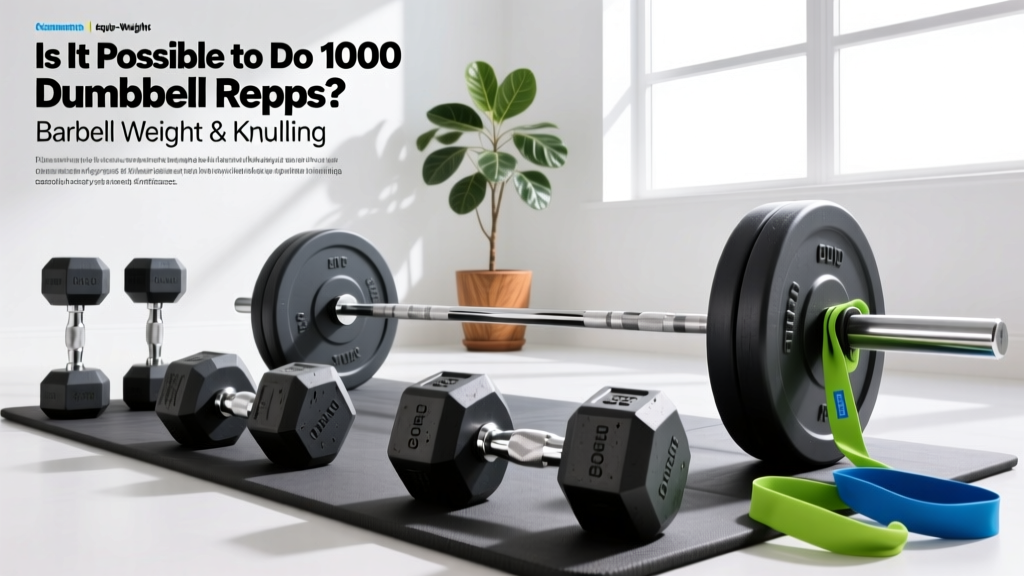
Is It Possible to Do 1000 Dumbbell Reps? Barbell Weight & Knurling
Wondering if it's possible to do 1000 dumbbell reps instead of lifting heavy? Learn why Olympic barbell weight and knurling are crucial for real gains.

A recurring question we encounter in home gym forums and fitness communities is: is it possible to do 1000 dumbbell curls, swings, or presses to build serious muscle without investing in a barbell setup? The short answer is yes, you can physically perform 1,000 repetitions with a light dumbbell. The physiological answer, however, is that you are chasing junk volume. High-repetition endurance work fails to provide the mechanical tension required for maximal strength and significant hypertrophy.
To trigger true neuromuscular adaptation and progressive overload, you eventually need to transition to an Olympic barbell. But this transition is where most lifters hit a wall. When upgrading from dumbbells to a barbell, buyers frequently make catastrophic mistakes regarding barbell weight tolerances, shaft metallurgy, and knurling profiles. This troubleshooting guide will help you avoid the most common pitfalls in the 2026 Olympic barbell market, ensuring your investment supports heavy, safe, and effective lifting.
The '1000 Rep' Endurance Trap vs. Mechanical Tension
Before diving into barbell specifications, we must address why the '1000 dumbbell rep' mentality is a troubleshooting red flag for your training program. According to extensive biomechanical reviews on hypertrophy and rep ranges published by Stronger By Science, mechanical tension is the primary driver of muscle growth. While metabolic stress (the 'burn' you feel on rep 800 of a dumbbell swing) plays a role, it cannot compensate for a lack of heavy load.
Expert Insight: If you are asking 'is it possible to do 1000 dumbbell reps to replace deadlifts or squats?', you are confusing cardiovascular endurance with central nervous system (CNS) adaptation. A standard 20kg Olympic barbell forces your CNS to recruit high-threshold motor units that light dumbbells simply cannot activate.
Once you abandon the high-rep endurance trap and decide to purchase an Olympic barbell, you must navigate a market flooded with misleading specifications. Here are the most common buying mistakes and how to troubleshoot them.
Troubleshooting Mistake #1: Ignoring Tensile Strength and Weight Tolerance
The most critical failure mode in budget barbells is permanent deformation. A standard men's Olympic barbell weighs exactly 20kg (44 lbs) and measures 2200mm in length. However, the weight capacity and tensile strength dictate whether the bar will bend and stay bent when you load it with 300+ lbs.
Understanding PSI (Pounds per Square Inch)
- Below 165,000 PSI: Avoid entirely. These bars will permanently bend if dropped during a heavy deadlift or fail under loads exceeding 250 lbs.
- 190,000 PSI (The Sweet Spot):strong> The industry standard for high-quality multi-purpose bars. The Rogue Ohio Bar utilizes 190k PSI steel, offering the perfect balance of 'whip' (elastic deformation) and rigidity.
- 215,000+ PSI: Reserved for elite powerlifting and weightlifting competition bars (e.g., Eleiko). These offer virtually zero whip and extreme rigidity, but come with a premium price tag.
The Fix: Never buy a barbell based solely on its static weight. Always check the manufacturer's published tensile strength. If it is not listed, assume it is sub-165k PSI and walk away.
Troubleshooting Mistake #2: Choosing the Wrong Knurling Profile
Knurling is the cross-hatched pattern machined into the steel shaft to provide grip. When transitioning from the smooth, often rubber-coated handles of dumbbells to raw steel, beginners often buy the most aggressive knurl they can find, resulting in torn calluses and compromised grip strength. Conversely, buying a bar with shallow knurling leads to dangerous slippage during heavy pulls.
As detailed in the comprehensive BarBend knurling guide, knurl geometry is categorized into three distinct profiles. Here is a troubleshooting matrix to help you select the right one for your training style:
| Knurl Profile | Geometry & Depth | Best Use Case | Common Failure Mode |
|---|---|---|---|
| Hill | Shallow, rounded peaks (0.2mm - 0.5mm depth) | High-rep endurance, casual pressing | Slippage during heavy deadlifts; useless for chalked grips |
| Volcano | Deep valleys with flattened peaks (0.8mm - 1.2mm depth) | Multi-purpose, Powerbuilding, Olympic lifting | None; this is the gold standard for 90% of lifters |
| Mountain | Sharp, pointed peaks with deep cuts (1.0mm - 1.5mm depth) | Max-effort Powerlifting (Deadlifts) | Tears skin during high-volume hypertrophy work |
The Fix: For a primary home gym barbell that will handle everything from heavy squats to high-volume rows, a Volcano knurl is non-negotiable. It provides maximum surface area for grip without acting like a cheese grater on your palms.
Troubleshooting Mistake #3: Misunderstanding Shaft Diameter and Center Knurl
Dumbbell handles are typically thick and uniform. Olympic barbell shafts, however, vary in diameter, which directly impacts how the knurl feels in your hand and how the bar performs under load.
Shaft Diameter Breakdown
- 28mm: Standard for Olympic weightlifting. The thinner shaft allows for greater 'whip' during the clean and jerk, and is easier for smaller hands to hook-grip.
- 28.5mm: The ultimate multi-purpose diameter. It offers enough rigidity for heavy squats while remaining comfortable for dynamic pulls.
- 29mm: Standard for powerlifting. The thicker shaft reduces whip and provides a stiffer, more stable feel during heavy bench presses and deadlifts, but can tax the forearms quickly.
The Center Knurl Debate
Many cheap barbells omit the center knurl to save manufacturing costs. If you plan to back-squat or front-squat heavy loads, a center knurl is vital for preventing the bar from sliding down your back. However, if you exclusively do CrossFit or high-rep cleans, a center knurl will scrape your collarbone. Troubleshoot your programming before selecting the bar's knurl layout.
2026 Market Pricing: What Should You Actually Spend?
The fitness equipment market has stabilized post-pandemic, but inflation and shipping costs have shifted the price brackets for quality Olympic barbells. Here is a realistic 2026 buying framework to ensure you do not overpay for gimmicks or underpay for dangerous steel.
- The 'Junk' Tier ($90 - $160): Found on massive e-commerce sites. These feature 150k PSI steel, brass bushings that seize within six months, and 'Hill' knurling. Troubleshooting advice: Avoid entirely.
- The 'Value Multi-Purpose' Tier ($225 - $295): The sweet spot for most lifters. Expect 190k PSI tensile strength, sintered bronze bushings, composite or ceramic bushings, and a solid volcano knurl. Brands like Rep Fitness and Bells of Steel dominate this tier.
- The 'Premium' Tier ($300 - $450): Includes lifetime warranties, advanced Cerakote or stainless steel shafts (which prevent rust without hiding the knurl depth), and precision needle bearings. Rogue Fitness and American Barbell are the benchmarks here.
- The 'Competition' Tier ($800 - $1,200+): IWF or IPF certified bars (e.g., Eleiko, Urethane-coated elite bars). Only necessary if you are competing in sanctioned meets.
Final Verdict: Ditch the 1000 Reps, Invest in the Steel
So, is it possible to do 1000 dumbbell reps? Yes. Is it the optimal path to building a strong, resilient physique? Absolutely not. Stop chasing metabolic burnout with light weights and invest in a proper Olympic barbell. By prioritizing 190k+ PSI tensile strength, a 28.5mm shaft, and a volcano knurl profile, you will secure a piece of equipment that outlasts your fitness journey and safely supports your transition into heavy, progressive overload training.
More gear to consider
All reviews
Upgrading From the Sit Dumbbell Press: Olympic Barbell Knurling Guide

Power Rack vs Squat Stand: Leg Workout With Dumbbells and Barbells
5 Day Dumbbell Split Upgrade: Power Rack vs Squat Rack vs Stand

Neoprene Dumbbells Weight Showdown: Yes4All vs Amazon Basics 2026

Olympic vs Standard Plates: Dumbbell Silver Chain Setup