
Best HR Fitness Tracker for Strength Training: Garmin vs WHOOP (2026)
Comparing the Garmin Venu 3 and WHOOP 4.0 to find the best HR fitness tracker for strength training. We test grip artifacts, rep counting, and recovery.

The Wrist-Flexion Problem: Why Strength Training Breaks Optical HR
When evaluating an hr fitness tracker for weightlifting, most consumers make a critical mistake: they assume cardiovascular tracking translates perfectly to the weight room. It does not. The fundamental enemy of optical heart rate sensors—known as photoplethysmography (PPG)—is muscle contraction and wrist flexion. When you grip a barbell, kettlebell, or dumbbell, the flexor muscles in your forearm contract, restricting capillary blood flow and creating severe motion artifacts. The result? Your watch thinks your heart rate is 85 BPM while you are actually redlining at 165 BPM during a heavy set of deadlifts.
As we navigate the fitness tech landscape in 2026, two distinct philosophies dominate the strength training wearable market: the feature-rich smartwatch and the screenless recovery band. In this head-to-head comparison, we pit the Garmin Venu 3 against the WHOOP 4.0 to determine which device truly earns the title of the best hr fitness tracker for lifters, powerlifters, and CrossFit athletes.
Contender 1: Garmin Venu 3 (The Smartwatch Rep-Counter)
The Garmin Venu 3 (retailing around $449) is Garmin's premier lifestyle and fitness smartwatch, equipped with the highly regarded Elevate V5 optical heart rate sensor. For strength training, Garmin includes a dedicated 'Strength' activity profile that attempts to automatically count reps, identify the muscle group targeted, and track rest intervals.
Sensor Performance and Grip Artifacts
According to extensive testing by DC Rainmaker, the Elevate V5 sensor is a massive leap forward for running and cycling. However, during heavy compound lifts like pull-ups or barbell rows, the Venu 3 still suffers from the inherent limitations of wrist-based PPG. When your wrists are bent at extreme angles under load, the sensor loses contact with the skin's microvasculature. Pro-Tip: To mitigate this, lifters using the Venu 3 should wear the watch two finger-widths above the wrist bone and tighten the band significantly before heavy sets.
The Rep-Counting Algorithm: Hit or Miss?
Garmin's automatic rep counting relies on the watch's accelerometer and gyroscope to detect the concentric and eccentric phases of a movement. While it excels at identifying strict bicep curls and overhead presses, it frequently fails during complex, multi-joint movements like Romanian deadlifts or walking lunges. You will often find yourself manually editing the rep count and muscle group directly on the watch's touchscreen between sets, which can disrupt your rest timer and overall workout flow.
💡 The Chest Strap WorkaroundIf you demand 100% HR accuracy during heavy lifting while using the Venu 3, you must bypass the optical sensor entirely. Pairing the watch via ANT+ or Bluetooth to a Polar H10 or Garmin HRM-Pro Plus chest strap eliminates wrist-flexion artifacts entirely, providing clinical-grade heart rate data even during max-effort kettlebell swings.
Contender 2: WHOOP 4.0 (The Screenless Bicep Specialist)
The WHOOP 4.0 takes a radically different approach. Priced via a subscription model (approximately $30/month or $239/year), it features no screen, no GPS, and no rep-counting algorithms. Instead, it focuses entirely on continuous biometric data collection, specifically Heart Rate Variability (HRV), resting heart rate, and respiratory rate, to calculate your daily 'Strain' and 'Recovery' scores.
The Bicep Band Advantage
WHOOP's secret weapon for strength training is its optional Bicep Band accessory. By moving the PPG sensor from the wrist to the bicep, WHOOP completely bypasses the wrist-flexion problem. The bicep provides a thick, stable vascular bed that does not experience the same grip-induced restriction as the forearm. As noted in DC Rainmaker's WHOOP 4.0 Review, the bicep placement yields optical HR accuracy that rivals chest straps during heavy resistance training, making it arguably the most accurate hr fitness tracker for lifters who refuse to wear a chest strap.
The Strain vs. CNS Fatigue Discrepancy
WHOOP's 'Strain' score is heavily weighted toward cardiovascular output (time spent in elevated heart rate zones). This creates a major edge case for strength athletes. A grueling 90-minute powerlifting session involving heavy singles and 5-minute rest periods might only yield a WHOOP Strain score of 8 or 9 out of 21, because your heart rate rarely stays above 140 BPM. However, your Central Nervous System (CNS) and muscular tissues are highly fatigued. While WHOOP's HRV-based 'Recovery' score will accurately reflect this systemic fatigue the next morning (often dropping you into the 'Yellow' or 'Red' zone), the real-time Strain metric can feel deeply unsatisfying for lifters who want validation for their heavy gym sessions.
Head-to-Head Spec Matrix
| Feature | Garmin Venu 3 | WHOOP 4.0 |
|---|---|---|
| Primary Sensor | Elevate V5 (Wrist) | Custom PPG (Wrist/Bicep) |
| Strength Features | Auto rep counting, rest timer, muscle map | None (Focuses on post-workout recovery) |
| HR Accuracy in Lifts | Moderate (Drops during heavy grips) | Excellent (When using Bicep Band) |
| Display | 1.4-inch AMOLED Touchscreen | None (App-only) |
| Battery Life | Up to 14 days | 4-5 days (Charge-on-device) |
| Pricing Model | $449 (One-time hardware cost) | ~$239/year (Subscription required) |
Real-World Failure Modes & Edge Cases
When selecting your hr fitness tracker, you must consider the specific modality of your strength training. Here is how both devices handle common gym edge cases:
- CrossFit & Gymnastics: The Venu 3 will struggle immensely with muscle-ups, ring dips, and rope climbs due to extreme wrist extension and impact. WHOOP, worn on the bicep, will maintain a solid HR lock, but its Strain algorithm may misinterpret the high-impact vibrations as cardiac noise if the band is not tightened sufficiently.
- Strongman & Odd-Object Lifting: Carrying Atlas stones or flipping heavy tires involves massive spikes in intra-abdominal pressure (the Valsalva maneuver). This causes rapid, violent fluctuations in blood pressure. According to the Mayo Clinic's guidelines on exercise intensity, optical sensors lag behind ECG chest straps by several seconds during these rapid vascular shifts. Neither the Venu 3 nor the WHOOP will capture the true peak HR of a 1-rep max deadlift; both will smooth the data, showing a lower peak than reality.
- Rest Period Tracking: If you rely on auto-rest timers, the Venu 3 requires you to manually tap the screen to start the timer after a set. WHOOP does not track sets or rests at all, functioning purely as a background biometric logger.
The Verdict: Which HR Fitness Tracker Should You Buy?
The 'best' device depends entirely on what you value more: intra-workout utility or post-workout recovery management.
Choose the Garmin Venu 3 if you want a traditional smartwatch that tracks your gym sessions, provides a visual rest timer, and attempts to log your sets and reps. It is the superior choice for bodybuilders and general fitness enthusiasts who want all their data consolidated in the Garmin Connect ecosystem without paying a monthly subscription fee. Just be prepared to manually edit your reps and consider buying a chest strap for heavy compound days.
Choose the WHOOP 4.0 (paired with the Bicep Band) if you are a serious strength athlete, powerlifter, or tactical athlete who cares more about Central Nervous System recovery and sleep optimization than logging individual sets. WHOOP provides the most accurate optical HR tracking during lifts thanks to bicep placement, and its HRV-driven recovery metrics will help you auto-regulate your training volume, preventing overtraining and injury.
Frequently Asked Questions
Can I use the Garmin Venu 3 for powerlifting?
Yes, but you should disable the auto-rep counting feature to save battery and reduce UI friction. Use the watch primarily for its rest timer and overall workout duration tracking, and pair it with a chest strap for accurate heart rate zone monitoring.
Does WHOOP count calories burned during weightlifting?
WHOOP does not display a real-time calorie counter. Instead, it calculates your overall daily energy expenditure and Strain based on your heart rate relative to your personalized baseline. Because weightlifting features long rest periods, WHOOP's calorie burn estimate for a lifting session will be significantly lower than a cardio session of the same duration.
Is a chest strap still necessary in 2026?
For runners and cyclists, modern optical sensors like Garmin's Elevate V5 have largely eliminated the need for chest straps. However, for heavy strength training, gymnastics, and CrossFit, the physics of wrist flexion still limit optical accuracy. A chest strap or a bicep-mounted optical band remains the gold standard for lifters.
More gear to consider
All reviews
Apple Watch Fitness Tracking Value: 2026 Budget Guide

Crane Fitness Tracker vs GPS Running Watches: 2026 Feature Comparison

Best Apple Fitness Tracker Guide: Watch SE vs Ultra 2 (2026)
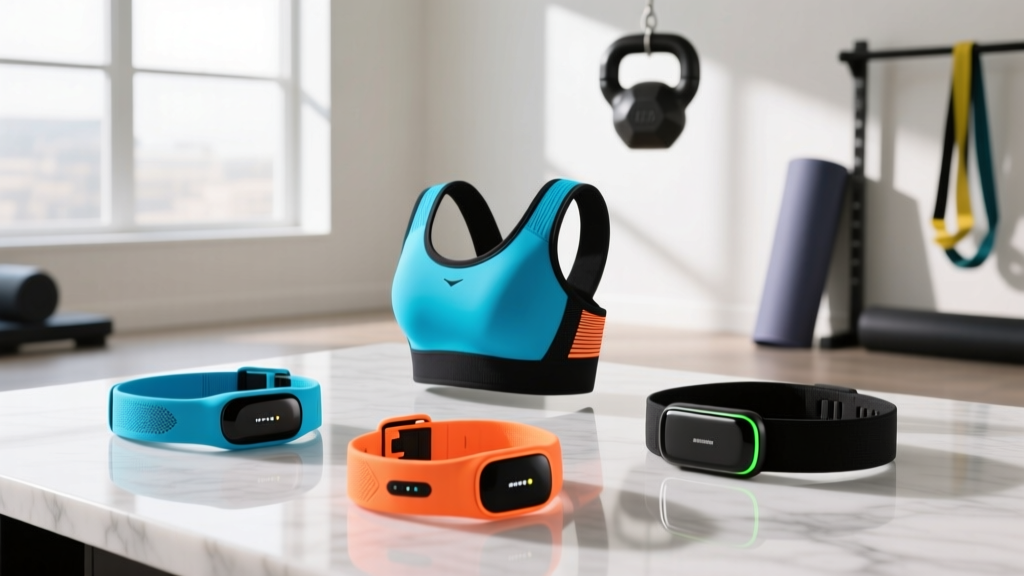
Fitness Tracker Not Wrist: Top Wearables for Strength Training

What Is the Highest Rated Fitness Tracker? A 2026 Value Analysis
