
Fitbit Inspire 3 vs Inspire HR: Which Fitness Tracker Wins?
Comparing Fitbit Inspire 3 vs Inspire HR? We break down battery life, heart rate accuracy, and smart features to help you choose the right tracker.

The Core Matchup: Fitbit Inspire 3 vs Inspire HR
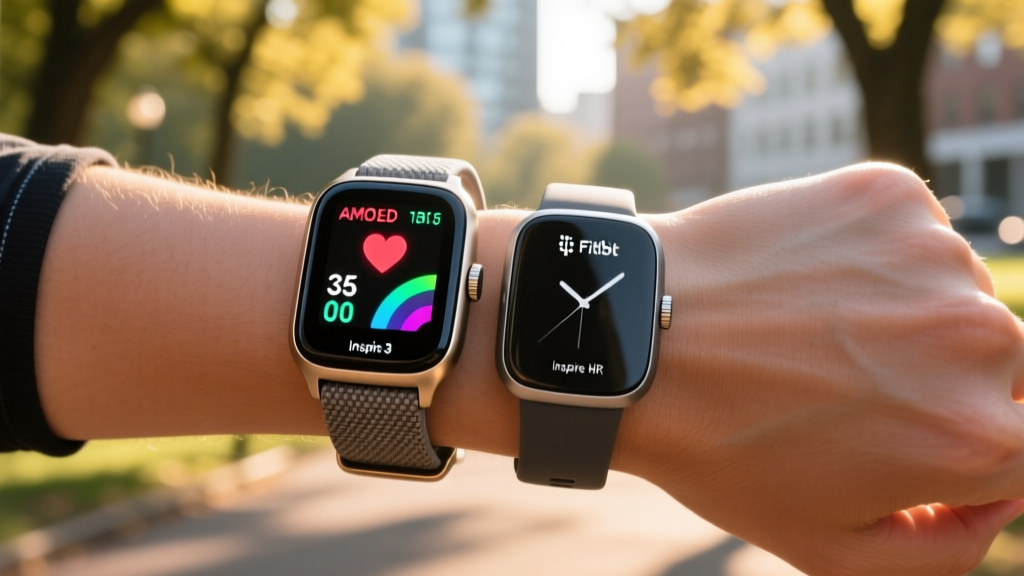
When evaluating budget-friendly wearables, the debate of fitbit inspire 3 vs inspire hr remains surprisingly common among users upgrading older devices or shopping the refurbished market in 2026. While the Inspire HR laid the groundwork for affordable biometric tracking upon its release, comparing the fitbit inspire 3 vs inspire hr today reveals a massive generational leap in display technology, sensor accuracy, and ecosystem integration. If you are holding onto an older Inspire HR or considering a steeply discounted legacy model, you need to know exactly what hardware and software capabilities you are gaining—or missing out on—by making the switch.
The Fitbit Inspire HR was a pioneer in bringing continuous optical heart rate monitoring to the sub-$100 price point. However, the wearable landscape has shifted dramatically. With Google's full integration of the Fitbit ecosystem into Health Connect and the Google Fit app, the modern Fitbit Inspire 3 operates on a completely different software architecture. Below, we dismantle the hardware, software, and daily usability differences to help you decide which tracker belongs on your wrist.
Display and Hardware Design: AMOLED vs Grayscale OLED
The most immediate difference when placing the inspire hr vs inspire 3 side-by-side is the screen. The Inspire HR utilizes a grayscale OLED touch display. While it is perfectly legible in most indoor lighting, it struggles under direct sunlight and lacks the visual depth required for complex on-screen data graphs.
The Inspire 3 upgrades to a vibrant, full-color AMOLED display. This is not just an aesthetic improvement; it fundamentally changes how you interact with the device. The AMOLED panel supports an Always-On Display (AOD) mode, allowing you to glance at your heart rate zone or pace without flicking your wrist. Furthermore, the Inspire 3 features a more robust physical button interface, replacing the Inspire HR's single, often-unresponsive side button with a dual-button setup that provides much-needed tactile feedback during sweaty workouts when the touchscreen might fail to register swipes.
Regarding build materials, both trackers utilize a lightweight polycarbonate resin casing and interchangeable elastomer bands. However, the Inspire 3's chassis is slightly more contoured to the wrist, improving the optical sensor's skin contact—a critical factor for heart rate accuracy during high-intensity interval training (HIIT) and weightlifting.
Heart Rate Tracking and Health Metrics
Does Fitbit Inspire Track Heart Rate?
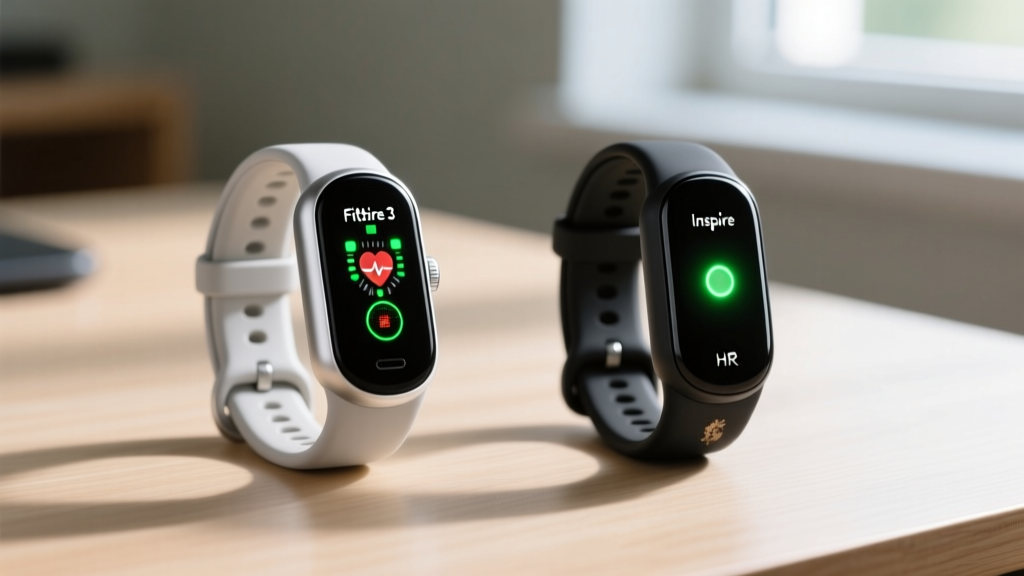
A common query from entry-level buyers is: does fitbit inspire track heart rate? The answer is an absolute yes. Both the legacy Inspire HR and the modern Inspire 3 feature Fitbit's PurePulse optical heart rate technology, providing 24/7 continuous tracking, resting heart rate (RHR) monitoring, and active zone minutes. You do not need a chest strap for standard cardio tracking with either device.
Clarifying the 'Fitbit Inspire 3 HR' Naming Confusion
Many users search for the fitbit inspire 3 hr, assuming there is a base model without heart rate and a premium model with it, similar to the original Inspire and Inspire HR lineup from 2019. This is a misconception. In the current generation, all Inspire 3 models include advanced heart rate tracking out of the box. There is no non-HR version of the Inspire 3. When you see the term 'fitbit inspire 3 hr' in retail listings, it is simply a keyword-stuffed title used by third-party sellers to ensure their listings appear in heart-rate-specific searches.
Sensor Accuracy: Gen 3 vs Modern Multi-Path Optics
According to extensive testing by DC Rainmaker's wearable reviews, the Inspire HR performs admirably during steady-state cardio like jogging or cycling. However, its older single-path green LED sensor array struggles with rapid heart rate spikes, such as those experienced during CrossFit or heavy barbell lifting. The Inspire 3 utilizes a newer, multi-path optical sensor array that samples blood volume changes at a much higher frequency. This results in significantly tighter tracking against gold-standard chest straps during erratic, high-intensity movements.
Beyond Heart Rate: SpO2, Sleep, and Stress
Where the fitbit inspire hr vs inspire 3 comparison truly diverges is in secondary biometric tracking. The Inspire HR is fundamentally a step-counter with a heart rate monitor. It lacks the hardware for advanced blood oxygen monitoring.
The Inspire 3 includes red and infrared sensors dedicated to SpO2 (blood oxygen variation) estimation. While not a medical device, this feature is invaluable for identifying potential breathing disturbances during sleep, a core component of Fitbit's Sleep Profile. Furthermore, the Inspire 3 calculates a Daily Readiness Score (requires Fitbit Premium) and a Stress Management Score based on Heart Rate Variability (HRV). The Inspire HR's hardware simply cannot capture the granular beat-to-beat HRV data required for these modern recovery algorithms.
Battery Life and Charging Mechanisms
Battery life is a cornerstone of the budget tracker appeal. The Inspire HR is rated for up to 5 days of battery life. In real-world 2026 usage, with continuous heart rate tracking and daily 45-minute GPS-connected workouts, you will likely need to charge the Inspire HR every 3.5 to 4 days.
The Inspire 3 boasts a rated battery life of up to 10 days. Even with the Always-On Display enabled—which cuts battery life roughly in half—you are still matching the Inspire HR's maximum theoretical lifespan. Additionally, the charging mechanisms differ entirely. The Inspire HR uses a flat magnetic puck that aligns with metal contacts on the back of the tracker. These contacts are prone to sweat corrosion and charging failures over time. The Inspire 3 uses a proprietary pinch-clip charger that clamps securely over the device, ensuring a reliable connection and eliminating the corrosion issue.
Specification Comparison Matrix
| Feature | Fitbit Inspire HR (Legacy) | Fitbit Inspire 3 (Current) |
|---|---|---|
| Display | Grayscale OLED Touch | Color AMOLED Touch + AOD |
| Heart Rate Sensor | PurePulse (Gen 3 Equivalent) | Multi-Path Optical (Gen 5 Equivalent) |
| SpO2 Monitoring | No | Yes (Red/IR Sensors) |
| Battery Life | Up to 5 Days | Up to 10 Days |
| GPS | Connected (Phone Required) | Connected (Phone Required) |
| Water Resistance | 50 Meters | 50 Meters |
| Smart App Ecosystem | Legacy Fitbit App | Google Fit / Health Connect |
The 2026 Ecosystem: Google Health Connect
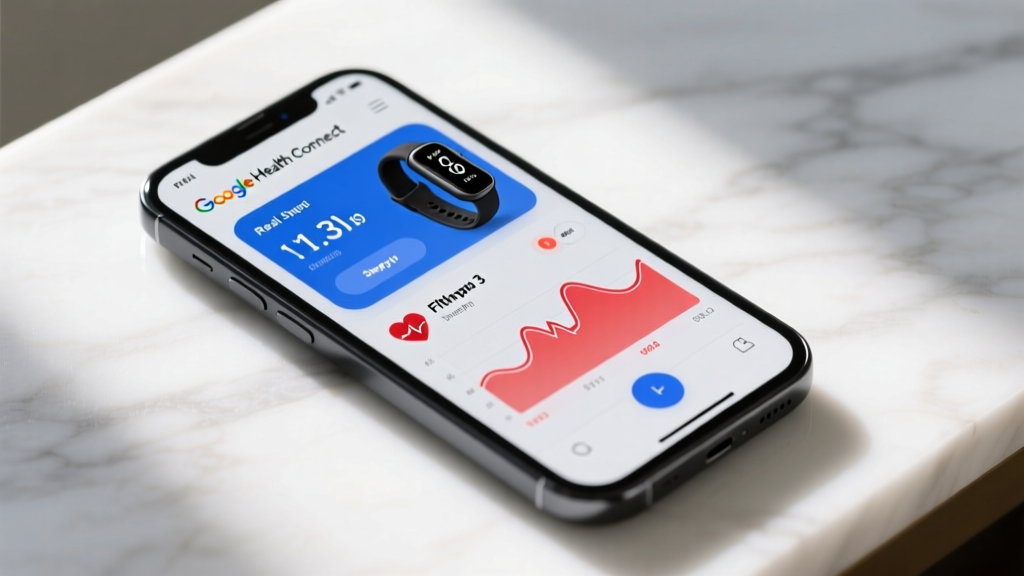
Hardware is only half the equation. In 2026, the software ecosystem dictates a wearable's long-term viability. The Inspire HR was built for the standalone Fitbit app. While legacy support remains, new feature rollouts, UI updates, and third-party API integrations are exclusively prioritized for modern devices like the Inspire 3 via Google's Health Connect API. If you use apps like Strava, MyFitnessPal, or Samsung Health, the Inspire 3's native ability to write data directly to the Health Connect hub ensures seamless, real-time data sharing that the Inspire HR struggles to maintain reliably on modern Android and iOS operating systems.
Frequently Asked Questions
Is the Fitbit Inspire HR still worth buying in 2026?
Only if you are on an extremely strict budget (under $40) and buying it used or refurbished. The Inspire HR still accurately counts steps and tracks basic steady-state heart rate. However, you will miss out on the AMOLED screen, SpO2 tracking, HRV-based stress metrics, and seamless Google Health Connect integration. For most users, the Inspire 3 is a vastly superior long-term investment.
What is the exact difference in the Fitbit Inspire HR vs Inspire 3 for weightlifters?
For weightlifters, the primary difference lies in the optical sensor's ability to handle 'cadence lock' and rapid heart rate fluctuations. The Inspire 3's newer sensor array and improved chassis contouring maintain better skin contact during heavy gripping and pulling movements, resulting in fewer dropped data points during sets of deadlifts or pull-ups compared to the Inspire HR.
Does the Fitbit Inspire track heart rate continuously while sleeping?
Yes. Both devices track heart rate continuously 24/7, including during sleep. However, the Inspire 3 uses this nocturnal heart rate and HRV data to generate a comprehensive Sleep Profile and Daily Readiness Score, whereas the Inspire HR only provides basic sleep stage estimations (Light, Deep, REM) based on movement and gross heart rate changes.
Do I need a subscription to use the Fitbit Inspire 3?
No. Core features like continuous heart rate tracking, step counting, sleep staging, and smartphone notifications are completely free. Fitbit Premium (a paid subscription) is only required if you want advanced breakdowns like the Daily Readiness Score, the full Sleep Profile animal classifications, and deep-dive wellness reports. The Inspire HR also operates on this freemium model, though many newer Premium features are no longer backward-compatible with its older firmware.
More gear to consider
All reviews
2026 Market Shift: Apple Watch as Fitness Tracker vs $100 Bands

Oura Ring Fitness Tracker vs. Budget Alternatives Under $100

Beyond the Fitbit Blaze Fitness Tracker: GPS Watch Upgrades

Scale Accuracy Troubleshooting for Fitness Tracker App Development

Cycling Computer and Sensor Guide: Pairing an HRV Fitness Tracker
