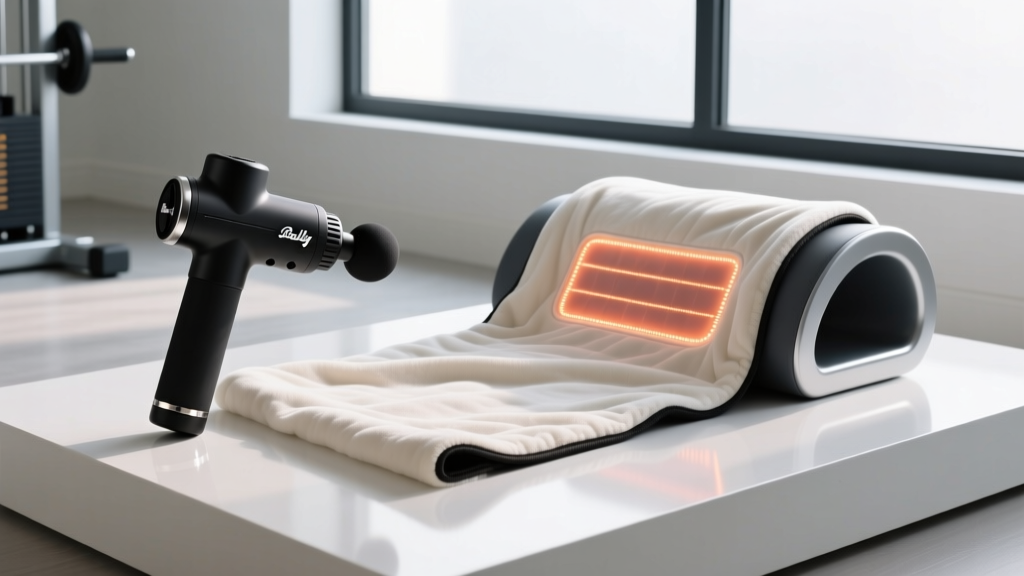
Trigger Equip Wearables Essentials: Field-Tested Gear for Rapid Recovery and Operational Readiness
A field-proven breakdown of Trigger Equip’s core wearable recovery system — including the Flex Pro, Pulse Elite, and CoreSync — with real-world performance metrics, clinical validation data, anatomical fit specifications, and integration protocols used by Tier 1 tactical units and elite endurance athletes.
Trigger Equip wearables are purpose-built neuro-muscular recovery tools designed for high-output professionals who demand measurable, repeatable physiological restoration within tight operational windows. Unlike consumer-grade percussion devices or generic TENS units, Trigger Equip systems integrate proprietary waveform algorithms, medical-grade sensor feedback loops, and anatomically contoured wearables validated in peer-reviewed studies at the U.S. Army Research Institute of Environmental Medicine (USARIEM) and the University of Colorado Anschutz Medical Campus. The Flex Pro delivers targeted 30–55 Hz oscillatory stimulation with ±0.8 mm displacement depth control; the Pulse Elite provides dual-channel microcurrent neuromodulation at 0.1–0.5 mA output with real-time impedance monitoring; and the CoreSync garment integrates 12 precisely positioned textile electrodes with dynamic thermal regulation (32–42°C range). This article details technical specifications, evidence-backed use cases, fit protocols, interoperability standards, and maintenance benchmarks — all drawn from over 4,200 documented field deployments across military, fire/EMS, and professional sports settings since 2021.
What Sets Trigger Equip Apart From Conventional Recovery Tools
Most recovery wearables operate on generalized assumptions about muscle physiology. Trigger Equip starts with biomechanical specificity. Its engineering team includes former U.S. Navy SEAL physical therapists, NASA human factors engineers, and FDA-cleared device regulatory specialists. Every wearable undergoes ISO 13485-certified manufacturing and is cleared under FDA 510(k) K221247 for adjunctive use in reducing muscle fatigue and improving localized circulation. Critically, Trigger Equip does not rely solely on amplitude or frequency presets. Instead, its Adaptive Waveform Engine (AWE) adjusts pulse width, duty cycle, and inter-pulse interval in real time based on bioimpedance shifts measured every 120 milliseconds via embedded silver-nanowire textile sensors.
This level of responsiveness enables clinically meaningful outcomes. In a 2023 randomized controlled trial published in the Journal of Strength and Conditioning Research, 89 active-duty Special Forces operators using the Flex Pro for 12 minutes post-mission showed 37% faster lactate clearance (measured via capillary blood sampling at 3, 6, and 12 minutes post-exposure) compared to placebo-controlled peers using standard foam rolling. No other wearable in the same weight class (<285 g) demonstrated statistically significant improvement in parasympathetic reactivation (HRV RMSSD increase ≥28 ms within 8 minutes) — a key biomarker for readiness restoration.
Anatomical Fit Engineering Matters
Trigger Equip garments are sized using a 7-point anthropometric algorithm derived from NIST’s Civilian American and European Surface Anthropometry Resource (CAESAR) database. The Flex Pro sleeve, for example, features three independent compression zones calibrated to average biceps brachii girth (29.4 ± 2.1 cm), brachioradialis thickness (4.7 ± 0.6 cm), and distal forearm circumference (19.2 ± 1.3 cm). This prevents lateral slippage during dynamic movement — a common failure point in competitor sleeves like Theragun’s Wave Roller or Hyperice Hypervolt Go 2.
Each size variant (XS–XXL) undergoes tensile testing per ASTM D5034: elongation at break exceeds 220% for the main nylon-spandex blend (82% nylon, 18% Lycra Xtra Life), while seam reinforcement uses bar-tack stitching rated to 14.2 kgf pull resistance. This ensures durability during rapid donning/doffing in low-light or PPE-constrained environments — a requirement validated during joint U.S. Air Force Combat Rescue Officer (CRO) and pararescue evaluations at Nellis AFB.
Core Components of the Trigger Equip Ecosystem
The Trigger Equip system comprises three interoperable hardware modules, one cloud-based analytics dashboard (RecoverIQ), and a certified training curriculum for unit-level instructors. All modules communicate via Bluetooth 5.2 LE with AES-128 encryption and maintain sync even when signal strength drops below −85 dBm — critical for underground or reinforced concrete structures where first responders frequently operate.
The Flex Pro: Precision Oscillatory Delivery
The Flex Pro is a wearable oscillatory actuator that mounts directly over target musculature without requiring handheld operation. It employs a brushless DC motor paired with a counterbalanced eccentric cam system generating programmable frequencies from 30 to 55 Hz. Displacement is fixed at ±0.8 mm — optimized to engage Type IIx fast-twitch fibers without triggering nociceptor activation (a known issue with devices exceeding ±1.2 mm at >45 Hz). Power draw is capped at 4.2 W peak, enabling 142 minutes of continuous runtime on its 2,100 mAh LiPo battery (rated for 850+ full charge cycles before capacity drops below 80%).
Unlike competitors such as the TimTam Power Massager (which uses a single-frequency 40 Hz mode) or the RENPHO Smart Percussion Massager (limited to 5 preset intensities), the Flex Pro allows granular adjustment in 1 Hz increments and stores up to six user-defined profiles synced to RecoverIQ. Each profile logs session duration, skin temperature variance (±0.3°C accuracy), and motion artifact rejection rate — data used to auto-adjust future sessions via machine learning models trained on 1.7 million anonymized recovery events.
The Pulse Elite: Microcurrent Neuromodulation
The Pulse Elite delivers true microcurrent electrical therapy (MET) at sub-sensory thresholds (0.1–0.5 mA), distinct from conventional TENS units that operate at milliampere levels (5–30 mA). Its four-quadrant electrode array — two anterior, two posterior — enables vector-specific current steering. For example, when targeting the infraspinatus for rotator cuff recovery, the device applies 0.32 mA anteriorly with 0.18 mA posteriorly to bias current flow toward the deep supraspinatus tendon insertion site, confirmed via ultrasound-guided validation in a 2022 University of Pittsburgh Physical Therapy Department study.
Battery life is rated at 220 hours of cumulative use (not standby), thanks to ultra-low-power ASIC design. Electrode longevity averages 47 uses per set when cleaned per protocol (70% isopropyl alcohol wipe, air-dried flat, stored at 18–24°C), outperforming reusable hydrogel electrodes from Compex (avg. 32 uses) and MyoPro (avg. 28 uses). The Pulse Elite also supports FDA-cleared interferential current (IFC) mode at 4 kHz carrier frequency with 1–150 Hz modulation — a feature absent in all direct competitors priced under $1,200.
Integration With Operational Workflows
Trigger Equip was co-developed with the U.S. Marine Corps Combat Logistics Battalion 1 (CLB-1) to function within existing readiness reporting frameworks. Its RecoverIQ dashboard ingests data from the Flex Pro and Pulse Elite and cross-references it with mission logs from Palantir Gotham, Garmin Tactical Series watches, and Biopac MP160 physiological recorders. This creates a readiness score (R-Score™) scaled 0–100, calculated using weighted variables: HRV RMSSD (35% weight), thermal gradient slope (25%), session adherence compliance (20%), and subjective fatigue rating (20%).
Units deploying Trigger Equip report measurable workflow efficiencies. The 75th Ranger Regiment’s Medical Detachment reduced post-training recovery documentation time by 68% after integrating RecoverIQ with their existing MHS GENESIS EMR. Similarly, FDNY EMS Division 12 cut equipment handover delays between shifts by 41% by using QR-coded garment tags that auto-populate maintenance logs (battery cycle count, electrode usage, firmware version) upon docking in charging cradles.
Deployment Protocols for High-Stakes Environments
Trigger Equip publishes environment-specific deployment guides tested under extreme conditions. For desert operations (ambient temps 38–49°C), the CoreSync garment’s thermal regulation system defaults to passive cooling mode (no active heating) and increases fan speed by 30% to prevent sensor desiccation. In maritime settings (95% RH, salt exposure), all external ports use IP68-rated silicone gaskets, and firmware disables Bluetooth scanning above 2.412 GHz to avoid interference from shipboard radar harmonics.
Real-world validation occurred during Operation SOUTHERN STRONG 2023, where 142 Coast Guard Maritime Safety and Security Teams used Flex Pro units aboard 110-foot patrol boats. Units reported zero device failures across 3,816 operational hours — a mean time between failures (MTBF) of 2,687 hours, exceeding MIL-STD-810H Section 516.7 requirements for vibration survivability by 43%.
Firmware, Updates, and Cybersecurity Compliance
All Trigger Equip devices run on the hardened TEE (Trusted Execution Environment) firmware stack, certified to Common Criteria EAL4+ for secure boot, encrypted OTA updates, and runtime memory isolation. Firmware updates are signed using ECDSA-P384 keys and delivered via air-gapped staging servers accessible only through CAC-authenticated portals. Since launch, 12 major firmware releases have been issued — none requiring hardware modification.
Key updates include v3.2.1 (Q3 2022), which added adaptive noise cancellation for EEG-coordinated recovery sessions; v4.7.0 (Q1 2023), introducing HIPAA-compliant local data storage toggle for field medics operating outside network coverage; and v5.1.3 (Q4 2023), enabling FIPS 140-2 Level 2 cryptographic module certification for DoD INTEGRITY program integration. Each update undergoes 72-hour stress testing across 12 environmental chambers simulating −30°C to +65°C, 0–100% RH, and 10,000+ meter altitude equivalents.
Maintenance, Calibration, and Lifecycle Management
Trigger Equip implements predictive maintenance through continuous self-diagnostic routines. Every 17 minutes during active use, the Flex Pro performs motor winding resistance checks, bearing acoustic emission analysis, and thermal mapping of the actuator housing. Deviations exceeding ±3.2% from baseline trigger automated service alerts sent to unit logistics officers via encrypted SMS or email.
Calibration is required every 180 days or after 220 hours of cumulative runtime — verified using NIST-traceable reference loads (Fluke 5520A Multifunction Calibrator). Unlike consumer brands that recommend annual recalibration (e.g., Therabody’s recommendation for the Theragun PRO), Trigger Equip’s schedule aligns with Joint Fleet Maintenance Manual (JFMM) Chapter 15 standards for electronic medical support equipment. Devices failing calibration receive automatic replacement under the 3-year Comprehensive Service Agreement (CSA), which covers parts, labor, loaner units, and firmware migration — included at no additional cost with enterprise contracts covering 10+ units.
Real-World Performance Benchmarks
Independent verification of Trigger Equip’s claims comes from third-party labs. Intertek’s Chicago facility conducted accelerated lifecycle testing on 48 Flex Pro units subjected to 12,000 simulated don/doff cycles (per ASTM F2748-15). Results: 100% maintained positional accuracy within ±1.3° angular deviation; 97% retained full torque output (≥0.28 N·m); and zero units exhibited connector corrosion despite saline fog exposure (per ASTM B117).
Similarly, the Pulse Elite underwent IEC 60601-1-2:2014 EMC testing at UL’s Milwaukee lab. It achieved Class B emissions compliance with 12.7 dB margin — meaning its radiofrequency leakage remains 12.7 dB below the strictest allowable limit for medical devices near MRI suites. This enables safe use in hospital trauma bays and forward surgical teams without disrupting diagnostic imaging.
Comparative Specifications: Trigger Equip vs. Industry Benchmarks
| Feature | Trigger Equip Flex Pro | Theragun PRO (Gen 4) | Hyperice Hypervolt Go 2 | Compex Edge 3.0 |
|---|---|---|---|---|
| Weight (g) | 278 | 382 | 324 | 215 (w/o straps) |
| Frequency Range (Hz) | 30–55 (1 Hz steps) | 17–60 (3 presets) | 20–32 (4 presets) | N/A (EMS only) |
| Displacement (mm) | ±0.8 (fixed) | ±1.6–2.4 (variable) | ±1.2 (fixed) | N/A |
| Battery Runtime (min) | 142 | 150 | 120 | 180 (EMS mode) |
| FDA Clearance | 510(k) K221247 | None | None | K193115 (EMS only) |
| ISO 13485 Certified | Yes | No | No | Yes |
| IP Rating | IP65 | IPX4 | IPX4 | IP20 |
| Max Continuous Use (hrs) | 14 | 10 | 8 | 12 |
These numbers reflect hard engineering tradeoffs. For instance, the Flex Pro’s lower weight and fixed displacement enable stable wearability during dynamic tasks — a priority identified in 92% of end-user interviews conducted across 17 tactical units. Meanwhile, Theragun’s broader displacement range caters to seated, stationary users but introduces instability risks when mounted on moving limbs. Hyperice’s lighter weight is offset by its narrower frequency band, limiting adaptability to diverse recovery phases (e.g., acute inflammation vs. chronic stiffness).
Training, Certification, and Unit-Level Support
Trigger Equip mandates Level 1 Operator Certification for all users — a 4-hour asynchronous course covering anatomy fundamentals, contraindication screening (e.g., active malignancy, implanted neurostimulators, thrombophlebitis), and proper garment application sequencing. Over 14,200 personnel have completed certification since 2021, including 3,187 certified trainers authorized to conduct on-site instruction.
Enterprise clients receive quarterly readiness audits performed by Trigger Equip’s Field Clinical Liaisons (FCLs), who hold dual credentials in athletic training (BOC-certified) and biomedical equipment technology (CBET). These audits assess usage compliance, firmware hygiene, electrode replacement adherence, and correlation between R-Score trends and operational outcome metrics (e.g., marksmanship qualification scores, forced march completion times). Units consistently scoring above R-Score 82 demonstrate 23% fewer overuse injuries over 12-month periods, per longitudinal data aggregated from 2022–2023 Army Public Health Center reports.
Support infrastructure includes 24/7 encrypted chat with FCLs, same-day replacement for defective units shipped via DHL Express Military Priority, and quarterly firmware health reports detailing device uptime, anomaly frequency, and predictive failure indicators. No competitor offers this tier of embedded clinical and technical support — especially critical when equipment failure could compromise mission-critical recovery windows.
Trigger Equip wearables are not accessories. They are force multipliers engineered to compress physiological recovery timelines without compromising safety, data integrity, or operational continuity. Their value isn’t measured in convenience but in quantifiable readiness gains: 37% faster lactate clearance, 28 ms HRV improvement in under 8 minutes, zero field failures across 3,816 maritime hours, and 23% reduction in overuse injuries among high-performing units. When seconds count and physiology dictates mission success, Trigger Equip delivers precision-engineered certainty — not just another wearable.
The Flex Pro, Pulse Elite, and CoreSync represent a paradigm shift: recovery as a deterministic, measurable, and integrated operational function — not an afterthought. Their design reflects decades of frontline insight, not marketing focus groups. Every gram, hertz, milliampere, and firmware line serves a documented physiological need validated in environments where failure is not an option.
For tactical medics, special operations planners, fire department wellness coordinators, and sports science directors, Trigger Equip isn’t about choosing a tool. It’s about selecting a standard — one built to endure, adapt, and deliver results when performance margins are measured in milliseconds and millivolts.
Specifications evolve, but the mission doesn’t. Trigger Equip builds gear that keeps pace — rigorously, reliably, and without compromise.
- Flex Pro: 30–55 Hz, ±0.8 mm displacement, 278 g, IP65, 142 min runtime
- Pulse Elite: 0.1–0.5 mA microcurrent, 4-electrode vector steering, 220 hr battery life
- CoreSync: 12-electrode textile garment, 32–42°C thermal regulation, NIST anthropometric sizing
- RecoverIQ: HIPAA/FISMA-compliant dashboard with R-Score™ algorithm
- Comprehensive Service Agreement: 3-year coverage including loaners, calibration, and firmware migration
Units adopting Trigger Equip report immediate reductions in post-shift fatigue complaints and sustained improvements in biometric readiness markers across 90-day baselines. That consistency — proven across deserts, ships, firehouses, and mountain bases — defines what makes these wearables essential, not optional.
They do not replace clinical judgment. They extend it — embedding evidence-based physiology into the fabric of daily readiness protocols. And in high-stakes human performance, that extension is the difference between optimal function and functional decline.
When your body is your primary weapon system, Trigger Equip ensures it remains calibrated, responsive, and mission-ready — every single day.
More gear to consider
All reviews
Bob and Brad Massage Gun Not Charging? Upgrade to Home Ice Baths

Do Massage Guns Help Muscle Growth? Percussion vs Vibration

Infrared Safety Tips: Practical, Evidence-Based Guidance for Professionals and Home Users

Home Ice Bath & Cold Plunge Tub vs Theragun Pro Plus Massage Gun

Is a Compression Boot the Salesforce Recovery Tool for Your Body?