
Sharper Image Hot and Cold Massage Gun & Heat Pad Troubleshooting
Troubleshoot the Sharper Image hot and cold massage gun and compare heat therapy pads vs. wraps. Fix common thermal recovery mistakes and optimize healing.

The Thermal Recovery Dilemma: Pads, Wraps, and Percussive Heat
As sports science evolves through 2026, thermal recovery modalities have moved far beyond simple microwaveable gel packs. Athletes and physical therapy patients now rely on advanced thermoelectric percussive devices, smart heat therapy pads, and targeted compression wraps. However, combining percussive therapy with active temperature control introduces unique mechanical and physiological challenges. Whether you are utilizing a dedicated heat therapy pad, a smart wrap, or the highly popular Sharper Image hot and cold massage gun, user error and hardware misunderstandings frequently lead to suboptimal recovery, tissue damage, or device failure.
This comprehensive troubleshooting guide and comparison matrix will help you diagnose hardware faults, correct dangerous application mistakes, and determine exactly when to use a flat heat therapy pad versus a wrap or a thermal percussive gun.
Troubleshooting the Sharper Image Hot and Cold Massage Gun
The Sharper Image hot and cold massage gun utilizes a Peltier thermoelectric module integrated into its interchangeable attachment heads. This solid-state heat pump allows the device to drop to roughly 42°F (5°C) or rise to 113°F (45°C) within 90 seconds. While innovative, this specific engineering design is prone to several common user mistakes and hardware faults.
Mistake 1: Ignoring the Copper Contact Pins
The Symptom: The percussion motor works perfectly, but the thermal head remains at room temperature despite being turned on via the digital interface.
The Fix: The thermal head relies on four microscopic copper contact pins located at the base of the attachment stem to draw power from the main battery housing. Sweat, massage oils, and dead skin cells frequently create an insulating barrier on these pins. Use a microfiber cloth dampened with 70% isopropyl alcohol to clean both the male pins on the attachment and the female receptors inside the gun's shaft. If the pins appear depressed and do not spring back, the internal micro-springs have failed—a common issue requiring a warranty replacement of the thermal head.
Mistake 2: Battery Miscalculation and Thermal Throttling
The Symptom: The device shuts off abruptly after 20 minutes of heat therapy, or the temperature fluctuates wildly during use.
The Fix: Users frequently assume the battery life listed on the box (often up to 4 hours) applies to all modes. The heating element in the Sharper Image hot and cold massage gun draws approximately 15W to 18W of continuous power, compared to the 4W to 6W drawn by the percussive motor. When using the heat function, expect the 2500mAh lithium-ion battery to deplete in just 45 to 60 minutes. Furthermore, if the internal thermal sensor detects the battery housing exceeding 105°F (40°C), the firmware will intentionally throttle the heating element to prevent battery swelling. To fix this, avoid charging the device while simultaneously using the heat function, and allow the battery to cool between sessions.
⚠️ Condensation Warning: When switching from the cold head (42°F) to a warm environment, condensation will form on the metal thermal plate. Never immediately swap to the hot head without wiping the connection stem completely dry, as moisture ingress will short the thermoelectric circuit board.Heat Therapy Pad vs. Wrap: Mistakes & Comparison Matrix
When localized thermal recovery is required, users must choose between traditional flat heat therapy pads (like the Theratherm Pro or Sunbeam XpressHeat) and smart wearable wraps (like the Hyperice Venom 2 or Therabody PowerDot thermal sleeves). Each has distinct failure modes and physiological use cases.
| Modality | Best Target Area | Heat Distribution | Common User Mistake | Hardware Failure Mode | Avg. Price (2026) |
|---|---|---|---|---|---|
| Flat Heat Therapy Pad | Lower back, large flat muscle groups | Conductive, surface-level, relies on gravity/body weight | Folding the pad during use, causing internal wire hot-spots | Internal wire fracturing leading to dead zones or short circuits | $35 - $80 |
| Smart Thermal Wrap | Knees, elbows, shoulders, joints | Convective/Conductive, wraps 360 degrees with compression | Overtightening Velcro, causing ischemia (restricted blood flow) | Lithium-polymer battery degradation from over-tightening flex stress | $150 - $250 |
| Thermal Percussive Gun | Trigger points, deep fascial adhesions | Highly localized, penetrates deep tissue via kinetic energy | Applying heat to acute, inflamed injuries (sprains/strains) | Peltier module burnout from excessive downward pressure | $100 - $180 |
The Folding Hazard: Heat Therapy Pads
The most critical mistake made with standard heat therapy pads is folding or bunching the pad while it is powered on. According to the U.S. Food and Drug Administration (FDA), folding a heating pad traps heat and prevents the internal thermostat from accurately reading the surface temperature. This creates localized hot spots that can exceed 160°F (71°C), resulting in severe contact burns or triggering the pad's non-resettable thermal fuse, permanently destroying the device. Always lay heat therapy pads completely flat against the body or drape them loosely over a joint without creating sharp creases.
The Ischemia Trap: Smart Thermal Wraps
Smart wraps like the Hyperice Venom 2 combine heat with vibration and compression. The most frequent physiological mistake is overtightening the Velcro straps. The goal of heat therapy is vasodilation—expanding blood vessels to increase nutrient delivery and clear metabolic waste. If you strap a thermal wrap too tightly around a joint like the knee or elbow, you induce ischemia (restricted arterial blood flow). You are effectively neutralizing the primary benefit of the heat. A proper wrap should feel snug and supportive, but you must be able to slide two fingers under the neoprene strap comfortably.
Critical Safety Mistakes in Thermal Recovery
Beyond hardware troubleshooting, misunderstanding the physiological application of heat and cold can lead to chronic tissue issues.
1. Applying Heat to Acute Inflammation
A persistent mistake in 2026 remains the application of thermal heat to acute, freshly torn muscle fibers or sprained ligaments. Heat increases localized blood flow. If applied within the first 48 to 72 hours of an acute injury, this increased vascular permeability will exacerbate edema (swelling) and amplify the inflammatory cascade. As noted by Johns Hopkins Medicine, cold therapy (cryotherapy) must be used first to induce vasoconstriction and limit cellular hypoxia. Reserve the Sharper Image hot and cold massage gun's cold head, or standard ice wraps, for acute phases, and switch to heat therapy pads only for chronic stiffness or pre-workout tissue priming.
2. Erythema Ab Igne (Toasted Skin Syndrome)
Leaving a heat therapy pad on a low setting for hours while working at a desk or sleeping can lead to a condition called Erythema ab igne. This is a reticulated, hyperpigmented skin rash caused by chronic, prolonged exposure to sub-burn threshold infrared heat (typically between 109°F and 116°F). The American Council on Exercise (ACE) emphasizes that thermal recovery sessions should be strictly limited to 15 to 20 minutes. Prolonged exposure does not yield deeper muscle relaxation; it merely damages the superficial dermal vascular network.
Step-by-Step Diagnostic Flowchart for Thermal Gear
When your recovery equipment fails to perform, follow this systematic diagnostic flow to isolate the issue before requesting a warranty replacement.
- Verify the Power Delivery: For the Sharper Image hot and cold massage gun, ensure you are using the original 24V DC charging brick. Third-party USB-C chargers often lack the voltage handshake required to calibrate the battery management system (BMS), resulting in the thermal heads being disabled by the firmware as a safety precaution.
- Test the Thermal Sensor: Turn on your heat therapy pad or wrap. Place a standard infrared thermometer gun exactly 1 inch from the center of the heating element after 5 minutes. If the surface reads below 100°F (37°C) on the highest setting, the internal carbon-fiber heating wires have likely degraded or snapped.
- Check for Moisture Ingress: If a smart wrap is failing to hold a charge or randomly shutting off, inspect the charging port for sweat corrosion. Use a wooden toothpick (never metal) to gently scrape away crystallized salt deposits from the charging contacts.
- Assess the Fabric Matrix: For thermal wraps, inspect the neoprene and heating mesh. If the internal heating wires are palpable through the fabric, the internal insulation has broken down. Discontinue use immediately to prevent electrical burns.
Frequently Asked Thermal Gear Questions
Can I use the Sharper Image hot and cold massage gun on my neck?
You must exercise extreme caution. While the cold head can safely be applied to the upper trapezius, applying the heated percussive head near the cervical spine or anterior neck risks irritating the carotid sinus or causing thermal damage to superficial nerves. Stick to standard, static heat therapy pads for the cervical region, and keep percussive thermal tools strictly to large muscle bellies like the lats, quads, and glutes.
How do I clean a sweat-soaked thermal wrap without ruining the electronics?
Never submerge a smart wrap. Remove the battery pack if it is modular. Wipe the interior neoprene with a solution of 10% white vinegar and 90% distilled water to break down urea and salt from sweat, which can corrode the heating elements over time. Allow it to air dry completely in a shaded area; UV exposure degrades neoprene elasticity.
Mastering your recovery tools requires more than just pressing a power button. By understanding the mechanical limits of thermoelectric percussive guns and the physiological boundaries of heat therapy pads and wraps, you can safely accelerate tissue repair, avoid catastrophic hardware failures, and optimize your physical readiness.
More gear to consider
All reviews
Buying Equip Wearables Essentials: A Field-Tested Guide for Clinicians and Rehab Professionals

Home Ice Baths: The Best Way to Use Massage Gun Contrast Recovery
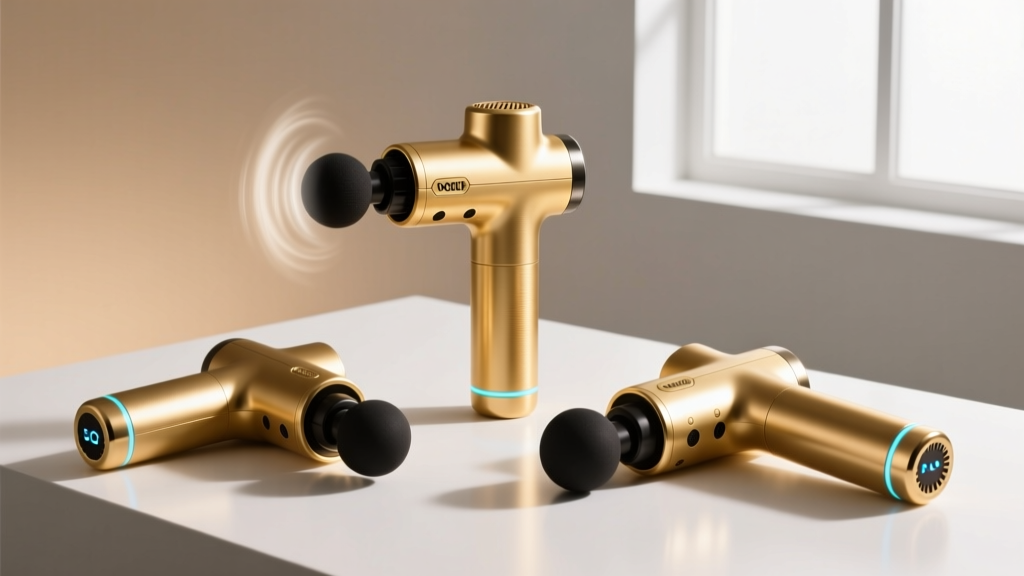
Best Gold Massage Gun Models 2026: Luxury & Performance Guide

Who Invented the Massage Gun? And Why Stretching Tools Are Better

Heat Pads vs Wraps: Troubleshooting & MySQL Recovery Tool Fixes
