
Phoenix A2 Massage Gun vs Infrared Sauna Blanket & Panel Guide
Compare the Phoenix A2 massage gun against top infrared sauna blankets and panels. Discover which recovery modality fits your physiology and budget.

The 2026 Recovery Dilemma: Localized Percussion vs. Systemic Thermal Therapy
Building a comprehensive home recovery setup in 2026 forces athletes, biohackers, and weekend warriors to make a critical budget allocation decision. Do you invest in localized mechanical therapy, or do you prioritize systemic thermal conditioning? This guide provides a definitive head-to-head comparison between the budget-friendly Phoenix A2 massage gun and the rapidly evolving category of infrared sauna blankets and panels. While these tools operate on entirely different physiological mechanisms, they are frequently cross-shopped by consumers looking to maximize their recovery ROI. Below, we break down the exact specifications, physiological pathways, and real-world use cases to help you decide which modality—or combination of both—belongs in your recovery arsenal.
Contender 1: Phoenix A2 Massage Gun (Mechanical Recovery)
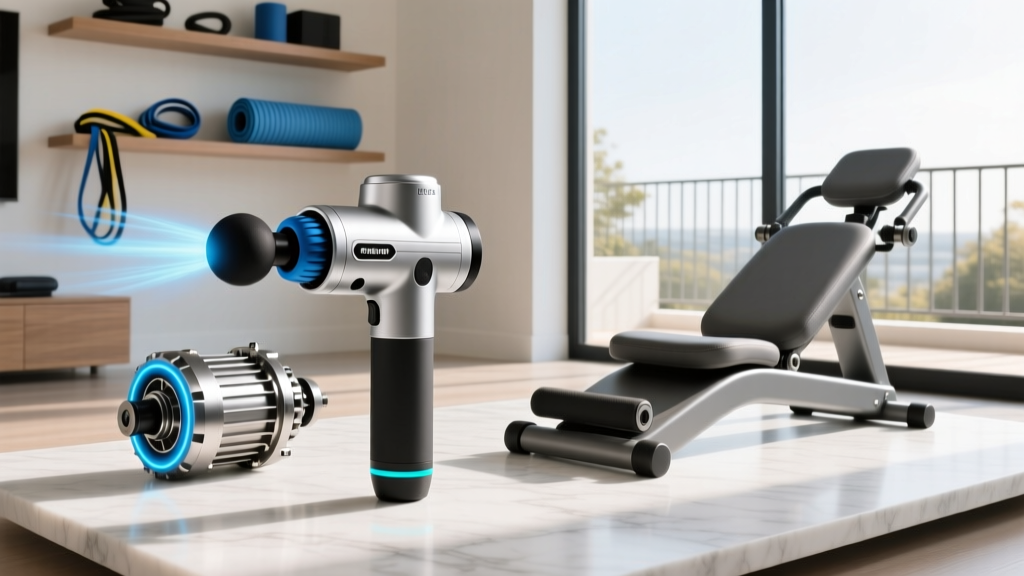
The Phoenix A2 massage gun has dominated the entry-level percussive therapy market on major e-commerce platforms. Priced aggressively between $69 and $89, it serves as a high-value alternative to premium $500+ devices. But how does it actually perform when subjected to rigorous post-training protocols?
Specifications and Real-World Performance
- Amplitude (Stroke Length): 14mm. This provides moderate depth, sufficient for superficial fascial release and flushing localized edema, but it falls short of the 16mm+ amplitude required to reach deep-tissue motor points in dense muscle bellies like the gluteus maximus or hamstrings.
- Stall Force: Approximately 35 lbs. When you apply heavy pressure to the quads, the Phoenix A2 will stall out before a Theragun PRO (which boasts 60 lbs of stall force). This makes it ideal for lighter, sweeping flushes rather than deep trigger-point eradication.
- Percussion Range: 1,200 to 3,200 RPM across 5 speed settings.
- Battery Life: 2500mAh lithium-ion, yielding roughly 4 hours of continuous use at mid-tier speeds.
Contender 2: Infrared Sauna Blankets & Panels (Thermal Recovery)
Unlike traditional saunas that heat the ambient air to extreme temperatures (180°F+), infrared technology uses electromagnetic radiation to penetrate the epidermis and directly heat the body's core and tissues. This allows for profound physiological adaptations at much lower, more tolerable ambient temperatures (typically 120°F to 150°F). In 2026, the market is split between two primary form factors: the wearable blanket and the stationary wall panel.
The Blanket Form Factor (e.g., HigherDOSE V4 & KURE)
Infrared sauna blankets, such as the flagship HigherDOSE V4 (retailing around $699), utilize flexible carbon fiber heating elements embedded within a medical-grade, low-EMF (Electromagnetic Field) polyurethane shell.
- Max Temperature: 150°F (65°C).
- Heating Zones: Modern 2026 models feature bi-zonal heating, allowing users to independently control the heat applied to the upper back versus the lower extremities.
- Use Case: Full-body systemic sweating, cardiovascular conditioning, and deep-tissue relaxation while lying supine on a yoga mat or bed.
The Panel Form Factor (e.g., Clearlight & Sun Home Saunas)
Standalone infrared panels, like the Sun Home 400W targeted panel or Clearlight's modular wall units ($499 to $799), offer a different advantage: targeted Near-Infrared (NIR) and Far-Infrared (FIR) therapy.
- Wavelength Specificity: While blankets primarily use FIR (wavelengths of 5-15 microns) for deep tissue heating and sweating, premium panels combine FIR with NIR (wavelengths of 700-1400 nanometers). NIR does not produce heat but penetrates the skin to stimulate cellular ATP production via cytochrome c oxidase, accelerating wound healing and reducing joint inflammation.
- Use Case: Targeted joint therapy (e.g., sitting in front of a panel to treat chronic knee osteoarthritis or lower back pain) without the claustrophobia or full-body sweat response of a blanket.
Head-to-Head Comparison Matrix
When deciding between the Phoenix A2 massage gun and an infrared thermal setup, you are comparing a localized mechanical tool against a systemic cellular therapy. The table below outlines the critical differences.
| Feature | Phoenix A2 Massage Gun | Infrared Sauna Blanket | Infrared Wall Panel |
|---|---|---|---|
| Primary Mechanism | Percussive Mechanotransduction | Far-Infrared Thermal Penetration | FIR Thermal + NIR Photobiomodulation |
| Target Depth | Superficial to Mid-Muscle (14mm) | Up to 1.5 inches into tissue | Skin surface (NIR) + Deep tissue (FIR) |
| Setup Time | Instant (0 seconds) | 5-10 minutes to unroll and pre-heat | Instant (mounted/standby) |
| Price Range (2026) | $69 - $89 | $399 - $699 | $499 - $899 |
| Best For | Pre-workout activation, acute DOMS | Cardiovascular mimicry, detox, sleep | Chronic joint pain, skin health, localized injury |
Physiological Showdown: What the Science Says
To understand which tool you need, you must understand the cellular responses they trigger. The Phoenix A2 massage gun excels at acute symptom management. By applying rapid kinetic energy, it reduces the viscosity of hyaluronic acid in the fascial layers, allowing muscle fibers to glide more smoothly. However, it does not significantly alter systemic cardiovascular markers.
Infrared therapy, conversely, is a systemic conditioning tool. According to a comprehensive review published in Mayo Clinic Proceedings, regular infrared sauna use mimics the cardiovascular demands of moderate-intensity exercise, elevating heart rate and improving endothelial function. Furthermore, the thermal stress induces the production of Heat Shock Proteins (specifically HSP70), which are critical for repairing misfolded proteins and reducing systemic inflammation. As noted by Harvard Health Publishing, the vasodilation caused by deep-tissue heating accelerates the delivery of oxygen and nutrients to damaged tissues while flushing out cortisol and metabolic byproducts far more effectively than localized percussion alone.
"While percussive tools like the Phoenix A2 are excellent for neurological pain gating and temporary range-of-motion improvements, infrared thermal therapy fundamentally alters cellular repair mechanisms and cardiovascular health markers over time."
The Verdict: How to Build Your Recovery Stack
Choosing between the Phoenix A2 massage gun and an infrared sauna blanket or panel is not necessarily an 'either/or' decision; it is a matter of prioritizing your immediate recovery bottlenecks and available budget.
Scenario A: The Budget-Conscious Athlete (Under $150)
If your budget is strictly limited, the Phoenix A2 massage gun is the undisputed winner. For under $90, you gain immediate access to a tool that will reduce acute Delayed Onset Muscle Soreness (DOMS), improve pre-workout mobility, and provide immediate neurological relief after heavy lifting sessions. Pair it with a $15 high-density EVA foam roller for a complete, budget-friendly mechanical recovery protocol.
Scenario B: The Biohacker & Endurance Athlete ($500 - $800)
If your goals include improving sleep architecture, boosting cardiovascular baseline, and accelerating deep-tissue repair after marathon training or Ironman prep, invest in an infrared sauna blanket. The ability to induce a profound sweat response and trigger Heat Shock Proteins while lying in your living room offers a systemic ROI that a massage gun simply cannot match.
Scenario C: The Chronic Pain & Joint Rehab Profile
If you are dealing with localized osteoarthritis, chronic tendinopathy, or are focused on skin collagen synthesis, a NIR/FIR infrared panel is the superior choice. The addition of Near-Infrared photobiomodulation targets cellular mitochondria directly, promoting ATP synthesis in damaged joints without the need for full-body heat exposure.
Frequently Asked Questions
Can I use the Phoenix A2 massage gun immediately after an infrared sauna session?
Yes, but with caution. Following a 45-minute infrared blanket session, your tissues are highly vascularized, and your nervous system is in a parasympathetic (rest and digest) state. Using a percussive gun on high speed immediately after can overstimulate the nervous system. Instead, use the Phoenix A2 on its lowest setting (1,200 RPM) with a soft foam attachment to gently encourage lymphatic drainage of the newly mobilized metabolic waste.
Do infrared sauna blankets have high EMF emissions?
Cheap, unbranded blankets from overseas manufacturers can emit dangerous levels of Extremely Low Frequency (ELF) and Radio Frequency (RF) electromagnetic fields. In 2026, reputable brands like HigherDOSE and KURE utilize advanced carbon-weave shielding that keeps EMF emissions at or near 0 milligauss, making them safe for daily 60-minute protocols.
Is the Phoenix A2 powerful enough for heavy powerlifters?
For superficial warm-ups and post-meet flushes, yes. However, powerlifters with dense, hypertrophied muscle tissue will likely find the 14mm amplitude and 35 lb stall force insufficient for deep glute or spinal erector work. Heavy athletes should eventually upgrade to a commercial-grade device with a 16mm+ stroke length and 60+ lbs of stall force for true deep-tissue penetration.
More gear to consider
All reviews
Theragun vs Hyperice: Budget Breakdown & Massage Gun Sex Attachments

Care: Therabody Theragun Prime Massage Gun & Trigger Point Tools

Space-Saving Layouts for Your ARW Recovery Tool & Trigger Gear

Massage Gun for Tendonitis vs Infrared Sauna Blankets (2026)
High-Torque Massage Gun Motor vs. Stretching Equipment
