
Massage Gun Constipation Relief: Safe Setup & Step-by-Step Guide
Wondering if percussive therapy aids digestion? Learn the safe massage gun constipation setup, best attachments, and step-by-step abdominal techniques.

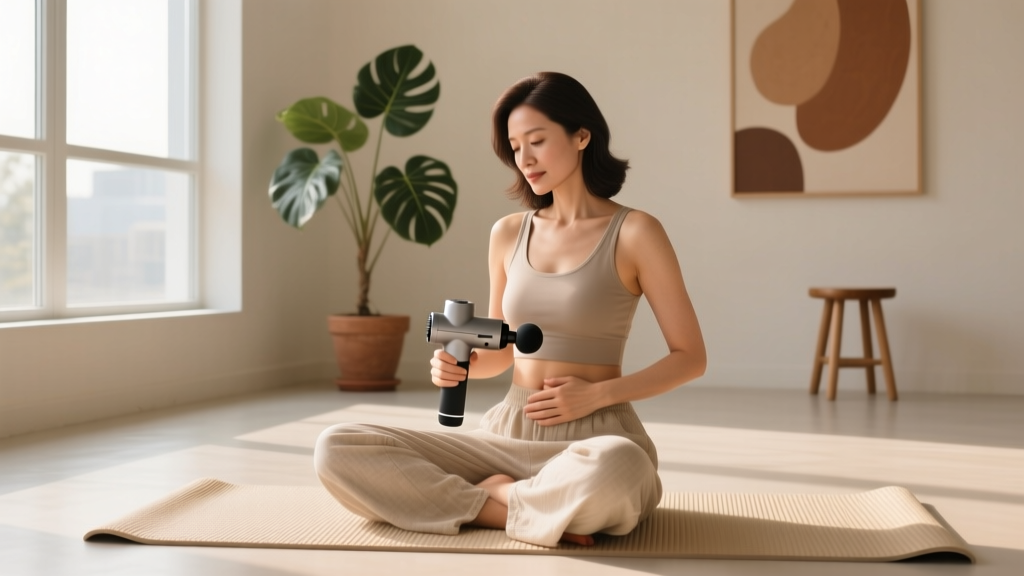
Dealing with sluggish digestion and severe bloating can be incredibly uncomfortable, leading many to explore alternative recovery tools for gut health. If you are researching massage gun constipation protocols, you are not alone; percussive therapy is increasingly being adapted for abdominal wellness. However, the abdomen houses delicate internal organs, meaning the high-impact, deep-tissue techniques used on your quads or calves are entirely inappropriate—and potentially dangerous—for your stomach. When executed correctly with the proper attachments and speed settings, targeted vibrational therapy can stimulate peristalsis and encourage bowel motility. This comprehensive guide breaks down the exact science, safety parameters, and step-by-step setup required to use percussive therapy for digestive relief safely.
Medical Disclaimer: The following information is for educational purposes and does not replace professional medical advice. Always consult a gastroenterologist or primary care physician before using percussive therapy on your abdomen, especially if you have a history of gastrointestinal disorders.
The Science Behind Massage Gun Constipation Relief
To understand how percussive therapy interacts with the digestive tract, we must look at gut motility and the enteric nervous system. Constipation often occurs when peristalsis—the involuntary, wave-like muscle contractions that move food through the digestive tract—slows down. According to research published by the National Institutes of Health (NIH), mechanical stimulation of the abdomen can significantly improve bowel movement frequency and reduce transit time in patients with chronic constipation.
When you apply a low-intensity massage gun for constipation relief, the rapid vibrations stimulate the mechanoreceptors in the abdominal wall and the underlying smooth muscle of the intestines. This sensory input can trigger the parasympathetic nervous system (the 'rest and digest' state) via the vagus nerve, promoting relaxation of the sphincters and encouraging the colon to contract rhythmically. Furthermore, the gentle mechanical agitation helps to physically shift trapped gas and break up stagnant matter in the large intestine, reducing the painful bloating associated with backed-up bowels.
Choosing the Right Attachment and Speed Settings
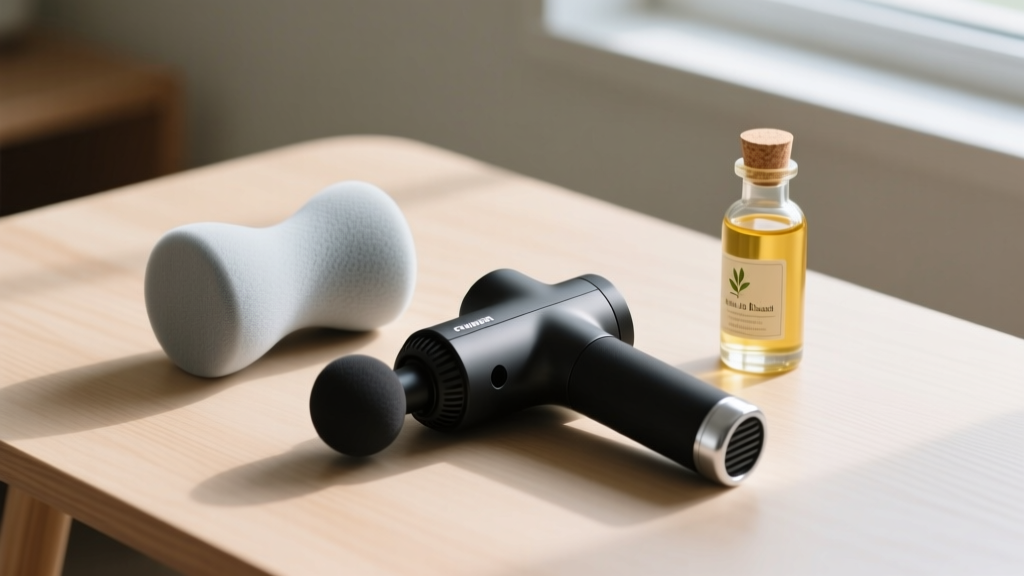
The most critical error users make when attempting abdominal percussive therapy is using the wrong attachment head. Hard plastic or dense EVA foam heads designed for muscle fascia will cause bruising, organ trauma, and severe pain. The primary goal of any massage gun constipation setup is to deliver broad, gentle oscillation rather than deep, localized pressure.
Attachment Matrix for Abdominal Use
| Attachment Type | Material / Design | Abdominal Suitability | Primary Function |
|---|---|---|---|
| Dampener / Soft Ball | Porous, ultra-soft foam | Highly Recommended | Distributes vibration broadly; prevents deep tissue impact. |
| Air Cushion | Inflatable rubber bladder | Highly Recommended | Absorbs excess stall force; ideal for highly sensitive areas. |
| Standard Ball | Dense EVA foam | Use with Extreme Caution | Only for very light hovering; risks deep organ impact if pressed. |
| Bullet / Cone | Hard plastic / dense rubber | NEVER USE | Designed for trigger points; will cause severe internal injury. |
| Fork / U-Shape | Dense foam / plastic | NEVER USE | Designed for the spine and Achilles; completely unsafe for the gut. |
Optimal Speed and Amplitude
When evaluating massage gun constipation effectiveness, amplitude (the distance the head travels back and forth) and RPM (revolutions per minute) dictate the safety profile. For the abdomen, you want a device with a shorter amplitude (10mm to 12mm) rather than a deep-tissue 16mm amplitude. Keep the speed strictly between 1200 and 1500 RPM (usually Speed 1 or Speed 2 on modern 2026 brushless motor models). Anything faster will cause the abdominal muscles to involuntarily tense up, defeating the purpose of the therapy.
Step-by-Step Abdominal Setup and Execution Guide
Proper technique is non-negotiable. The large intestine follows a specific anatomical pathway, and your percussive therapy must follow the natural flow of digestion to be effective. The Cleveland Clinic emphasizes that all abdominal massage must follow a clockwise direction to align with the colon's anatomy.
1. Preparation and Positioning
- Hydrate: Drink a large glass of warm water 15 minutes before starting to help soften stool and promote motility.
- Position: Lie flat on your back on a firm but comfortable surface (like a yoga mat). Bend your knees and keep your feet flat on the floor to relax the rectus abdominis muscles.
- Breathing: Practice deep diaphragmatic breathing. Tensing your core will block the vibrational waves from reaching the intestines.
2. The Clockwise Pathway (The 'I-L-U' Adaptation)
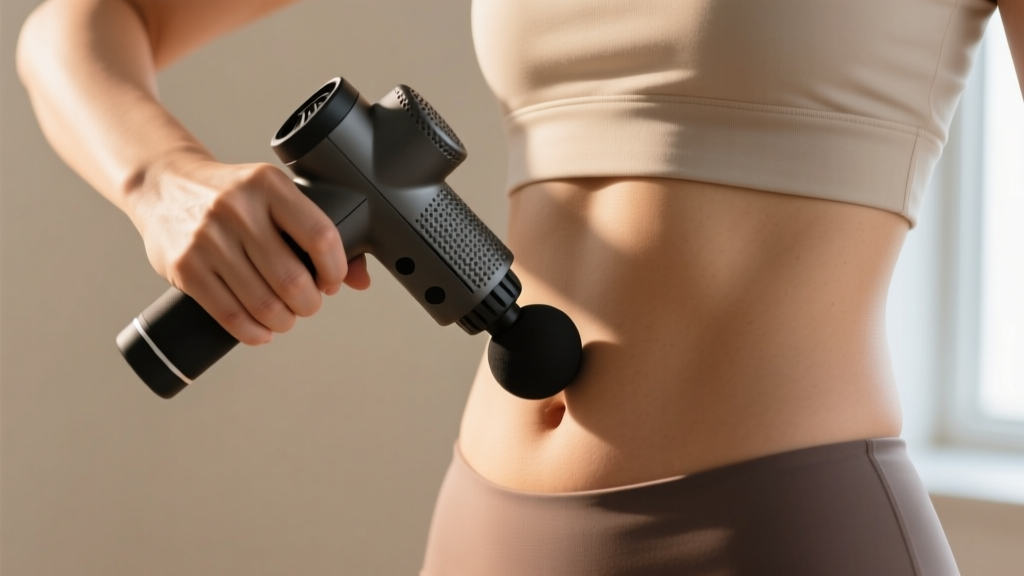
Equip your massage gun with the soft dampener or air cushion attachment and turn it on to the lowest setting before making contact. Never turn the device on while it is already pressing against your skin.
- The Ascending Colon (Right Side): Start at the lower right quadrant of your abdomen (near the right hip bone, where the cecum is located). Gently hover or lightly rest the attachment and slowly glide upward toward the right rib cage.
- The Transverse Colon (Across the Top): Once you reach the upper right quadrant, slowly move the device horizontally across your upper abdomen, just below the rib cage, toward the left side.
- The Descending Colon (Left Side): From the upper left quadrant, glide the device downward toward the lower left hip bone, following the path of the descending and sigmoid colon.
3. Pressure and Timing
Do not push the device into your stomach. Let the weight of the massage gun (or just the gentle vibration if hovering) do the work. Spend about 15 to 20 seconds on each quadrant, completing the full clockwise loop 3 to 5 times. The entire session should last no more than 3 to 5 minutes. Over-stimulating the bowels can lead to cramping or spasms.
Top Massage Guns for Abdominal Therapy in 2026
Not all percussive devices are built for the nuanced requirements of abdominal therapy. The latest 2026 models feature adaptive brushless motors and smart pressure-tracking sensors that prevent users from accidentally applying too much force. Here are the top models suited for this specific application:
Theragun Pro Plus (Smart Series)
The Theragun Pro Plus remains a gold standard due to its proprietary Smart App integration. The app's pressure sensor provides real-time visual feedback on your screen, ensuring you do not exceed the recommended 10-15 lbs of force (and for the abdomen, you should aim for less than 5 lbs). Its included Dampener attachment is exceptionally soft, and the 16mm amplitude can be effectively mitigated by using the device at an angle or utilizing the hovering technique.
Hyperice Hypervolt 2 Pro
Hyperice's QuietForce technology makes the Hypervolt 2 Pro incredibly smooth, reducing the jarring 'rattle' that can cause abdominal discomfort. It features a 14mm amplitude and comes with a soft, cushioned air head attachment specifically designed for sensitive areas and bony prominences, making it an excellent, gentle choice for stimulating gut motility without aggressive impact.
Bob and Brad C2 (Budget-Friendly Option)
For those seeking an entry-level device, the C2 offers a highly manageable 10mm amplitude, which is actually preferable for abdominal use. It is lightweight, reducing arm fatigue during the slow, clockwise tracing motions, and includes a soft foam ball head that distributes vibration evenly across the stomach.
Safety Precautions and Contraindications
While percussive therapy can be a powerful tool for occasional sluggishness, it is strictly contraindicated for several medical conditions. Using a massage gun for constipation is unsafe if you experience any of the following:
- Inflammatory Bowel Disease (IBD): Conditions like Crohn's disease or ulcerative colitis involve severe inflammation and thinning of the intestinal walls. Vibration can trigger flare-ups or cause perforation.
- Pregnancy: Never use percussive therapy on the abdomen during pregnancy.
- Recent Abdominal Surgery: Wait until fully cleared by your surgeon, as vibrations can disrupt internal healing, sutures, or mesh.
- Hernias: Vibrating near an inguinal, umbilical, or hiatal hernia can worsen the protrusion.
- Unexplained Severe Pain: If your constipation is accompanied by sharp, localized pain, fever, or vomiting, this may indicate a bowel obstruction or appendicitis. Seek emergency medical care immediately; do not attempt to treat it with a massage gun.
FAQ: Your Questions About Percussive Therapy and Digestion
Can a massage gun help with constipation?
Yes, a massage gun can help with constipation by using low-speed, gentle vibrations to stimulate the enteric nervous system and encourage peristalsis. The mechanical oscillation helps relax the abdominal wall, promotes blood flow to the digestive organs, and can physically assist in moving trapped gas and stagnant matter through the large intestine. However, it must be used with soft attachments and strict clockwise motions to be safe and effective.
Is a massage gun for constipation safe to use daily?
Using a massage gun for constipation is generally safe for daily use if performed correctly on the lowest speed settings with a dampener attachment for no more than 3 to 5 minutes per session. However, if you find yourself relying on percussive therapy every single day to initiate a bowel movement, it is a strong indicator that you need to address the root causes of your digestive issues, such as dietary fiber intake, hydration levels, or underlying motility disorders, with a healthcare professional.
Where should I avoid using a massage gun on my stomach?
You must avoid using a massage gun directly over the xiphoid process (the small cartilage at the bottom of the sternum), the lower rib cage, and the pelvic bone. Additionally, never apply percussive therapy directly over the belly button (umbilicus) if you have an umbilical hernia or recent piercings. Stick strictly to the soft tissue of the four abdominal quadrants, avoiding any areas that feel sharp, bruised, or unusually tender to the touch.
Does percussive therapy replace traditional abdominal massage?
Percussive therapy does not replace the nuanced, hands-on pressure modulation of a manual abdominal massage or physical therapy. While a massage gun provides rapid, consistent vibrational stimulation that can quickly relax the outer abdominal fascia and stimulate surface mechanoreceptors, manual massage allows a therapist to feel for specific areas of tension, adhesions, or trapped gas and adjust pressure dynamically. Many users find the best results by combining manual clockwise stroking with brief, targeted percussive sessions.
More gear to consider
All reviews
Flex Fitness Massage Gun vs. Stretching Equipment 2026

Sharper Image Massage Gun Won't Turn On? Space-Saving Trigger Tools

Foam Roller Density Guide & Blackleaf Massage Gun Value
Cold Plunge Layouts: Space Tips & Do Massage Guns Work for Knots?
Space-Saving Recovery: Trigger Point Tools vs Etafor Plus Massage Gun
