
2026 Market Trends: Home Ice Baths and the Mijia Massage Gun Boom
Analyze the 2026 home recovery market, comparing premium cold plunge tub infrastructure with the budget-friendly Mijia massage gun trend.

The Bifurcated 2026 Home Recovery Market
The at-home recovery equipment sector has undergone a radical structural shift as we move through 2026. Post-pandemic fitness enthusiasts and elite amateurs are no longer satisfied with makeshift recovery routines. Instead, the market has bifurcated into two distinct spending categories: high-ticket, permanent home infrastructure and high-value, portable percussive technology. Consumers are willingly financing $5,000+ custom cold plunge tubs for their backyards while simultaneously rejecting the $600 premium brand tax on handheld recovery tools, opting instead for high-performance import alternatives.
This 'barbell spending' strategy defines the current recovery landscape. On one end, homeowners are investing heavily in thermodynamic infrastructure. On the other, they are leveraging global supply chain efficiencies to source sub-$150 percussive devices that rival legacy brands in clinical efficacy. Understanding this dichotomy is essential for both consumers building out home gyms and industry analysts tracking fitness equipment trends.
The Premium Infrastructure Shift: Home Ice Baths and Cold Plunges
The days of dumping $40 worth of gas station ice into an insulated livestock trough are largely over for serious athletes. The 2026 market for an ice bath and cold plunge tub for home is dominated by fully plumbed, acrylic-shell units equipped with inline commercial-grade chillers. According to the American College of Sports Medicine, cold water immersion (CWI) remains a premier modality for attenuating delayed onset muscle soreness (DOMS) and managing systemic inflammation, driving massive consumer demand for turnkey home solutions.
Chiller Specifications and Thermal Dynamics
Modern home cold plunges rely on titanium heat exchangers and rotary compressors to maintain precise water temperatures. The critical metric for buyers in 2026 is no longer just the minimum temperature, but the thermal recovery rate—how quickly the chiller can pull 80 gallons of water from 55°F down to 42°F after a user's body heat has warmed it.
| Brand & Model (2026) | Chiller Capacity | Min Temp | Filtration System | Est. Price |
|---|---|---|---|---|
| Plunge Original Series 3 | 0.8 HP Inline | 38°F (3.3°C) | 20-micron + UV-C | $4,990 |
| Edge Theory Labs Cold Plunge | 1.0 HP Inline | 37°F (2.7°C) | 5-micron + Ozone | $5,250 |
| Redwood Outdoors Cedar Plunge | 0.6 HP Inline | 41°F (5.0°C) | Standard Skimmer | $4,100 |
Hidden Installation Realities and Failure Modes
Market analysis reveals that the primary consumer friction point in 2026 is not the unit cost, but the installation requirements. A 1.0 HP chiller requires a dedicated 110V/20A or 220V/15A GFCI-protected circuit. Running a new line from the main breaker panel to an outdoor pad adds $800 to $1,500 in hidden electrical costs.
Furthermore, a common failure mode in early-generation home plunges was hard water scale buildup on the titanium heating/cooling coils, leading to compressor burnout. In 2026, savvy buyers mandate the inclusion of an inline polyphosphate descaler or a pre-filtration water softener loop to protect the $2,000 chiller unit from mineral calcification.
The Budget Tech Counterweight: The Mijia Massage Gun Phenomenon
While consumers drop thousands on plumbing and chillers, they are aggressively optimizing their percussive therapy spend. Enter the massage gun mijia ecosystem. Xiaomi’s Mijia line has captured a massive share of the budget-to-mid-tier recovery market by offering specifications that mirror $500 legacy tools at a fraction of the cost.
Market Insight: The Percussive Value PropositionIn 2026, the Mijia Massage Gun (typically retailing between $99 and $130 USD via global import channels) features a 24V brushless motor, a 12mm amplitude stroke, and a maximum speed of 3,200 RPM. Independent stall-force testing shows it sustains approximately 20-25 lbs of pressure before stalling. While this falls slightly short of the 60 lbs stall force of a Theragun Pro, it perfectly matches the therapeutic threshold required for 90% of superficial to mid-level fascial tissue release, rendering the premium price gap functionally irrelevant for most home users.
The success of the massage gun mijia models highlights a broader consumer trend: the rejection of proprietary ecosystems. Legacy brands often lock users into expensive proprietary attachment heads and non-replaceable internal batteries. The Mijia ecosystem, conversely, utilizes standard USB-C fast charging and universally compatible 16mm attachment stems, allowing users to swap in third-party dampener heads or thermal attachment tips without being tethered to a single manufacturer.
Synergistic Protocols: Combining Thermal and Percussive Therapy
The true value of the 2026 home recovery setup lies in the clinical sequencing of these modalities. Research published via the National Institutes of Health (NIH) indicates that the timing of cold water immersion and mechanical tissue manipulation drastically alters the neurological and vascular response.
Improperly sequencing these tools can blunt hypertrophy signals or cause localized nerve irritation. Here is the evidence-based protocol for combining a home cold plunge with a high-amplitude percussive device like the Mijia:
- The Vasoconstriction Phase (Cold Plunge): Submerge in 42°F water for exactly 3 to 5 minutes. This triggers profound peripheral vasoconstriction, shunting blood to the core and flushing metabolic waste from the extremities. Do not exceed 10 minutes, as prolonged exposure risks non-freezing cold injury.
- The Rewarming Window (15-20 Minutes): Exit the tub and allow the body to naturally rewarm via shivering thermogenesis. Do not take a hot shower immediately, as rapid vasodilation can cause blood pressure drops and negate the anti-inflammatory signaling cascade.
- The Percussive Phase (Mijia Application): Once tissue temperature has normalized to near-baseline (usually 20 minutes post-plunge), apply the massage gun. Use a dampener attachment head at 2,400 RPM. The cold exposure temporarily numbs superficial nociceptors; using a hard plastic head immediately after a plunge can lead to accidental tissue bruising because the user's pain feedback loop is dampened.
- Targeting Strategy: Focus on large, dense muscle bellies (quadriceps, glutes, latissimus dorsi) for 90 seconds per group. Avoid the cervical spine and anterior neck entirely, as the vascular structures here are highly sensitive to both thermal shock and mechanical vibration.
Strategic Buying Framework for Home Recovery
For consumers looking to allocate their 2026 fitness budget, the decision matrix should prioritize permanent infrastructure over portable tech. The ROI on a properly installed home ice bath and cold plunge tub is immense, both in daily utility and property value retention. Conversely, the rapid commoditization of brushless motors means that percussive tools should be treated as consumable electronics rather than lifetime investments.
- Allocate 80% of Budget to Infrastructure: Invest in a cold plunge with a minimum 0.8 HP chiller, UV-C sanitation, and a professional electrical install. Skimping on the chiller results in a tub that cannot maintain therapeutic temperatures during summer months.
- Allocate 20% to Portable Tech: Purchase a high-value import like the Mijia massage gun. Expect a 2-to-3-year battery lifecycle before lithium-ion degradation necessitates replacement, and factor that into your cost-per-use analysis.
- Prioritize Water Treatment: The hidden cost of home plunges is water maintenance. Budget $150 annually for replacement ozone bulbs, UV-C lamps, and enzyme-based water clarifiers to prevent biofilm formation in the chiller lines.
Ultimately, the 2026 recovery market rewards the informed consumer. By understanding the thermodynamic requirements of home cold plunges and the true mechanical capabilities of budget-friendly percussive tools, athletes can build elite-tier recovery sanctuaries without falling victim to inflated legacy brand marketing.
More gear to consider
All reviews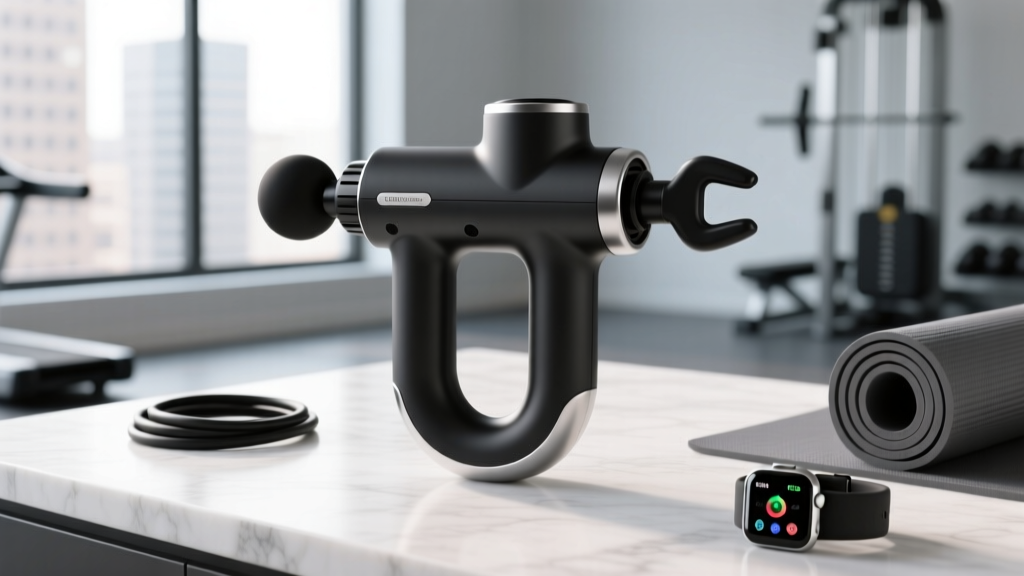
U-Shaped Massage Gun Buying Guide: Step-by-Step for 2026

Massage Gun Physical Therapy Trends 2026: Percussion vs Vibration

Vybe Percussion Massage Gun: 2026 Percussion vs Vibration Trends

Infrared Sauna Blankets & Trakk Hot and Cold Massage Gun Guide

2026 Compression Boots & Bob And Brad Mini Massage Gun Review
