
Foam Roller Types & How to Use Massage Gun on Neck and Shoulders
Analyze 2026 recovery trends with our foam roller density guide and expert protocols on how to use massage gun on neck and shoulders safely.

The 2026 Recovery Market: The Shift to Hybrid Myofascial Protocols
The sports recovery equipment market has undergone a massive paradigm shift as we move through 2026. While percussive therapy dominated the early 2020s, clinical sports medicine now heavily favors a hybrid recovery stack—combining broad myofascial release with targeted percussive therapy. According to recent industry analyses, consumers and physical therapists are no longer viewing foam rollers and massage guns as competing tools, but rather as complementary modalities. To optimize upper-body recovery, athletes must understand both the material science of modern foam rollers and the precise biomechanical application of percussive devices on delicate cervical and thoracic structures.
Foam Roller Types, Density, and Size Guide: A 2026 Market Breakdown
Selecting the correct foam roller is no longer just about picking a color. The 2026 market is segmented by material composition, structural density, and specialized dimensions. Understanding these variables is critical for targeting specific muscle groups without causing tissue bruising or central nervous system guarding.
| Roller Category | Primary Material | Density Level | 2026 Price Range | Best Clinical Application |
|---|---|---|---|---|
| Soft / Low-Density | EVA (Ethylene-Vinyl Acetate) | Low (White/Pastel) | $15 - $28 | Beginners, Pilates integration, lymphatic flushing, acute injury rehab. |
| Standard / Medium | EPP (Expanded Polypropylene) | Medium (Black/Blue) | $25 - $45 | Daily maintenance, large muscle groups (quads, lats), IT band mobility. |
| Firm / High-Density | PU (Polyurethane) / ABS Core | High (Grid/Textured) | $40 - $75 | Deep tissue trigger point release, chronic adhesions, thoracic extensions. |
| Smart / Vibrating | EPP + Haptic Motors | Adjustable (3-5 speeds) | $150 - $279 | Neuromuscular re-education, overriding stretch reflexes, pre-workout priming. |
Size and Dimensional Guidelines
- 36-Inch (Full-Length): Essential for thoracic spine extensions and vertical rolling (e.g., lying longitudinally to open the pec minor and anterior deltoids). Models like the TriggerPoint GRID 36 ($65) remain the gold standard for clinical tables.
- 24-Inch (Mid-Length): The versatile middle ground. Ideal for rolling the lats, glutes, and hamstrings while remaining portable enough for standard gym bags.
- 12 to 18-Inch (Travel/Targeted): Best for isolated limb work and travel. The Blackroll PRO Mini ($18) is highly favored by traveling professionals for pinpoint calf and forearm release.
Upper Body Biomechanics: Bridging Myofascial and Percussive Therapy
While a 36-inch high-density roller is exceptional for thoracic extension and broad latissimus dorsi release, it falls short when addressing the intricate, multi-layered musculature of the cervical and shoulder girdle. The upper trapezius, levator scapulae, and splenius capitis are notoriously difficult to compress against a floor-based cylinder. This is where percussive therapy bridges the gap. However, the neck houses critical neurovascular structures, including the carotid artery, jugular vein, and the brachial plexus. Therefore, understanding how to use massage gun on neck and shoulders requires strict adherence to anatomical safety zones and device calibration.
⚠️ CRITICAL SAFETY DIRECTIVE: Never apply a percussive device directly to the anterior (front) or lateral (sides) of the neck, and avoid the bony prominences of the cervical spine (C1-C7). The vibration can cause arterial dissection or severe nerve impingement. Limit percussive therapy strictly to the posterior muscular bellies of the upper back and shoulder girdle.Step-by-Step Protocol: How to Use Massage Gun on Neck and Shoulders
To safely and effectively treat upper-body tension using 2026 flagship devices like the Theragun PRO Plus or Hyperice Hypervolt 2, follow this clinical protocol:
- Attachment Selection: Discard the hard plastic or bullet attachments. You must use a Dampener (Theragun) or a Soft Ball / Cushion Head (Hyperice). These attachments absorb the superficial impact, allowing the kinetic energy to penetrate the muscle belly without bruising the fascia or irritating the cervical nerves.
- Speed Calibration: Set the device to a low-to-medium frequency. For the upper traps and neck base, 1200 to 1750 RPM (Percussions Per Minute) is the clinical sweet spot. Higher speeds (2000+ RPM) cause the nervous system to guard and tense up, defeating the purpose of the release.
- Target Zone 1 - Upper Trapezius: Have the user sit upright. Glide the dampener attachment along the muscle belly that connects the base of the neck to the acromion (shoulder joint). Use a 'sweeping' motion, moving at a pace of 1 inch per second. Spend no more than 15-20 seconds on any single trigger point.
- Target Zone 2 - Levator Scapulae: This muscle connects the cervical spine to the shoulder blade and is the primary culprit in 'tech neck.' Angle the device slightly downward, following the muscle fibers from the superior medial border of the scapula upward. Apply zero downward pressure; let the weight of the device (approx. 2.8 lbs for the Theragun PRO) do the work.
- Target Zone 3 - Rhomboids & Infraspinatus: Move to the posterior shoulder blade. You can safely increase the pressure slightly here to target deep rotational cuff adhesions, using a medium-firm ball attachment at 1750 RPM.
Comparative Matrix: Rolling vs. Percussive for the Cervicothoracic Junction
Why combine these tools? The following matrix illustrates why a hybrid approach is the dominant trend in 2026 sports science.
| Modality | Mechanism of Action | Strengths | Limitations |
|---|---|---|---|
| High-Density Foam Roller | Ischemic compression & broad fascial shearing. | Excellent for global thoracic extension; realigns the T-spine; low cost. | Cannot isolate deep cervical rotators; awkward to use on the neck; requires floor space. |
| Percussive Therapy (Massage Gun) | Rapid acoustic waves & neurological gating (pain override). | Pinpoint accuracy on upper traps; increases local blood flow rapidly; portable. | High risk if used on cervical vertebrae; expensive; does not stretch the fascial net. |
Expert Consensus and Clinical Citations
The integration of these tools is backed by leading sports medicine institutions. According to guidelines published by the Mayo Clinic, foam rolling is highly effective for improving short-term flexibility and reducing delayed onset muscle soreness (DOMS) when applied to large postural muscles. However, they caution that rolling should be a controlled, deliberate process rather than rapid, aggressive scrubbing.
'Percussive therapy devices offer a unique neurological benefit by stimulating mechanoreceptors, which can temporarily down-regulate pain signals and reduce muscle tone. However, users must strictly avoid bony landmarks and the anterior neck to prevent vascular or neural injury.' — Cleveland Clinic Sports Health Review
Furthermore, the American Council on Exercise (ACE) emphasizes that foam rolling the thoracic spine is a prerequisite for healthy shoulder mechanics. If the T-spine is kyphotic (rounded), the levator scapulae and upper traps are forced into chronic over-activity to stabilize the head. Therefore, using a 36-inch roller to restore thoracic extension before applying percussive therapy to the neck yields significantly longer-lasting relief.
Final Verdict: Building Your 2026 Hybrid Recovery Stack
The era of relying on a single recovery modality is over. For optimal upper-body health, invest in a 36-inch medium-to-high density EPP foam roller (budget $40-$60) to maintain thoracic mobility and global fascial health. Follow this with targeted, low-RPM percussive therapy using a dampener attachment to melt away localized tension in the upper trapezius and shoulder girdle. By respecting the anatomical boundaries and understanding the material science of your tools, you can build a professional-grade recovery protocol in your own home.
More gear to consider
All reviews
Cold Plunge & Massage Gun Display: Home Recovery Layouts

Does a Massage Gun Help With Muscle Soreness? 2026 Guide & Fixes

Compression Boots vs Using a Massage Gun as a Vibrator

Normatec vs Hyperice Boots & Therabody Relief Massage Gun 2026
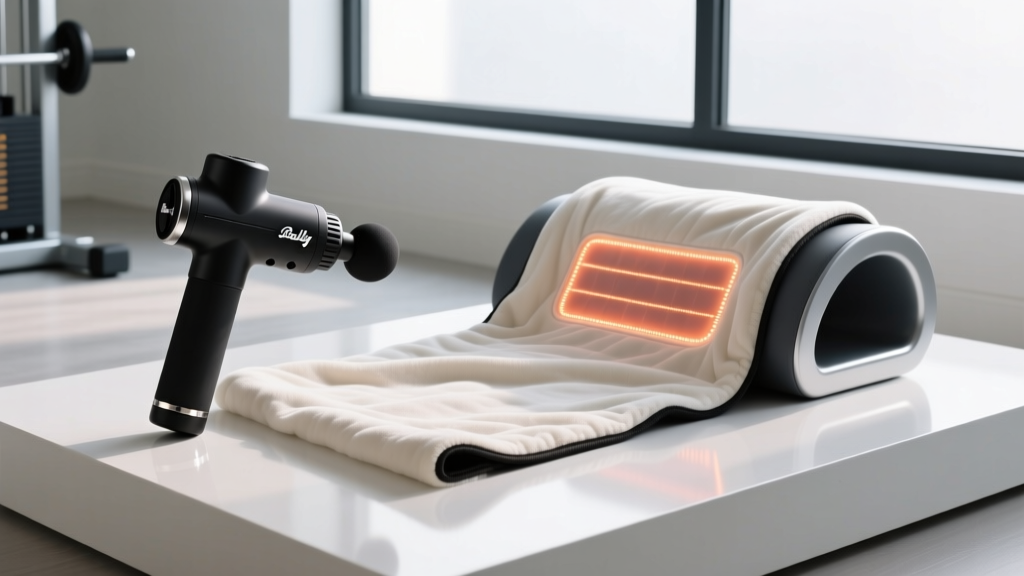
Bally Massage Gun vs Infrared Sauna Blanket: 2026 Guide
