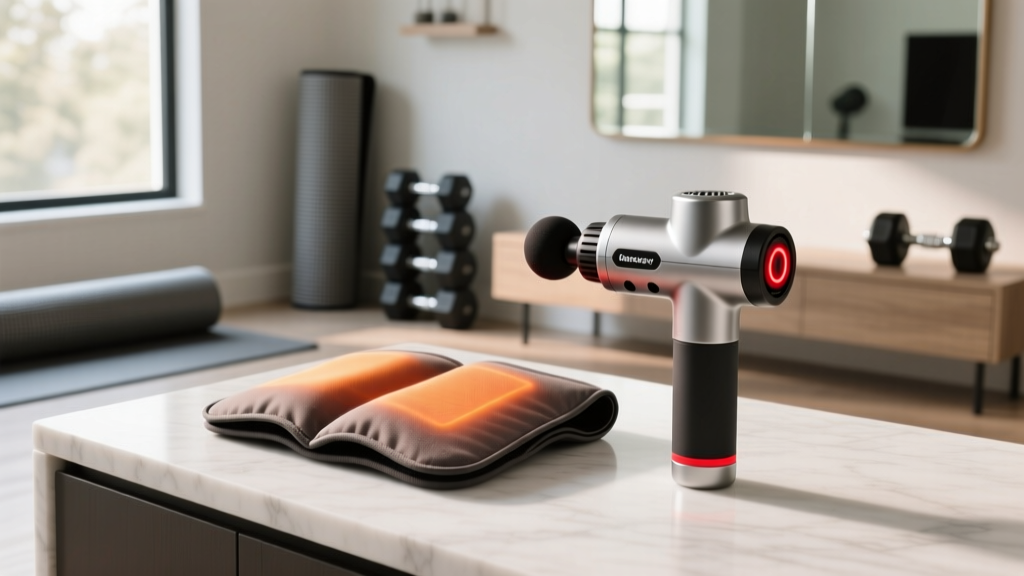
Recovery Space Layout: Foam Rollers & Massage Gun Pregnancy Safety
Optimize your home recovery zone with our foam roller sizing guide, density mapping, and essential massage gun pregnancy safety protocols for 2026.

The Blueprint: Zoning Your Compact Recovery Space
Designing a functional home recovery zone requires more than just purchasing the latest equipment; it demands a strategic approach to spatial geometry and physiological safety. When mapping out a dedicated myofascial release area, the primary constraint is the 'Rolling Radius.' To comfortably perform standard thoracic and IT band sweeps, you need a minimum clear floor footprint of 40 inches by 80 inches. In multi-purpose home gyms or small apartment layouts, this footprint must be optimized through intelligent tool selection and vertical storage integration.
This guide breaks down the exact dimensions, material densities, and spatial footprints of modern foam rollers, while addressing a critical and often overlooked demographic in home gym design: expecting mothers. Navigating massage gun pregnancy safety protocols fundamentally shifts how we layout and select recovery tools, making specific foam roller profiles an indispensable, space-efficient alternative to high-amplitude percussive devices.
Spatial Rule of Thumb: Never store your primary recovery tools in a separate room. The friction of retrieving a foam roller reduces compliance by up to 60%. Integrate storage directly into your workout zone using vertical wall mounts or under-bench sliding bins.Foam Roller Dimensions: Sizing for Spatial Efficiency
Foam rollers are not one-size-fits-all. The length and diameter of the cylinder dictate both its biomechanical utility and its storage footprint. While a 36-inch roller offers the most versatility for bilateral back rolling, it is a spatial nightmare in compact rooms. Below is a spatial and functional matrix to help you choose the right size for your layout.
| Size Category | Dimensions (L x D) | Primary Use Case | Storage Footprint | Avg. Price (2026) |
|---|---|---|---|---|
| Standard Full | 36" x 6" | Full back, bilateral sweeps, Pilates | High (Requires vertical wall rack) | $25 - $45 |
| Mid-Size (Grid) | 24" x 5.5" | IT band, quads, upper back | Medium (Fits under standard benches) | $35 - $55 |
| Travel / Targeted | 12" to 18" x 5" | Calves, arms, localized trigger points | Low (Drawers, cubbies, gym bags) | $20 - $40 |
| Half-Round | 36" x 3" (Half-Cylinder) | Longitudinal arch support, gentle spine | Low (Lays flat against baseboards) | $30 - $60 |
For the space-conscious home gym, the TriggerPoint GRID 24-Inch remains the gold standard. Its hollow-core ABS plastic construction allows you to slide smaller tools (like lacrosse balls or massage sticks) inside the cylinder, effectively utilizing dead space and reducing visual clutter.
Density Mapping: Material Science and Durability
The density of a foam roller dictates its lifespan, its pressure profile, and how it reacts to environmental factors like humidity and temperature in your specific layout.
- Soft Density (EVA Foam): Often found in white or light-colored rollers (e.g., OPTP PRO-ROLLER Soft). These are highly forgiving and ideal for beginners or prenatal recovery. However, EVA foam degrades faster under heavy compression and can warp if stored vertically in direct sunlight or near heating vents.
- Medium Density (EPP Foam): Expanded Polypropylene is the industry workhorse. It resists moisture, maintains its shape indefinitely, and offers a firm but yielding surface. Black EPP rollers are the most space-efficient choice because they do not require climate-controlled storage.
- Firm / Textured (ABS Core + EVA Shell): Models like the RumbleRoller feature aggressive bumps designed to mimic a massage therapist's thumbs. These require dedicated floor space during use, as the deep-tissue pressure demands precise body alignment that is difficult to achieve in cramped, obstructed zones.
Navigating Prenatal Recovery: Foam Rollers vs. Massage Gun Pregnancy Protocols
When designing a recovery space for a household that includes an expecting mother, equipment selection must pivot to accommodate physiological changes. The intersection of spatial layout and prenatal safety is most evident when evaluating massage gun pregnancy guidelines versus traditional foam rolling.
The Biomechanics of Prenatal Myofascial Release
During pregnancy, the body releases relaxin, a hormone that increases joint laxity and alters the center of gravity. This leads to severe lower back, pelvic, and IT band tension. While percussive therapy devices (like the Theragun PRO with its 16mm amplitude) are highly effective for localized muscle knots, they present specific contraindications during pregnancy.
Clinical Consensus on Percussive Therapy: According to the American College of Obstetricians and Gynecologists (ACOG), maintaining muscle health is vital, but deep, localized percussion must be avoided on the abdomen, lower back, and deep calf muscles. Pregnant women are at a statistically higher risk for Deep Vein Thrombosis (DVT); applying high-frequency percussive force to the calves can dislodge a potential clot.
This is where the spatial layout of your recovery zone must prioritize specific foam rollers. A 36-inch soft-density EVA foam roller provides a broad, safe pressure distribution across the thoracic spine and glutes without the localized, high-velocity impact of a massage gun. Furthermore, the American Pregnancy Association notes that broad, sweeping pressure is vastly superior for promoting lymphatic drainage and reducing edema in the lower extremities without triggering vascular risks.
Foam Roller Advantages (Prenatal)
- Broad surface area prevents localized vascular trauma.
- Allows user to strictly control pressure via body weight.
- Safe for lateral IT band and upper thoracic release.
- Zero noise pollution (crucial for households with newborns).
Massage Gun Contraindications (Prenatal)
- Strictly avoid the lower back, abdomen, and pelvic region.
- High risk on calves due to DVT vulnerability.
- 16mm+ amplitude can overstimulate relaxin-loosened joints.
- Requires a secondary user for hard-to-reach back zones.
Vertical Storage Solutions and Layout Hacks
To maintain the required 40" x 80" rolling radius in a small room, your recovery tools must vanish into the architecture when not in use. Here are three space-optimization strategies for 2026 home gyms:
- Slatwall Integration: Install a standard 4-foot slatwall panel behind your power rack. Use heavy-duty 8-inch metal hooks to hang 36-inch and 24-inch foam rollers vertically. This keeps them off the floor, prevents EPP core warping from uneven floor pressure, and utilizes dead vertical space.
- The Hollow-Core Vault: As mentioned, utilize ABS-cored rollers (like the TriggerPoint GRID) as storage vessels. Slide your massage gun attachments, lacrosse balls, and resistance bands inside the roller itself.
- Under-Bench Sliding Bins: For half-round rollers and 12-inch travel rollers, use low-profile, wheeled canvas bins that slide seamlessly under a standard 18-inch high workout bench. This keeps the floor visually clear and prevents tripping hazards during dynamic movements.
Frequently Asked Questions
Can I use a massage gun while pregnant if I avoid the abdomen?
Yes, but with strict limitations. While upper back, neck, and shoulder usage is generally considered safe, you must completely avoid the lower back, abdomen, and calves due to DVT risks and joint laxity. Always consult your OB-GYN, and when in doubt, default to a soft-density foam roller for broader, safer pressure distribution.
What is the best foam roller density for a small apartment gym?
Medium-density EPP (Expanded Polypropylene) is the best choice. It is highly durable, resistant to humidity and temperature fluctuations common in multi-use apartment spaces, and provides enough firmness for deep tissue work without degrading over time like softer EVA foams.
How much floor space do I actually need for foam rolling?
You need a minimum clear zone of 40 inches wide by 80 inches long. This allows you to lie horizontally with your arms extended for thoracic rolling, and provides enough lateral space to transition into side-lying positions for IT band and quad work without hitting walls or furniture.
More gear to consider
All reviews
Trigger Point Tools & Balls: Smart Recovery Tools (Windows 10) & Care

Normatec vs Hyperice Boots & PulseMax Massage Gun Setup

2026 Recovery Market: Home Cold Plunges vs Sharper Image Massage Guns

Cupping for Athletes: Are Massage Guns Good for Arthritis Too?

Theragun vs Hyperice: Which Drum Massage Gun Wins in 2026?