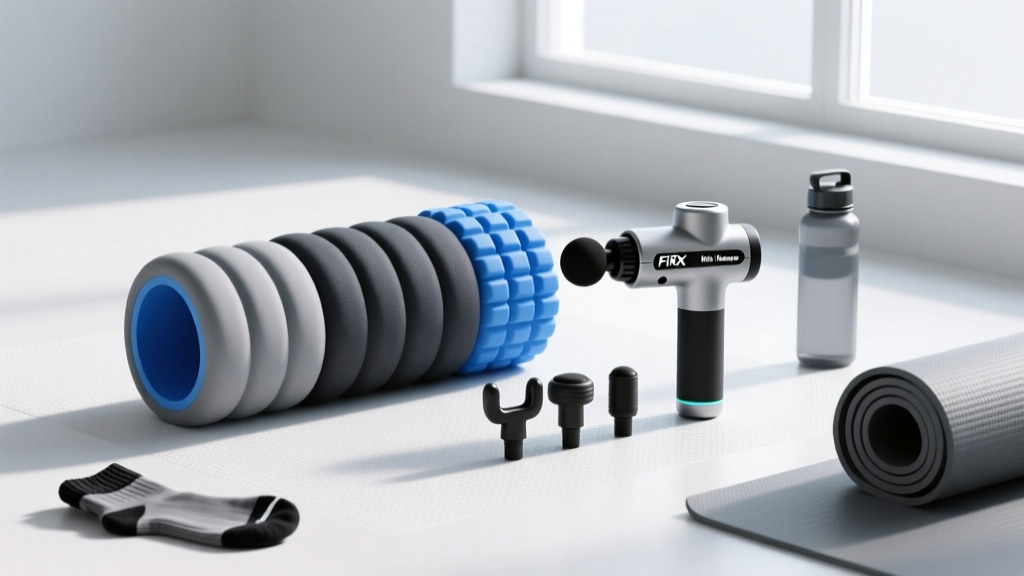
Foam Roller Density Guide & FitRx Mini Massage Gun Review
Master foam roller density, size, and types for 2026. Plus, our hands-on FitRx Mini massage gun review to build your ultimate recovery stack.

The Biomechanics of Myofascial Release: Rollers vs. Percussive Therapy
As we navigate the sports recovery landscape in 2026, the debate between macro-level compression and micro-level percussive therapy has largely been settled: elite recovery requires both. Myofascial release is non-negotiable for maintaining tissue elasticity, reducing delayed onset muscle soreness (DOMS), and restoring optimal range of motion. According to comprehensive analyses published by the National Center for Biotechnology Information (NCBI), self-myofascial release (SMR) via foam rolling significantly improves acute flexibility without negatively impacting muscle performance.
However, a foam roller cannot isolate a deep-tissue trigger point in the piriformis, nor can a massage gun effectively flush lymphatic fluid across the entire latissimus dorsi. This guide breaks down the exact foam roller densities and sizes you need for your specific biomechanical demands, followed by an exclusive, hands-on review of the FitRx Mini massage gun to determine if it is the right targeted companion for your recovery stack.
The 2026 Foam Roller Matrix: Density, Texture, and Size
Choosing a foam roller based solely on color is a rookie mistake. The durometer (hardness) of the foam and the structural core dictate the physiological response. Below is our expert matrix for selecting the right tool.
| Density / Type | Material & Core | Best Use Case | Top 2026 Model | Price Range |
|---|---|---|---|---|
| Soft / Low-Density | EPP Foam (No Core) | Acute injury rehab, Pilates, sensory-sensitive users | OPTP PRO-ROLLER Soft (36') | $35 - $42 |
| Medium / Multi-Density | EVA over ABS Plastic Core | Daily maintenance, gym-bag travel, broad muscle groups | TriggerPoint GRID 13' | $39 - $45 |
| High-Density / Textured | Dense EVA with Aggressive Nodes | Deep tissue adhesion breaking, thick fascial layers | RumbleRoller Deep-Tissue | $70 - $85 |
Size Matters: Length and Diameter Specifications
The dimensions of your roller dictate its mechanical leverage. A 36-inch x 6-inch roller is mandatory for thoracic spine (T-spine) extensions and bilateral IT band work, as it provides a stable base that prevents you from rolling off the edge. Conversely, a 13-inch x 5.5-inch roller is ideal for targeting the TFL (tensor fasciae latae) and calves, and it easily fits into a carry-on for travel. Avoid 4-inch diameter rollers for deep tissue work; they lack the surface area to distribute body weight effectively, often causing superficial bruising rather than fascial release.
Beyond the Roller: Hands-On FitRx Mini Massage Gun Review
While foam rollers excel at broad, sweeping myofascial release, they fail at targeting deep, localized knots. This is where percussive therapy enters the equation. We spent three weeks testing the FitRx Mini massage gun to see if this budget-friendly, ultra-portable device can legitimately replace bulkier, premium models for everyday athletes.
FitRx Mini: Quick Specs & Teardown
- Motor: Brushless 12V QuietGlide Motor
- Amplitude (Stroke Length): 10mm
- Max Stall Force: ~25 lbs (11.3 kg)
- Speeds: 4 settings (1800 to 3200 RPM)
- Weight: 0.85 lbs (385g)
- Battery: 2500mAh Li-ion (USB-C Fast Charge)
- Current Retail Price: $69.99
Ergonomics, Portability, and Acoustics
The first thing you notice about the FitRx Mini is the T-grip ergonomics. Unlike older cylindrical mini-guns that cause wrist fatigue when trying to reach the posterior chain, the FitRx features an angled, textured silicone grip that makes reaching the rhomboids and rear delts manageable without a partner. Weighing in at just 0.85 lbs, it is lighter than a standard 16oz water bottle. Acoustically, our decibel meter registered it at 48dB on the lowest setting and 56dB on the highest—quiet enough to use in a shared office or a living room while watching television.
Performance: Stall Force and Amplitude Reality Check
Here is where we must apply expert scrutiny. The FitRx Mini features a 10mm amplitude. For context, premium full-sized guns like the Theragun PRO utilize a 16mm amplitude. A 10mm stroke provides a 'pummeling' sensation rather than a deep 'thumping' strike. Furthermore, the 25 lb stall force means that if you press aggressively into a dense quad or glute, the motor will stutter and stop.
The Verdict: The FitRx Mini is not for elite powerlifters needing to blast through hypertrophied gluteal adhesions. However, for runners, cyclists, and desk workers needing to target the calves, forearms, neck, and upper traps, the 10mm amplitude is actually preferable, as it prevents the bruising associated with overly aggressive deep-tissue percussive tools.
Decision Framework: When to Roll vs. When to Percuss
According to sports medicine experts at the Hospital for Special Surgery (HSS), percussive therapy and foam rolling trigger different neurological and mechanical responses. Use this framework to build your 2026 recovery protocol:
- Pre-Workout Priming (Up-regulation): Use the FitRx Mini on speed 4 (3200 RPM) for 30 seconds per muscle group. The rapid percussive strikes stimulate the sympathetic nervous system and increase local blood flow without relaxing the muscle's stretch reflex.
- Post-Workout Flushing (Down-regulation): Use a Medium-Density Foam Roller (like the TriggerPoint GRID). Roll slowly (1 inch per second) to engage the parasympathetic nervous system and encourage lymphatic drainage.
- Localized Trigger Points: Use the FitRx Mini with the bullet attachment head. Apply directly to the knot for 15-20 seconds. A foam roller cannot isolate a 2-inch knot in the levator scapulae.
- Spinal & Postural Correction: Use a 36-inch Soft/Medium Roller horizontally across the mid-back to perform passive T-spine extensions. Never use a massage gun directly on the spine or bony prominences.
Expert Recovery Protocols: The 12-Minute Hybrid Routine
To maximize the ROI on your recovery equipment, combine both modalities. Here is a proven 12-minute hybrid protocol for lower-body recovery after a heavy leg day or long run:
- Minutes 0-3 (Broad Flush): Lie on a 36-inch medium-density roller. Perform slow, sweeping rolls from the glute-hamstring tie-in down to the superior patella. 90 seconds per leg.
- Minutes 3-6 (IT Band & TFL): Switch to a 13-inch roller. Target the tensor fasciae latae (the muscle pocket at the top of the hip) rather than rolling the lateral femur directly, which can aggravate the bursa.
- Minutes 6-10 (Percussive Isolation): Take the FitRx Mini with the flat head attachment. Set to 2400 RPM. Target the vastus medialis (inner quad) and the calf complex (gastrocnemius and soleus). Spend 60 seconds per localized area.
- Minutes 10-12 (Neurological Down-Regulation): Use the FitRx Mini on the lowest setting (1800 RPM) with the dampener attachment, lightly gliding over the hamstrings to signal the nervous system to relax the tissue tone.
Frequently Asked Questions
Can I use the FitRx Mini massage gun on my lower back?
No. You should avoid using any percussive massage gun directly on the lumbar spine or kidneys. The lack of ribcage protection in the lumbar region makes deep percussive strikes dangerous. Stick to a soft-density foam roller for gentle lower back traction, or use the FitRx Mini strictly on the surrounding glutes and hip flexors to relieve secondary lower back tension.
How often should I replace my foam roller?
Low-density EPP rollers typically compress and lose their structural integrity after 6 to 9 months of daily use. High-density EVA rollers with an ABS plastic core (like the TriggerPoint GRID) can last 3 to 5 years. If your roller develops permanent divots or no longer provides resistance when you apply body weight, it is time to replace it.
Is the FitRx Mini worth it compared to the Theragun Mini?
The Theragun Mini offers a slightly higher stall force and a proprietary triangular grip, but it retails for nearly three times the price of the FitRx Mini (approx. $199 vs $69). For 90% of recreational athletes, the FitRx Mini provides more than enough percussive power for the extremities and upper back, making it the superior value proposition in 2026.
More gear to consider
All reviews
Compression Boot Review: Pulsio Massage Gun Integration Mistakes

Massage Gun Muscle Growth Benefits vs. Compression Boots: A Beginner's Step-by-Step Review
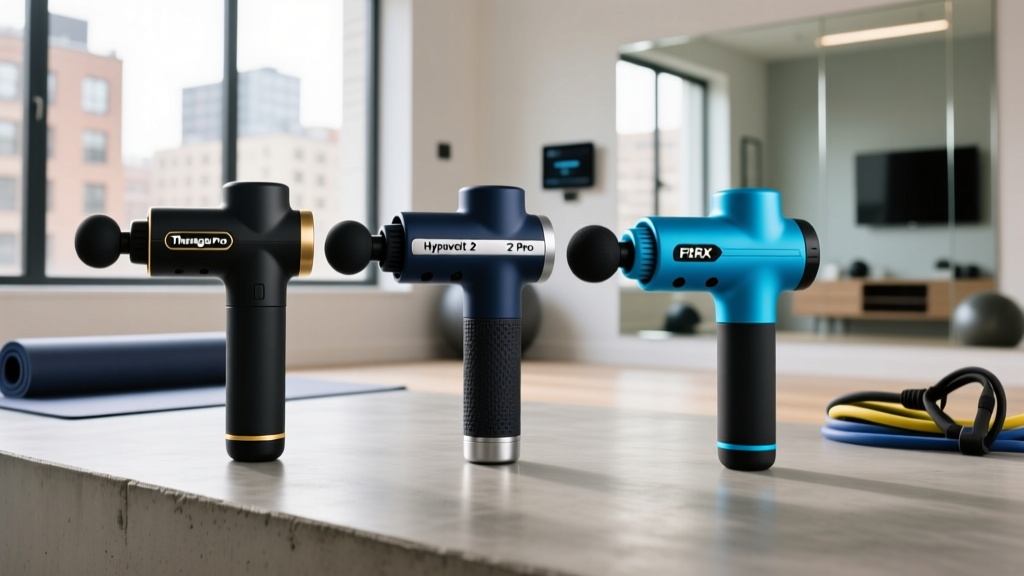
Theragun vs Hyperice vs FitRx Massage Gun: 2026 Expert Review

Heat Pad vs Wrap Troubleshooting & Massage Gun Tips and Uses

Normatec vs Hyperice Boots & Revive Ultra Massage Gun Guide
