
Cupping Therapy vs. Hyperice Recovery Tools: Athlete Budget Guide
Compare cupping therapy equipment to Hyperice recovery tools. We break down costs, clinical efficacy, and ROI to help athletes build the best recovery kit.

The 2026 Recovery Dilemma: Suction vs. Percussion and Heat
As we navigate the 2026 sports science landscape, the marginal gains of post-workout recovery have become a primary focus for both elite and amateur athletes. Two dominant localized recovery modalities have emerged as staples in the modern training room: traditional and smart cupping therapy, and high-tech percussive and thermal devices. But when you are allocating a strict equipment budget, how do you choose between the fascial decompression of cupping and the neuromuscular flushing of premium Hyperice recovery tools?
This guide provides a ruthless, data-driven budget breakdown and value analysis of cupping equipment versus the Hyperice ecosystem. We will examine exact pricing, clinical mechanisms, real-world failure modes, and how to maximize your return on investment (ROI) for delayed onset muscle soreness (DOMS) and tissue mobility.
The True Cost of Cupping Therapy Equipment
Cupping therapy works by creating negative pressure (suction) to lift the skin and underlying fascia, promoting localized blood flow and decompressing tight muscle bellies. The market has bifurcated into cheap manual sets and expensive electronic smart cups.
| Equipment Type | Average Price Range | Suction Control | Maintenance & Lifespan |
|---|---|---|---|
| Traditional Silicone Cups | $20 - $45 | Manual (Squeeze & Release) | High; degrades with friction oils |
| Polycarbonate Pump Sets | $35 - $80 | Manual (Vacuum Gun) | Medium; plastic valves can stick |
| Smart Electronic Cups (e.g., Achedaway, Hi5) | $110 - $160 | Digital (-30 to -60 kPa) | Low; battery degradation over 3 years |
Budget Insight: While a $30 silicone set seems like a steal, the manual suction control often leads to inconsistent negative pressure. Smart cups offer precise kilopascal (kPa) adjustments and integrated red-light therapy, but they require a $130+ upfront investment and eventual battery replacement.
Evaluating Hyperice Recovery Tools for Localized Treatment
Hyperice has built its reputation on active recovery, utilizing percussion, vibration, and thermal therapy. When comparing cupping to Hyperice recovery tools, we must look at the specific devices designed for localized, targeted treatment: the Venom 3 and the Hypervolt 2 Pro.
Venom 3 Heat and Vibration Wrap ($129)
The Venom 3 targets tissue extensibility. By combining precise heat (up to 140°F / 60°C) with high-frequency vibration, it increases local blood flow and relaxes the nervous system. Unlike cupping, which physically pulls tissue, the Venom 3 uses thermal expansion and neuromuscular vibration to reduce stiffness. At $129, it is a direct competitor to mid-tier smart cupping devices.
Hypervolt 2 Pro ($249)
Percussive therapy pushes deep into the muscle belly (up to 16mm amplitude). The Hypervolt 2 Pro is designed to flush metabolic waste and override pain signals via the gate control theory. It is a broader, more aggressive tool than a localized cupping set, making it a higher-ticket item but one that serves a wider variety of muscle groups.
Budget Breakdown: Building a $400 Recovery Arsenal
If you have a $400 budget to optimize your localized recovery, you generally have to choose a primary modality. Here is how the two most logical setups compare in practical value.
Scenario A: The Fascial Decompression Route (Total: $185)
- Smart Electronic Cupping Device: $130 (Provides precise -50 kPa suction and red light therapy)
- Premium Massage Oil & Liniment: $25 (Required for smart cup gliding)
- Traditional Silicone Set (for static placement): $30 (Used for hard-to-reach static back placements)
Best for: Powerlifters, Olympic weightlifters, and athletes suffering from severe fascial adhesions and lower back tightness.
Scenario B: The Hyperice Tech Route (Total: $378)
- Hyperice Venom 3: $129 (For pre-workout tissue warming and post-workout relaxation)
- Hyperice Hypervolt Go 2: $199 (Lightweight percussive tool for flushing and DOMS reduction)
- Replacement Attachment Heads: $50
Best for: Endurance athletes, sprinters, and CrossFit competitors who need rapid blood flow, metabolic flushing, and nervous system down-regulation.
Clinical Efficacy: What the Science Actually Says
When investing in recovery gear, you are paying for physiological outcomes. According to the Cleveland Clinic, cupping therapy is highly effective for drawing blood to specific areas, which can help relieve muscle tension and promote cellular repair by creating a localized inflammatory response that triggers healing.
However, percussive therapy operates on a different mechanism. Research indexed in the National Library of Medicine demonstrates that percussive massage guns significantly improve acute range of motion and reduce perceived DOMS without the tissue trauma (bruising) associated with aggressive cupping. Furthermore, the Hyperice technology framework leverages vibration to stimulate mechanoreceptors, effectively blocking pain signals from reaching the brain.
Expert Synthesis: Cupping is a passive, structural intervention (altering tissue position and hydration). Hyperice recovery tools are active, neurological interventions (altering muscle tone and pain perception). Neither is universally superior; they solve different physiological bottlenecks.
Real-World Failure Modes and Edge Cases
Marketing materials rarely discuss how recovery equipment fails. As a domain expert, here are the edge cases you must factor into your long-term value analysis:
- Silicone Degradation: Traditional cupping sets fail when exposed to synthetic massage oils and friction liniments. The silicone becomes sticky, loses its structural integrity, and fails to hold a vacuum seal. Fix: Use only water-based lubricants or replace cups annually.
- Smart Cup Battery Swelling: Electronic cupping devices that are left on the charger 24/7 often suffer from lithium-ion battery swelling by year two, which can crack the polycarbonate housing and ruin the vacuum seal.
- Hyperice Strap Wear: The Velcro and neoprene straps on the Venom series degrade rapidly when exposed to heavy sweat and frequent washing. Budget an extra $30 every 18 months for strap replacements.
- Percussive Tolerance: Athletes using the Hypervolt daily often build a neurological tolerance to the vibration, requiring them to use higher speeds that drain the battery faster and increase motor wear.
The Ultimate Sequencing Protocol: Combining Both Modalities
For athletes with the budget to acquire both cupping equipment and Hyperice recovery tools, the true value lies in sequencing. Do not use them simultaneously. Follow this 2026 sports-science protocol for maximum ROI:
- Phase 1: Decompress (Cupping - 8 Minutes): Use static smart cupping on the target muscle belly (e.g., hamstrings) at -40 kPa. This pulls stagnant interstitial fluid away from the tissue and creates space in the fascia.
- Phase 2: Flush (Hypervolt - 5 Minutes): Immediately after removing the cups, use the Hypervolt 2 Pro with the dampener attachment on a low-to-medium speed. The newly created space in the fascia allows the percussive waves to penetrate deeper, flushing the area with fresh, oxygenated blood.
- Phase 3: Down-Regulate (Venom 3 - 15 Minutes): Wrap the area with the Venom 3 set to 120°F. The sustained heat and vibration will lock in the new range of motion and shift the autonomic nervous system into a parasympathetic (rest and digest) state.
The Final Verdict: Where Should Your Budget Go?
If your budget is strictly under $150 and you suffer from chronic, localized fascial tightness (like a stubborn rhomboid or QL knot), invest in a high-quality smart cupping device. The mechanical decompression it offers cannot be replicated by percussion.
However, if your budget allows for $250+, and your primary goals are reducing systemic DOMS, warming up tissues before heavy lifts, and accelerating metabolic clearance after endurance events, Hyperice recovery tools offer a vastly superior, more versatile ROI. The combination of thermal therapy and percussion addresses both the neurological and vascular components of recovery, making it the smarter long-term investment for the majority of modern athletes.
More gear to consider
All reviews
Normatec 3 vs Hidow Massage Gun: 2026 Recovery Comparison

2026 Trends: Bob and Brad Air 2 Mini Massage Gun vs Trigger Balls
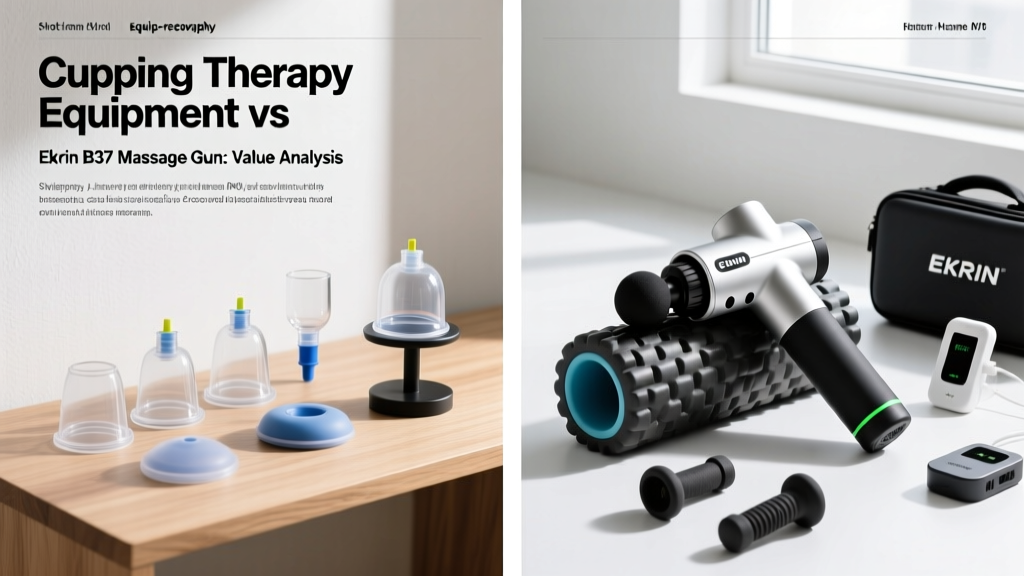
Cupping Therapy Equipment vs Ekrin B37 Massage Gun: Value Analysis

Sauna Blanket Setup Guide: Why A Massage Gun Makes Me Itchy (Reddit)
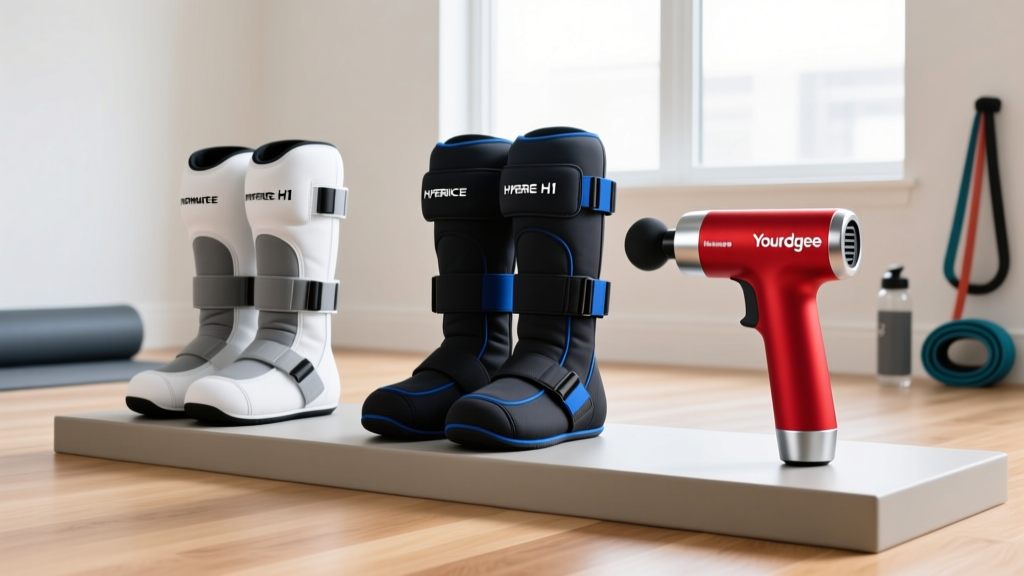
Normatec vs Hyperice Boots vs Youdgee Massage Gun 2026
