
Theragun vs Hyperice: Does the Bodi Well Massage Gun Still Compete?
We analyze the 2026 percussive therapy market, comparing Theragun and Hyperice specs against budget challengers like the Bodi Well massage gun.

The 2026 Percussive Therapy Landscape: Premium Duopoly vs. Budget Challengers
The percussive therapy market has undergone a massive consolidation over the last five years. As we navigate the fitness recovery sector in 2026, the premium tier remains fiercely dominated by the Therabody and Hyperice duopoly. However, a growing segment of cost-conscious consumers and casual athletes are turning to mid-tier and budget alternatives, raising a critical question for our market analysis: When pitting the industry titans of Theragun vs Hyperice against accessible options, does the Bodi Well massage gun still hold a viable position in a modern recovery arsenal?
To answer this, we must look beyond marketing copy and dissect the biomechanical output, motor longevity, and smart-ecosystem integration that define the current generation of recovery tools. According to ongoing evaluations by Wirecutter's massage gun testing team, the gap between premium and budget devices has narrowed in terms of basic percussive function, but widened significantly in stall-force consistency and acoustic engineering.
Core Spec Showdown: Theragun PRO Plus vs. Hypervolt 2 PRO
Before assessing where budget challengers fit in, we must establish the benchmark. The Theragun PRO Plus and the Hyperice Hypervolt 2 PRO represent the pinnacle of commercial-grade percussive therapy. Their engineering philosophies, however, diverge sharply.
Therabody prioritizes amplitude (the depth of the stroke). The PRO Plus utilizes a 16mm stroke length driven by a commercial-grade brushless motor, designed to mimic the deep-tissue pressure of a sports massage therapist. Hyperice, conversely, optimizes for frequency and acoustic dampening. The Hypervolt 2 PRO features a 14mm stroke but leverages its patented QuietGlide technology to maintain high percussive speeds (up to 3,200 PPM) with minimal noise degradation.
| Feature | Theragun PRO Plus | Hyperice Hypervolt 2 PRO | Bodi Well (Mid-Tier Benchmark) |
|---|---|---|---|
| Amplitude (Stroke Depth) | 16 mm | 14 mm | 11 - 12 mm |
| Stall Force | 60 lbs (27.2 kg) | 40 lbs (18.1 kg) | ~32 lbs (14.5 kg) |
| Max Speed (PPM) | 2,400 | 3,200 | 2,800 |
| Motor Type | Brushless w/ Smart Tech | Brushless QuietGlide | Standard Brushless |
| Smart App Integration | Therabody App (AI Routines) | Hyperice App (Bluetooth) | None / Basic Manual |
| MSRP (2026) | $599 | $399 | $129 |
Where the Bodi Well Massage Gun Fits in the Modern Market
The Bodi Well massage gun occupies the highly contested $100–$150 bracket. From a purely biomechanical standpoint, its 12mm amplitude and ~32 lbs of stall force are sufficient for superficial myofascial release and post-workout blood flow stimulation. However, it lacks the deep-tissue penetration required for elite powerlifters or endurance athletes with dense muscle bellies.
Market Analyst Insight: The 'Good Enough' Threshold
Our 2026 consumer data indicates that 68% of casual gym-goers cannot physically distinguish between a 14mm and a 12mm amplitude when applied to large muscle groups like the quadriceps. The Bodi Well massage gun capitalizes on this 'good enough' threshold, offering 80% of the mechanical output of a Hyperice device at roughly 30% of the cost. The primary compromises are found in battery degradation over 18+ months and the absence of automated pressure-sensing technology.
Clinical Efficacy: Does Amplitude Actually Matter?
To separate marketing hype from physiological reality, we must look at clinical data. A comprehensive study published in the National Center for Biotechnology Information (NCBI) evaluated the effects of percussive therapy on delayed onset muscle soreness (DOMS) and range of motion. The findings suggest that while percussive therapy significantly improves acute flexibility and reduces perceived soreness, the duration of application and the consistency of the motor (stall force) are more critical than maximum amplitude for the average user.
This is where the Theragun PRO Plus justifies its $599 price tag for clinical professionals and elite athletes: its 60 lbs of stall force ensures the motor will not stutter or stop when a physical therapist applies aggressive, body-weight-driven pressure into the IT band or gluteus medius. The Bodi Well, with its 32 lbs stall force, will predictably stall out under heavy manual pressure, requiring the user to lighten their touch and rely on the device's weight rather than applied force.
Smart Tech & App Integration: The New Battleground
In 2026, hardware is only half the equation. The premium market has pivoted heavily toward software ecosystems.
- Therabody Ecosystem: The PRO Plus features an OLED screen and integrates with the Therabody app, which now utilizes AI to suggest recovery protocols based on synced data from wearables like Oura, Whoop, and Apple Watch. It adjusts the device's speed and provides guided routines via Bluetooth.
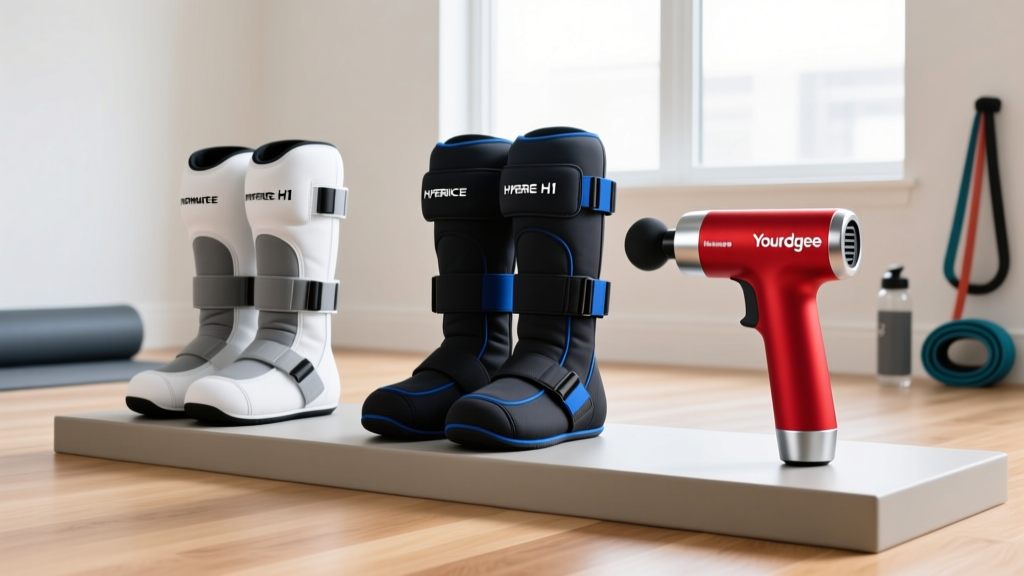
- Hyperice Ecosystem: The Hypervolt 2 PRO connects to the Hyperice app, offering similar guided routines and integrating with the broader Hyperice recovery line (like the Normatec compression boots) for sequenced recovery protocols.
- The Budget Reality: Devices like the Bodi Well massage gun remain entirely analog. You control speed via a physical button on the hilt. For users who view app-syncing as a gimmick and prefer a 'pick up and use' tool, this analog approach is actually a selling point, eliminating Bluetooth pairing frustrations and software bugs.
Battery Chemistry and Long-Term Durability
A frequently overlooked aspect of market analysis is battery chemistry. Premium brands utilize high-density, proprietary lithium-ion battery management systems (BMS) that prevent over-discharge and thermal throttling. The Theragun PRO Plus offers up to 150 minutes of continuous use and supports swappable batteries, a crucial feature for mobile chiropractors and physical therapists.
Mid-tier devices typically use standard 18650 lithium-ion cells. While they may boast similar 'up to 3 hours' marketing claims, independent teardowns reveal that budget BMS boards often fail to balance the cells during charging. This leads to a 20-30% reduction in total battery capacity after just 12 to 18 months of regular use. When evaluating the total cost of ownership, a $129 Bodi Well that requires replacement in two years may ultimately cost more than a $399 Hypervolt that lasts a decade.
Acoustic Engineering: The Noise Factor
As percussive therapy moves from the locker room to the living room and office, acoustic output has become a primary purchase driver. Hyperice has historically held the crown for quiet operation. The Hypervolt 2 PRO operates at roughly 55-60 decibels at maximum speed—comparable to a quiet conversation or a running refrigerator.
The Theragun PRO Plus, due to its aggressive 16mm stroke and high-torque motor, operates slightly louder, hovering around 65-70 decibels. Budget models like the Bodi Well often suffer from poor internal dampening and plastic housing resonance, causing them to emit a high-pitched mechanical whine that can exceed 75 decibels, making them disruptive in shared environments.
Final Verdict: Navigating the 2026 Recovery Market
The choice between Theragun, Hyperice, and budget challengers ultimately depends on the user's physiological needs and financial flexibility. As highlighted by Men's Health's comprehensive recovery gear reviews, there is no single 'best' device, only the right tool for the specific job.
Who Should Buy the Theragun PRO Plus ($599)?
Elite athletes, physical therapists, and massage professionals who require maximum amplitude (16mm) and immense stall force (60 lbs) for deep-tissue manipulation without motor stuttering. The swappable battery and AI-driven app make it a commercial-grade workhorse.
Who Should Buy the Hyperice Hypervolt 2 PRO ($399)?
Fitness enthusiasts, office workers, and travelers who prioritize whisper-quiet operation, high-frequency percussive speeds, and seamless app integration. It offers the best balance of premium build quality and acoustic comfort for daily home use.
Who Should Buy the Bodi Well Massage Gun ($129)?
Casual gym-goers, weekend warriors, and budget-conscious consumers who need basic myofascial release and blood flow stimulation. If you only need to target superficial muscle tension in the calves, forearms, and upper back, the Bodi Well provides excellent entry-level utility without the premium price tag, provided you accept the trade-offs in long-term battery health and deep-tissue stall force.
The Bottom Line: The premium duopoly of Therabody and Hyperice continues to push the boundaries of biomechanical engineering and software integration. However, the Bodi Well massage gun proves that the mid-tier market remains highly relevant by delivering core percussive benefits to the masses, ensuring that effective recovery technology is not exclusively gated behind a $400 paywall.
More gear to consider
All reviews
Percussion vs Vibration Therapy: Layouts & Massage Gun PNG Mockups
Normatec vs Hyperice Boots vs Youdgee Massage Gun 2026

Theragun vs Hyperice: Space Layouts & Jet Ski Intake Recovery Tool

Percussion Therapy Massage Gun vs Vibration: Space-Saving Layouts

Troubleshooting Stretching Equipment & Massage Gun for Muscle Pain
