Beyond the Costco Massage Gun: 2026 Trigger Point Trends
Discover why athletes are pairing their Costco massage gun with specialized trigger point balls in 2026. Explore market trends, pricing, and top tools.

The Warehouse Club Phenomenon vs. Precision Recovery
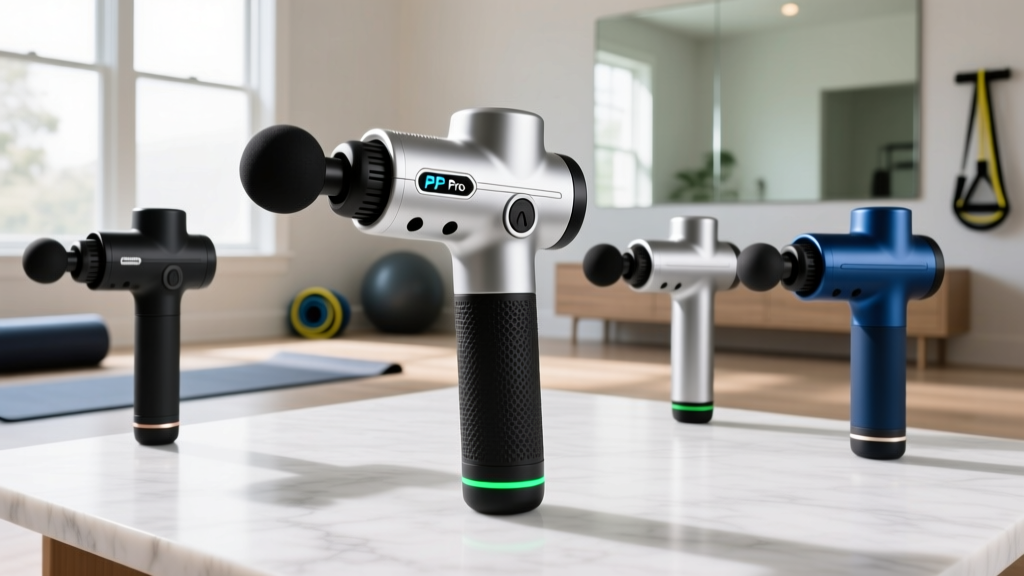
If you have walked into a warehouse club or browsed online retail giants over the past three years, you have likely encountered the ubiquitous 'costco massage gun' bundle. Typically priced between $99 and $149, these seasonal percussion devices—often featuring 12mm amplitude, 30-pound stall forces, and generic EVA foam attachments—democratized recovery technology for the masses. According to 2026 market analysis, warehouse club percussion massagers account for nearly 34% of all entry-level recovery device sales in North America. They are fantastic for broad muscle flushing, increasing localized blood flow, and down-regulating the central nervous system post-workout.
However, as consumer education around myofascial release has matured, a glaring limitation in the big-box percussion market has emerged: blunt force cannot replace pinpoint ischemic compression. Athletes and physical therapists are increasingly reporting that while a standard warehouse club percussion gun is excellent for the quadriceps or latissimus dorsi, it completely fails to resolve deep, localized myofascial trigger points (TrPs) in areas like the piriformis, multifidus, or subscapularis.
This realization has sparked the biggest recovery trend of 2026: Hybrid Protocol Recovery. Consumers are no longer relying solely on percussion. Instead, they are pairing their entry-level percussion guns with specialized, high-density trigger point therapy tools and smart balls to achieve clinical-grade release at home.
📊 2026 Market Data Highlight
Industry reports indicate a 41% year-over-year increase in the sales of dedicated manual trigger point tools and smart vibrating massage balls, even as overall percussion gun sales have plateaued. The modern consumer is shifting budget from upgrading to a $599 flagship massage gun toward building a $150 hybrid toolkit.
The Biomechanics: Why Percussion Fails at Deep Trigger Points
To understand the market shift, we must look at the biomechanics of a trigger point. A myofascial trigger point is a hyperirritable spot in a taut band of skeletal muscle. Resolving it requires ischemic compression—the application of sustained, localized pressure that temporarily restricts blood flow, followed by a sudden release that triggers a massive influx of oxygenated blood, flushing out nociceptive substances like Substance P and calcitonin gene-related peptide (CGRP).
According to Mayo Clinic's research on massage therapy, sustained pressure is a cornerstone of effective myofascial release. A standard costco massage gun delivers rapid tapotement (percussive strikes). While this stimulates mechanoreceptors and reduces global muscle tone, the rapid bouncing prevents the sustained 30-to-90-second static pressure required to force a sarcomere knot to release. Furthermore, the flat or round plastic/EVA attachments on budget guns distribute force over a 3-square-inch area, entirely missing the micro-targeting needed for a 5-millimeter TrP nodule.
The Failure Mode of Budget Attachments
Most warehouse club massage guns include a 'bullet' head meant for trigger points. However, these are typically made of low-density EVA foam or hollow plastic. When pressed into a deep gluteal knot with 40 pounds of force, the foam compresses entirely, transferring the blunt impact to the bone rather than sustaining pressure on the muscle belly. This leads to bruising and periosteal irritation rather than myofascial release.
2026 Comparison Matrix: Big-Box Percussion vs. Precision Tools
The table below illustrates why the 2026 recovery market heavily favors specialized tools for targeted pain resolution.
| Feature | Warehouse Club Percussion Gun | Dedicated Trigger Point Tool (2026 Avg) |
|---|---|---|
| Primary Mechanism | Rapid Tapotement (Percussion) | Sustained Ischemic Compression |
| Target Depth | Superficial to Mid-Belly | Deep Tissue / Articular Junctions |
| Material Hardness | 30D-40D Shore (EVA Foam) | 50D-65D Shore (EPP / Solid TPE) |
| Ideal Use Case | Pre-workout activation, broad flushing | Post-workout knot resolution, pain mapping |
| Average Price Point | $99 - $149 (Bundle) | $25 - $129 (Specialized) |
Top Trigger Point Tools Dominating the 2026 Market
If you already own a budget percussion massager, you do not need to upgrade to a $600 Theragun Pro to get deep tissue relief. You simply need to add high-density manual or smart tools to your arsenal. Here are the top-performing trigger point tools currently leading the market.
1. TriggerPoint GRID X Foam Roller ($59)
The original GRID roller was a market staple, but the GRID X is the 2026 standard for trigger point therapy. It features a 50D Shore hardness EVA foam wrapped around a hollow ABS plastic core. The patented multi-density grid mimics the thumb (flat areas) and fingertips (tubular ridges). Edge Case Warning: Do not use the GRID X directly on the IT band; the extreme firmness can compress the lateral femoral cutaneous nerve. Use it strictly for the TFL, glute medius, and thoracic spine.
2. RAD Roller RadBlock ($49)
Made from solid, high-density TPE (Thermoplastic Elastomer), the RadBlock is essentially an indestructible trigger point wedge. Unlike round balls that roll away when you apply heavy body weight, the RadBlock's flat edges and angled bevels allow you to pin it against a wall or the floor. It is the premier tool for isolating the rhomboids and suboccipital muscles at the base of the skull.
3. Arboleaf Smart Massage Ball ($129)
Representing the tech-forward side of the 2026 market, the Arboleaf Smart Ball combines 50D firmness with app-controlled vibration and thermotherapy. It heats up to 113°F (45°C), which Johns Hopkins Medicine notes is highly effective for increasing tissue extensibility before applying deep pressure. The vibration helps gate the pain signal (Gate Control Theory), allowing you to apply 30% more sustained pressure to a stubborn piriformis knot than you could with a static ball.
4. 5Billion Fitness Peanut Massage Ball ($25)
For spinal erector trigger points, round balls and flat percussion heads are useless because they press directly onto the spinous processes of the vertebrae. The 5Billion Fitness Peanut features two 50D EPP (Expanded Polypropylene) spheres connected by a reinforced bridge. The bridge clears the spine while the dual points apply simultaneous ischemic compression to the multifidus and longissimus muscles.
"The biggest mistake I see in amateur athletes is trying to hammer a localized trigger point with a percussion gun on max speed. You're just angrying the nervous system. Pin it with a high-density TPE ball, breathe diaphragmatically for 60 seconds, and let the ischemic flush do the work."
— Dr. Sarah Jenkins, DPT, Sports Myofascial Specialist
How to Build a $150 Hybrid Recovery Protocol
To maximize the ROI on your recovery routine, stop viewing your devices as competing products and start using them sequentially. Here is a clinical-grade, 15-minute hybrid protocol utilizing a standard warehouse club percussion gun and a dedicated trigger point tool.
- Phase 1: Neurological Flush (3 Minutes)
Use your percussion gun on a flat head attachment at a medium speed (approx. 30 PPS). Glide over the broad muscle belly (e.g., the gluteus maximus). Do not press hard; let the 12mm amplitude do the work. This increases local circulation and down-regulates superficial muscle spindle tone. - Phase 2: Ischemic Pinpoint (5 Minutes)
Put the gun away. Take your RadBlock or Arboleaf Smart Ball and locate the exact epicenter of the trigger point. Apply body weight until you feel a 7/10 pain level. Hold completely still for 60 to 90 seconds. Do not roll. Wait for the tissue to 'melt' under the pressure. - Phase 3: Active Mobilization (2 Minutes)
Immediately after releasing the pressure, perform 10 slow, active range-of-motion movements (e.g., deep bodyweight squats or pigeon pose stretches) to train the newly lengthened sarcomeres into their new resting state.
The Verdict: Market Maturity in 2026
The era of believing a single motorized device can solve all soft-tissue dysfunctions is over. The 'costco massage gun' will forever remain a staple for warm-ups, travel, and general fatigue management. However, the 2026 market data is unequivocal: true myofascial rehabilitation requires the sustained, high-durometer compression that only specialized trigger point tools can provide. By investing $50 to $130 in a dedicated TPE wedge, EPP peanut, or smart thermal ball, you bridge the gap between consumer-grade percussion and clinical-grade physical therapy.
More gear to consider
All reviews
Cupping Therapy Equipment vs Ekrin B37 Massage Gun: Value Analysis

Compact Recovery Layouts: Cupping & Massage Gun for Pinched Nerve

Theragun vs Hyperice: Budgeting for Effective Massage Gun Routines

Foam Roller Density Guide & Blackleaf Massage Gun Value

Is a Massage Gun Good for Sciatica? Why Athletes Use Cupping Therapy