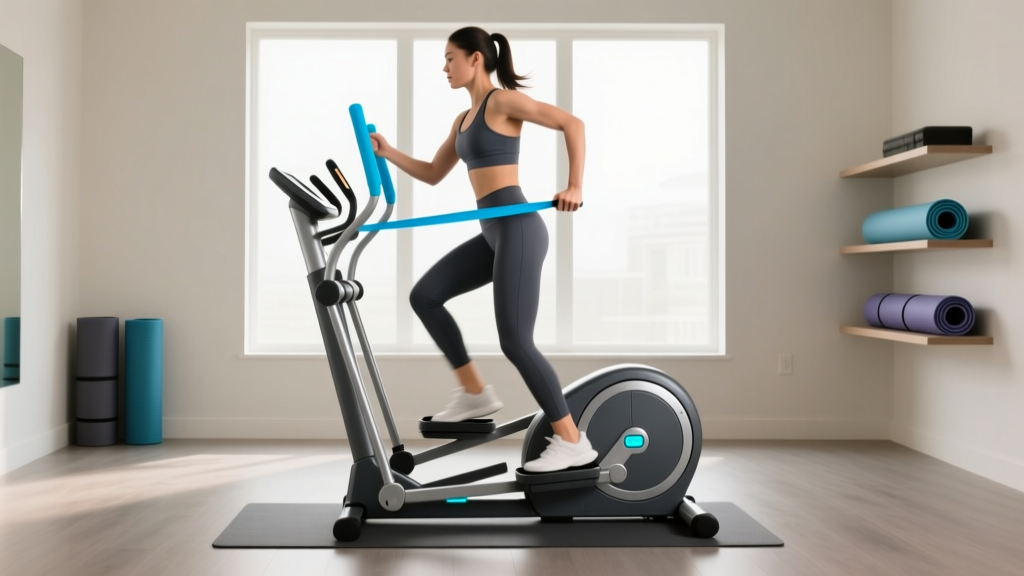
Weslo Cadence 200CS Treadmill: Feature Comparison Guide
Is the Weslo Cadence 200CS treadmill still viable? We compare its legacy specs against modern budget alternatives in our 2026 feature buying guide.

Introduction: The Legacy of the Weslo Cadence 200CS Treadmill
When navigating the secondary market or evaluating legacy fitness equipment, the weslo cadence 200cs treadmill frequently appears as a benchmark for entry-level home cardio. Manufactured under the Icon Health & Fitness umbrella, this folding treadmill was designed to offer an accessible price point for casual walkers and light joggers. However, as we move through 2026, the budget treadmill landscape has evolved dramatically. Modern entry-level machines now feature advanced Bluetooth FTMS connectivity, continuous-duty motors, and wider running surfaces.
This in-depth buying guide deconstructs the core feature set of the Weslo Cadence 200CS, compares its specifications against current market leaders, and provides a practical decision framework to help you determine if this legacy model fits your biomechanical needs or if you should pivot to a modern alternative.
Feature Breakdown: What the 200CS Actually Offers
To accurately compare the Weslo Cadence 200CS against contemporary machines, we must first isolate its baseline specifications. This model was engineered for space-saving convenience rather than high-performance marathon training.
- Motor Output: 2.25 HP (Peak Rating)
- Running Surface: 16 inches wide x 50 inches long
- Speed Range: 0 to 10 MPH
- Weight Capacity: 250 pounds
- Incline: Manual (typically 2 fixed positions)
- Console Tech: Basic LCD tracking (Time, Speed, Distance, Calories, Pulse)
While these specifications were standard for budget-tier machines a decade ago, they present distinct limitations for today's consumers, particularly regarding stride length accommodation and motor longevity under sustained loads.
2026 Budget Treadmill Comparison Matrix
How does the Weslo Cadence 200CS stack up against modern budget treadmills available in 2026? The table below illustrates the shift in industry standards for entry-level cardio equipment.
| Feature / Model | Weslo Cadence 200CS | Horizon Fitness T101 | XTERRA TR150 | Sunny Health SF-T7850 |
|---|---|---|---|---|
| Motor Rating | 2.25 HP (Peak) | 2.5 HP (CHP) | 2.25 HP (CHP) | 2.5 HP (Peak) |
| Belt Dimensions | 16' x 50' | 20' x 55' | 16' x 50' | 19' x 48' |
| Max Speed | 10 MPH | 10 MPH | 10 MPH | 8 MPH |
| Weight Capacity | 250 lbs | 300 lbs | 250 lbs | 220 lbs |
| Incline Type | Manual | Motorized (0-10%) | Manual (3 levels) | Manual (3 levels) |
| App Connectivity | None | Bluetooth / Incline+ | None | SunnyFit App |
| Est. Price (2026) | $150-$250 (Used) | $599 (New) | $299 (New) | $249 (New) |
Deep Dive: Motor Mechanics and Biomechanical Realities
The most critical point of failure and misunderstanding in budget treadmills lies in motor nomenclature and belt ergonomics. Understanding these concepts is vital when evaluating the Weslo Cadence 200CS for your home gym.
Peak HP vs. Continuous Duty HP (CHP)
The Weslo Cadence 200CS advertises a 2.25 HP motor. However, this is a Peak rating, meaning the motor can only sustain this output for a fraction of a second before overheating. In reality, the Continuous Duty HP (CHP)—the actual usable power during a 30-minute workout—is likely closer to 1.25 or 1.5 CHP.
When a user approaches the 250-pound weight limit, a 1.5 CHP motor must draw excessive amperage to keep the belt moving at 6 MPH. This leads to the degradation of the Pulse Width Modulation (PWM) motor controller board. Modern alternatives like the Horizon T101 utilize true 2.5 CHP motors, ensuring consistent torque delivery without thermal throttling.
Belt Width and Stride Kinematics
The 16-inch by 50-inch running surface on the 200CS is highly restrictive. According to biomechanical research published in the National Institutes of Health (NIH), treadmill running alters natural stride length and joint kinematics compared to overground running. A 50-inch belt forces users taller than 5'7' to subconsciously shorten their stride to avoid stepping off the rear roller. Over time, this altered gait increases patellofemoral joint stress and hip flexor fatigue. If you intend to run (rather than walk), a minimum 20-inch width and 55-inch length is the 2026 industry standard for injury prevention.
Common Failure Modes in Entry-Level Treadmills
When purchasing a legacy model like the Weslo Cadence 200CS on the secondary market, you must inspect it for specific failure modes inherent to budget-tier engineering.
Expert Warning: The 'E1' Error Code
If the Weslo console flashes an E1 or E2 error code, it indicates a communication failure between the console and the lower motor controller board. In 90% of cases on the 200CS, this is caused by a blown MOSFET on the controller board due to belt friction. Always test the machine at an 8% incline and 6 MPH for at least 5 minutes before purchasing used.
1. Deck Delamination and Belt Friction: Budget treadmills use MDF (Medium-Density Fiberboard) decks coated with a thin layer of wax. If the previous owner neglected to apply 100% silicone lubricant every 40 hours of use, the friction coefficient between the belt and deck spikes. This not only destroys the motor but causes the deck to warp and delaminate.
2. Rear Roller Bearing Seizure: The 200CS utilizes basic steel bearings in the rear roller. Under heavy use, these bearings can seize, causing the walking belt to track aggressively to the left or right, eventually fraying the belt edges.
3. Safety Lanyard Degradation: The FDA regularly issues warnings regarding treadmill safety and the necessity of functional emergency stop mechanisms. As noted in FDA consumer safety updates, magnetic safety keys and lanyards are critical for preventing severe friction burns and impact injuries. On older Weslo models, the magnetic reed switch inside the console can fail, rendering the machine dead.
The 2026 Buyer's Decision Framework
Should you buy the Weslo Cadence 200CS, or invest in a modern alternative? Use this framework to decide.
Who Should Buy the Weslo Cadence 200CS?
- Strict Walkers: If you exclusively walk at speeds under 4.0 MPH and are under 180 pounds, the 1.5 CHP equivalent motor will suffice.
- Space-Constrained Buyers: The 200CS features a highly compact folding footprint, making it ideal for small apartments.
- Extreme Budget Shoppers: If you can source a well-maintained unit on the secondary market for under $150, it serves as a decent temporary bridge to a better machine.
Who Should Avoid It?
- Runners and Joggers: The 50-inch belt length is unsafe for sustained running gaits.
- Heavy Users: Users over 200 pounds will rapidly degrade the motor controller and void any remaining structural integrity.
- Tech-Integrated Athletes: The lack of Bluetooth FTMS means you cannot connect the 200CS to Zwift, Peloton Universal, or KinoFit for virtual terrain resistance adjustments.
For dedicated cardiovascular health, the Mayo Clinic emphasizes the importance of consistent, comfortable movement to maintain long-term adherence to fitness routines. If a 16-inch belt makes your walk uncomfortable, you will abandon the machine. In 2026, spending an extra $150 for a modern XTERRA or Sunny Health model with a wider belt and app connectivity yields a significantly higher return on investment.
Frequently Asked Questions
Q: Can I upgrade the motor on the Weslo Cadence 200CS?
A: No. The motor mount brackets, flywheel size, and PWM controller board are proprietary to the 1.5 CHP equivalent setup. Attempting to wire a larger 3.0 CHP motor will immediately blow the console's low-voltage circuitry.
Q: How do I properly tension the belt on this model?
A: Locate the two hex bolts at the rear end caps. Turn both bolts clockwise exactly one-quarter turn. Test the belt at 3 MPH. If it slips underfoot, add another quarter turn. Never exceed one full turn from the factory baseline, or you will stretch the belt backing and destroy the front roller bearings.
Q: Is the Weslo Cadence 200CS compatible with chest strap heart rate monitors?
A: No. The console relies solely on conductive contact grips located on the handrails, which are notoriously inaccurate during high-sweat workouts. You will need to rely on a standalone smartwatch for accurate BPM tracking.
More gear to consider
All reviews
Cardio Noise Guide: NordicTrack T Series 5 Treadmill Details & More
Why Does Getting Off a Treadmill Feel Weird? Air vs Assault Bike Layouts

Treadmill Motor HP Guide: How Long to Get 10k Steps on Treadmill

KICKR RUN Smart Treadmill & Under Desk Office Review 2026
Can You Walk on a Curved Treadmill? 2026 Belt Maintenance Trends