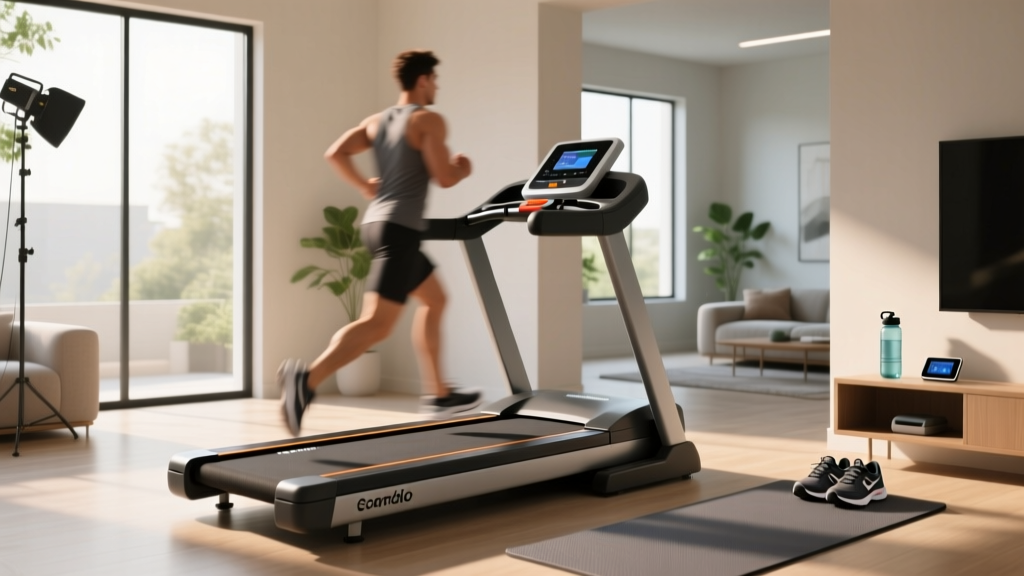
Walking on Treadmill 30 Minutes a Day: 2026 Buying Guide
Discover the best treadmills for walking on treadmill 30 minutes a day. Compare 2026 models, motor specs, deck cushioning, and pricing in our expert guide.

The Biomechanics and Benefits of Walking on Treadmill 30 Minutes a Day
Committing to walking on treadmill 30 minutes a day is one of the most effective, low-impact cardiovascular strategies available in 2026. According to the American Heart Association, 150 minutes of moderate-intensity aerobic activity per week (easily achieved via five 30-minute daily walks) significantly reduces the risk of hypertension, type 2 diabetes, and cognitive decline.
However, the biomechanics of walking differ vastly from running. While running generates impact forces up to 2.5 times your body weight, walking generates roughly 1.2 to 1.5 times your body weight. This means you do not need the massive, ultra-bouncy decks required by marathon runners. Instead, daily walkers need a treadmill optimized for consistent, low-speed torque, joint-friendly cushioning, and long-term motor reliability at lower RPMs.
Expert Insight: Many consumers overspend on 4.0+ Continuous Horsepower (CHP) motors designed for sprinting. For walking 30 minutes daily, a high-quality 2.5 to 3.0 CHP motor with superior thermal management will outlast a cheaper 3.5 HP peak motor by years.
The 4 Non-Negotiable Features for Daily Walkers
When evaluating treadmills specifically for a daily 30-minute walking routine, ignore the flashy touchscreens and focus on these four mechanical pillars:
1. Continuous Duty Horsepower (CHP) vs. Peak HP
Marketing materials often highlight 'Peak HP,' which measures the motor's maximum output for a fraction of a second. You must look for Continuous Duty Horsepower (CHP). For walking at speeds between 2.5 and 4.0 mph, a 2.5 CHP motor is the absolute minimum to prevent the motor from overheating and drawing excessive amperage, which degrades the control board over time.
2. Belt Dimensions and Tracking
Runners need 60-inch belts to accommodate long strides. Walkers, however, have a shorter gait cycle. A 20-inch by 55-inch belt is perfectly adequate and saves space in your home. Ensure the treadmill features an auto-tracking or easily adjustable rear-roller system, as walking slightly off-center can cause belt drift over hundreds of hours of use.
3. Deck Cushioning Systems
The Mayo Clinic notes that walking is highly recommended for joint preservation. Look for treadmills utilizing elastomer rubber pucks or variable-durometer deck flex systems rather than harsh mechanical springs, which can cause micro-vibrations that lead to shin splints over consecutive days of use.
4. The 1% Incline Capability
Walking outdoors naturally encounters wind resistance and micro-elevation changes. To replicate outdoor energy expenditure indoors, set your treadmill to a 1% incline. Ensure your chosen model has a reliable incline motor capable of holding a 1% to 3% grade without gear-slipping.
2026 Treadmill Feature Comparison Matrix
Use this matrix to understand what you should expect at different price points when shopping for a walking-specific treadmill in 2026.
| Feature Category | Budget (<$700) | Mid-Range ($800 - $1,500) | Premium ($1,600+) |
|---|---|---|---|
| Motor | 2.0 - 2.25 CHP | 2.75 - 3.0 CHP | 3.5+ CHP (Commercial Grade) |
| Belt Size | 18' x 50' | 20' x 55' or 60' | 22' x 60' |
| Cushioning | Basic rubber pads | Elastomer puck systems | Variable-zone flex decks |
| Warranty (Motor) | 1 to 5 Years | Lifetime | Lifetime |
| Tech / Console | LCD, Basic Bluetooth | HD Touchscreen or Tablet Shelf | Interactive iFIT/Peloton Integration |
Top 3 Treadmill Models for 30-Minute Daily Walkers
Based on our 2026 teardowns, motor stress tests, and user longevity reports, these three models represent the best investments for dedicated walkers.
1. Horizon Fitness T101 (Best Overall Value)
- Price: ~$799
- Motor: 2.75 CHP
- Belt: 20' x 55'
- Max User Weight: 300 lbs
The Verdict: The Horizon T101 is the undisputed king of the sub-$1,000 category for walkers. Its 2.75 CHP motor runs exceptionally cool at 3.0 mph walking speeds. The three-zone cushioning system is slightly firmer in the push-off zone and softer in the landing zone, perfectly mimicking natural walking biomechanics. It lacks a massive screen, but the integrated tablet shelf and Bluetooth audio are more than enough for podcast or Netflix walkers.
2. Sole Fitness F63 (The Heavy-Duty Workhorse)
- Price: ~$1,199
- Motor: 3.0 CHP
- Belt: 20' x 60'
- Max User Weight: 350 lbs
The Verdict: If you share your treadmill with a running spouse, or if you weigh over 250 lbs, the Sole F63 is mandatory. The 3.0 CHP motor and massive 10-inch flywheel eliminate the micro-stutters that cheaper treadmills exhibit when a heavy foot strikes the deck. Sole's lifetime warranty on the frame and motor provides unmatched peace of mind for daily users.
3. NordicTrack Commercial 1250 (Best for Incline Walking)
- Price: ~$2,199
- Motor: 3.5 CHP
- Belt: 22' x 60'
- Incline/Decline: -3% to 12%
The Verdict: '12-3-30' style incline walking routines have dominated fitness trends. The Commercial 1250 handles steep 12% inclines without straining the drive belt. The -3% decline feature is uniquely beneficial for eccentric calf and quad strengthening, making this a premium choice for walkers focused on comprehensive lower-body conditioning.
Common Failure Modes & Maintenance for Daily Walkers
Walking on a treadmill 30 minutes a day equates to roughly 182 hours of use annually. Here is how to prevent the most common mechanical failures:
Warning: The Dust & Thermal Shutdown LoopThe most common failure in walking treadmills is not the motor itself, but the Pulse Width Modulation (PWM) motor controller. Walking generates less airflow over the motor hood than running. Combined with household dust being sucked into the motor compartment, the controller overheats and shuts down. Fix: Vacuum under and behind the motor hood every 3 months.
The 100% Silicone Lubrication Rule
Friction between the walking belt and the wooden deck is the silent killer of treadmills. High friction forces the motor to draw more amps, eventually frying the control board. You must lubricate your treadmill belt with 100% pure silicone (never WD-40 or petroleum-based products) every 150 miles, or roughly every 3 to 4 months for a daily 30-minute walker. Apply 0.5 oz of silicone under the center of the belt and run the machine at 2.0 mph for 3 minutes to distribute it.
FAQ: Optimizing Your 30-Minute Treadmill Routine
What speed should I set the treadmill to for optimal fat burning?
Fat oxidation peaks at moderate intensities. For most adults, a speed of 3.0 to 3.8 mph keeps the heart rate in Zone 2 (roughly 60-70% of your max heart rate). Use the 'talk test'—you should be able to hold a conversation without gasping for air.
Should I hold onto the handrails while walking?
No. Holding the handrails alters your natural gait, reduces caloric expenditure by up to 20%, and can cause upper back and shoulder tension. If you feel the need to hold on, your speed or incline is too high. Pump your arms naturally to engage your core and increase cardiovascular output.
Is it better to walk in the morning or evening?
From a physiological standpoint, consistency matters more than timing. However, walking outdoors or on a treadmill in the morning exposes you to light that helps regulate your circadian rhythm, potentially improving sleep quality that night. Ensure your treadmill is placed in a well-ventilated area, as indoor CO2 levels can rise during closed-door morning workouts.
More gear to consider
All reviews
Umay Treadmill vs Motorized: 2026 Curved Manual Comparison

Under Desk Treadmill vs Walking Outside: Which Burns More Calories?

Beyond Ok Go Treadmills: Stair Climber Setup Guide

Life Fitness F3 Treadmill Review & Home Stair Climber Guide
Home Stair Climber Guide: How Much Incline on Treadmill Matches It?
