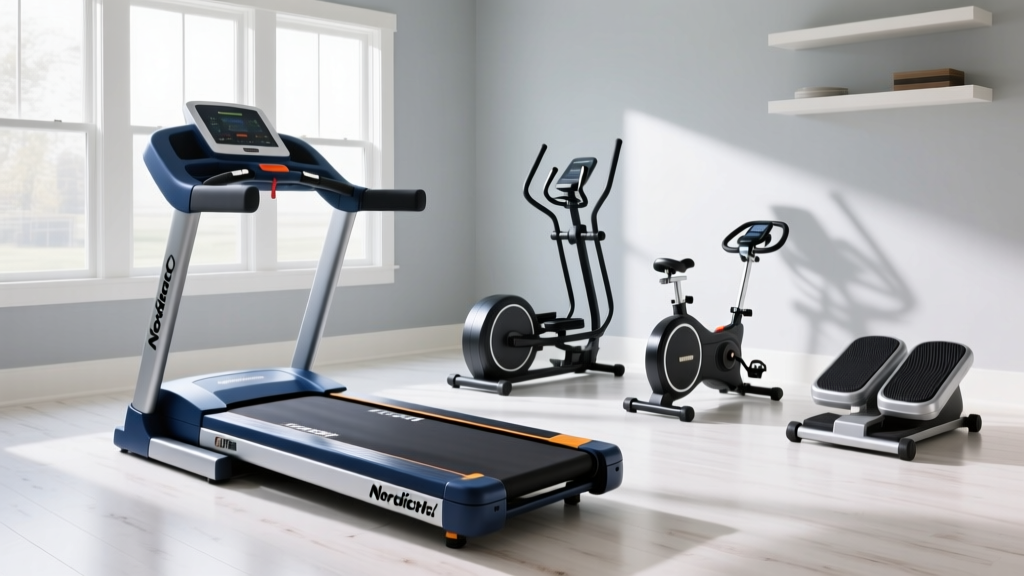
Beginner Home Treadmill Workouts: Walking Pad vs Treadmill Review
Master beginner home treadmill workouts with our 2026 walking pad vs treadmill review. Compare specs, pricing, and follow our step-by-step cardio plan.

The Great Cardio Dilemma: Walking Pad or Traditional Treadmill?
If you are just starting your fitness journey in 2026, the market for indoor cardio equipment can feel overwhelming. Specifically, the explosion of ultra-compact walking pads has created a massive debate: do you really need a full-sized traditional treadmill, or is a sleek, under-desk walking pad enough to achieve your goals?
Designing effective home treadmill workouts requires matching your equipment to your biomechanics, space constraints, and fitness level. According to the American Heart Association, adults should aim for at least 150 minutes of moderate-intensity aerobic activity per week. Both walking pads and traditional treadmills can help you hit this mark, but they do so in very different ways.
This step-by-step guide will walk you through the exact differences, review top beginner-friendly models, and provide a progressive 4-week workout plan to get you moving safely.
Step 1: Understand the Biomechanical Differences
Before spending your hard-earned money, you must understand how belt size affects your stride. This is the most common failure point for beginners who buy cheap equipment and end up with shin splints or hip pain.
⚠️ The Stride Length Warning: Most walking pads feature a belt length between 40 and 45 inches. If you are taller than 5'6" or plan to walk faster than 3.5 mph, a short belt forces you to "chop" your stride. This unnatural gait alters your heel-to-toe strike, shifting impact to your shins and knees. Traditional treadmills offer 55 to 60-inch belts, allowing for a full, natural stride at any speed.Head-to-Head Comparison Matrix
| Feature | Walking Pads (Under-Desk) | Traditional Treadmills |
|---|---|---|
| Belt Length | 40" - 47" (Walking only) | 55" - 60" (Walking & Running) |
| Motor Power | 1.5 to 2.5 HP (Peak) | 2.5 to 3.5 CHP (Continuous) |
| Incline Capability | Rare (Usually 0% to 5% max) | Standard (0% to 15%) |
| Avg. Footprint | 5 sq. ft. (Slides under bed) | 18 - 22 sq. ft. (Dedicated space) |
| Price Range (2026) | $199 - $599 | $799 - $1,500+ |
Step 2: Choose Your Machine (2026 Beginner Reviews)
Based on durability, motor reliability, and beginner ergonomics, here are the top picks for both categories this year.
Category A: The Best Walking Pads for Beginners
1. UREVO Strol 2E (Best Budget/Space-Saver)
- Price: ~$279
- Specs: 2.5 HP Peak Motor, 41" x 16" belt, 265 lb weight capacity.
- The Verdict: The Strol 2E features a handlebar that folds down, bridging the gap between a pure under-desk pad and a light walking treadmill. The 16-inch width is slightly narrow, so it requires focus, but the shock-absorbing pads beneath the belt do an excellent job of reducing joint fatigue for daily 3 mph walks.
2. KingSmith WalkingPad X21 (Best Premium Smart Pad)
- Price: ~$599
- Specs: Auto-folding frame, adaptive speed control, 48" belt length.
- The Verdict: The X21's slightly longer 48-inch belt accommodates taller users much better than standard pads. Its "Adaptive Speed Control" uses foot-pressure sensors to speed up or slow down based on where you step on the belt—a fantastic feature for beginners doing interval walking without fumbling for a remote.
Category B: The Best Traditional Treadmills for Beginners
1. Horizon Fitness T101 (Best Overall Value)
- Price: ~$799
- Specs: 3.0 CHP Motor, 20" x 55" belt, 0-10% motorized incline, Bluetooth audio.
- The Verdict: Horizon remains the gold standard for entry-level traditional treadmills. The 3.0 Continuous Horsepower (CHP) motor won't overheat during hour-long sessions, and the 55-inch belt provides ample room for a natural walking stride and light jogging. The 3-zone cushioning system is noticeably softer than the rigid decks of walking pads.
2. Sole Fitness F63 (Best for Joint Support & Incline)
- Price: ~$1,199
- Specs: 3.25 CHP Motor, 20" x 60" belt, 0-15% incline, heavy-duty flywheel.
- The Verdict: If your budget allows, the Sole F63 is a lifetime beginner machine. The 15% incline capability unlocks advanced "home treadmill workouts" (like the famous 12-3-30 routine) that simply aren't possible on a walking pad. The 60-inch belt accommodates runners of any height.
Step 3: Your 4-Week Beginner Home Treadmill Workout Plan
Whether you chose a walking pad or a full treadmill, consistency is your primary goal. The Cleveland Clinic notes that daily walking drastically improves cardiovascular health, regulates blood sugar, and boosts mood. Follow this progressive 4-week plan to build endurance safely.
Weeks 1 & 2: The Base-Building Phase (Focus on Form)
Goal: 20-30 minutes, 4 days a week. Speed: 2.5 to 3.2 mph.
- Warm-up (5 mins): Walk at 2.0 mph. Focus on rolling through your foot from heel to toe. Keep your chest up and eyes forward, not staring down at your phone or console.
- Steady State (15-20 mins): Increase to 3.0 mph. Swing your arms naturally. If using a walking pad without a handlebar, engage your core to maintain balance.
- Cool Down (5 mins): Drop back to 2.0 mph. Finish with off-machine calf and hamstring stretches.
Weeks 3 & 4: Introducing Intervals and Incline
Goal: 30-40 minutes, 4 days a week. (Note: Incline requires a traditional treadmill; walking pad users should substitute incline with speed bursts).
- Warm-up (5 mins): 2.5 mph at 0% incline.
- The Interval Block (20 mins):
- Traditional Treadmill Users: Set incline to 8% and speed to 3.0 mph for 3 minutes. Drop incline to 0% and speed to 2.5 mph for 2 minutes to recover. Repeat 4 times.
- Walking Pad Users: Walk at a brisk 3.5 mph for 3 minutes. Slow to 2.5 mph for 2 minutes to recover. Repeat 4 times.
- Endurance Push (10 mins): Find a comfortable "conversational pace" (usually 3.2 mph) and hold it steady.
- Cool Down (5 mins): 2.0 mph, followed by stretching.
Step 4: Essential Maintenance for Longevity
Beginners often neglect treadmill maintenance, leading to burnt-out motors within the first year. To protect your investment, follow this strict maintenance schedule:
- Monthly Belt Alignment: Stand on the side rails and turn the machine on to 2.0 mph. Watch the belt. If it drifts left, use the provided Allen wrench to turn the left rear roller bolt a quarter-turn clockwise.
- Bi-Annual Lubrication: Lift the belt and apply 100% silicone treadmill lubricant (never use WD-40 or household oils, which destroy the deck). Walking pads typically require 15ml of silicone every 60 miles; traditional treadmills require it every 150 miles.
- Surge Protection: Always plug traditional treadmills into a dedicated 15-amp wall outlet or a high-joule surge protector. Power fluctuations are the number one killer of digital console boards in 2026 smart-treadmills.
Frequently Asked Questions
Can I run on a walking pad?
No. Walking pads are engineered with smaller rollers and weaker motors designed strictly for walking (up to 3.8 mph). Attempting to jog or run on a 40-inch belt is a severe safety hazard and will immediately void your warranty while likely causing the motor control board to short out.
Are walking pads effective for weight loss?
Yes, if used consistently to create a caloric deficit. While a traditional treadmill allows for higher calorie burn via steep inclines and running, a walking pad excels at increasing your NEAT (Non-Exercise Activity Thermogenesis). Getting 8,000 to 10,000 steps a day on a walking pad while working or watching TV is a highly effective, low-impact weight management strategy.
How much space do I really need for a traditional treadmill?
While the machine footprint might be 30" x 70", you must account for safety clearance. The Consumer Product Safety Commission recommends at least 2 feet of clearance on each side and 6 feet behind the treadmill to prevent severe friction burns if you fall and are pushed backward.
Final Verdict: Which Should You Buy?
If your primary goal is to increase daily step counts, combat a sedentary desk job, and you live in a small apartment, a premium walking pad like the KingSmith X21 is an incredible, frictionless way to build a daily habit. However, if your goal is dedicated cardiovascular conditioning, weight loss via high-calorie-burn incline routines, or you are taller than 5'8", investing in a traditional machine like the Horizon T101 or Sole F63 is non-negotiable for proper biomechanics and long-term progression.
More gear to consider
All reviews
Walking Pad vs. Treadmill: Lessons from Precor Treadmills Reviews

How to Disassemble a NordicTrack Treadmill & Air Bike vs Assault Bike
Air Bike vs Assault Bike: Value vs Fat Burning Interval Treadmill Workout
Space-Saving Layouts & Bowflex BXT6 Treadmill Belt Care

NordicTrack T6.5z Treadmill vs Horizon T101: 2026 Guide