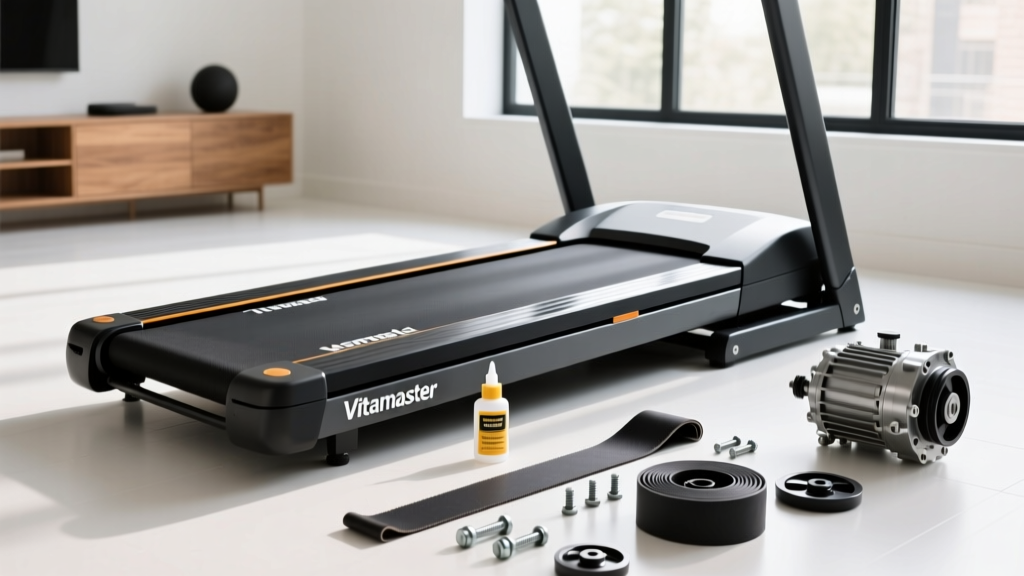
Vitamaster Treadmill Belt Maintenance: Cost and Value Breakdown
Discover the true cost of Vitamaster treadmill belt maintenance. We break down lubrication, replacement parts, and value analysis for legacy models.

The Legacy of the Vitamaster Treadmill: Is It Worth Saving?
Vitamaster treadmills, particularly the legendary 810, 910, and Pro series models from the late 1990s and early 2000s, are renowned for their over-engineered steel frames and reliable DC motor setups. In an era where modern budget treadmills often feature fragile aluminum extrusions and underpowered motors, a well-maintained vintage Vitamaster remains a formidable piece of home gym equipment. However, keeping the running belt and deck operational in 2026 requires a precise, calculated approach to maintenance. The primary failure point for any legacy cardio machine is the belt-deck friction interface. This comprehensive budget breakdown and value analysis will detail the exact costs, materials, and mechanical protocols required to maintain, lubricate, and potentially replace the belt system on a Vitamaster treadmill.
The Diagnostic Phase: The Amp Draw Test
Before spending a single dollar on lubricants or replacement parts, you must quantify the actual friction level of your Vitamaster's running belt. Guessing leads to wasted money and potential motor burnout. The industry standard for measuring belt-deck friction is the Amp Draw Test.
Using a standard digital clamp meter or a plug-in watt meter (like a Kill-A-Watt), measure the current the motor draws under specific conditions. According to repair data from the Treadmill Doctor, a healthy treadmill motor should exhibit the following amp draw profile:
- No-Load (Belt moving, no user): 2 to 3 Amps
- Walking Load (User walking at 3.0 mph): 4 to 6 Amps
- Running Load (User running at 6.0 mph): 6 to 8 Amps
If your Vitamaster pulls more than 10 Amps while walking, the friction coefficient is dangerously high. This indicates that the belt is either severely under-lubricated, the deck is warped, or the belt tension is improperly calibrated. This diagnostic step costs less than $20 (the price of a basic multimeter) and dictates your entire maintenance budget.
Budget Breakdown: Vitamaster Belt Lubrication Costs
If the Amp Draw Test indicates high friction but the belt and deck surfaces are physically intact, lubrication is your most cost-effective intervention. However, using the wrong chemical compound will destroy the PVC and rubber layers of a legacy belt. You must use 100% silicone lubricant. Never use WD-40, petroleum distillates, or household oils, as these will degrade the belt backing and cause delamination.
| Lubricant Type | Average Cost (2026) | Compatibility with Vitamaster | Longevity |
|---|---|---|---|
| 100% Silicone Liquid (1 oz bottles) | $8 - $12 | Excellent (Phenolic Decks) | 3-6 Months |
| Silicone Gel / Paste | $12 - $18 | Good (Reduces Dripping) | 4-8 Months |
| Petroleum-Based Sprays | $5 - $9 | DO NOT USE (Destroys Belt) | N/A |
| Universal Wax Bar | $10 - $15 | Excellent (Wax-Impregnated Decks) | 6-12 Months |
Many vintage Vitamaster models (particularly the early 800 series) feature a wax-impregnated wooden deck rather than a standard phenolic resin overlay. Applying standard liquid silicone to a wax deck will create a gummy, abrasive paste that acts like sandpaper, destroying your belt backing within weeks. Always verify your deck type by checking the owner's manual or inspecting the deck surface before applying liquid silicone.
Step-by-Step Lubrication Protocol for Legacy Vitamaster Decks
Proper application ensures the lubricant reaches the center of the deck where foot-strike friction is highest. Budget exactly 30 minutes for this procedure.
- Release Tension: Using a 3/16-inch or 1/4-inch Allen wrench (depending on your specific Vitamaster model), turn the left and right rear roller adjustment bolts counter-clockwise by exactly three full turns. This creates enough slack to lift the belt.
- Apply Lubricant: Lift the edge of the belt and insert the nozzle of your 100% silicone lubricant. Squeeze exactly 1 oz (half a standard 2 oz bottle) in a zig-zag pattern across the center third of the deck. Repeat on the opposite side.
- Restore Tension: Tighten the rear roller bolts clockwise by the exact same three turns to restore baseline tension.
- Distribute: Power on the treadmill and run it at 3.0 mph for 5 minutes. Walk on the belt gently to help press the silicone into the deck pores.
When Lubrication Fails: Belt and Deck Replacement Economics
If you have properly lubricated the deck and the Amp Draw remains above 10 Amps, or if you feel a 'washboard' ridged texture on the underside of the belt, the friction interface has suffered mechanical failure. At this stage, lubrication is a sunk cost. You must evaluate the replacement economics.
Because Vitamaster is a legacy brand, sourcing OEM (Original Equipment Manufacturer) parts directly from the factory is impossible. Fortunately, the aftermarket support for these machines is robust. According to inventory data from Fitness Repair Parts, universal replacement components are highly cost-effective.
The Replacement Budget Matrix
- Universal Running Belt (18' x 100' or 17' x 100'): $45 to $75. (Measure your current belt before ordering; Vitamaster typically used 18-inch widths for their Pro series).
- Phenolic Deck Overlay (Custom Cut): $85 to $120. If your wooden deck is grooved but structurally sound, you can buy a custom-cut phenolic board to overlay on top of the existing wood, saving the cost of a full deck assembly.
- Drive Belt (Motor to Front Roller): $15 to $25. Often overlooked, a stretched drive belt causes slipping that mimics running belt friction.
- Motor Carbon Brushes: $18 to $30. High friction burns out brushes. If your Vitamaster is over 15 years old, replace these while the hood is off.
Total Estimated Restoration Cost: $163 to $250. This includes all necessary wear items to return the machine to factory-level mechanical efficiency.
Value Analysis: Restoring a Vitamaster vs. Buying New in 2026
Is spending $200 to restore a 20-year-old Vitamaster a sound financial decision compared to purchasing a new entry-level treadmill? To answer this, we must look at the cost-per-pound and component quality metrics.
A modern budget treadmill in the $600 to $800 range (such as entry-level models highlighted in Consumer Reports' treadmill buying guides) typically features a 2.0 to 2.25 Continuous Horsepower (CHP) motor, a 50-inch running surface, and a lightweight aluminum frame. These machines are designed with a planned obsolescence of 3 to 5 years under regular use.
Conversely, a restored Vitamaster 910 Pro boasts a 2.5 to 3.0 HP DC motor, a heavy-gauge welded steel frame, and a commercial-grade roller bearing system. The mechanical durability of the Vitamaster's chassis far exceeds that of a modern $800 machine. By investing $200 into the belt and deck friction interface, you are effectively unlocking the remaining lifespan of a heavy-duty frame that would cost upwards of $1,500 to replicate in today's market.
Frequently Asked Questions
How often should I lubricate my Vitamaster treadmill belt?
For a standard phenolic deck using 100% liquid silicone, lubricate every 150 miles or every 3 to 6 months, depending on usage frequency and ambient humidity. If your machine is in a climate-controlled room, lean toward the 6-month mark.
Can I use a belt dressing spray instead of silicone?
No. Belt dressing sprays are designed for automotive serpentine belts and contain tackifiers and petroleum derivatives. These will immediately void any remaining aftermarket warranties and will chemically break down the PVC layers of your treadmill belt.
My Vitamaster belt keeps drifting to the left after lubrication. How do I fix it?
Belt drift is a tension issue, not a lubrication issue. If the belt drifts left, the left rear roller bolt is too loose relative to the right. Turn the left adjustment bolt clockwise by one-quarter turn, run the machine at 3 mph for two minutes, and reassess. Never adjust by more than a quarter-turn at a time.
More gear to consider
All reviews
Weight Vest Treadmill Trends: 2026 Belt Maintenance Analysis

Stair Climber Setup & What Is a Good Speed on Treadmill to Lose Weight

Cycling or Treadmill for Weight Loss? Under Desk Treadmill Review
Elliptical vs Treadmill Space: Air Assault Treadmill Layout Guide

Office Under Desk Treadmill Review: Care & Curved Treadmill Benefits
