Under Desk Treadmill Review: Ditching the Nordic Track Treadmill 1250
Discover how under desk treadmills optimize home office layouts compared to the Nordic Track Treadmill 1250. Read our spatial design and gear review.

The Spatial Reality: Full-Size vs. Under-Desk Footprints
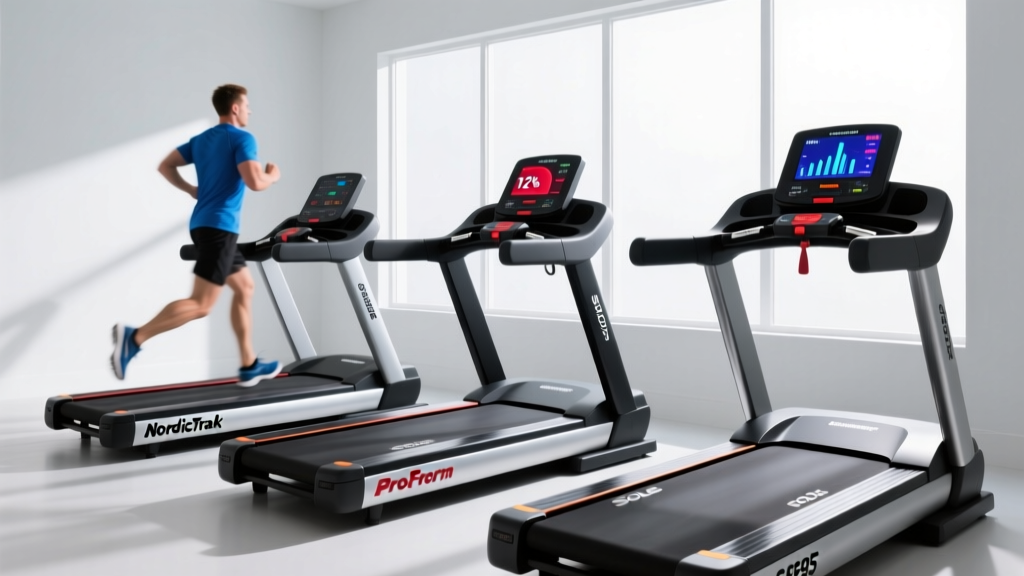
For years, the Nordic Track Treadmill 1250 was considered the gold standard for home cardio setups. Boasting a robust 2.75 CHP motor, a 10-inch interactive display, and a 20-inch by 55-inch tread belt, it delivered commercial-gym performance in a residential package. However, as the 2026 hybrid work model has solidified, home office design has shifted from dedicated 'gym rooms' to integrated 'active workspaces.' From a space optimization perspective, the Nordic Track Treadmill 1250 presents a massive spatial bottleneck.
Measuring 70.5 inches long by 30.5 inches wide, the 1250 demands a minimum of 15 square feet of dedicated floor space. More critically, safety guidelines dictate a 30-inch rear clearance zone to prevent injury in the event of a fall, pushing its total spatial footprint to nearly 22.5 square feet. In a standard 10x10 home office, this single piece of equipment consumes over 20% of the room's usable area, completely disrupting the ergonomic flow between your seated desk, storage, and active zones.
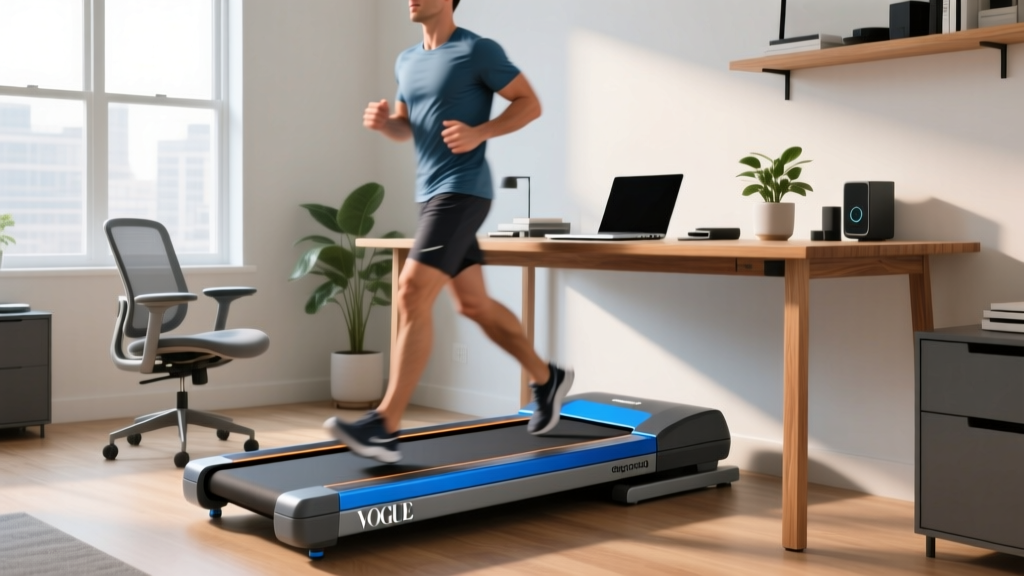
This spatial inefficiency has driven a massive surge in under-desk treadmills. By sliding directly beneath a height-adjustable standing desk, these low-profile machines reclaim the room's footprint while promoting Non-Exercise Activity Thermogenesis (NEAT). According to the Mayo Clinic, integrating low-intensity walking into your workday significantly boosts NEAT, improving metabolic health without requiring the dedicated time or spatial footprint of a traditional cardio session.
Footprint & Clearance Comparison Matrix
To understand the spatial trade-offs, we must look at the exact dimensions and clearance requirements of traditional versus under-desk cardio equipment.
| Feature | Nordic Track Treadmill 1250 | WalkingPad R2 Foldable | UREVO Strol 2E |
|---|---|---|---|
| Active Footprint | 70.5" L x 30.5" W | 57" L x 22" W | 53" L x 20" W |
| Total Zone (w/ Clearance) | 100.5" L x 30.5" W (21.3 sq ft) | 57" L x 22" W (8.7 sq ft) | 53" L x 20" W (7.3 sq ft) |
| Deck Height | 8.5" (Requires high desk clearance) | 4.5" (Fits most standing desks) | 4.7" (Fits most standing desks) |
| Weight | 150 lbs | 62 lbs | 55 lbs |
| Primary Use Case | High-intensity interval training | Active office walking (1-4 mph) | Active office walking (1-4 mph) |
Under Desk Treadmill Reviews for the 2026 Home Office
When replacing a full-size machine like the Nordic Track Treadmill 1250 with an under-desk alternative, you are trading top-end speed and incline capabilities for spatial efficiency and workflow integration. Here is how the top contenders perform in a real-world office layout.
WalkingPad R2 Foldable: The Space-Saving Champion
The WalkingPad R2 remains the undisputed king of spatial optimization. Its patented 180-degree folding hinge allows the 57-inch track to fold down into a compact 22-inch by 22-inch square. When not in use, it can be slid under a sofa, stood upright in a closet, or tucked beneath a low console table.
- Pros: Unmatched storage footprint; 2.5 HP motor handles continuous 4-hour walking sessions without overheating; aluminum alloy frame supports up to 240 lbs; integrated transport wheels.
- Cons: Lacks a built-in desk (requires a separate sit-stand desk); the 17-inch track width can feel narrow for users with a wider natural gait; no incline feature.
- Layout Tip: Pair the R2 with a gas-spring monitor arm. Because the R2 lacks a front handrail console, you maintain an unobstructed view of your monitors, reducing neck strain compared to looking down at a traditional treadmill's display.
UREVO Strol 2E: The All-in-One Budget Solution
If your office layout cannot accommodate a separate standing desk, the UREVO Strol 2E solves the problem by integrating a folding desk directly onto the treadmill's front mast. Priced around $279, it is a fraction of the cost of a premium standing desk and treadmill combo.
- Pros: Integrated desk eliminates the need for a separate height-adjustable table; 2.0 HP motor is surprisingly quiet (under 45 dB at 2 mph); built-in tablet holder and cable management clips.
- Cons: The desk surface is relatively small (31" x 19"), making it unsuitable for dual-monitor setups or large drafting work; the mast introduces a slight wobble at speeds above 3.5 mph; cannot be folded down to slide under a standard bed.
- Layout Tip: Position the Strol 2E near a power outlet but away from high-traffic walkways. The integrated desk means the entire unit acts as a mobile workstation, allowing you to roll it into a sunroom or near a window for a change of scenery.
Designing the Active Office: Layout Integration Strategies
Transitioning from a Nordic Track Treadmill 1250 to an under-desk model requires rethinking your office ergonomics. According to Cornell University Ergonomics, the optimal keyboard height while walking at 1.5 mph is approximately 2 to 3 inches lower than your standard seated elbow height. This accounts for the natural elevation of the shoulders and the slight bounce in the gait cycle.
The 48-Inch Desk Rule: When selecting a standing desk to pair with your under-desk treadmill, ensure the desk's maximum height is at least 48 inches. A standard 4.5-inch treadmill deck plus a 43-inch ergonomic elbow height for a 6-foot-tall user requires a desk that can clear 47.5 inches. Many budget standing desks max out at 46 inches, forcing taller users to hunch over their keyboards.Cable Management and Spatial Flow
A major advantage of ditching the 1250 is the elimination of massive power bricks and thick data cables running across the room. However, under-desk treadmills introduce a new hazard: tripping over your laptop or monitor power cords while the belt is in motion.
Utilize an under-desk cable management tray with a flexible spine. As the desk raises and lowers to accommodate the treadmill, the spine flexes, keeping all power and HDMI cables suspended safely above the moving belt. Research by Steelcase on hybrid work environments emphasizes that visual clutter and physical hazards in the home office significantly increase cognitive load and reduce deep-work focus.
Edge Cases: Motor Heat and Acoustic Footprints
One of the most common failure modes when using under-desk treadmills in a home office is motor overheating. Unlike the Nordic Track Treadmill 1250, which utilizes a large, ventilated hood and a high-speed cooling fan, under-desk models have low-profile, enclosed decks. If you weigh over 220 lbs and walk at 1.0 mph (which requires high torque and generates excess heat), the motor can overheat and trigger a thermal shutoff after 90 minutes.
The Solution: Maintain a walking speed of at least 1.5 to 2.0 mph. This momentum reduces the amp draw on the motor. Additionally, ensure the rear of the treadmill is at least 6 inches away from a wall or desk leg to allow the rear roller's ambient heat to dissipate.
Acoustically, under-desk treadmills are vastly superior for shared living spaces. The WalkingPad R2 generates roughly 45-50 decibels at 2 mph—equivalent to a quiet library or a humming refrigerator. In contrast, the heavy footfalls and motor whine of a full-size treadmill easily exceed 70 decibels, making it impossible to take a phone call or attend a virtual meeting without noise-canceling headphones.
Frequently Asked Questions
Can I use an under-desk treadmill on carpet or hardwood?
Yes, but with caveats. On thick pile carpet, the treadmill deck may sink slightly, causing friction between the belt and the carpet fibers, which strains the motor. On hardwood, the vibration from the motor can cause the unit to 'walk' across the room over time. Always use a high-density, low-pile equipment mat (at least 3/16" thick) that extends 6 inches beyond the treadmill's perimeter to anchor the unit and protect your flooring.
Why not just put the Nordic Track Treadmill 1250 in the office?
Beyond the massive 22.5 square foot footprint and the 8.5-inch deck height (which requires an exceptionally tall desk), the 1250 is designed for running. Running at 6+ mph while trying to read a spreadsheet or type an email is biomechanically impractical and leads to severe motion sickness and eye strain. Under-desk treadmills are engineered specifically for the 1 to 4 mph 'active walking' zone, which aligns with human cognitive processing speeds.
Do I need to lubricate an under-desk treadmill more often?
Actually, you may need to lubricate it less frequently than a gym treadmill, but the process is more critical. Because under-desk treadmills operate at lower speeds, the belt doesn't generate as much natural heat to distribute the silicone lubricant. Every 300 miles, or roughly every 3 months of daily office use, apply 100% silicone treadmill lubricant directly to the deck to prevent the motor from overworking.
More gear to consider
All reviews
ProForm Sport 5.0 Treadmill vs Curved Manuals: Troubleshooting Guide
Pro-Form Treadmill Manual: 2026 Belt Maintenance Trends

Elliptical vs Treadmill: Walking on Treadmill for 30 Minutes Daily

iFIT App for NordicTrack Treadmill & Home Stair Climber Setup

Treadmill Motor Setup: Treadmill or Elliptical for Belly Fat?