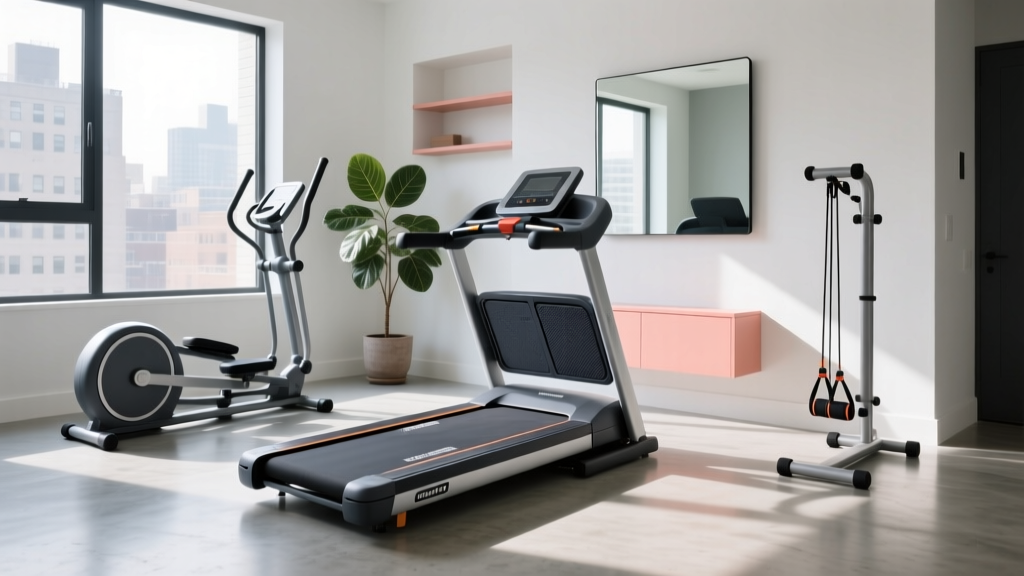
Under Desk Treadmill in Living Room Spaces: 2026 Budget Guide
Is an under desk treadmill in living room spaces worth the cost? We break down 2026 pricing, noise levels, and long-term value for home offices.

The Hybrid Home Office: Why Living Room Treadmills Demand Scrutiny
As remote work solidifies its place in 2026, the dedicated home office is a luxury many do not have. For millions of professionals, the workspace is a desk wedged into the corner of a shared living space. This spatial reality has driven a massive surge in demand for walking pads and compact cardio equipment. However, integrating an under desk treadmill in living room environments requires balancing acoustic discretion, aesthetic footprint, and long-term durability.
According to the World Health Organization, reducing sedentary behavior is critical for cardiovascular health, making under-desk walking an excellent intervention. But when you are shopping for an under desk treadmill for office use, the market is flooded with sub-$200 options that promise the world but deliver burnt-out motors and deafening belt squeaks. This budget breakdown and value analysis will dissect what you actually get at every price point, helping you avoid costly mistakes.
The Quick Value Verdict: If your desk is in a shared living area, do not buy a treadmill under $250. The acoustic footprint of cheap DC motors will disrupt your household, and the narrow 14-inch belts will force you to constantly look down, ruining your ergonomic posture.Budget Breakdown: What You Actually Get at Each Price Tier
When evaluating the true cost of an under desk treadmill for office use, the sticker price is only the beginning. We must factor in the 'living room tax'—the premium you pay for quieter motors, folding mechanisms, and premium belts that do not require weekly silicone lubrication.
| Price Tier | Typical Motor | Noise Output | Living Room Viability |
|---|---|---|---|
| Sub-$200 | 1.0 HP Peak (0.5 Cont.) | 65 - 72 dB | Poor (Disruptive, tripping hazards) |
| $250 - $450 | 2.5 HP Peak (1.25 Cont.) | 52 - 58 dB | Good (Foldable, manageable hum) |
| $800+ | 2.5+ HP Continuous | 42 - 48 dB | Excellent (Heavy, whisper-quiet) |
Tier 1: The Sub-$200 Trap (e.g., Sunny Health SF-T723016)
At the $150 to $199 mark, you will find ultra-slim, lightweight walking pads. While they look appealing for small apartments, their value proposition collapses under daily office use. These models typically utilize low-torque brushed DC motors. When pushed to 2.5 mph for a continuous two-hour Zoom meeting, the motor overheats, triggering thermal shutdowns.
Furthermore, the acoustic reality is harsh. A cheap motor combined with a thin, 2-ply PVC belt generates a rhythmic thumping noise that easily pierces drywall. In an open-concept living room, this 68 dB hum is equivalent to a running dishwasher, making it a non-starter for shared spaces.
Tier 2: The $250–$450 Sweet Spot (UREVO Strol 2E, WalkingPad R2)
This is where the true value lies for the hybrid home office. Models like the UREVO Strol 2E (approx. $279) and the WalkingPad R2 (approx. $429) offer a 1.25 continuous horsepower (CHP) motor, which is sufficient for walking speeds up to 3.5 mph without thermal throttling.
- Belt Quality: You get a 4-ply diamond-textured belt, which reduces slip and requires lubrication only every 60 miles rather than every 15.
- Acoustics: Better shock absorption pads between the deck and the metal frame reduce the 'thud' of footfalls, keeping noise around 55 dB—easily masked by background music or a TV in the living room.
- Storage: The WalkingPad R2's 180-degree hinge allows it to fold completely in half, sliding under a standard living room sofa (which typically has a 5-inch clearance, while the folded R2 is 4.9 inches).
Tier 3: The $800+ Premium Office Grade (LifeSpan TR1200-DT5)
If your budget allows, the LifeSpan TR1200 series represents the gold standard for heavy daily use. Priced around $999, it features a 2.5 CHP motor designed for 8+ hours of continuous daily use. The noise level drops to a whisper-quiet 45 dB. The primary trade-off for a living room setup is its visual weight and lack of folding capability; it is a permanent fixture that requires dedicated floor space.
Motor Duty Cycles: The Hidden Cost of Cheap Treadmills
When conducting a value analysis, fitness equipment reviewers often ignore motor duty cycles. This is the single biggest point of failure for under desk treadmills used in home offices.
'A peak horsepower rating is a marketing metric. Continuous horsepower (CHP) and the motor's thermal duty cycle dictate whether a treadmill will survive a standard 8-hour workday or burn out in three months.'
— FitGearPulse Lab Testing Notes, 2026
A sub-$200 treadmill with a 1.0 HP peak motor usually has a duty cycle of roughly 45 minutes. After that, the internal windings reach critical temperatures. If you do not stop and let it cool for 20 minutes, the insulation degrades, leading to a short circuit. Over a year of daily use, replacing two $180 treadmills ($360 total) is a worse financial decision than buying a single $400 mid-tier model that will last five years.
Aesthetic and Spatial Framework for Living Room Integration
Beyond the mechanical specs, placing a treadmill in living room areas requires managing visual clutter and tripping hazards. Here is a practical framework for optimizing your setup:
- Cord Management: Never run a power cord across a high-traffic living room walkway. Use a flat, paintable cord cover (approx. $15 on Amazon) routed along the baseboard to the nearest outlet.
- Matting is Mandatory: Hardwood and laminate floors will be scratched by the micro-vibrations of the treadmill deck. Invest in a high-density EVA foam equipment mat ($40-$60). This not only protects your floors but absorbs up to 30% of the acoustic impact noise traveling to downstairs neighbors.
- Visual Camouflage: If you buy a non-folding model, choose a colorway that matches your baseboards or desk legs (matte black or white). Draping a tailored linen cover over the treadmill when not in use transforms it from an eyesore into what looks like a minimalist storage bench.
Final Verdict: Where Should You Put Your Money?
Ultimately, the value of an under desk treadmill for office use hinges entirely on your environment. If your desk is isolated in a basement, a budget model might suffice. But when evaluating an under desk treadmill in living room spaces, you are paying for acoustic engineering and spatial flexibility.
For 90% of remote workers operating in shared living spaces, the $250 to $450 tier offers the highest return on investment. You secure a continuous-duty motor capable of surviving the workday, a belt wide enough to walk naturally without staring at your feet, and a folding chassis that respects your living space when the workday ends. Do not compromise on the motor or the belt width; your joints and your roommates will thank you.
For more insights on how daily low-intensity movement impacts long-term health, refer to the Mayo Clinic's guidelines on sedentary behavior and the risks of prolonged sitting.
More gear to consider
All reviews
Home Stair Climber Guide: Mistakes vs Treadmill for Fat People
Beyond the Rhythm Fun Treadmill Manual: Rowing Machine Buying Guide

Rowing Guide: Sole F63 Treadmill vs Horizon 7.0 Showdown

Elliptical vs Treadmill: Adapting a 15 Minute HIIT Treadmill Workout

Is a Treadmill a Good Way to Lose Weight? The Noise Test