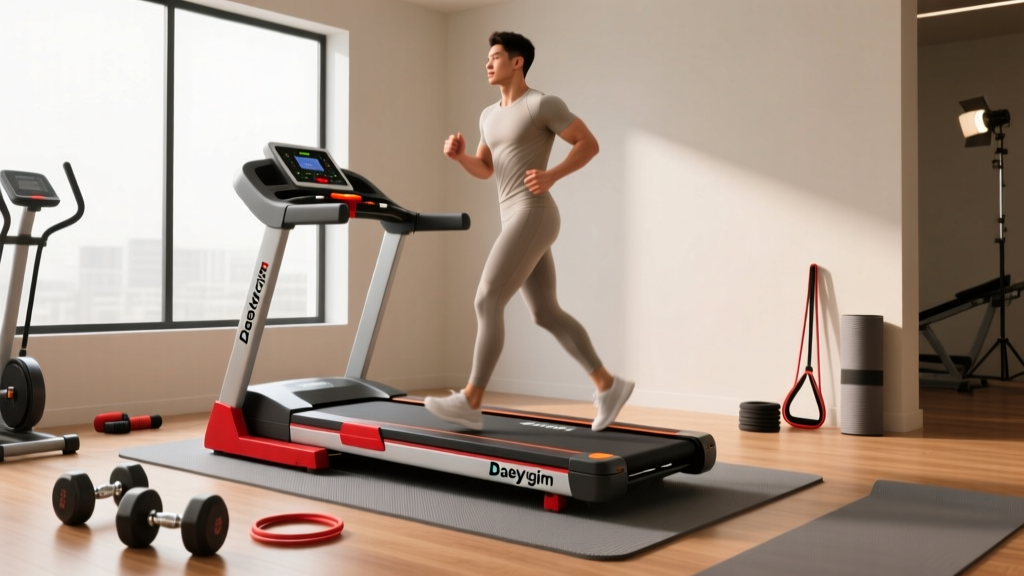
Umay Treadmill vs Motorized: 2026 Curved Manual Comparison
We compare the Umay curved manual treadmill against standard motorized models. Discover biomechanics, real calorie burn, maintenance, and 2026 pricing.

The Biomechanical Divide: Curved Manual vs. Motorized Treadmills
The home fitness landscape in 2026 has seen a massive surge in non-motorized, self-powered cardio equipment. At the center of this debate is the Umay treadmill lineup, specifically their budget-friendly curved manual models, pitted against traditional motorized flatbed treadmills. While a standard motorized treadmill pulls your foot backward via a continuous-duty motor, a curved manual treadmill requires your posterior chain—glutes, hamstrings, and calves—to actively drive the slat belt backward. This fundamental difference in physics completely alters your running biomechanics, energy expenditure, and long-term maintenance requirements.
Whether you are looking at the Umay curved non-motorized treadmill (typically priced between $450 and $550 in 2026) or a comparably priced Umay folding motorized treadmill, choosing the right machine requires understanding how your body interacts with the deck. Below, we break down the exact specifications, failure modes, and physiological impacts of both designs to help you make an informed decision for your home gym.
The 30% Calorie Burn Claim: Myth or Reality?
Marketing materials for curved treadmills often claim a 30% increase in calorie expenditure compared to motorized treadmills. According to Mayo Clinic's guide to aerobic exercise, energy expenditure is directly tied to oxygen consumption and muscle recruitment. Because a curved treadmill forces a forefoot strike and eliminates motor assistance, you are effectively running on a constant 3% to 5% incline. While the 30% metric is accurate for sprinting and high-intensity intervals, steady-state jogging on a curved manual treadmill yields roughly a 10% to 15% higher caloric burn compared to a flat motorized deck at the exact same speed.
Head-to-Head Spec & Performance Matrix
To understand the practical differences, we must look at the raw data. The table below compares the typical specifications of the Umay Curved Manual Treadmill against a standard entry-to-mid-level motorized treadmill (such as the Umay 2.5 HP folding model or similar market equivalents) as of 2026.
| Feature | Umay Curved Manual | Standard Motorized Treadmill |
|---|---|---|
| Price Range (2026) | $450 - $599 | $350 - $1,200 |
| Top Speed | Unlimited (User-generated, up to 18+ mph) | Capped at 10.0 - 12.0 mph |
| Belt Type | Rubber Slat on Ball Bearings | 2-Ply PVC/Nylon Woven Belt |
| Incline Capability | Fixed Curve (Simulates 3-5% grade) | 0% to 15% Motorized Incline |
| Power Requirement | 0 Watts (100% Self-Powered) | 1.5 to 3.0 CHP (Requires 120V Outlet) |
| Footprint | ~65' L x 32' W (No folding) | ~75' L x 30' W (Often foldable) |
| Ideal Workout Type | HIIT, Sprints, CrossFit, Intervals | LISS, Long-Distance, Walking, Rehab |
Failure Modes & Maintenance: What Breaks First?
One of the most overlooked aspects of buying cardio equipment is the long-term failure rate. The mechanical simplicity of a curved manual treadmill drastically changes the maintenance paradigm compared to a motorized flatbed.
Curved Slat Belt Wear and Bearing Friction
The Umay curved treadmill utilizes a series of individual rubber slats mounted on a track. The primary failure point here is not a motor, but the slat guide bearings. Over 500+ miles of use, dust and pet hair can infiltrate the side tracks, causing the bearings to seize. Furthermore, the rubber slats can develop micro-cracks if the machine is stored in an unclimate-controlled garage where temperatures drop below freezing, as the rubber compound loses its elasticity. However, because there is no electronic motor or PWM (Pulse Width Modulation) controller board, you completely eliminate the risk of power surge fry-outs, which are common in budget motorized treadmills.
Motorized Deck Delamination and Belt Drift
On a standard motorized treadmill, the most frequent point of failure is the deck-to-belt friction zone. If a user neglects to apply 100% silicone lubricant every 130 miles, the friction generates excessive heat. This heat increases amperage draw on the motor, eventually tripping the thermal breaker or frying the motor controller board. Additionally, motorized belts are prone to 'drift' (sliding to the left or right), requiring manual tension adjustments via the rear roller Allen bolts. The Centers for Disease Control and Prevention (CDC) emphasizes that consistent, uninterrupted physical activity is key to cardiovascular health; a machine that requires frequent downtime for belt realignment or motor resets can severely disrupt your weekly training volume.
Biomechanics and Impact: Forefoot vs. Heel Strike
When you run on a motorized treadmill, the belt pulls your foot backward, which often encourages a passive heel-strike and over-striding. This sends a shockwave directly up the tibia into the knee joint. Conversely, the geometry of the Umay curved treadmill forces you to run on the balls of your feet (forefoot strike) to catch the upward slope of the curve.
'The curved geometry acts as a natural shock absorber. By forcing a mid-foot or forefoot strike, the calf and Achilles tendon absorb the kinetic energy, significantly reducing the compressive forces on the patellofemoral joint (knee) compared to a flat motorized deck.'
However, this biomechanical shift is a double-edged sword. If you suffer from plantar fasciitis or Achilles tendinopathy, the constant forefoot loading on a curved manual treadmill will exacerbate your condition. In such cases, a motorized treadmill with a cushioned elastomer deck system is the medically sound choice.
The Walking Paradox: Why Curved Treadmills Struggle at Low Speeds
A non-obvious edge case that catches many buyers off guard is the low-speed walking experience. On a motorized treadmill, walking at 2.0 mph is effortless. On a curved manual treadmill, walking at 2.0 mph is surprisingly difficult. Because you must manually overcome the static friction of the heavy rubber slat belt without the momentum of a running stride, walking slowly on a curve feels jerky and requires exaggerated hip flexion. If your primary goal is getting 10,000 steps a day while working at a standing desk, or if you are purchasing the machine for an elderly parent focused on low-impact walking, a motorized treadmill is vastly superior.
Step-by-Step Maintenance Protocols (2026 Guide)
To maximize the lifespan of your investment, follow these specific maintenance routines based on your chosen machine type:
Umay Curved Manual Maintenance
- Monthly Track Cleaning: Use a vacuum with a brush attachment to remove dust from the lateral slat guides.
- Bi-Annual Bearing Check: Spin the belt by hand. If you hear grinding or feel 'catching' points, apply a lithium-based grease to the internal guide wheels (avoid WD-40, which strips existing lubrication).
- Slat Tension Inspection: Check the tension bolts at the rear axle every 6 months to ensure the slat belt hasn't stretched, which can cause slipping during heavy sprinting.
Standard Motorized Maintenance
- The 2-Inch Lift Test: Every month, reach under the center of the belt. You should be able to lift it exactly 2 to 3 inches off the deck. If it's tighter, loosen the rear roller bolts; if looser, tighten them.
- Silicone Lubrication: Every 3 months (or 130 miles), lift the belt edges and apply 15ml of 100% pure silicone treadmill lubricant in a zig-zag pattern across the deck.
- Surge Protection: Always plug a motorized treadmill into a dedicated 120V surge protector (minimum 2000 Joules) to protect the lower control board from voltage spikes.
The Decision Framework: Which Belongs in Your Home Gym?
Ultimately, the choice between the Umay curved manual treadmill and a motorized alternative comes down to your specific training modalities, space constraints, and physical limitations.
- Buy the Umay Curved Manual Treadmill if: You are an athlete focused on HIIT, Tabata, or CrossFit-style metcons. You want zero electricity costs, no motor noise, and a machine that naturally enforces proper sprinting posture. You have a dedicated space and do not need to fold the machine away.
- Buy a Motorized Treadmill if: You primarily engage in LISS (Low-Intensity Steady State) cardio, long-distance marathon training, or daily walking. You require adjustable inclines for hiking simulation, need a folding mechanism to save space, or have pre-existing Achilles/calf injuries that make forefoot striking painful.
Frequently Asked Questions
Can I use a curved treadmill for long-distance marathon training?
While possible, it is not recommended for distances over 10 miles. The constant 3-5% simulated incline and forefoot strike will fatigue your calves and Achilles tendons much faster than outdoor running or a flat motorized treadmill, potentially altering your race-day biomechanics.
Is the Umay curved treadmill loud in an apartment?
Curved treadmills have zero motor hum, making them quieter in terms of ambient decibels. However, the physical impact of your feet striking the hard rubber slats creates a sharp, percussive 'clack'. If you live in an upstairs apartment, you will absolutely need a high-density EVA foam equipment mat to dampen the impact noise traveling through the floor joists.
Do curved manual treadmills have weight limits?
Yes. Due to the structural stress placed on the slat bearings and the steel frame during the downward phase of a sprint, most budget and mid-tier curved treadmills, including Umay's models, cap out at a 300 to 330 lb user weight limit. Motorized treadmills in the same price bracket often support up to 350 lbs due to their wider, reinforced flatbed decks.
More gear to consider
All reviews
Upright, Recumbent, Spin Bikes vs NordicTrack T6 5 S Treadmill
Curved vs Motorized Treadmill on Floor: Beginner Setup Guide

Redliro Treadmill Reviews: Testing the Best Folding Pick for 2026

Prevent Treadmill Burn: Motor Size & Horsepower Guide

Stair Climber vs NordicTrack Treadmill C2155: Home Use Guide