
Side by Side Treadmill Guide: Dual Belt vs Wide Decks
Looking for a side by side treadmill? Compare dual belt systems vs double wide decks for couples. Find the best two person treadmill setups for 2026.

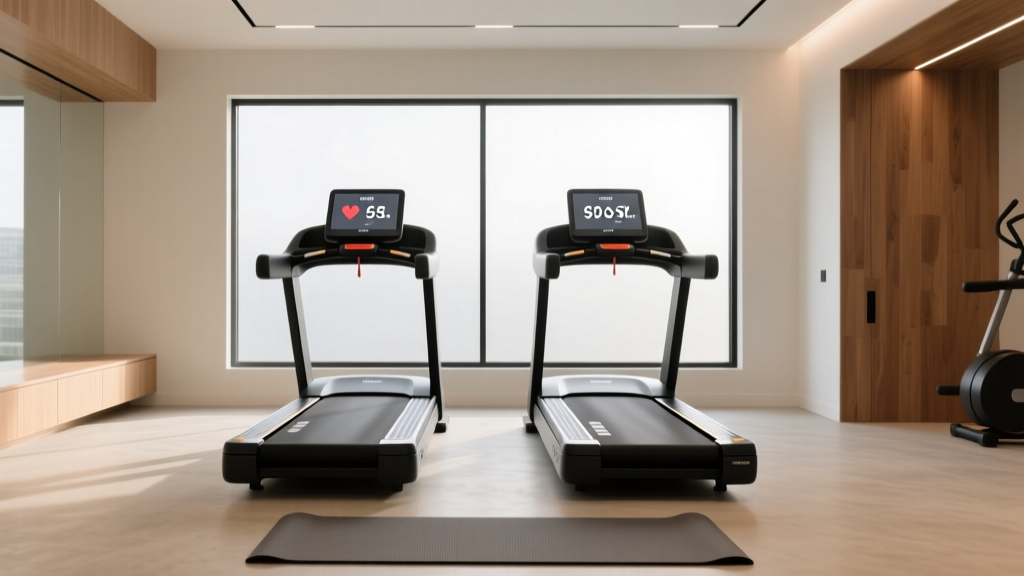
Finding a true side by side treadmill setup for a shared home gym requires navigating a minefield of marketing myths and engineering limitations. While many couples and training partners search for a single machine wide enough for two runners, the reality of biomechanics and motor physics tells a vastly different story. In 2026, the commercial fitness industry has largely abandoned the concept of a unified ultra-wide running surface for consumer use in favor of synchronized dual-belt configurations. Understanding the mechanical constraints of belt drift, motor heat dissipation, and electrical load is critical before investing in shared cardio equipment.
The Reality of the Side by Side Treadmill Market
The term 'side by side treadmill' describes a behavioral intent—two people running together—rather than a single, unified product SKU. When outfitting a luxury home gym or a boutique training studio, architects and fitness equipment specialists almost universally recommend placing two independent commercial-grade treadmills adjacent to one another. This approach eliminates the catastrophic failure points associated with oversized single belts while allowing each user to control their own speed, incline, and decline metrics independently.
Syncing two separate machines via Bluetooth or proprietary ecosystem apps (such as Peloton Guide integration or iFIT Coach syncing) provides the shared experience runners desire without compromising the structural integrity of the equipment. A standard commercial treadmill requires a dedicated 20-amp NEMA 5-20R electrical circuit. Attempting to run a single, massively over-engineered wide-belt machine on standard residential wiring is a primary reason manufacturers avoid producing them for the consumer market.
Dual Belt Systems vs. Double Wide Treadmills: A Technical Breakdown
The engineering debate between purchasing two premium machines versus hunting for a mythical double wide treadmill centers on dynamic load distribution and belt tracking. A standard premium running surface measures 22 inches wide by 60 inches long. A true double wide treadmill would require a continuous belt spanning at least 44 to 48 inches in width. According to biomechanical research on treadmill gait kinematics, runners naturally alter their stride width and foot placement when confined or when sharing a surface, leading to asymmetric loading.
When two 200-pound runners strike a 48-inch wide belt simultaneously, the lateral sheer force causes severe belt drift. To counteract this, manufacturers would need to install a center tracking guide or use a split-belt system, which introduces a dangerous tripping hazard directly in the center of the running path. Furthermore, a single continuous roller spanning 48 inches will experience micro-flexing under dual impact, leading to premature bearing failure and uneven deck wear.
| Feature | Dual Independent Setup (Two Machines) | Single Double Wide Treadmill (Custom/Lab) |
|---|---|---|
| Belt Dimensions | Two 22' x 60' surfaces | One 48' x 60' surface |
| Motor Configuration | Dual 4.0 HP DC or AC motors | Single 8.0+ HP Industrial AC motor |
| Electrical Requirement | Two dedicated 20A / 120V circuits | Requires 240V / 30A hardwired connection |
| Tracking & Drift Risk | Low (Standard tensioning) | Extreme (High lateral sheer force) |
| Independent Control | Full independent speed/incline | Locked to single speed/incline |
Engineering Challenges of a Two Person Treadmill
Building a safe, consumer-ready two person treadmill on a single chassis presents insurmountable thermal and electrical hurdles. Continuous Horsepower (CHP) ratings dictate that a motor needs roughly 1.0 HP for every 50 pounds of active user weight during sustained running. Two athletes running at 8.0 mph would demand a minimum of 8.0 CHP. Most high-end residential direct current (DC) motors peak at 4.0 to 4.5 CHP before the internal commutator overheats.
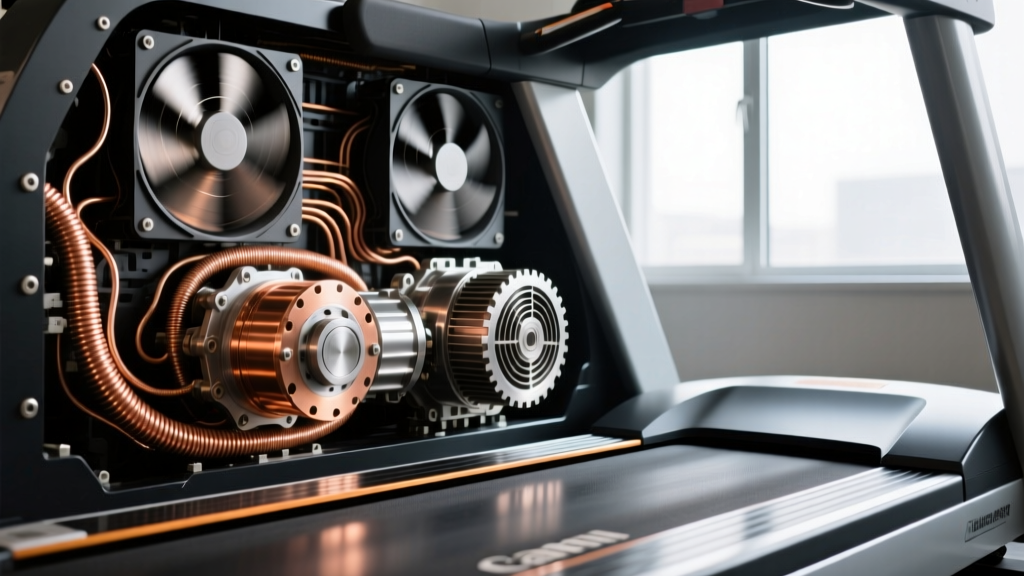
To achieve 8.0 CHP, a manufacturer would need to install an alternating current (AC) industrial motor, similar to those found in the Woodway Desmo series used in clinical gait labs. These motors require 240-volt electrical connections, which are virtually nonexistent in standard residential home gyms. Additionally, the ASTM International safety standards for motorized fitness equipment mandate strict emergency stop protocols and side-rail clearances. A 48-inch wide deck would require users to reach an impractical distance to grab the safety handrails in the event of a stumble, violating core ergonomic safety principles.
Tandem Treadmill Setups: The Space-Saving Alternative
When floor space is limited, some facility managers consider a tandem treadmill layout—placing one machine directly behind the other. While this configuration is occasionally utilized in university biomechanics labs for motion capture camera alignment, it is highly discouraged for home and commercial gyms.
Safety guidelines dictate a minimum of 78 inches of clear fall space behind every motorized treadmill to prevent severe friction burns and impact injuries if a user falls off the rear roller. In a tandem treadmill arrangement, the rear machine's fall zone directly intersects with the front machine's operational footprint. Furthermore, the drafting effect created by the front runner alters the air resistance and thermal comfort for the rear runner, making the experience highly unequal. Parallel placement remains the only viable solution for shared cardio zones.
Designing the Ideal Shared Cardio Zone
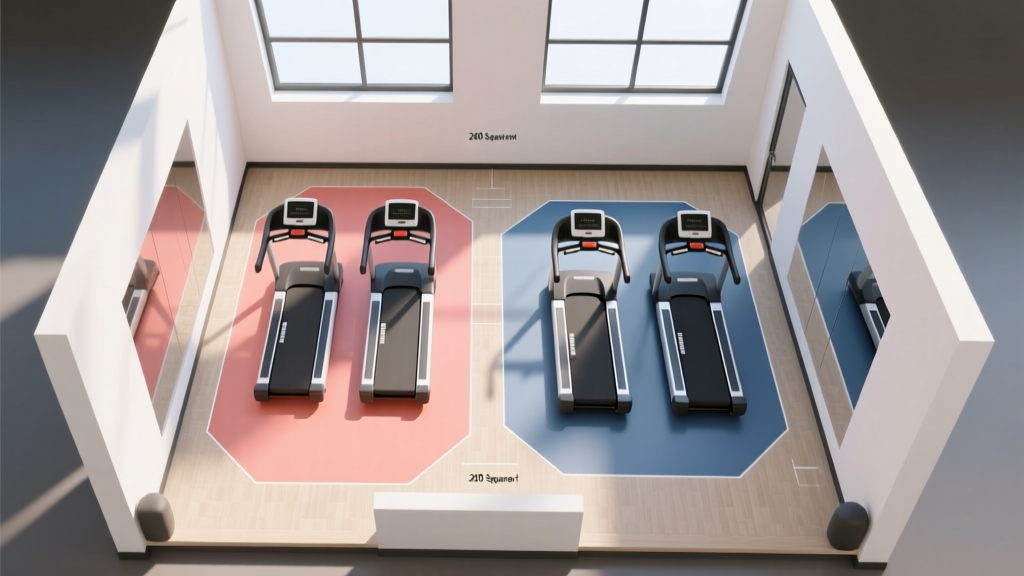
To create the ultimate side by side treadmill configuration, focus on acoustic dampening and visual symmetry. Commercial treadmills like the Life Fitness Club Series+ or the Matrix T7xe weigh between 350 and 420 pounds each. When combined with the dynamic impact of two runners, the point-load on your subfloor can exceed 1,200 pounds. Reinforcing the floor joists and installing high-density rubber flooring (at least 3/8-inch thick, 80 durometer) is mandatory to prevent structural deflection and reduce low-frequency vibration transfer to the rooms below.
For electrical planning, consult the NFPA 70 National Electrical Code guidelines for dedicated fitness equipment circuits. Running two high-draw cardio machines on a shared 15-amp residential breaker will result in immediate tripping during simultaneous incline sprints. Ensure your electrician installs two separate 20-amp dedicated lines routed directly from the main panel.
Frequently Asked Questions
Is a true two person treadmill safe for home gyms?
No. A unified two person treadmill running surface poses severe safety risks, including center-seam tripping hazards, inability to reach emergency stop handrails, and catastrophic belt drift under dual dynamic loading. The industry standard for safe shared running is two independent, adjacent machines with separate safety keys and consoles.
How does a double wide treadmill handle motor heat and belt drift?
A true double wide treadmill requires an oversized industrial AC motor to manage the heat generated by dual-user friction, which necessitates 240V commercial wiring. Belt drift is managed through aggressive, high-tension tracking systems that accelerate the wear of the 4-ply urethane belt and deck overlays, resulting in exorbitant maintenance costs compared to dual standard setups.
Can I use a tandem treadmill layout to save space in my gym?
Using a tandem treadmill layout is strongly advised against. Safety regulations require 78 inches of unobstructed clearance behind the rear roller of every treadmill. Placing machines in a tandem formation violates this safety envelope, creating a severe trip and friction-burn hazard for the user on the rear machine.
What is the best side by side treadmill configuration for couples?
The optimal side by side treadmill configuration involves purchasing two identical commercial-grade models with 22' x 60' belts, 3.0-inch precision rollers, and AC or high-CHP DC motors. Placing them parallel with a 6-inch gap allows for independent speed control, synchronized digital ecosystem integration, and adherence to electrical and structural safety codes.
More gear to consider
All reviews
Is Sole a Good Treadmill? Walking Pad Comparison & Buyer Mistakes
Air Bike vs Assault Bike Comparison Guide & WalkingPad Denise Austin 2.0 Foldable Treadmill Reviews

Gold's Gym Treadmill Belt Maintenance & Lubrication Guide

Air Bike vs Assault Bike & How to Connect Apple Watch to Treadmill
Under-Desk Treadmill Review: Is a VR Treadmill Cheap Option Viable?
