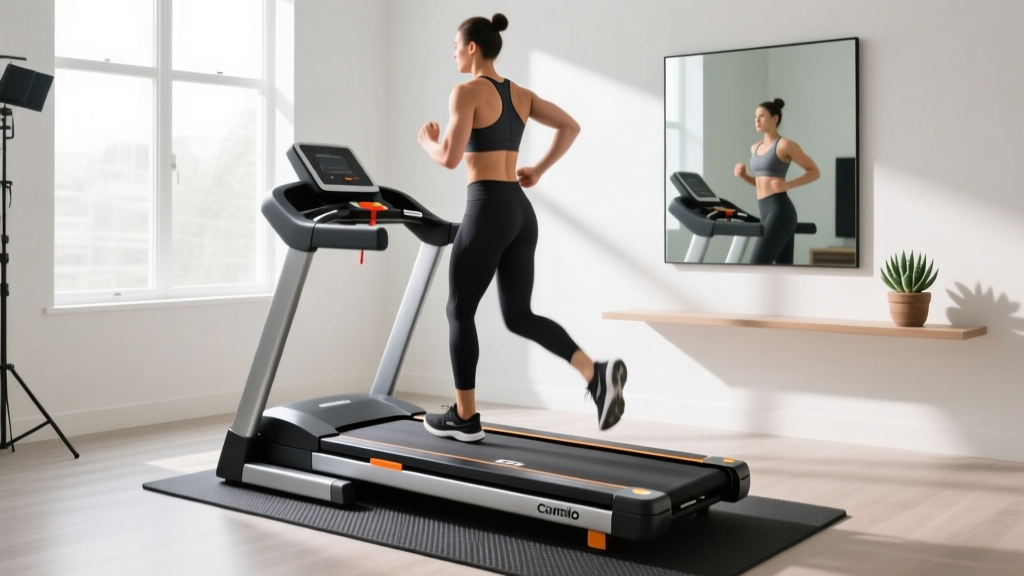
True M30 Treadmill vs Curved Manual: 2026 Motorized Buying Guide
Compare the TRUE M30 treadmill against top curved manual models. Our 2026 buying guide covers biomechanics, pricing, and real-world failure modes.

The Great Debate: Manual Curved vs. Premium Motorized in 2026
The home and light-commercial fitness market has undergone a massive shift. While motorized treadmills have long been the undisputed kings of cardio, the rise of self-powered curved manual treadmills has forced buyers to reconsider their options. When outfitting a high-end home gym or boutique studio, the decision usually comes down to a premium motorized workhorse—like the TRUE M30 treadmill—versus a top-tier curved manual machine like the AssaultRunner Elite or TrueForm Trainer.
This in-depth buying guide cuts through the marketing fluff. We will dissect the biomechanics, exact pricing, long-term maintenance costs, and specific failure modes of both categories to help you make an evidence-based purchasing decision in 2026.
Benchmarking the Motorized Side: The TRUE M30 Treadmill
TRUE Fitness has built a reputation for manufacturing commercial-grade equipment that transitions seamlessly into luxury home gyms. The TRUE M30 treadmill represents the sweet spot in their lineup, offering heavy-duty stability without the massive footprint of a full club-series model.
Core Specifications & Engineering
- Motor: 3.0 HP Continuous Duty DC Motor (Peak output 4.5 HP). This is critical; continuous duty ensures the motor won't overheat during 90-minute marathon training blocks.
- Running Surface: 20' x 60' commercial-grade belt. The 60-inch length accommodates runners with long strides, preventing the 'clipping' sensation found on cheaper 55-inch belts.
- Incline/Speed: 0% to 15% incline via a dedicated lift motor, and speeds up to 12 mph.
- Footprint & Weight: 82' L x 33' W x 62' H, weighing in at a massive 315 lbs. This mass eliminates lateral wobble during sprint intervals.
- 2026 Pricing: MSRP is $4,299, though authorized dealers frequently offer it between $3,899 and $4,099 with white-glove delivery included.
The Curved Manual Contenders: AssaultRunner Elite & TrueForm
Curved manual treadmills operate on a fundamentally different premise: the user is the motor. The concave slat-belt design uses gravity and friction to pull the belt down and back, requiring the runner to actively drive their feet into the deck.
Market Leaders and Pricing
- AssaultRunner Elite ($3,299): Features a rugged slat belt, magnetic resistance for varied tension, and a Bluetooth-enabled console. It weighs 280 lbs and has a top speed limited only by the user's legs.
- TrueForm Trainer ($3,899): Known for its low-profile deck and incredibly smooth urethane slat belt. It is the preferred choice for purists who want a zero-distraction, screen-free running experience.
Head-to-Head Comparison Matrix
How does the TRUE M30 treadmill stack up against the leading curved manual models? Review the data below to compare critical purchasing factors.
| Feature | TRUE M30 (Motorized) | AssaultRunner Elite (Curved) | TrueForm Trainer (Curved) |
|---|---|---|---|
| Power Source | Requires 110V/20A Dedicated Outlet | 100% Self-Powered | 100% Self-Powered |
| Top Speed | 12 mph (Fixed Cap) | Unlimited (User Dependent) | Unlimited (User Dependent) |
| Incline Capability | 0% - 15% Motorized | Simulated via Curve Position | Simulated via Curve Position |
| Deck Cushioning | 3-Zone Variable Durometer | Rigid Slat Belt (High Impact) | Low-Profile Rubber Slat |
| Estimated 2026 Cost | $3,899 - $4,299 | $3,299 | $3,899 |
Biomechanics and Caloric Burn: What the Science Says
The most common argument for buying a curved manual treadmill is the increased caloric expenditure. But is it backed by science, and at what cost to your joints?
According to research published in the Journal of Strength and Conditioning Research, running on a non-motorized curved treadmill increases energy expenditure by approximately 25% to 30% compared to a motorized treadmill at the exact same speed. This is because the runner must overcome the friction of the belt and actively pull it backward, engaging the posterior chain (hamstrings and glutes) much more aggressively.
'While curved treadmills offer superior metabolic demands for HIIT protocols, the lack of shock absorption significantly increases ground reaction forces. Athletes with a history of tibial stress fractures or plantar fasciitis should approach high-volume curved running with caution.'
Conversely, the TRUE M30 treadmill prioritizes joint longevity. The motorized belt pulls your foot back, reducing the active braking forces required by your hamstrings. Coupled with TRUE's elastomer cushioning system, the M30 is vastly superior for high-mileage marathon training blocks where repetitive impact is the primary enemy. For more on managing joint stress during cardio, the American Physical Therapy Association recommends utilizing shock-absorbing decks for runners logging over 20 miles per week.
Real-World Failure Modes & Maintenance Costs
Every piece of fitness equipment eventually breaks. Understanding how they fail is crucial for calculating the total cost of ownership.
Motorized Failure Modes (TRUE M30)
- Control Board (PCB) Frying: The most common catastrophic failure in motorized treadmills. Power surges or failing to use a dedicated 20-amp circuit can fry the lower control board. Replacement cost: $250 - $400.
- Drive Belt Snapping: The ribbed belt connecting the motor to the front roller will stretch and eventually snap after 5 to 7 years of heavy use. Replacement cost: $45 (part) + $150 (labor).
- Incline Motor Burnout: Frequently running at maximum 15% incline with a 250+ lb user will overheat the incline lift motor over time.
Curved Manual Failure Modes (Assault/TrueForm)
- Slat Belt Friction Degradation: The urethane slats glide on a curved track. Over 3 to 5 years, the track coating wears down, causing the belt to 'stick' or feel gritty. Re-lubricating the track with specialized silicone spray is required every 6 months.
- Roller Bearing Seizure: The front and rear cylindrical rollers house heavy-duty bearings. If sweat and dust infiltrate the seals, the bearings will seize, requiring a $120 roller replacement.
- Zero Electronic Failures: Because there is no drive motor or incline motor, the catastrophic mechanical failure rate is nearly zero. The only electronic component is the magnetic sensor calculating speed for the LCD screen.
Decision Framework: Which Should You Buy?
Do not buy based on trends; buy based on your specific physiological needs and training modalities. Use this framework to finalize your decision.
Buy the TRUE M30 Treadmill If:
- You are training for a marathon or ultra-endurance event and need to log 30+ miles a week with minimal joint degradation.
- You require precise, programmable pacing (e.g., locking into an exact 8:15/mile pace for a tempo run).
- You want to utilize incline training for hiking prep (the 15% motorized incline is vastly superior to the simulated curve of a manual treadmill).
- Multiple users of varying fitness levels and ages will be using the machine, requiring an easy walk/jog transition.
Buy a Curved Manual Treadmill If:
- Your primary training modality is High-Intensity Interval Training (HIIT) or CrossFit-style metabolic conditioning.
- You have severe spatial constraints and cannot run dedicated 20-amp electrical wiring to your garage or basement gym.
- You want to improve your running mechanics; the curved deck naturally forces a mid-foot or forefoot strike, eliminating the heel-strike common on motorized belts.
- You want a machine with virtually zero electronic points of failure.
Frequently Asked Questions
Is the TRUE M30 treadmill worth the premium price over budget motorized models?
Yes, if you weigh over 200 lbs or run more than 15 miles a week. Budget treadmills (under $1,500) typically use 2.5 HP or lower motors and 1-ply belts that stretch and require constant realignment. The TRUE M30's 3.0 HP continuous duty motor and 2-ply commercial belt are engineered for a 10+ year lifespan under heavy load.
Can I walk on a curved manual treadmill?
You can, but it is highly inefficient. Curved treadmills require a certain amount of momentum and downward force to engage the belt. Walking at speeds under 3.0 mph on a curved deck feels jerky and unnatural. The TRUE M30, by contrast, offers a buttery-smooth walking experience down to 0.5 mph, making it ideal for active recovery and walking pad alternatives.
Do curved treadmills require a surge protector?
No. Because models like the AssaultRunner and TrueForm are entirely self-powered and lack a drive motor, they do not plug into the wall. The small LCD console is powered by an internal battery or a simple plug-in adapter that draws negligible current, eliminating the risk of surge-related PCB damage.
For more insights on optimizing your home gym layout and selecting the right cardiovascular equipment, consult the certified training guidelines available via the American Council on Exercise.
More gear to consider
All reviews
Weslo Crosswalk 5.2 T Treadmill Troubleshooting vs Curved Manual
How to Run on a Treadmill Properly & Stationary Bike Maintenance

NordicTrack 2450 Treadmill Review: 2026 Feature Comparison Guide

Horizon Treadmill Coupon Code Guide & 2026 Feature Comparison

ProForm Carbon TL Treadmill Specs: Compact Cardio Maintenance